WEL COME GROWTH SEO
SEO Growth: The Complete Guide to Building Sustainable Search Engine Growth
SEO growth is one of those phrases that sounds simple until you actually start working on it. At first glance, it seems to mean getting higher rankings on Google and attracting more visitors from search engines. While those things are certainly part of the picture, real SEO growth goes much further. It is about creating a search presence that becomes stronger, more valuable, and more profitable over time.
The internet is crowded with businesses competing for the same customers. In almost every industry, there are established brands, new companies, content publishers, marketplaces, influencers, and countless websites fighting for attention. Simply publishing a website and adding a few keywords is no longer enough. Search engines have become better at understanding content, and users have become much more selective about which results they trust and click.
That is where SEO growth becomes important. Instead of treating search engine optimization as a one-time project, SEO growth treats it as an ongoing business strategy. The objective is to steadily improve visibility, attract increasingly relevant visitors, build authority, improve user experience, and turn organic traffic into meaningful results.
A successful SEO growth strategy also understands that traffic alone is not the final goal. A website can receive thousands of visitors and still struggle to generate sales or leads. On the other hand, a smaller website can produce excellent results when it attracts the right audience. Good SEO growth is therefore about quality, relevance, consistency, and measurable progress.
What Is SEO Growth?
SEO growth refers to the process of increasing a website’s visibility, organic traffic, authority, and business results through search engine optimization. It combines technical improvements, keyword research, content creation, website optimization, internal linking, authority building, user experience, and performance measurement.
Traditional SEO can sometimes focus heavily on individual rankings. SEO growth looks at the bigger picture. Instead of asking only whether a page ranks for a particular keyword, it asks whether the website is attracting the right people and whether those visitors are contributing to the organization’s goals.
For example, an online store might improve its rankings for hundreds of informational keywords. That sounds impressive, but if those searches rarely lead to purchases, the growth strategy needs adjustment. A better approach might be to target product comparisons, category searches, transactional phrases, and specific customer problems that are closer to buying intent.
SEO growth is therefore best understood as a continuous cycle. Research creates opportunities, optimization improves the website, content attracts visitors, measurement reveals what works, and further improvements build on those results. Over time, these small improvements can create significant organic growth.
SEO Growth vs. Traditional SEO
Traditional SEO is often described as a collection of optimization activities. These can include keyword research, on-page optimization, technical audits, link building, content creation, and reporting. Those activities remain essential, but SEO growth adds another layer by connecting them to broader business objectives.
Imagine two websites competing in the same industry. Website A focuses on ranking for as many keywords as possible. Website B focuses on ranking for keywords that attract potential customers, creates content that supports the buying journey, improves conversion rates, and measures revenue generated from organic search.
Website A may have more total traffic. Website B may have fewer visitors but significantly more customers. From a business perspective, Website B may have achieved much stronger SEO growth.
This distinction is important because SEO should not operate separately from the rest of a business. It should support marketing, sales, branding, customer acquisition, and long-term growth. Rankings are useful indicators, but they are not the entire definition of success.
Why Organic Search Is Still a Powerful Growth Channel
Search engines remain one of the most important ways people discover information, products, services, and businesses. When someone needs an answer, wants to compare products, or is ready to purchase something, search is often part of that process.
One major advantage of organic search is intent. Unlike some forms of advertising that interrupt users while they are doing something else, search results can place a business in front of people who are already looking for relevant information. That creates an opportunity to connect with potential customers at exactly the moment they have a problem or need.
Organic search can also provide long-term value. A useful article, service page, or product category can continue attracting visitors months or even years after it is published. That does not mean SEO becomes passive. Successful pages require updates, maintenance, optimization, and continued attention. However, strong organic assets can continue producing value without paying for every individual click.
This makes SEO growth particularly attractive for businesses interested in sustainable customer acquisition. Instead of relying entirely on continuously increasing advertising budgets, a company can invest in building an organic presence that becomes more useful and authoritative over time.
The Core Principles of SEO Growth
Successful SEO growth is built on a few fundamental principles. The first is relevance. A website should target searches that actually relate to its products, services, expertise, and audience. Ranking for irrelevant terms may increase traffic without increasing business value.
The second principle is usefulness. Search engines exist to help users find information, and websites that consistently provide useful answers have a stronger foundation for sustainable visibility. Content should solve problems, answer questions, explain concepts, compare options, or help users make decisions.
The third principle is consistency. SEO rarely produces lasting results through one major project. Growth usually comes from a series of improvements made over time. Technical fixes, content updates, new resources, internal links, authority development, and conversion improvements all contribute to the larger strategy.
The final principle is measurement. Without measurement, it is difficult to know which activities are creating results. SEO growth should be guided by evidence rather than assumptions, trends, or vanity metrics.
Understanding Search Intent
Search intent is one of the most important concepts in modern SEO growth. It refers to the reason behind a user’s search query. Understanding intent allows marketers to create pages that satisfy what users actually want rather than simply inserting keywords into content.
Informational searches usually indicate that someone wants to learn something. Searches such as “how does SEO work” or “what is technical SEO” typically require educational content. Commercial investigation searches often indicate that a user is comparing options, while transactional searches suggest a stronger desire to take action.
Navigational searches are different again because the user is trying to reach a specific website, company, or page. Understanding these distinctions helps determine what type of content should be created for each keyword.
Matching search intent can make a huge difference. A detailed informational article may perform poorly for a highly transactional query, while a sales page may not satisfy someone who is simply trying to understand a topic. SEO growth depends on delivering the right content at the right stage of the user’s journey.
Keyword Research for SEO Growth
Keyword research is the process of discovering the words and phrases people use when searching for information, products, or services. It remains one of the foundations of SEO growth, but effective keyword research is much more than finding phrases with high search volume.
Search volume tells you how frequently a term may be searched, but it does not tell you whether those searches are valuable to the business. A keyword with a huge audience can be less useful than a smaller keyword that indicates strong purchasing intent.
Good keyword research considers relevance, intent, competition, search volume, business value, and the type of content currently ranking. It also looks at related queries and the broader topic surrounding a keyword.
The best keyword strategy is usually balanced. It includes broad topics that build awareness, specific long-tail searches that capture focused demand, commercial terms that support conversions, and informational content that introduces the brand to potential customers.
Long-Tail Keywords and SEO Growth
Long-tail keywords are more specific search phrases that usually contain several words. They often have lower search volume than broad terms, but they can reveal much more about what a user actually wants.
Consider the difference between “laptops” and “best lightweight laptops for college students.” The first query is extremely broad. The second provides information about the product, its desired characteristic, and the intended audience.
This specificity can make long-tail searches valuable for growing websites. A smaller website may struggle to compete for extremely broad keywords but have a realistic opportunity to rank for specific queries.
Long-tail keywords can also produce highly relevant visitors. Someone searching for a detailed solution may be further along in the decision-making process than someone conducting a broad search.
Building Topic Clusters
Topic clusters are a useful way to organize SEO content around broader subjects. Instead of creating isolated articles, a website develops a central pillar page and supporting pages that explore related subtopics.
For example, a website focused on SEO could create a comprehensive SEO guide supported by pages about keyword research, technical SEO, link building, local SEO, content optimization, search intent, analytics, and SEO reporting.
The supporting pages can link to the main guide and to each other when appropriate. This creates a logical structure that helps users navigate the subject.
Topic clusters can also help a website demonstrate depth. Rather than answering one narrow question and moving on, the website becomes a more comprehensive resource around an important subject.
Technical SEO: The Foundation of Growth
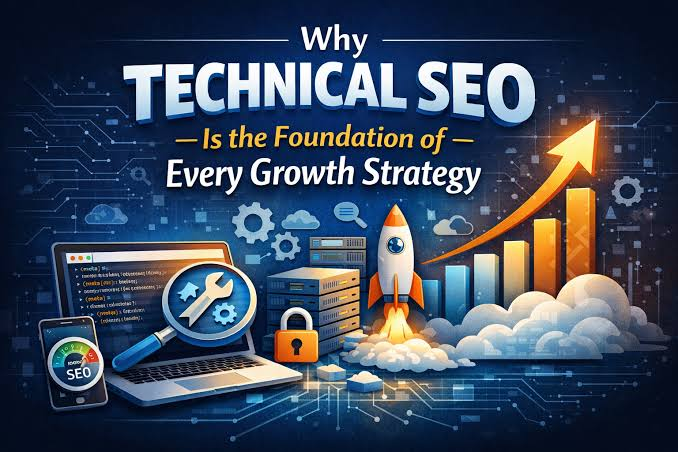
Technical SEO is the infrastructure behind a successful organic search strategy. It focuses on making sure search engines can access, crawl, understand, and process a website effectively.
Technical SEO can involve website architecture, crawlability, indexing, redirects, canonicalization, page speed, mobile usability, structured data, broken links, XML sitemaps, and many other elements.
A website can have excellent content and still struggle if important pages cannot be crawled or indexed. Similarly, a website that loads slowly or performs poorly on mobile devices can create a frustrating experience for visitors.
Technical SEO should therefore be treated as a foundation rather than an optional extra. When the technical structure is healthy, content and authority-building efforts have a stronger platform on which to work.
Website Crawlability and Indexing
Search engines need to discover website pages before they can evaluate them for potential inclusion in search results. Crawlability refers to how easily search engine systems can access those pages.
Indexing is the process through which search engines process and store information about pages. A page that is not properly indexed may not appear in search results even if its content is excellent.
Technical problems can interfere with both processes. Incorrect directives, broken links, poor architecture, accidental noindex settings, duplicate URLs, and other issues can create unnecessary obstacles.
SEO growth requires regular technical monitoring because websites change over time. New pages are added, old pages are removed, platforms are updated, and developers introduce changes. A website that was technically healthy last year may not be equally healthy today.
Website Speed and Performance
Website speed is important for both user experience and overall website quality. People are impatient online, and slow pages can create frustration before visitors even have a chance to read the content.
Improving performance may involve compressing images, optimizing scripts, reducing unnecessary code, improving caching, using efficient hosting, and addressing other technical bottlenecks.
The goal should not be to chase a perfect technical score at all costs. A website is a business tool, and functionality matters. Removing useful features simply to achieve a slightly better performance score may not always be the best decision.
Instead, SEO growth should focus on creating a fast, stable, useful experience that helps visitors complete their intended tasks.
Mobile SEO
Mobile devices have changed how people search and browse the internet. A website that works perfectly on a desktop but creates problems on a phone can lose a significant portion of its potential audience.
Mobile SEO includes responsive design, readable text, accessible navigation, appropriately sized buttons, fast loading, and usable forms.
Conversion paths deserve particular attention. If someone wants to call a business, request information, purchase a product, or complete a form, the process should be simple on a smaller screen.
A mobile-friendly website is therefore not just an SEO requirement. It is part of providing a professional customer experience.
On-Page SEO
On-page SEO involves optimizing elements directly on a webpage. This includes titles, headings, content, URLs, internal links, images, descriptions, and overall page structure.
The best on-page optimization feels natural. Visitors should never feel like they are reading text that was written primarily to satisfy a search algorithm.
A good page has a clear topic and structure. It uses relevant terminology naturally, answers important questions, provides useful context, and guides readers toward the next appropriate action.
On-page SEO should improve understanding rather than simply increase keyword frequency.
Optimizing Title Tags and Headings
Title tags are among the most important elements for communicating what a webpage is about. A strong title should accurately represent the page and give users a reason to consider clicking it.
Headings help organize the content. They allow readers to scan a page and quickly find the sections relevant to their questions.
Good headings should be descriptive rather than vague. Instead of writing “More Information,” a page might use “How SEO Growth Improves Organic Traffic” or “How to Measure SEO Growth.”
Clear structure benefits both users and search engines because it makes the topic easier to understand.
Content Quality and SEO Growth
Content remains one of the central components of SEO growth. However, the internet already contains an enormous amount of content, so simply producing more is not enough.
High-quality content should provide something useful. That might mean a better explanation, original examples, a practical framework, new research, expert insight, clearer instructions, or a more complete answer.
Content should also be written for a specific audience. A beginner and an experienced professional may search for the same topic but need very different explanations.
The strongest content strategy combines usefulness with business relevance. Each major piece of content should have a reason to exist.
Creating People-First Content
People-first content starts with the reader’s problem rather than the keyword.
Before writing an article, ask what the reader is trying to accomplish. Are they learning something? Comparing options? Looking for a service? Trying to fix a problem? Preparing to buy something?
Once that is clear, the content can be structured around the user’s needs.
This approach also improves writing quality because it encourages natural explanations instead of repetitive keyword placement.
Updating Existing Content
SEO growth is not limited to creating new pages. Existing content can represent one of the biggest opportunities on an established website.
Some pages may already rank but have outdated information. Others may receive impressions but few clicks. Some may rank near the first page but lack important information found in competing results.
Updating these pages can involve improving the introduction, adding missing sections, replacing outdated examples, strengthening internal links, improving headings, and making the content more useful.
A strong SEO growth strategy regularly evaluates existing assets instead of assuming every improvement must come from publishing something new.
Content Refresh Strategy
A content refresh should begin with data and purpose.
Look at the page’s current rankings, traffic, impressions, click-through rate, conversions, and relevance. Then compare the page with competing results.
The objective is not to change words randomly. It is to identify what could make the page more useful or better aligned with current search expectations.
Sometimes a page needs a small update. In other cases, it may need a major restructuring. The right approach depends on the situation.
Internal Linking for SEO Growth
Internal links connect pages within the same website. They are useful because they help visitors discover additional information and help search engines understand relationships between pages.
For example, an article about keyword research could link naturally to content about search intent, content strategy, SEO tools, and technical optimization.
Internal links should be relevant and useful. Adding dozens of links simply because they exist does not automatically improve a page.
A thoughtful internal linking strategy creates a connected website rather than a collection of isolated articles.
Building Website Authority
Authority is an important part of competitive SEO. Search engines need signals that help them determine which sources are trustworthy and valuable.
One way websites develop authority is by earning relevant references from other websites. These links can indicate that other publishers consider the content useful enough to mention.
However, authority is not simply a numbers game. A large quantity of irrelevant or poor-quality links does not necessarily create a stronger website.
The focus should be on building a reputation for useful content and earning relevant recognition naturally.
Link Building and SEO Growth

Link building involves acquiring links from external websites. Done properly, it can support authority and visibility.
Useful link-building strategies may involve creating original research, publishing useful resources, developing tools, contributing expert insights, building relationships with industry publications, and producing content that naturally deserves to be referenced.
The strongest links often come as a result of doing something genuinely valuable.
Aggressive tactics that focus on manipulating link signals can create long-term risks. Sustainable SEO growth should prioritize relevance and credibility.
Local SEO and Business Growth
Local SEO is especially important for businesses that serve specific geographic areas. Restaurants, clinics, contractors, consultants, retailers, agencies, and many service businesses depend on being discovered by nearby customers.
Local SEO involves more than adding a city name to a webpage. Businesses need accurate information, strong service pages, local relevance, reviews, consistent business details, and a useful online presence.
Local searches often have strong commercial intent. Someone searching for a service in a specific location may be ready to contact a provider.
That makes local SEO a powerful part of an overall growth strategy.
Google Business Profile and Local Search
A well-maintained Google Business Profile can help local businesses appear in search and map results.
Accurate business information makes it easier for customers to understand where a business operates, when it is open, and how to contact it.
Reviews can also influence customer decisions. Search visibility is only useful if customers trust what they see.
Businesses should therefore treat their local presence as an extension of their overall brand rather than a separate marketing task.
SEO Growth for E-Commerce Websites
E-commerce websites face unique SEO challenges because they often contain large numbers of pages. Product variations, filters, categories, tags, and sorting options can create complicated URL structures.
The first priority should be ensuring that important category and product pages are accessible and valuable.
Category pages should help users understand what products are available and how they differ. Product pages should contain detailed, useful information that helps customers make decisions.
E-commerce SEO also benefits from strong internal linking and careful management of duplicate or low-value pages.
SEO Growth for Service Businesses
Service businesses often depend on a combination of service pages, location pages, educational articles, and conversion-focused landing pages.
A good service page should explain the problem the business solves, describe the service clearly, communicate benefits, answer common objections, and provide a straightforward next step.
Educational content can attract visitors earlier in the customer journey.
For example, a home improvement company could publish articles about common renovation problems and connect those articles with relevant service pages.
This creates a natural path from information to commercial intent.
SEO Growth and Conversion Optimization
Getting visitors to a website is only half the job. The next challenge is encouraging them to take a meaningful action.
Conversion optimization focuses on improving that experience. Depending on the business, a conversion could be a purchase, form submission, phone call, booking, subscription, or demo request.
A high-ranking page can still be commercially weak if visitors cannot understand what to do next.
Clear calls to action, strong value propositions, useful trust signals, simple forms, and intuitive navigation can all support better conversion performance.
Measuring SEO Growth
Measurement is essential because SEO involves many moving parts.
Useful metrics can include organic clicks, impressions, rankings, click-through rates, organic conversions, leads, sales, and revenue.
The exact metrics depend on the business. An online retailer may care heavily about organic revenue, while a local service business may focus on qualified calls and form submissions.
The important thing is to connect SEO metrics with business outcomes.
SEO Growth and Google Search Console
Google Search Console provides valuable information about a website’s organic search performance.
It can reveal which queries generate impressions and clicks, which pages receive visibility, and where opportunities may exist.
For example, a page receiving thousands of impressions but relatively few clicks might have an opportunity to improve its search result presentation.
A page ranking around the bottom of the first page may also deserve attention if the topic is commercially valuable.
Data becomes useful when it leads to action.
Analytics and SEO Growth
Analytics helps businesses understand what happens after visitors arrive.
It can reveal which pages attract traffic, how users navigate through the website, which channels generate conversions, and where visitors leave.
SEO growth should connect search data with behavior data.
Ranking for a keyword is only one event in a longer customer journey. Understanding what happens after the click can reveal whether the traffic is genuinely valuable.
SEO Reporting
A good SEO report should explain more than whether traffic went up or down.
It should identify what changed, why it changed, what work was completed, what results appeared, and what should happen next.
Reports should be understandable to decision-makers who may not know every technical SEO term.
The best reporting turns data into a story about progress and priorities.
SEO Growth and Artificial Intelligence
Artificial intelligence is changing SEO workflows rapidly. AI tools can help with research, brainstorming, content organization, technical analysis, data processing, and repetitive tasks.
That does not mean AI automatically creates excellent SEO content.
AI-generated information can be incomplete, generic, outdated, or inaccurate. Human review remains important, particularly for subjects requiring expertise and factual accuracy.
The most effective approach is to use AI as an assistant rather than blindly handing over the entire SEO process.
AI-Assisted Content Creation
AI can help content teams generate outlines, identify potential questions, summarize research, brainstorm examples, and improve workflows.
However, the final content should still provide genuine value.
A website filled with generic AI-written pages can quickly become indistinguishable from thousands of competitors.
Human expertise adds context, experience, originality, judgment, and credibility.
AI should make good teams more efficient rather than make websites more generic.
Generative Search and the Future of SEO
Search is becoming more conversational. Users increasingly ask complete questions instead of typing short keyword phrases.
AI-powered search experiences can summarize information, compare sources, and provide direct answers.
This does not make SEO irrelevant. It makes high-quality information even more important.
Businesses need websites that are accessible, clearly structured, factually reliable, and genuinely useful.
The future of SEO growth will likely involve optimizing not only for traditional search results but also for broader discovery environments.
User Experience and SEO Growth
User experience has become closely connected with successful SEO.
If visitors arrive at a page and immediately encounter confusing navigation, slow loading, intrusive elements, or unclear information, they may leave.
A strong user experience makes information easy to find.
Readable text, logical headings, fast pages, mobile responsiveness, clear navigation, and helpful calls to action all contribute to a better experience.
SEO growth should therefore never treat users as an afterthought.
Building Trust Through SEO
Trust is especially important when visitors are considering spending money.
A business can build trust through clear information, transparent pricing where appropriate, customer reviews, case studies, expert authorship, useful resources, contact information, and consistent branding.
Content should also avoid exaggerated claims.
People are more likely to trust a website that acknowledges limitations and explains things honestly.
SEO can bring the visitor to the website, but trust helps create the relationship.
Competitor Analysis
Competitor analysis is a useful part of SEO growth because it shows what is already working within a market.
Look at the pages competitors rank with, the topics they cover, the formats they use, their internal linking structures, their service pages, and their strengths and weaknesses.
The goal is not to copy them.
Instead, identify opportunities to create something more useful, more specific, clearer, more current, or more comprehensive.
Competition can actually provide valuable information about what users and search engines expect.
Content Gaps
A content gap occurs when an audience needs information that a website does not adequately provide.
Competitor research can reveal some gaps, but customer conversations are equally valuable.
Sales teams, customer support teams, reviews, emails, and frequently asked questions can all reveal topics worth addressing.
Sometimes the best SEO opportunities come from questions that customers ask repeatedly.
Those questions can become articles, FAQs, guides, videos, comparison pages, or service resources.
Search Results as Market Research
Search results themselves provide clues about user expectations.
If the results for a keyword are mostly detailed guides, the query probably has informational intent.
If the results are mostly products or service pages, the intent is likely more commercial.
If local businesses dominate the results, geographic relevance matters.
Analyzing the search results before creating content can prevent a common SEO mistake: publishing the wrong type of page for the query.
SEO Growth for New Websites
New websites have the advantage of being able to build a clean structure from the beginning.
A new site should establish logical categories, simple navigation, useful URLs, strong internal linking, and a clear content hierarchy.
Technical SEO should be considered during development rather than after launch.
The content strategy should also focus on realistic opportunities rather than immediately chasing the most competitive keywords.
Building gradually can create a stronger foundation for future growth.
SEO Growth for Established Websites
Established websites often have an interesting advantage: they already possess data.
They may have pages ranking for dozens or hundreds of queries.
Those pages can reveal what the audience cares about and where opportunities exist.
Instead of publishing new content endlessly, an established website can often achieve growth by improving existing pages.
This can include updating content, improving internal links, consolidating overlapping pages, improving titles, fixing technical problems, and strengthening conversion paths.
Content Pruning
Not every page deserves to remain on a website forever.
Some pages become outdated. Others overlap with stronger pages. Some may have been created without a clear purpose.
Content pruning involves reviewing these pages and deciding whether they should be improved, combined, redirected, or removed.
The process should be careful because low traffic does not automatically mean low value.
A page may support customers, answer a niche question, or contribute to conversions even if its traffic is small.
SEO Growth and Website Architecture
Website architecture describes how pages are organized and connected.
A logical architecture helps users navigate the website and allows search engines to understand the relationship between pages.
For example, a website might organize content as:
Homepage → Services → SEO Services → Technical SEO
and:
Homepage → Resources → SEO Guides → Technical SEO Guide
The exact structure depends on the business, but important pages should not be buried several clicks deep without a good reason.
Creating an SEO Growth Strategy
A strong strategy should begin with business goals.
Before selecting keywords or planning articles, determine what the organization wants from organic search.
Does it need more sales? More leads? More local customers? More subscriptions? Greater brand visibility?
Once that objective is established, research can identify the search opportunities most likely to support it.
The strategy should then prioritize technical improvements, content opportunities, authority development, conversion optimization, and measurement.
Prioritizing SEO Tasks
SEO can produce an endless list of possible improvements.
The challenge is deciding what should happen first.
A useful framework is to consider impact, effort, confidence, and business value.
A technical issue affecting thousands of pages may deserve immediate attention. A minor heading adjustment on one low-value article probably does not.
Prioritization keeps SEO teams focused on changes that have a reasonable chance of creating meaningful results.
The SEO Growth Flywheel
SEO growth can be viewed as a flywheel.
Better research leads to better content. Better content attracts more relevant visitors. More visitors create more data. Data reveals new opportunities. New opportunities lead to further optimization.
At the same time, useful content can earn references, build brand awareness, and strengthen authority.
The more efficiently this system operates, the easier it becomes to identify and exploit future opportunities.
SEO Growth and Brand Awareness
Organic visibility can increase brand awareness even when a visitor does not immediately become a customer.
Someone might discover a company through an educational article and remember the name.
Later, they may search for the brand directly or encounter it through another marketing channel.
This makes SEO valuable for both direct response and long-term brand building.
A consistent presence around useful topics can help position a business as an authority.
SEO and Email Marketing
SEO can also support email list growth.
A visitor who discovers a useful resource may be willing to subscribe for additional information, updates, guides, or offers.
This creates a relationship that is less dependent on future search traffic.
The combination of SEO and email can be powerful because organic search brings discovery while email provides ongoing communication.
Both channels can reinforce each other.
SEO and Paid Advertising
Paid advertising and SEO are not necessarily competing strategies.
PPC can provide immediate visibility and useful data, while SEO can build long-term organic presence.
Paid search data can reveal valuable keywords and messaging.
Organic data can also reveal which topics deserve paid promotion.
Businesses with the resources to use both channels can create a more diversified acquisition strategy.
How Long Does SEO Growth Take?
SEO timelines vary considerably.
A new website in a competitive industry may require substantial time to establish authority.
An established website with strong content may see quicker improvements after technical problems are fixed or existing pages are optimized.
Competition, website history, content quality, authority, implementation speed, and search demand all affect results.
The safest expectation is that SEO growth is a long-term process.
Common SEO Growth Mistakes
One major mistake is focusing entirely on rankings.
Another is targeting keywords simply because they have high search volume.
Businesses also make mistakes by publishing thin content, ignoring technical SEO, neglecting mobile users, failing to track conversions, and creating pages that do not match search intent.
Some websites also spend too much time acquiring links while neglecting their actual content and user experience.
The solution is balance.
Keyword Stuffing
Keyword stuffing means using keywords excessively or unnaturally in an attempt to influence rankings.
It can make content difficult to read and may reduce trust.
Modern SEO content should use terminology naturally.
If a keyword belongs in the article, it should appear where it makes sense.
The goal is to communicate clearly, not to repeat the same phrase every few sentences.
Thin Content
Thin content provides little useful information.
It might consist of a few generic paragraphs that say what dozens of other websites already say.
Creating large quantities of thin pages can make a website look active without actually making it more valuable.
SEO growth should prioritize depth and usefulness over volume.
Sometimes one excellent guide is more valuable than ten weak articles.
Measuring SEO Return on Investment
SEO investment should eventually connect to financial outcomes.
For ecommerce businesses, this may involve organic revenue.
For service companies, it could mean qualified leads and the revenue generated from them.
For publishers, it may involve subscriptions, memberships, or advertising value.
The exact calculation depends on the business model, but the principle is consistent: measure what matters.
Creating an SEO Content Calendar
A content calendar helps organize SEO efforts around business priorities.
Instead of choosing topics randomly, the team can plan content around customer questions, product launches, seasonal trends, commercial priorities, and keyword opportunities.
A balanced calendar may include pillar guides, supporting articles, comparison pages, service pages, case studies, FAQs, and content refreshes.
Consistency is more important than publishing at an unrealistic pace.
Evergreen Content
Evergreen content remains useful over a long period.
Examples include tutorials, definitions, beginner guides, checklists, and fundamental explanations.
Evergreen content can create a stable foundation for organic growth.
However, even evergreen pages should be reviewed occasionally because examples, tools, standards, and best practices can change.
Trending Content
Trending content addresses topics experiencing temporary or current interest.
It can help businesses participate in industry conversations and attract short-term search demand.
However, trending content should be relevant to the audience and brand.
Publishing random news simply because it is popular may attract visitors who have no connection to the business.
Expertise and SEO Growth
Expertise adds something generic content often lacks: real understanding.
An expert can explain why a strategy works, when it should not be used, what mistakes commonly happen, and how to adapt the approach to different situations.
This creates richer content.
Expertise does not require complicated language. In many cases, the strongest expert writing is clear, direct, and practical.
Building a Sustainable SEO Workflow
A sustainable SEO workflow might include research, auditing, prioritization, implementation, measurement, and refinement.
Research identifies opportunities.
Auditing reveals problems.
Prioritization determines which actions matter most.
Implementation turns the strategy into reality.
Measurement reveals results.
Refinement improves the next round of work.
This creates a continuous process rather than a one-time campaign.
Data-Driven SEO Growth
Data should guide SEO decisions, but data should not replace judgment.
Traffic fluctuations can happen for many reasons.
A ranking change does not automatically mean something went wrong.
A good SEO team looks for patterns across multiple metrics before deciding what action to take.
The goal is to use data to make better decisions rather than reacting emotionally to every change.
SEO Growth and Customer Experience
SEO should ultimately improve the customer’s experience.
When someone searches for a solution, they expect the result to provide a useful answer.
If the website delivers that answer clearly, the visitor is more likely to continue exploring.
This means SEO, content, design, navigation, and conversion optimization should work together.
A search visitor should not feel like they have been tricked into clicking a result.
Trust and Credibility
Trust can influence whether a visitor becomes a customer.
Clear business information, accurate content, reviews, case studies, transparent explanations, and professional presentation all contribute to credibility.
A website that makes exaggerated promises may attract clicks but struggle to build lasting relationships.
Sustainable SEO growth depends on building a reputation that extends beyond search rankings.
Choosing an SEO Agency
Businesses considering professional SEO support should evaluate agencies carefully.
Look for clear explanations of the strategy, realistic expectations, transparent reporting, and evidence of relevant experience.
Be cautious with providers that promise guaranteed first-place rankings or claim to have secret methods that search engines cannot detect.
A professional SEO provider should be able to explain what it plans to do and why.
The business should also understand how success will be measured.
SEO Growth for Small Businesses
Small businesses often have limited resources, so prioritization is especially important.
Instead of trying to rank for every possible keyword, a small business can focus on its strongest products, services, locations, and customer problems.
Long-tail searches can provide realistic opportunities.
Local SEO can also be extremely valuable when customers are geographically concentrated.
The key is to focus resources where they can create the greatest business impact.
SEO Growth for Startups
Startups often need to balance speed with long-term strategy.
SEO can help build a sustainable acquisition channel, but startups should not expect organic traffic to appear instantly.
Early-stage SEO should focus on creating a strong technical foundation, understanding the audience, building useful content, and targeting opportunities where the company can realistically compete.
As authority grows, the keyword strategy can become more ambitious.
SEO Growth for Large Websites
Large websites face different challenges.
They may have thousands or millions of URLs, complex technical structures, multiple teams, and significant amounts of historical content.
Small technical problems can become large problems when they affect thousands of pages.
Large websites therefore need strong governance, automated monitoring, clear architecture, and consistent SEO standards.
The Role of Continuous Improvement
SEO growth is rarely about finding one magical tactic.
It is about continuously improving the system.
A better title can improve clicks.
Better content can improve rankings.
Better internal links can improve discovery.
A faster page can improve the experience.
A clearer call to action can improve conversions.
Individually, these changes may appear small. Collectively, they can create significant growth.
The Future of SEO Growth
The future of SEO will likely involve a broader understanding of search and discovery.
Search engines are becoming more capable of understanding topics, context, entities, intent, and user needs.
AI-driven interfaces are changing how people ask questions and consume answers.
This means businesses should focus increasingly on becoming genuinely useful rather than trying to exploit individual ranking tricks.
Strong fundamentals will remain important: accessible websites, valuable information, technical quality, credibility, and a clear understanding of the audience.
Final Thoughts on SEO Growth
SEO growth is not simply about increasing the number of keywords a website ranks for. It is about building a stronger organic presence that contributes to long-term business performance.
The process begins with understanding the audience and the questions they ask. Keyword research identifies opportunities, while search-intent analysis helps determine what those users actually need. Technical SEO creates the foundation, content provides value, internal links connect the website, and authority signals strengthen credibility.
Conversion optimization then turns organic visitors into leads, customers, subscribers, or other meaningful outcomes.
The strongest SEO growth strategies also recognize that the search landscape never stays still. Algorithms evolve, competitors improve, customer behavior changes, and new technologies reshape discovery. Businesses therefore need a flexible approach based on useful content, technical excellence, strong user experience, and continuous measurement.
Most importantly, SEO growth should be treated as a long-term investment. Quick tricks may create temporary results, but sustainable growth comes from building something genuinely valuable.
A website that consistently answers questions, solves problems, demonstrates expertise, provides a good user experience, and makes it easy for visitors to take the next step has a strong foundation for organic success.
That is the real meaning of SEO growth: creating a search presence that becomes more useful, more visible, more trusted, and more valuable over time.
Frequently Asked Questions About SEO Growth
What is SEO growth?
SEO growth is the process of improving a website’s organic visibility, traffic, authority, and business performance through search engine optimization.
It combines technical SEO, content, keyword research, search intent, internal linking, authority development, user experience, and conversion optimization.
Why is SEO growth important?
SEO growth can help businesses attract relevant visitors without relying entirely on paid advertising.
When implemented correctly, organic search can become a long-term customer acquisition channel.
How is SEO growth different from traditional SEO?
Traditional SEO often focuses heavily on rankings and traffic. SEO growth connects those metrics with broader business outcomes such as leads, sales, revenue, and customer acquisition.
How long does SEO growth take?
There is no universal timeline. Results depend on competition, website authority, technical condition, content quality, implementation speed, and search demand.
SEO is generally a long-term strategy rather than an overnight solution.
Does keyword research still matter?
Yes. Keyword research helps businesses understand what potential customers search for.
However, modern keyword research should consider intent, relevance, competition, and business value rather than search volume alone.
What is search intent?
Search intent is the reason a person conducts a particular search.
Understanding intent helps marketers create the correct type of page for the user’s needs.
Is technical SEO important?
Yes. Technical SEO ensures that search engines can access, crawl, understand, and process a website effectively.
It also contributes to website performance and user experience.
Does content still matter for SEO growth?
Absolutely. Useful, relevant, accurate, and well-structured content remains a major part of organic search strategy.
The focus should be on quality and usefulness rather than publishing as much content as possible.
Are backlinks still important?
Relevant backlinks can contribute to a website’s authority and visibility.
However, quality and relevance are more important than simply accumulating large numbers of links.
Is local SEO part of SEO growth?
Yes. Local SEO can be especially valuable for businesses that serve particular cities, regions, or communities.
It helps businesses become more visible to people searching for relevant services in their area.
Can AI help with SEO?
AI can help with research, brainstorming, analysis, organization, and repetitive tasks.
However, human oversight remains important for accuracy, expertise, originality, and strategic decision-making.
What is the biggest SEO mistake?
One of the biggest mistakes is focusing on rankings without considering whether the traffic contributes to business goals.
Other common mistakes include thin content, poor technical foundations, keyword stuffing, weak conversion paths, and ignoring search intent.
Should businesses focus on traffic or conversions?
Ideally, both should be considered, but conversions and business outcomes usually matter more than raw traffic.
A smaller amount of highly relevant traffic can be more valuable than a large amount of irrelevant traffic.
Can old content help SEO growth?
Yes. Existing content can often provide significant opportunities for improvement.
Updating outdated information, improving structure, strengthening internal links, and matching current search intent can improve the value of existing pages.
What makes an SEO strategy successful?
A successful strategy combines clear business goals, audience research, keyword research, search-intent analysis, technical SEO, high-quality content, authority development, conversion optimization, and consistent measurement.
Is SEO a one-time project?
No. SEO is best treated as an ongoing process.
Websites, competitors, search behavior, and search technologies continue to change, so successful SEO strategies require continuous improvement.
Conclusion
SEO growth is ultimately about building momentum.
A website starts with a technical foundation. It then develops useful content, targets meaningful search opportunities, builds authority, improves the user experience, and measures what happens. Each improvement creates information that can guide the next improvement.
That is why successful SEO rarely comes from one isolated tactic. It comes from connecting many activities into one coherent system.
Businesses that approach SEO this way can build a stronger organic presence while creating something valuable for the people they want to reach.