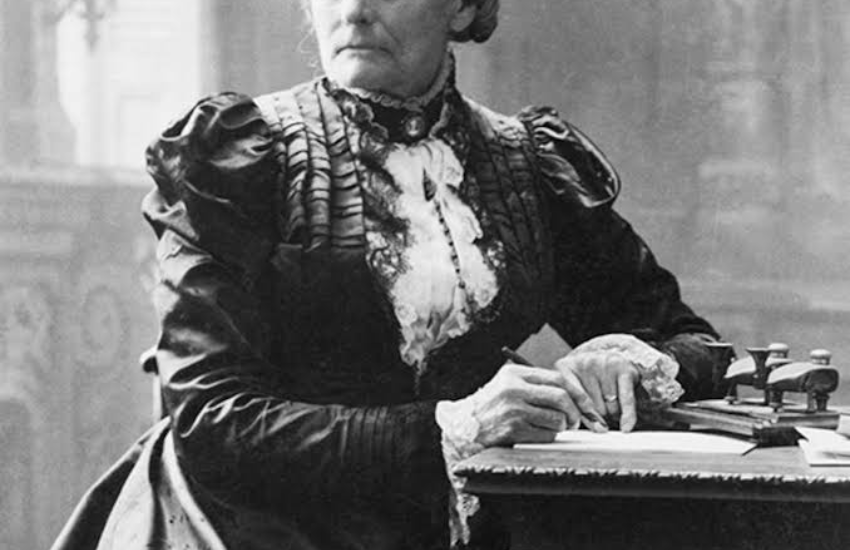
Introduction
Susan B. Anthony was one of the most influential figures in American history and a leading voice in the fight for women’s rights. She dedicated much of her life to challenging unfair laws, promoting equal opportunities, and demanding that women receive the same political rights as men. Her determination, courage, and commitment to equality helped shape the women’s suffrage movement in the United States.
Born on February 15, 1820, Susan B. Anthony grew up in a period when women had very limited legal, social, and political rights. In the nineteenth century, women could not vote in most elections, had fewer educational opportunities, and often faced restrictions when it came to owning property, earning money, and making independent decisions. Anthony recognized these inequalities early in life and became determined to help change the system.
Although she did not live long enough to see the United States adopt the constitutional amendment guaranteeing women the right to vote, her work played an important role in making that achievement possible. She organized campaigns, delivered speeches, traveled across the country, and worked alongside other reformers to build support for women’s suffrage.
Today, Susan B. Anthony is remembered as a symbol of persistence, equality, and social reform. Her story is not simply about one woman’s political ambitions. It is about the power of ordinary citizens to challenge established systems and work toward a fairer society. Let’s go through her life, achievements, challenges, and lasting influence in detail.
Who Was Susan B. Anthony?
Susan B. Anthony was an American social reformer, women’s rights activist, and abolitionist who became one of the most recognizable leaders of the nineteenth-century women’s suffrage movement. She believed that women deserved the same fundamental rights as men, particularly the right to participate in political decisions through voting.
Anthony was not someone who simply supported reform from a distance. She actively participated in public campaigns and spent decades encouraging Americans to reconsider the laws and traditions that limited women’s independence. Her work included organizing conventions, speaking at public gatherings, circulating petitions, and building relationships with other activists.
One of her most important contributions was helping establish a nationwide movement for women’s voting rights. She understood that changing public opinion required consistent effort, strong organization, and cooperation among people who shared a common goal. Her partnership with fellow reformer Elizabeth Cady Stanton became especially important to the development of the movement.
Susan B. Anthony’s influence extended beyond voting rights. She also supported educational opportunities for women, equal pay for equal work, and broader social reforms. Her dedication helped establish a foundation for later generations of activists who continued working toward gender equality.
Early Life and Family Background
Susan Brownell Anthony was born on February 15, 1820, in Adams, Massachusetts. She was the second of seven children born to Daniel Anthony and Lucy Read Anthony. Her family valued education, independence, hard work, and religious principles. These values played an important role in shaping her personality and future involvement in social reform.
Her father, Daniel Anthony, was a successful businessman who operated a cotton mill. He was also a supporter of abolitionism, the movement dedicated to ending slavery in the United States. Her mother, Lucy, supported the family’s educational and religious values. Growing up in a household where social issues were openly discussed helped Susan develop an early interest in fairness and justice.
The Anthony family later moved to Battenville, New York, where Susan spent much of her childhood. Her parents encouraged their children to think independently and develop useful skills. Unlike many families of that period, the Anthonys believed that girls deserved educational opportunities comparable to those offered to boys.
Susan’s childhood experiences exposed her to the unequal treatment of women. She noticed that women frequently received fewer opportunities, even when they possessed the same abilities as men. These observations gradually influenced her understanding of social inequality and encouraged her to question traditional expectations.
Education and Early Interest in Equality
Education played a major role in Susan B. Anthony’s development. Her family believed that learning was essential for personal independence, and Susan received educational opportunities that were not commonly available to many girls during the nineteenth century.
She attended a school established by her father and later studied at a boarding school operated by the Society of Friends near Philadelphia. There, she learned subjects including mathematics, literature, philosophy, science, and other academic disciplines. Her education helped her become a confident communicator and developed the intellectual skills she would eventually use in public activism.
Financial difficulties affected her family’s circumstances during the economic depression of 1837. As a result, Susan’s formal education was interrupted, and she had to begin working at a relatively young age. Although these circumstances created difficulties, they also introduced her to the realities of employment and economic inequality.
Her experiences as a student and young worker strengthened her belief that women deserved access to education and professional opportunities. She understood that education was not simply about gaining knowledge. It was also about giving people the confidence and independence necessary to make their own decisions.
Susan B. Anthony’s Teaching Career
Before becoming a full-time reformer, Susan B. Anthony worked as a teacher. She began teaching in New York and eventually became headmistress of the female department at Canajoharie Academy. Teaching provided her with practical experience and helped her understand the limitations placed on working women.
During this period, female teachers frequently earned considerably less than male teachers, even when they performed similar responsibilities. Anthony recognized that this unequal treatment reflected a much larger social problem. Women were expected to contribute to society, but their professional abilities were often undervalued.
She became increasingly interested in improving conditions for women working in education. She believed female teachers deserved fair compensation, professional respect, and opportunities for advancement. These concerns helped transform her personal observations into a broader commitment to reform.
Anthony eventually became involved in the teachers’ rights movement and attended educational conventions. At some gatherings, women were treated as less important participants than men. Such experiences strengthened her determination to challenge gender discrimination through organized activism.
Religious Beliefs and Quaker Influence
Susan B. Anthony was raised in the Quaker tradition, which had a significant influence on her understanding of equality and social responsibility. Quakers emphasized the spiritual equality of individuals and encouraged members to recognize the dignity of every human being.
This religious environment helped Anthony develop strong principles concerning fairness and justice. She learned to question practices that treated people as inferior because of their circumstances or social position. Her family’s religious beliefs also encouraged education, moral responsibility, and active participation in community affairs.
The Quaker tradition had a long history of involvement in reform movements, including abolitionism and efforts to improve the treatment of women. Anthony’s upbringing therefore placed her in an environment where questioning injustice was considered an important responsibility.
Although her activism eventually extended far beyond religious activities, the principles she learned during childhood remained important throughout her life. Her belief in equality became a central foundation for her work in the abolitionist and women’s rights movements.
Susan B. Anthony and the Abolitionist Movement
Before becoming widely known for women’s suffrage, Susan B. Anthony was actively involved in the abolitionist movement. Abolitionists believed slavery was morally wrong and worked to end the forced labor and exploitation of enslaved African Americans.
Anthony’s family supported the anti-slavery cause, and their home in Rochester, New York, became a gathering place for reformers. Several prominent abolitionists visited the area, including Frederick Douglass, who became an important ally and friend of Anthony.
In 1856, Anthony became an agent for the American Anti-Slavery Society. Her responsibilities included delivering speeches, organizing public meetings, distributing educational materials, and encouraging communities to oppose slavery. This work required considerable courage because abolitionists frequently encountered public hostility and threats.
Her involvement in abolitionism helped her develop the organizational and communication skills that later became essential to the women’s suffrage movement. She learned how to build public support, organize campaigns, and challenge powerful political interests.
Working With Other Abolitionists
Anthony worked alongside several influential reformers who shared her opposition to slavery. Frederick Douglass was particularly important because he believed in both racial justice and women’s rights. Their cooperation demonstrated that different reform movements could support common goals.
However, the relationship between abolitionism and women’s suffrage was not always straightforward. Reformers sometimes disagreed about which constitutional changes should receive priority, especially after the Civil War.
Anthony believed that freedom and political equality should not be limited to one group. She supported efforts to end slavery and wanted women to receive equal political recognition. Her activism reflected the growing belief that democratic rights should apply more broadly.
The Women’s Loyal National League
During the Civil War, Anthony and Elizabeth Cady Stanton helped establish the Women’s Loyal National League in 1863. The organization collected petitions supporting a constitutional amendment to abolish slavery.
The campaign attracted substantial public participation and demonstrated that women could organize large-scale political efforts despite being excluded from voting. The league’s petitioning activities contributed to the broader movement supporting the Thirteenth Amendment.
The amendment was ratified in 1865 and abolished slavery throughout the United States. Although the end of slavery represented an important victory, Anthony continued to believe that American democracy remained incomplete while women were denied voting rights.
Meeting Elizabeth Cady Stanton
American Women’s Suffrage Came Down to One Man’s Vote | HISTORY
One of the most important moments in Susan B. Anthony’s life occurred in 1851, when she met Elizabeth Cady Stanton. Stanton was already an established women’s rights advocate who had helped organize the historic Seneca Falls Convention in 1848.
The two women quickly developed a strong friendship and professional partnership. Although they had different personalities and strengths, their shared commitment to women’s equality made them an effective team. Their collaboration continued for decades and became one of the most influential partnerships in American reform history.
Stanton was particularly skilled at writing speeches, developing arguments, and creating political strategies. Anthony excelled at organizing campaigns, traveling, speaking publicly, and managing practical responsibilities. Together, they combined intellectual leadership with effective public activism.
Their partnership helped transform women’s rights from a relatively small reform issue into a national political movement. They worked together on speeches, petitions, publications, conventions, and organizational campaigns that challenged the legal and social restrictions imposed on women.
Why Their Partnership Was Important
Stanton and Anthony understood that achieving women’s equality required more than individual protests. They needed organized communities, public education, political pressure, and long-term planning.
Stanton frequently wrote about the legal inequalities experienced by married women, including restrictions involving property ownership, financial independence, and divorce. Anthony helped bring these arguments to public audiences and encouraged women to support legislative reform.
Their cooperation also demonstrated that successful social movements benefit from people with different talents. Stanton’s writing and Anthony’s organizational abilities complemented each other, allowing them to accomplish work that would have been more difficult individually.
Although they sometimes disagreed with other reformers, their partnership remained central to the women’s suffrage movement. Their decades of collaboration helped preserve the movement’s history and establish a foundation for future generations.
Susan B. Anthony’s Role in the Women’s Rights Movement
Susan B. Anthony gradually became one of the most recognizable leaders of the American women’s rights movement. She believed women should have the same legal, economic, educational, and political opportunities as men.
Her activism covered several interconnected issues. She supported women’s property rights, equal pay, better working conditions, educational access, and the ability to participate in political decisions. She understood that voting rights were especially important because they would allow women to influence the laws affecting their everyday lives.
During the 1850s, Anthony traveled extensively throughout New York and other states. She attended conventions, delivered speeches, gathered signatures, and encouraged women to demand legal reforms. Her willingness to speak publicly challenged traditional expectations about women’s roles.
She also faced considerable opposition. Some people believed women should remain outside political debates, while others argued that existing social arrangements were natural and should not change. Anthony refused to accept these arguments and continued campaigning.
Campaigning for Married Women’s Property Rights
During the nineteenth century, married women in many American states faced serious legal restrictions concerning their property and income. Under traditional legal principles, a married woman’s independent legal identity could be significantly limited after marriage.
Anthony considered these restrictions unfair because they prevented women from exercising control over important aspects of their lives. She supported legislative campaigns that would allow married women to own property, retain their earnings, and enjoy greater legal independence.
She helped circulate petitions and organize public support for changes to New York’s property laws. These campaigns were important because they addressed practical problems affecting women’s financial security.
Property rights were also connected to the larger suffrage campaign. Anthony believed that women could not enjoy full independence while laws affecting their lives were made without their political participation.
Supporting Equal Educational Opportunities
Anthony strongly believed that education should not be restricted by gender or race. She understood that educational inequality limited employment opportunities and reinforced traditional assumptions about women’s abilities.
She encouraged schools and educational institutions to provide women with greater access to academic programs. She also supported the professional development of female teachers and opposed discriminatory employment practices.
Her efforts helped strengthen public discussions about the relationship between education and equality. She wanted women to have the freedom to develop their talents rather than being restricted by outdated expectations.
This commitment remained part of her broader reform philosophy throughout her life. She believed that a more equal society required meaningful opportunities for people to learn, work, and participate in public affairs.
The American Equal Rights Association
In 1866, Susan B. Anthony and Elizabeth Cady Stanton helped establish the American Equal Rights Association. The organization promoted equal rights for all citizens, regardless of race or sex. Its formation reflected the belief that American democracy should provide meaningful political opportunities to everyone.
The association brought together abolitionists and women’s rights advocates who wanted to expand voting rights. Members organized meetings, circulated petitions, and encouraged lawmakers to recognize the political rights of previously excluded groups.
However, disagreements emerged as the country debated the Fourteenth and Fifteenth Amendments. Some activists believed securing voting rights for Black men was the most urgent priority, while Anthony and Stanton wanted women included in the constitutional changes as well.
These disagreements eventually contributed to divisions within the reform movement. Although the association did not remain united, its work helped bring important questions about citizenship, race, and gender into national political discussions.
The Revolution Newspaper
In 1868, Susan B. Anthony and Elizabeth Cady Stanton became involved in publishing a newspaper called The Revolution. Its purpose was to promote women’s rights and provide a platform for discussions about social and political reform.
The publication covered topics such as voting rights, equal pay, education, marriage, divorce, employment, and women’s legal independence. It provided readers with information about issues that were frequently ignored by mainstream newspapers.
Anthony took responsibility for many practical aspects of the publication. She helped manage subscriptions, arrange printing, seek financial support, and distribute copies. Her involvement demonstrated that she was not only a public speaker but also a capable organizer who understood the importance of communication.
Although the newspaper eventually stopped publishing in its original form, it made an important contribution to the women’s rights movement. It helped spread reform ideas and gave supporters a place to discuss their concerns.
Founding the National Woman Suffrage Association
In 1869, Susan B. Anthony and Elizabeth Cady Stanton founded the National Woman Suffrage Association, commonly known as the NWSA. The organization focused on securing a constitutional amendment that would guarantee women the right to vote.
The creation of the association followed disagreements among reformers concerning the Fifteenth Amendment. That amendment prohibited denying voting rights on the basis of race, color, or previous condition of servitude, but it did not prohibit discrimination based on sex.
Anthony and Stanton believed that women should not be excluded from the expansion of voting rights. They argued that political equality should apply to women as well as men.
The NWSA became an important organization in the national suffrage campaign. It organized conventions, promoted petitions, challenged discriminatory laws, and encouraged women to demand constitutional recognition.
It is also important to understand the limitations of Anthony’s approach. Although she had worked against slavery and supported abolition, she and Stanton sometimes used racially exclusionary arguments during their opposition to the Fifteenth Amendment. Their positions reflected serious racial tensions within the broader suffrage movement, and their record should be examined honestly rather than presented as entirely inclusive.
The Fifteenth Amendment and the Suffrage Debate
The Fifteenth Amendment was ratified in 1870 and prohibited federal and state governments from denying voting rights because of race, color, or previous condition of servitude. It represented an important development in the political rights of African American men.
However, women remained excluded from constitutional voting protections. This created disagreements among activists who had previously worked together against slavery and discrimination.
Susan B. Anthony and Elizabeth Cady Stanton wanted a constitutional amendment that explicitly protected women’s voting rights. Other reformers, including Lucy Stone and Frederick Douglass, supported the Fifteenth Amendment because they believed securing voting rights for Black men was an urgent step forward.
The disagreement caused a division within the movement. Anthony continued leading the National Woman Suffrage Association, while supporters of a different strategy organized the American Woman Suffrage Association.
Although the two organizations eventually reunited, their separation illustrated the complicated relationship between racial justice and women’s political equality during the nineteenth century.
Susan B. Anthony’s Historic Vote in 1872
One of the most famous events in Susan B. Anthony’s life occurred on November 5, 1872. Despite women being excluded from voting under the laws of the time, Anthony decided to register and cast a ballot in the presidential election.
She believed the Fourteenth Amendment’s citizenship and equal protection provisions supported her argument that women should be allowed to vote. Several other women joined her effort in Rochester, New York.
Anthony successfully cast her ballot in the election. Her decision was a deliberate act of civil disobedience intended to challenge the legal restrictions imposed on women.
Her vote attracted national attention and became a major moment in the history of the suffrage movement. Rather than quietly accepting the existing system, Anthony used her own actions to create a public debate about citizenship and voting rights.
Why Did Susan B. Anthony Vote?
Anthony believed that women were citizens of the United States and should therefore enjoy the rights associated with citizenship. She argued that excluding women from elections contradicted the principles of a democratic government.
She also understood that a public legal challenge could attract attention to the issue of women’s suffrage. By attempting to vote, she forced authorities and the wider public to address an important constitutional question.
Her decision was not simply a personal political statement. It was part of a larger strategy to demonstrate that women were prepared to exercise the rights they believed they already possessed.
The incident eventually led to her arrest and a highly publicized trial. Although the legal outcome did not support her position, the event became an important chapter in the campaign for voting equality.
The Arrest and Trial of Susan B. Anthony
Susan B. Anthony, 1873: The $100 Vote That Mattered
Following her participation in the 1872 election, Susan B. Anthony was arrested for voting illegally. Federal authorities argued that she had violated election laws by casting a ballot despite being legally excluded from voting.
Anthony did not attempt to hide from the legal consequences. Instead, she welcomed the opportunity to challenge the restrictions in court. She believed that the trial would provide a platform to explain why women deserved voting rights.
Her case attracted considerable public attention. Supporters viewed her as a courageous reformer, while opponents considered her actions a violation of existing law. Newspapers covered the proceedings, helping bring women’s suffrage into national conversations.
In June 1873, Anthony was found guilty. The judge imposed a fine of $100 along with court costs. Anthony refused to pay the fine, maintaining that she had committed no moral wrongdoing by attempting to exercise her rights.
The Importance of the Trial
The trial was important because it exposed the difference between citizenship and voting rights under American law. Anthony argued that being a citizen should include the ability to participate in elections, but the courts did not accept that interpretation.
The Supreme Court later addressed a related question in the 1875 case Minor v. Happersett. The Court recognized that women were citizens but concluded that citizenship did not automatically guarantee the right to vote.
This decision demonstrated that constitutional arguments alone would not immediately secure women’s suffrage. Activists would need to continue organizing and pressuring lawmakers to change the law.
Although Anthony did not win her legal challenge, the trial increased public awareness of women’s political exclusion. It became a powerful example of how peaceful resistance could draw attention to an unjust system.
Susan B. Anthony’s Work Beyond Voting Rights
Although Susan B. Anthony is most closely associated with women’s suffrage, her activism involved several other important social issues. She believed that genuine equality required improvements in education, employment, family law, and economic opportunities.
She supported working women who wanted better wages and fair treatment. She also recognized that women from working-class backgrounds often faced difficulties that wealthy reformers did not experience in the same way.
Anthony helped establish organizations that addressed women’s employment conditions and encouraged public discussions about economic independence. Her work showed that women’s rights were connected to everyday experiences, not simply political debates.
She also supported reforms involving marriage and property ownership. Her position was that women should have greater control over their financial resources and legal identities.
These activities demonstrate that Anthony’s reform philosophy was broader than the single issue of voting. She wanted women to participate fully in society and enjoy opportunities to make decisions about their own lives.
The History of Woman Suffrage
Another major contribution of Susan B. Anthony was her work documenting the history of the women’s rights movement. She understood that important achievements could be forgotten if nobody preserved the stories, speeches, documents, and experiences of the people involved.
During the late nineteenth century, Anthony worked with Elizabeth Cady Stanton and Matilda Joslyn Gage to produce History of Woman Suffrage. The project documented conventions, political campaigns, speeches, organizational developments, and the contributions of numerous activists.
The first volume appeared in 1881, followed by additional volumes over the following years. The collection became an important historical record of the movement.
Anthony recognized that future generations would need access to accurate accounts of the struggle for equality. Her documentation efforts helped preserve information about activists whose contributions might otherwise have received little attention.
The publication remains historically valuable because it provides insight into the development of women’s rights activism and the challenges reformers faced.
The National American Woman Suffrage Association
In 1890, the National Woman Suffrage Association and the American Woman Suffrage Association reunited to form the National American Woman Suffrage Association, commonly known as NAWSA.
The merger brought together two major groups that had previously followed different strategies. Their cooperation strengthened the national campaign and allowed activists to coordinate their efforts more effectively.
Susan B. Anthony played a central role in the organization and became its president in 1892. She continued supporting campaigns, attending conventions, and encouraging younger activists to remain committed to the cause.
The organization worked to secure voting rights through state-level campaigns and efforts to achieve a federal constitutional amendment. Its activities helped create a more organized national movement.
Anthony’s leadership during this period demonstrated her ability to adapt. She had spent decades fighting for women’s rights, but she also understood that the movement needed new leaders and fresh strategies to continue making progress.
International Influence and Women’s Rights
Susan B. Anthony’s influence eventually extended beyond the United States. She believed women’s equality was an international issue and that activists in different countries could learn from one another.
In 1888, she participated in the founding of the International Council of Women. The organization provided an opportunity for women’s rights advocates from different nations to cooperate and discuss common concerns.
She also supported international suffrage organizing and helped establish connections among activists working toward political equality. Her involvement reflected the growing recognition that women’s rights were not limited to one country’s political system.
In 1904, Anthony and other reformers helped establish the International Woman Suffrage Alliance. This organization strengthened international cooperation among those campaigning for women’s voting rights.
Her international activities demonstrated that she viewed equality as a universal principle. She believed women everywhere deserved opportunities to participate in public life and influence the decisions affecting their communities.
Susan B. Anthony’s Personal Life and Decision Not to Marry
Susan B. Anthony never married or had children. Instead, she devoted much of her adult life to public activism and the women’s rights movement. Her decision allowed her to travel extensively, attend conventions, organize campaigns, and spend long periods away from home.
During the nineteenth century, marriage often placed significant legal and social restrictions on women. Married women could face limitations concerning property, income, and independent decision-making. Anthony believed women should have the freedom to choose their own paths rather than being forced into traditional roles.
Her personal life was closely connected to her professional responsibilities. She developed lasting friendships with fellow activists and built a network of people who supported her work. Her partnership with Elizabeth Cady Stanton was particularly important because it provided both personal companionship and a shared commitment to reform.
Anthony’s decision not to marry should not be interpreted as a rejection of personal relationships. Rather, it reflected the way she organized her life around her principles and responsibilities. She wanted women to have the freedom to make their own choices about marriage, work, education, and independence.
Challenges Susan B. Anthony Faced
Susan B. Anthony’s career was filled with challenges. She worked in a society where women were frequently discouraged from participating in politics, public speaking, and organized reform movements.
One of her greatest difficulties was public opposition. Many Americans believed political participation was naturally a male responsibility. Women who challenged this expectation were sometimes mocked, criticized, or treated as troublemakers.
Financial challenges also affected her work. Organizing conventions, publishing newspapers, traveling, and distributing educational materials required significant resources. Anthony frequently had to find supporters and manage expenses to keep her campaigns operating.
Another challenge was disagreement within the women’s rights movement itself. Activists did not always agree about priorities, political strategies, or the relationship between racial equality and women’s suffrage. These disagreements sometimes weakened cooperation and created organizational divisions.
Despite these obstacles, Anthony continued her work for more than five decades. Her ability to remain active through changing political circumstances demonstrated remarkable persistence and dedication.
Susan B. Anthony’s Final Years
During her later years, Susan B. Anthony remained committed to women’s suffrage. Although she gradually reduced some of her organizational responsibilities, she continued attending meetings, supporting campaigns, and encouraging younger activists.
She understood that the movement needed to continue growing if it was going to achieve a constitutional amendment. Her experience made her a respected figure among both established reformers and younger campaigners.
In 1900, Anthony retired as president of the National American Woman Suffrage Association. Carrie Chapman Catt succeeded her and continued working toward national voting rights. Anthony supported the development of younger leadership because she understood that the movement’s future depended on more than one individual.
In 1905, she met with President Theodore Roosevelt to discuss the possibility of advancing a federal women’s suffrage amendment. Even in her eighties, she remained interested in political developments and continued advocating for constitutional change.
She celebrated her 86th birthday in February 1906 and delivered remarks emphasizing her belief that the women’s rights movement would eventually succeed. Her famous words, “Failure is Impossible,” captured the confidence she maintained after decades of setbacks.
Susan B. Anthony died on March 13, 1906, in Rochester, New York. She was 86 years old and did not live to see women gain the nationwide constitutional right to vote.
The Nineteenth Amendment and Susan B. Anthony’s Legacy
31 fotos muestran cómo era la vida de las mujeres hace 100 años
One of the most important developments connected to Susan B. Anthony’s legacy was the ratification of the Nineteenth Amendment in 1920. The amendment prohibited federal and state governments from denying the right to vote on the basis of sex.
It was a historic achievement for the American women’s suffrage movement. After decades of campaigning, women gained constitutional protection against voting discrimination based on sex.
Anthony had died fourteen years before the amendment became law. Nevertheless, her work had helped build the organizations, public awareness, and political pressure that contributed to the achievement.
The amendment became widely associated with her name and is often called the Susan B. Anthony Amendment. This informal name recognizes her long-standing contribution to the struggle for voting equality.
However, the amendment did not immediately guarantee that every woman could vote in practice. Many women of color, particularly Black, Native American, Asian American, and Latina women, continued facing discriminatory laws and barriers. Additional civil rights struggles were necessary to make voting access more meaningful and widely available.
Anthony’s legacy is therefore an important part of a much larger history involving many activists whose contributions helped expand democratic participation.
Susan B. Anthony’s Impact on Modern Society
Susan B. Anthony’s influence continues to appear in discussions about equality, political participation, and civil rights. Her life demonstrates how organized activism can challenge laws and traditions that have existed for generations.
Today, women participate in elections, hold public office, lead businesses, work in professional fields, and influence political decisions. These opportunities developed through many social and political changes, including the efforts of nineteenth- and twentieth-century reformers.
Anthony’s work also provides an example of the importance of public participation. She showed that people do not need to hold political office to influence national discussions. Through speeches, petitions, publications, and organized campaigns, citizens can help shape public policy.
Her historical record also encourages people to examine reform movements critically. Anthony made important contributions to women’s suffrage, but she also held views and supported political arguments that excluded or marginalized some groups. Understanding both her achievements and limitations provides a more complete picture of American history.
Her story remains relevant because debates about equal representation, voting access, and political participation continue in modern societies.
Susan B. Anthony on American Currency
Celebrating Women’s Equality Day with Susan B. Anthony Dollars
Susan B. Anthony received another important form of national recognition when her image appeared on a United States dollar coin. The Susan B. Anthony dollar was introduced in 1979 and became the first circulating American coin to feature a real woman.
The coin was created to recognize her contribution to American history and the struggle for women’s voting rights. Its introduction represented an important acknowledgment of women’s achievements in a country where national currency had traditionally featured male historical figures.
The coin was relatively small and had a silver-colored appearance. Its size was similar to that of the quarter, which created confusion among some members of the public. Although it did not become as widely used as expected, it remains a recognizable historical collectible.
The Susan B. Anthony dollar is still an important cultural symbol. It represents the recognition of women’s contributions to American democracy and the growing effort to acknowledge women in national historical traditions.
Important Facts About Susan B. Anthony
Here are some important facts that help summarize Susan B. Anthony’s life and achievements:
| Category | Information |
|---|---|
| Full name | Susan Brownell Anthony |
| Date of birth | February 15, 1820 |
| Birthplace | Adams, Massachusetts, USA |
| Parents | Daniel Anthony and Lucy Read Anthony |
| Religion and upbringing | Quaker |
| Profession | Teacher and social reformer |
| Famous for | Women’s suffrage activism |
| Important partner | Elizabeth Cady Stanton |
| Major organization | National Woman Suffrage Association |
| Historic event | Voting in the 1872 presidential election |
| Trial | 1873 |
| Famous publication | The Revolution |
| Major historical connection | Nineteenth Amendment |
| Date of death | March 13, 1906 |
| Place of death | Rochester, New York, USA |
These facts provide a useful overview, but her historical importance cannot be measured through dates and titles alone. Her greatest contribution was helping build a movement that challenged the political exclusion of women.
Lessons We Can Learn From Susan B. Anthony
Susan B. Anthony’s life offers several lessons that remain useful today. One of the most important is the value of persistence. She spent decades working toward a goal that she knew might not be achieved during her lifetime. Even when campaigns failed or public opinion turned against her, she continued working.
Another lesson is the importance of education. Anthony believed knowledge helped people understand their rights and recognize unfair treatment. Her own educational background influenced the way she approached social reform, and she consistently encouraged educational opportunities for women.
Her career also demonstrates the value of teamwork. Her partnership with Elizabeth Cady Stanton and cooperation with other reformers showed that lasting change often requires people with different skills and experiences to work together.
Finally, her history reminds us that progress is rarely simple. Reform movements can contain disagreements, contradictions, and serious mistakes. Learning from these complexities helps modern readers understand history more accurately and build more inclusive movements.
Frequently Asked Questions About Susan B. Anthony
1. Who was Susan B. Anthony?
Susan B. Anthony was an American women’s rights activist, abolitionist, and social reformer. She became famous for her efforts to secure voting rights for women and played a major role in the nineteenth-century women’s suffrage movement.
2. When was Susan B. Anthony born?
Susan B. Anthony was born on February 15, 1820, in Adams, Massachusetts. She grew up in a Quaker family that encouraged education, equality, and social responsibility.
3. What was Susan B. Anthony famous for?
She was best known for campaigning for women’s right to vote. She also supported abolitionism, educational equality, property rights for women, and improved working conditions.
4. Did Susan B. Anthony ever vote?
Yes. On November 5, 1872, she voted in the presidential election in Rochester, New York, despite laws excluding women from voting. Her action resulted in her arrest and trial in 1873.
5. Why was Susan B. Anthony arrested?
Anthony was arrested because she voted in the 1872 presidential election when women were not legally permitted to vote under the applicable election laws. She argued that her citizenship entitled her to participate in elections.
6. Who was Elizabeth Cady Stanton?
Elizabeth Cady Stanton was a leading women’s rights activist and a close friend and professional partner of Susan B. Anthony. Together, they organized campaigns, established organizations, and promoted women’s suffrage.
7. Did Susan B. Anthony get married?
No. Susan B. Anthony never married. She dedicated much of her adult life to activism, public speaking, organizing, and campaigning for women’s rights.
8. Did Susan B. Anthony live to see women get the right to vote?
No. She died on March 13, 1906, fourteen years before the Nineteenth Amendment was ratified in 1920.
9. What was the Susan B. Anthony Amendment?
The Susan B. Anthony Amendment is the informal name commonly associated with the Nineteenth Amendment to the United States Constitution. It prohibited denying voting rights on the basis of sex.
10. Why is Susan B. Anthony important today?
Susan B. Anthony remains important because her activism helped advance women’s political participation and expand public discussions about equality. Her life represents the importance of persistence, civic engagement, and challenging discriminatory systems.
Conclusion
Susan B. Anthony was one of the most influential reformers in American history. Her dedication to women’s rights, abolitionism, education, and political equality helped shape important social changes during the nineteenth century. Through public speaking, organizing, writing, and peaceful protest, she challenged a political system that excluded women from important decisions.
Her partnership with Elizabeth Cady Stanton, involvement in the National Woman Suffrage Association, and decision to vote in the 1872 presidential election remain important moments in the history of American reform. Although she faced criticism, legal challenges, financial difficulties, and disagreements within the movement, she continued working toward her goals.
Susan B. Anthony did not live to see the Nineteenth Amendment become law, but her efforts helped prepare the way for future generations. Her legacy also reminds us to recognize the contributions of other activists, especially women of color, whose work was essential to the wider struggle for voting rights.
Ultimately, Susan B. Anthony’s story is about determination, courage, and the belief that society can become fairer through sustained effort. Her name remains an important part of American history and the continuing discussion about equal rights and democratic participation.
YOU MAY HAVE MISSED