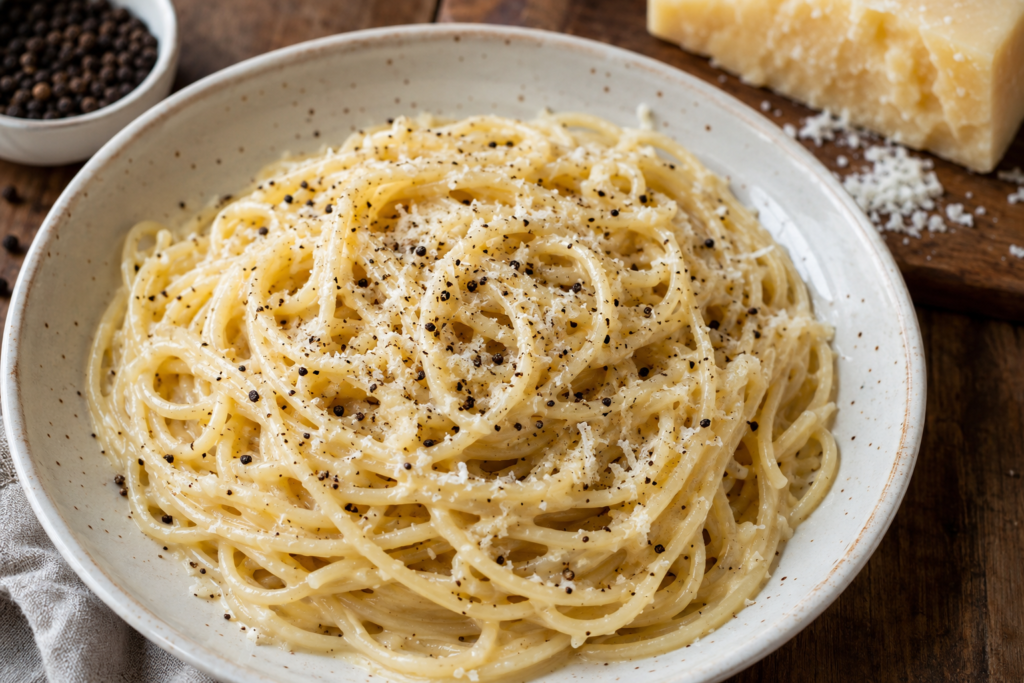
Cacio e pepe is one of those dishes that looks almost too simple to be special. At first glance, it is just pasta, cheese, black pepper, and a little pasta water. There is no long list of ingredients, no complicated sauce, and no elaborate cooking technique that requires professional equipment. Yet when the dish is prepared properly, the result is creamy, peppery, savory, and remarkably satisfying. It is a perfect example of how good cooking often depends more on technique and balance than on having dozens of ingredients.
The name cacio e pepe literally translates to “cheese and pepper.” The dish is strongly associated with Rome and the Lazio region of Italy, where it has become a beloved part of local food culture. Traditionally, the cheese used is Pecorino Romano, a salty and flavorful sheep’s-milk cheese that gives the pasta its distinctive character. Freshly ground black pepper provides warmth and fragrance, while starchy pasta water helps transform the cheese into a smooth coating for the noodles.
What makes cacio e pepe especially interesting is the way such basic ingredients interact. The pasta provides starch, the Pecorino contributes saltiness and richness, the pepper adds heat and aroma, and the reserved cooking water brings everything together. When the proportions and temperature are right, these ingredients create a sauce that feels much more luxurious than the ingredient list suggests. That combination of simplicity and technique is exactly why cacio e pepe remains a favorite among home cooks and professional chefs alike.
The Origins of Cacio e Pepe
Cacio e pepe has deep roots in Roman cuisine, although its exact history is difficult to trace to a single moment or inventor. Like many traditional Italian dishes, it developed from practical cooking traditions rather than from a carefully documented recipe. Shepherds and workers in the Roman countryside needed foods that were inexpensive, portable, filling, and capable of lasting for relatively long periods. Dried pasta, aged Pecorino Romano, and black pepper fit those needs remarkably well.
Pecorino Romano was particularly useful because aged cheese could be carried without refrigeration and remained edible for a long time. Black pepper was valued not only for its flavor but also because it added warmth and intensity to otherwise simple meals. Pasta provided carbohydrates and energy, making the combination practical for people who spent long hours working outdoors. Over time, these humble ingredients became part of a culinary tradition that is now recognized around the world.
Today, cacio e pepe is often considered one of the classic Roman pasta dishes, alongside preparations such as carbonara and amatriciana. While modern restaurants may present sophisticated variations, the traditional spirit of the dish remains focused on restraint. The goal is not to hide the ingredients behind a complicated sauce. Instead, the goal is to make each ingredient taste its best and allow the cheese, pepper, and pasta to work together naturally.
What Makes Cacio e Pepe Different?
The biggest difference between cacio e pepe and many other pasta dishes is its extremely short ingredient list. A basic version requires pasta, Pecorino Romano, black pepper, and water from the pasta pot. That simplicity makes the dish accessible, but it also means there is very little room for mistakes. When there are only a few ingredients, every ingredient and every cooking decision becomes more noticeable.
Another defining feature is the sauce. Traditional cacio e pepe does not rely on cream to create its creamy texture. Instead, the creaminess comes from an emulsion of finely grated cheese, starchy pasta water, and fat naturally present in the cheese. This is an important distinction because adding cream can change the character of the dish considerably. A properly emulsified cacio e pepe can be silky and rich without feeling heavy.
The pepper is also more important than many people realize. It is not simply sprinkled over the finished pasta as a garnish. Traditionally, freshly cracked black pepper is toasted or warmed in the pan so that its aromatic oils become more noticeable. This creates a deeper pepper flavor that complements the salty Pecorino. The result should be bold but balanced rather than overwhelmingly spicy.
Choosing the Right Pasta
Spaghetti is probably the most recognizable pasta choice for cacio e pepe, and it works beautifully because the long strands provide plenty of surface area for the cheese sauce. Thick spaghetti or tonnarelli can also be excellent choices. Tonnarelli, a square-shaped Roman pasta similar to thick spaghetti, is particularly well suited to rich, emulsified sauces because its substantial texture holds onto the sauce.
That said, you do not have to abandon the dish simply because you have another pasta shape in the cupboard. Bucatini, linguine, and other long shapes can work well too. The important thing is to choose a pasta that can carry the sauce rather than one that makes it difficult to distribute the cheese mixture evenly.
Dried pasta is perfectly appropriate for a classic cacio e pepe. In fact, the starchy cooking water produced by dried pasta is an important part of the technique. As the pasta cooks, starch is released into the water. Instead of throwing that liquid away, you reserve some of it and use it to help build the sauce. This seemingly ordinary cooking water is one of the most valuable ingredients in the entire recipe.
Why Pecorino Romano Is So Important
Pecorino Romano is the traditional cheese for cacio e pepe, and its flavor is one of the main reasons the dish tastes so distinctive. Made from sheep’s milk, Pecorino Romano has a firm texture and a salty, savory character. It is generally more assertive than many mild cow’s-milk cheeses, which makes it particularly effective in a recipe containing so few ingredients.
For the best texture, grate the cheese yourself using a fine grater. Pre-grated cheese can contain additives that prevent it from clumping in the package, and those additives can sometimes make it more difficult to create a smooth sauce. Freshly grated Pecorino also melts more predictably when combined with properly managed pasta water.
The cheese should be finely grated because large pieces are harder to incorporate into the sauce. A fine texture allows the Pecorino to blend gradually with the starchy water rather than forming large lumps. This small preparation step can make a surprisingly large difference in the final result.
The Role of Freshly Ground Black Pepper
Black pepper is the second major flavor in cacio e pepe, so using freshly ground pepper is worth the effort. Pre-ground pepper tends to lose some of its fragrance over time, while freshly cracked pepper has a much more noticeable aroma. The difference becomes especially clear in a dish where pepper is one of only a few ingredients.
A useful technique is to gently toast freshly cracked pepper in a dry skillet before combining it with the pasta. As the pepper warms, its aroma becomes more pronounced. Some cooks add a small amount of pasta water to the toasted pepper, creating a fragrant pepper-infused liquid that can later be combined with the pasta.
The amount of pepper is ultimately a matter of taste, but it should have a clear presence. Cacio e pepe is not meant to taste like plain pasta covered with cheese and a token amount of pepper. The pepper should cut through the richness of the Pecorino and provide the dish with its characteristic warmth.
Why Pasta Water Matters So Much
Pasta water is one of the secrets behind a successful cacio e pepe. As pasta cooks, it releases starch into the surrounding water. That starchy liquid can help bind ingredients together and create a smoother, more cohesive sauce. For cacio e pepe, it is essential because the cheese needs moisture and starch to form a creamy emulsion.
It is a good idea to reserve pasta water before draining the pasta. A cup or more can be kept nearby so you can add it gradually as needed. You may not use all of it, but having extra is far better than discovering that you need more after the pot has already been emptied.
The key word is gradually. Adding too much water at once can make the sauce thin, while adding too little may leave the cheese dry and clumpy. The goal is to add enough water to create a smooth coating without turning the sauce into a soup. Experienced cooks often adjust the amount by sight and texture rather than following an exact measurement.
How to Make Classic Cacio e Pepe
Start by bringing a pot of water to a boil and seasoning it appropriately. Because Pecorino Romano is naturally salty, there is usually no need to make the pasta water excessively salty. Add the pasta and cook it until it is al dente according to the package instructions, or slightly under if you plan to finish it in a skillet.
While the pasta cooks, finely grate the Pecorino Romano and prepare the black pepper. Heat a large skillet over medium heat and add the freshly cracked pepper. Let it warm gently for a short time, being careful not to burn it. The goal is to release its aroma rather than darken it aggressively.
Before draining the pasta, reserve plenty of cooking water. Transfer the pasta to the skillet with the pepper and add a small amount of pasta water. Toss the pasta so the starch begins to coat the strands. In a separate bowl, mix the finely grated Pecorino with enough warm pasta water to form a smooth paste. Add this mixture to the pasta gradually while tossing continuously. Keeping the heat low or briefly removing the skillet from direct heat can help prevent the cheese from overheating and turning grainy.
The Most Important Technique: Temperature Control
Temperature is one of the biggest factors separating smooth cacio e pepe from a sauce full of cheese clumps. If the cheese is exposed to excessively high heat, its proteins can tighten and separate from the fat. Instead of producing a creamy sauce, the cheese may become stringy, gritty, or lumpy.
For that reason, it is often helpful to remove the skillet from direct heat before adding the cheese mixture. The residual heat of the pasta and pan is usually enough to keep everything warm. You can then toss vigorously while adding pasta water a little at a time.
This process takes a little practice, but it is not difficult once you understand what you are looking for. The finished sauce should cling to the pasta strands and appear glossy and creamy. If it looks dry, add a small splash of pasta water. If it looks too loose, keep tossing for a moment and allow the starch and cheese to thicken the mixture.
Common Cacio e Pepe Mistakes
One of the most common mistakes is using too much heat. It is tempting to keep the pan hot because you want the cheese to melt quickly, but high heat can work against you. Cheese does not simply melt like butter. It needs the right combination of moisture, temperature, and agitation to become a stable sauce.
Another frequent mistake is using coarsely grated cheese. Large shreds can take longer to incorporate and are more likely to form lumps. Finely grated Pecorino gives you much more control and makes it easier to create a smooth cheese mixture before it reaches the pasta.
Some cooks also add too much pasta water at the beginning. While pasta water is essential, the sauce needs to be built gradually. Start with a small amount, toss, evaluate the texture, and add more if necessary. This approach gives you much greater control over the final consistency.
Can You Use Parmesan Instead of Pecorino?
Yes, but the result will be different. Parmesan, particularly Parmigiano-Reggiano, has a somewhat different flavor profile and generally tastes less salty and sharper than Pecorino Romano. It can produce a delicious pasta dish, but it will not have exactly the same traditional Roman character.
A combination of Pecorino and Parmesan can also work if you want a slightly milder flavor. This can be useful for people who find Pecorino Romano particularly salty or intense. However, if your goal is to experience classic cacio e pepe, Pecorino Romano remains the most appropriate choice.
Whichever cheese you use, freshness and texture matter. Grating the cheese finely and incorporating it carefully with pasta water will generally have a greater impact on the sauce’s success than obsessing over tiny differences in cheese brands.
Variations on Traditional Cacio e Pepe
Although traditional cacio e pepe is intentionally simple, cooks have developed countless variations. Some add lemon zest for brightness, while others incorporate vegetables such as peas or asparagus. These versions can be delicious, but they should be understood as interpretations rather than strict examples of the classic Roman dish.
A small amount of lemon zest can provide a fresh contrast to the salty cheese and pepper. If you experiment with this approach, it is usually better to use zest rather than a large amount of lemon juice, which can change the texture and acidity of the sauce.
Another variation involves adding butter or olive oil. A little additional fat can make the sauce richer and sometimes easier to emulsify, but it also changes the traditional character. For an authentic-style preparation, the cheese, pepper, pasta, and pasta water should remain the stars.
What to Serve With Cacio e Pepe
Cacio e pepe is filling enough to serve as a complete meal, especially when paired with a simple salad or some lightly dressed vegetables. Because the pasta is rich and salty, fresh accompaniments can provide a pleasant contrast.
A crisp green salad with a light vinaigrette is an especially good choice. The acidity of the dressing can balance the richness of the Pecorino without competing with the pasta. Roasted or steamed vegetables can work for the same reason, particularly when they are seasoned simply.
If you are serving cacio e pepe as part of a larger Italian-inspired meal, keep the other dishes relatively restrained. The pasta already has a strong personality. Heavy appetizers, rich sauces, and overly elaborate side dishes can make the overall meal feel unnecessarily dense.
How to Make Cacio e Pepe for a Crowd
Cacio e pepe is easiest to manage in small quantities because the sauce depends on careful emulsification. When cooking for a large group, the larger volume can make it harder to maintain the ideal temperature and distribute the cheese evenly.
If you need to serve several people, use a large skillet or wide pan so that the pasta has enough room to move. Tossing is important because it helps distribute the starch, cheese, and pepper across the pasta rather than leaving the sauce concentrated in one place.
It is also worth preparing everything before you start combining the ingredients. Have the cheese finely grated, the pepper ready, and the pasta water available. Cacio e pepe comes together quickly once the pasta is cooked, so having everything within reach reduces the chance of overcooking the pasta or letting the pan become too hot.
How to Store and Reheat Cacio e Pepe
Cacio e pepe is at its best immediately after preparation. The sauce becomes firmer as it cools, and reheating can cause the cheese to separate. That does not mean leftovers are impossible, but they require a little care.
If you have leftovers, store them in an airtight container in the refrigerator and consume them within a reasonable period for food safety. When reheating, use gentle heat and add a small amount of water to loosen the pasta. Toss frequently rather than heating it aggressively.
The texture may not be identical to freshly made cacio e pepe, but careful reheating can still produce a tasty meal. If you know in advance that you will have leftovers, slightly undercooking the pasta can sometimes help preserve its texture after reheating.
Why Cacio e Pepe Remains So Popular
The enduring popularity of cacio e pepe comes from its ability to deliver an impressive amount of flavor with very little effort and expense. It does not require a complicated shopping list or specialized equipment. Once you have pasta, Pecorino Romano, black pepper, and a reliable cooking technique, you can make a satisfying meal almost anywhere.
There is also something appealing about the confidence of the dish. Cacio e pepe does not attempt to disguise its ingredients. It asks the cook to understand how cheese, starch, heat, and water interact. That makes it both a simple dinner and a useful cooking lesson.
Perhaps most importantly, cacio e pepe proves that simplicity is not the same as blandness. When every ingredient has a clear purpose, even a four-ingredient dish can have layers of flavor and texture. The salty Pecorino, fragrant pepper, chewy pasta, and silky sauce create a combination that is comforting without being complicated.
Final Thoughts on Cacio e Pepe
Cacio e pepe is a wonderful example of classic Italian cooking at its most straightforward. Its ingredients are familiar, affordable, and easy to find, but turning them into a smooth and balanced sauce requires attention to detail. The technique is simple enough for a beginner to learn and nuanced enough to keep an experienced cook interested.
The most important lessons are straightforward: use good Pecorino Romano, grate it finely, freshly grind your black pepper, reserve plenty of starchy pasta water, and control the temperature carefully. Do not rush the emulsification process, and do not assume that more heat will make the cheese melt better. Gentle heat and constant tossing are your friends.
Once you understand those principles, cacio e pepe becomes much more than a quick pasta recipe. It becomes a reminder that great cooking often comes down to doing a few things exceptionally well. With just pasta, cheese, pepper, and water, you can create a dish that is creamy, comforting, aromatic, and unmistakably Italian—and that is the real magic of cacio e pepe.
YOU MAY HAVE MISSED