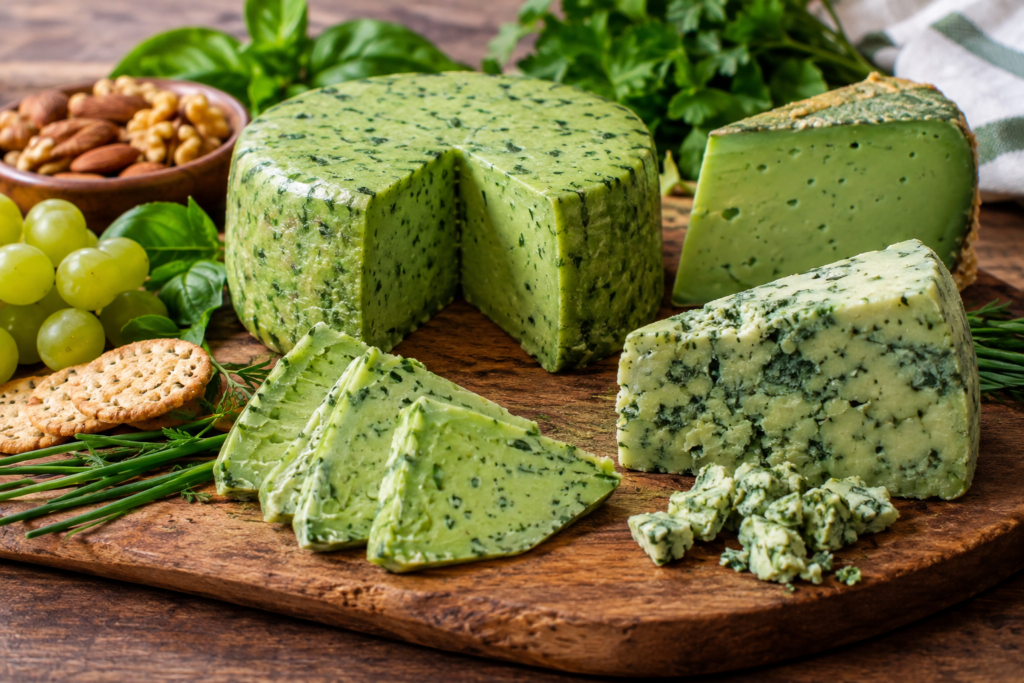
Green cheese is one of those food terms that can sound strange at first. When most people hear the phrase, they may imagine a bright green block of cheese sitting on a grocery shelf. In reality, “green cheese” can describe several different things depending on the context. It may refer to fresh, young cheese, cheese that has developed a green appearance from mold or herbs, or specialty cheeses deliberately made with green ingredients.
The idea becomes even more interesting when you look at how cheese is produced. Cheese naturally changes as it ages, and color can be an important clue about ingredients, microorganisms, storage conditions, and ripeness. Some green-colored cheeses are completely intentional and carefully produced, while unexpected green discoloration can be a warning sign that the food should not be eaten.
In this guide, we will explore green cheese from several angles. We will look at what the term means, why cheese can become green, how green cheeses are made, what they taste like, how they are used in cooking, and how to tell the difference between a specialty product and spoiled cheese.
What Is Green Cheese?
The term green cheese does not always refer to one specific variety. In traditional cheesemaking language, “green” can mean young, fresh, or not fully matured. A freshly made cheese may be described as green because it has not yet completed the aging process. At this stage, its texture and flavor can be very different from those of the same cheese after several weeks or months of maturation.
In another context, green cheese can mean cheese that actually has a green color. This may happen because producers add ingredients such as herbs, vegetables, or edible coloring. Some blue-veined cheeses can also develop greenish tones as part of their natural appearance, although blue cheese should not automatically be called green cheese.
The phrase can therefore be confusing. A green cheese may be perfectly safe and intentionally produced, or it may be an ordinary cheese that has developed unwanted mold. Understanding the difference is much more important than simply judging the product by its color.
Why Does Cheese Turn Green?
Cheese can turn green for several reasons. One of the most obvious is the presence of mold. Cheese is made in an environment where microorganisms play an important role, and certain molds are intentionally introduced during the production of specific varieties. Other molds, however, can grow accidentally when cheese is exposed to unsuitable storage conditions.
The color of mold can vary considerably. Depending on the species and environmental conditions, mold may appear white, gray, blue, green, yellow, orange, or even black. This means that green coloration alone does not tell you whether a cheese is safe to eat.
Ingredients can also create green cheese. Fresh herbs such as parsley, basil, chives, or spinach can give cheese a green appearance while adding flavor. Specialty producers may use natural food ingredients to create colorful cheeses for restaurants, tasting boards, or seasonal products.
Green Cheese as Young Cheese
Historically, “green cheese” has sometimes been used to describe young cheese that has not been aged. This meaning is especially useful when talking about traditional cheesemaking. Cheese does not immediately become the firm, flavorful product people associate with mature varieties. After curdling, draining, pressing, and salting, many cheeses require additional time before they develop their final character.
Young cheese generally contains more moisture than aged cheese. Its texture can be soft, creamy, crumbly, or slightly elastic depending on the style. Its flavor is often mild and milky because the complex compounds associated with aging have not yet developed fully.
As the cheese matures, enzymes and microorganisms gradually break down proteins and fats. These chemical changes influence aroma, texture, and taste. The transformation from young cheese to mature cheese is one of the reasons cheesemaking is both a culinary craft and a scientific process.
The Difference Between Green Cheese and Moldy Cheese
One of the most important distinctions is between intentionally produced green cheese and cheese that has accidentally developed green mold. They may look similar, but they are not necessarily the same thing.
Specialty cheeses are made under controlled conditions. Producers know which cultures or ingredients are being used and monitor factors such as temperature, humidity, acidity, and aging time. The resulting appearance is part of the intended product.
Unexpected green mold is different. If a cheese that was originally uniform in color suddenly develops fuzzy green patches, especially after being stored for a long time, it may be contaminated. The safest response depends on the type of cheese, the extent of mold growth, and food-safety guidance applicable to that product.
Soft cheeses deserve particular caution because mold and microorganisms can spread below the visible surface. Simply scraping off a small patch may not make a soft cheese safe. When in doubt about an unexpectedly moldy soft cheese, discarding it is generally the safer choice.
How Green Cheese Is Made
Making cheese begins with milk, but the final product depends on much more than the starting ingredient. Producers use a combination of cultures, enzymes, temperature, salt, moisture, and time to create the desired cheese.
Milk is first prepared and usually heated or otherwise treated according to the production method. Starter cultures may then be introduced. These microorganisms help acidify the milk and contribute to the development of flavor and texture.
Rennet or another coagulating agent can be added to form curds. The curds are then cut, stirred, heated, drained, salted, pressed, or handled in different ways depending on the cheese style. If a green appearance is desired, herbs or other ingredients may be incorporated during one of these stages.
The cheese may then be aged under controlled conditions. During maturation, microorganisms and enzymes continue to transform the cheese. Even small changes in humidity or temperature can influence the final result, which is why professional cheesemaking requires careful control.
Green Cheese and Herbs
Herb-infused cheese is one of the easiest ways to produce a naturally green appearance. Herbs can provide both color and flavor, making them useful for creating specialty cheese varieties.
Parsley, basil, chives, dill, and other herbs can be mixed into soft cheeses, cream cheese-style products, fresh cheese, or semi-soft varieties. The result can have a fresh, grassy aroma that contrasts with the creamy richness of the dairy.
Herb-based green cheese is particularly useful in cooking. It can be spread onto bread, added to sandwiches, used in pasta sauces, incorporated into stuffed vegetables, or served alongside crackers. Because the herbs provide their own flavor, the cheese does not necessarily need strong seasoning.
What Does Green Cheese Taste Like?
There is no single flavor profile for green cheese because the term covers multiple styles. A young green cheese may taste mild, creamy, and slightly tangy. Its flavor is often dominated by fresh milk and the characteristics of the starter culture.
A green cheese containing herbs can taste completely different. Basil may add a sweet and aromatic quality, while chives can contribute a mild onion-like flavor. Parsley tends to provide a fresh, grassy note.
If the green appearance comes from a particular mold culture, the flavor may be more complex. Mold-ripened cheeses can have earthy, mushroom-like, tangy, salty, or spicy characteristics. The exact flavor depends heavily on the cheese variety and the cultures involved.
Texture of Green Cheese
Texture is another feature that varies widely. Fresh green cheese may be soft and spreadable, making it suitable for toast, sandwiches, and dips.
Young pressed cheese can have a firmer texture while still being relatively moist. As it ages, it may become denser and more crumbly. Aging also concentrates flavor, so a mature version can taste substantially stronger than the younger cheese.
Herb-infused cheeses are often soft or semi-soft because herbs are commonly added to fresh or lightly aged varieties. However, herbs can also be incorporated into firmer cheeses, producing a more unusual combination of texture and flavor.
Is Green Cheese Safe to Eat?
The answer depends on why the cheese is green. If the green color is an intentional characteristic of the product, it can be perfectly safe when produced, stored, and handled properly.
If green discoloration appears unexpectedly, however, caution is necessary. Do not assume that every green spot is harmless simply because some famous cheeses contain mold.
Packaging information is useful. If the cheese is labeled as a mold-ripened, herb-infused, or naturally colored product, the appearance may be expected. If the product was originally plain white or yellow and later developed unexplained green growth, that is a different situation.
Storage also matters. Cheese should be kept according to the manufacturer’s instructions, and signs such as unusual odor, sliminess, unexpected mold, damaged packaging, or an abnormal texture can indicate spoilage.
Green Cheese in Cooking
Green cheese can be surprisingly versatile in the kitchen. Soft versions can be spread directly onto toast, bagels, crackers, or sandwiches. Their creamy texture makes them useful when you want to add richness without using a large quantity.
Green cheese can also be incorporated into hot dishes. It may melt into pasta, sauces, baked vegetables, stuffed chicken, or savory pastries. Herb-infused versions work particularly well in recipes that already contain fresh vegetables or herbs.
Another simple option is to crumble or slice green cheese onto salads. The creamy or tangy flavor can provide contrast against crisp lettuce, tomatoes, cucumbers, roasted vegetables, nuts, and fruit.
Green Cheese on a Cheese Board
A cheese board is another excellent place for specialty green cheese. Its unusual appearance immediately creates visual interest, especially when surrounded by traditionally colored cheeses.
A mild green cheese can be paired with crackers, fresh bread, grapes, apples, pears, dried fruit, or nuts. Stronger varieties can be served with sweeter accompaniments to balance their intense flavors.
Presentation matters. Instead of hiding the green color, use it as part of the visual design. Combining pale green cheese with white, golden, brown, and red ingredients can create an attractive spread without requiring complicated decoration.
Pairing Green Cheese With Fruit
Fruit is often an excellent partner for cheese because sweetness can balance saltiness and acidity. Mild green cheese can work nicely with apples and pears, particularly when the cheese has a creamy texture.
Grapes are another classic option. Their juicy sweetness provides contrast with savory cheese, while their small size makes them convenient for tasting plates.
For stronger cheeses, dried fruits such as figs, dates, apricots, or raisins may work particularly well. Their concentrated sweetness can stand up to intense flavors without overwhelming the cheese.
Pairing Green Cheese With Nuts
Nuts add crunch and richness to cheese dishes. Almonds, walnuts, pecans, pistachios, and hazelnuts can all provide interesting contrasts depending on the cheese.
A creamy green cheese can benefit from the crisp texture of toasted nuts. Meanwhile, earthy green or blue-veined cheeses can pair naturally with walnuts or hazelnuts because their flavors complement the deeper notes of aged cheese.
When building a cheese board, a small handful of nuts is usually enough. The goal is to create contrast rather than allow one ingredient to dominate the entire tasting experience.
Green Cheese and Sandwiches
Green cheese can make an ordinary sandwich more interesting. A soft herb-infused variety can replace mayonnaise or another spread, providing both creaminess and flavor.
It can be combined with grilled vegetables, roasted chicken, turkey, tomatoes, lettuce, cucumber, or avocado. Mild green cheese works particularly well when the other ingredients are fresh and lightly seasoned.
For a stronger sandwich, try pairing a more intensely flavored cheese with caramelized onions, roasted peppers, or sweet fruit chutney. The combination of savory, sweet, creamy, and acidic flavors can create a much more balanced bite.
Green Cheese in Pasta
Cheese and pasta are a natural combination, and green cheese can bring something different to familiar recipes. A soft green cheese can be stirred into warm pasta with a little pasta water to create a creamy sauce.
Herb-infused varieties are especially useful because they can provide seasoning without requiring a long list of ingredients. Garlic, black pepper, olive oil, and vegetables can complete the dish.
Green cheese can also be crumbled over pasta instead of being melted completely. This approach preserves more of its original texture and creates small bursts of flavor throughout the dish.
Green Cheese and Salads
Salads often benefit from ingredients with strong flavors and contrasting textures. Green cheese can serve as a creamy or tangy component alongside fresh vegetables.
Try pairing it with leafy greens, cucumber, tomatoes, roasted peppers, apples, pears, walnuts, or sunflower seeds. A simple vinaigrette can bring everything together.
If the cheese is salty, use less salt in the dressing. This is a simple but important cooking principle: season the complete dish rather than automatically adding the same amount of salt you would use when cooking without cheese.
How to Store Green Cheese
Proper storage helps preserve both flavor and safety. Cheese should generally be stored according to the instructions on its packaging. Different cheese varieties have different moisture levels and therefore different storage requirements.
Avoid leaving cheese exposed to air for extended periods. Excessive exposure can cause drying, flavor changes, and unwanted microbial growth. At the same time, some cheeses need to breathe, so completely sealing every type of cheese in an airtight environment is not always ideal.
Use clean utensils when handling soft cheese. Cross-contamination can introduce unwanted microorganisms and shorten the product’s shelf life.
How to Recognize High-Quality Green Cheese
Quality starts with appearance, but appearance should not be the only factor. A good specialty green cheese should have an appearance consistent with its stated ingredients or production method.
The aroma should also make sense for the cheese. Herb-infused cheese may smell fresh and herbal, while an aged cheese may have a deeper, earthy aroma. An unexpectedly sour, rotten, chemical-like, or otherwise abnormal smell can be a reason to avoid the product.
Texture should match the style as well. A soft cheese should not necessarily be judged against the texture of a hard cheese. The key is consistency with what the product is supposed to be.
Green Cheese vs. Blue Cheese
Green cheese and blue cheese are sometimes confused because both can contain visible colored mold or veins. However, they are not interchangeable terms.
Blue cheeses are specifically produced using selected molds that contribute to their characteristic appearance and flavor. Their veins may appear blue, blue-green, grayish, or sometimes greenish depending on the variety and conditions.
A cheese simply developing green mold during storage is not automatically a blue cheese. The distinction comes from controlled production, intended cultures, and the characteristics of the finished product.
This is why the label and product description are more reliable than color alone.
The Science Behind Cheese Color
Cheese color is influenced by many factors. Milk composition, animal diet, processing methods, aging, cultures, and added ingredients can all influence the final appearance.
Natural pigments can come from ingredients incorporated into the cheese. Microorganisms can also create pigments or alter the cheese’s surface appearance.
Even environmental conditions can make a difference. Temperature, humidity, oxygen availability, and storage duration influence microbial growth and chemical reactions. Cheesemakers therefore treat the aging environment as an important part of the production process.
Why People Are Curious About Green Cheese
Green cheese attracts attention because it challenges expectations. Most people are familiar with cheese in shades of white, cream, yellow, or orange. Green immediately signals that something different is happening.
For food lovers, unusual colors can make an ordinary tasting experience more memorable. Specialty cheese producers can use color to create distinctive products that stand out on restaurant menus and retail shelves.
There is also a natural curiosity about foods that look unusual. People want to know whether the color is intentional, whether the food is safe, and what it tastes like. These questions make green cheese an interesting topic for both casual diners and serious food enthusiasts.
Green Cheese in Modern Food Culture
Modern food culture places a growing emphasis on visual presentation. Social media has made colorful and unusual foods particularly popular because distinctive dishes are more likely to attract attention.
Green cheese fits naturally into this trend. A vibrant cheese can become a centerpiece for a tasting board, sandwich, appetizer, or restaurant dish.
However, appearance should never replace quality. A colorful food still needs to be made with appropriate ingredients, handled safely, and stored correctly. The best specialty foods combine visual appeal with genuine flavor and craftsmanship.
Can You Make Green Cheese at Home?
It is possible to make fresh cheese at home and incorporate green herbs or other food ingredients. Simple fresh cheeses can be produced using relatively basic equipment, although careful hygiene is essential.
Herbs can be finely chopped and mixed into a fresh cheese after the cheese has reached the appropriate consistency. This creates a naturally green, flavored product without relying on artificial coloring.
However, making aged or mold-ripened cheese at home is considerably more complicated. Such cheeses require controlled environmental conditions and a strong understanding of food safety. Experimenting with uncontrolled mold growth is not a good substitute for professional cheesemaking.
Common Mistakes People Make With Green Cheese
One common mistake is assuming that every green cheese is spoiled. Some green cheeses are deliberately made that way, and their color is part of their identity.
The opposite mistake can be more serious: assuming that any green mold is safe because some cheeses intentionally contain mold. Controlled cheesemaking and accidental contamination are not the same thing.
Another mistake is storing cheese incorrectly. Even a high-quality specialty cheese can deteriorate when exposed to unsuitable temperatures, moisture, or contamination. Following the product’s storage instructions is one of the easiest ways to preserve its quality.
Frequently Asked Questions About Green Cheese
Is green cheese real?
Yes. Green cheese can refer to young cheese, herb-infused cheese, or specialty cheeses with naturally occurring or intentionally introduced greenish characteristics.
Why is my cheese green?
If the cheese was sold as green or contains herbs or specific cultures, the color may be intentional. If an ordinary cheese unexpectedly develops green mold, it may be spoiled and should be treated cautiously.
Can you eat green cheese?
Some green cheeses are completely edible and intentionally produced. Unexpected green mold is a different matter, and safety depends on the cheese type and extent of contamination.
Does green cheese taste different?
It can. Young green cheese may be mild and milky, while herb-infused versions may taste fresh and aromatic. Mold-ripened varieties can have stronger earthy or tangy flavors.
Is green cheese the same as blue cheese?
No. Blue cheese is a specific category of cheese produced with particular mold cultures. Some blue cheeses can have greenish tones, but not every green cheese is blue cheese.
What goes well with green cheese?
Fruit, nuts, crackers, bread, vegetables, salads, pasta, and sandwiches can all work well. The best pairing depends on the specific green cheese and its flavor intensity.
Can green cheese be used for cooking?
Yes. Depending on the variety, it can be melted into sauces, added to pasta, spread on bread, crumbled over salads, or incorporated into baked dishes.
How should green cheese be stored?
Follow the storage instructions provided for the specific product. Keep it appropriately refrigerated when required, protect it from contamination, and avoid prolonged exposure to unsuitable conditions.
Final Thoughts on Green Cheese
Green cheese is much more interesting than its unusual name might suggest. The term can describe young cheese, herb-infused varieties, or cheeses with intentionally developed greenish characteristics. At the same time, unexpected green mold on an ordinary cheese can be a completely different issue.
The most important lesson is to understand why a cheese is green rather than judging it by color alone. A specialty cheese made with herbs or carefully selected cultures is very different from a forgotten piece of cheese that has developed uncontrolled mold in the refrigerator.
From sandwiches and salads to pasta and cheese boards, intentionally produced green cheese can also be surprisingly versatile. Its unusual appearance makes it visually appealing, while herbs, cultures, and aging can create distinctive flavors.
Ultimately, green cheese demonstrates what makes cheesemaking so fascinating: a simple ingredient such as milk can be transformed into products with dramatically different colors, textures, aromas, and flavors. Whether you encounter it as a fresh young cheese, a colorful herb-infused variety, or a carefully aged specialty product, green cheese offers plenty to explore for anyone interested in food.
YOU MAY HAVE MISSED