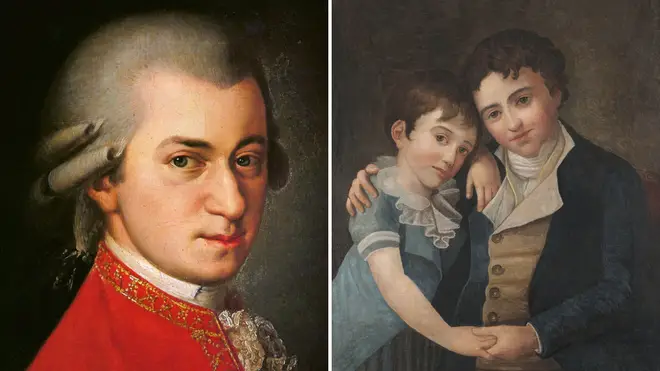
Yes, Wolfgang Amadeus Mozart did have children. Mozart and his wife, Constanze Weber, had six children together between 1783 and 1791. Sadly, only two of their children survived beyond early childhood: Karl Thomas Mozart and Franz Xaver Wolfgang Mozart. Both sons lived into adulthood, but neither married or left children of their own, meaning Mozart’s direct family line eventually came to an end.
The question “Did Mozart have children?” may sound simple, but the story behind it reveals a deeply human side of one of history’s greatest composers. Mozart is usually remembered as a musical genius who wrote symphonies, operas, concertos, and chamber music that continue to influence musicians centuries later. However, away from concert halls and manuscripts, he was also a husband and father who experienced love, financial pressure, childbirth, and heartbreaking family losses.
Understanding Mozart’s children also gives us a different perspective on his short life. He died at only 35 years old, leaving behind a wife and two young sons. His youngest child was only a few months old when Mozart died. The story of his family therefore became closely connected to the preservation of his name and musical legacy.
Mozart’s Marriage to Constanze Weber
Wolfgang Amadeus Mozart married Constanze Weber in Vienna on August 4, 1782. Their relationship was not always supported by Mozart’s father, Leopold Mozart, who had concerns about the marriage. Nevertheless, Wolfgang and Constanze married and remained together until Mozart’s death in 1791.
Their marriage was much more than a minor detail in Mozart’s biography. Constanze became an important part of his personal life during the years when he was producing some of his most famous music. Their surviving correspondence and historical records suggest a relationship filled with affection, humor, and emotional attachment, even though the couple also experienced financial difficulties and family tragedies.
The marriage lasted approximately nine years, but those years were extraordinarily eventful. Mozart continued composing at an astonishing pace while the couple established a household and started a family. During this period, Constanze gave birth to six children, although the high infant mortality of the eighteenth century brought repeated tragedy to the family.
How Many Children Did Mozart Have?
Mozart and Constanze had six children. This fact sometimes surprises people because popular accounts of Mozart’s life often focus almost entirely on his musical achievements. His children were:
- Raimund Leopold Mozart
- Karl Thomas Mozart
- Johann Thomas Leopold Mozart
- Theresia Constanzia Adelheid Friedericke Maria Anna Mozart
- Anna Maria Mozart
- Franz Xaver Wolfgang Mozart
Of these six children, only Karl Thomas and Franz Xaver Wolfgang survived childhood. The other four died as infants or very young children. This was a devastating pattern of loss, but unfortunately it was not unusual in eighteenth-century Europe, where childhood diseases and limited medical knowledge made infancy particularly dangerous.
Mozart therefore experienced fatherhood alongside repeated grief. His life was not simply the glamorous story of a celebrated composer performing before aristocrats and writing masterpieces. Like many parents of his era, he lived with the uncertainty that accompanied childbirth and childhood illness.
The survival of two sons meant that Mozart’s immediate family continued after his death. However, neither surviving son eventually produced children, so there are no direct descendants of Wolfgang Amadeus Mozart through his sons.
Raimund Leopold Mozart: Mozart’s First Child
Mozart’s first child was Raimund Leopold Mozart, born on June 17, 1783. The birth of a first child was naturally an important moment for the young couple, who had been married for less than a year.
Historical accounts show that Mozart and Constanze were deeply affected by their son’s arrival. Mozart reportedly described the child affectionately, reflecting the excitement and pride that came with becoming a father. For someone remembered primarily as a musical genius, these details offer a valuable reminder that Mozart also had an ordinary emotional life filled with family attachments.
Sadly, Raimund Leopold died only a few weeks later, on August 19, 1783. His death was the first major childhood tragedy experienced by Mozart and Constanze. Losing a child at such a young age would have been emotionally devastating, regardless of the fact that infant mortality was common during the period.
The death of Raimund Leopold began a painful pattern that would continue through several of Mozart and Constanze’s later children. Their experience as parents was therefore marked by both hope and repeated loss.
Karl Thomas Mozart: One of Mozart’s Two Surviving Sons
The second child, Karl Thomas Mozart, was born in Vienna on September 21, 1784. He became one of only two of Mozart’s children to survive childhood and eventually lived a long life.
Karl Thomas was still a young boy when his father died in 1791. As a result, he grew up without the opportunity to have a long adult relationship with Wolfgang Amadeus Mozart. After Mozart’s death, Karl Thomas received support and education through the efforts of family members and friends.
Because he was Mozart’s son, there were understandable expectations that Karl Thomas might follow his father into a major musical career. He showed musical ability and received training, but ultimately did not become a famous composer or concert performer. Instead, he pursued a more practical professional life and worked in administrative and government-related positions.
Karl Thomas remained connected to his father’s legacy and later supported institutions and efforts associated with Mozart’s memory. He died in Milan in 1858 without children. His decision not to establish a family meant that one branch of Mozart’s direct line ended with him.
Johann Thomas Leopold Mozart and Another Family Loss
Mozart and Constanze’s third child was Johann Thomas Leopold Mozart, born on October 18, 1786. Tragically, he survived for only a short period and died the following month.
The loss of another infant would have placed enormous emotional pressure on the family. By this stage, Mozart was already an internationally recognized composer, but professional success could not protect him from the personal tragedies faced by ordinary families.
It is easy to imagine Mozart’s life only through the lens of his greatest compositions. Yet his household was also experiencing pregnancies, illness, uncertainty, and grief. The death of Johann Thomas Leopold demonstrates that Mozart’s domestic life was far more emotionally complex than the simplified image often presented in popular biographies.
For Mozart and Constanze, the birth of each child likely carried both happiness and anxiety. After losing children previously, the arrival of another baby would not necessarily have felt like uncomplicated joy. This context helps us understand the human circumstances surrounding Mozart’s extraordinary creative years.
Theresia Constanzia Mozart: Mozart’s Only Daughter
Mozart and Constanze also had a daughter, Theresia Constanzia Adelheid Friedericke Maria Anna Mozart, born on December 27, 1787.
Her arrival was significant because she was the only daughter among the six children. Like several of her siblings, however, she did not survive childhood. Theresia died in June 1788 when she was only a few months old.
The loss of a daughter added another painful chapter to the family’s history. Mozart and Constanze had now experienced multiple infant deaths while continuing to manage the demands of professional life and family responsibilities.
During these years, Mozart was producing some of his greatest works, yet artistic brilliance and personal hardship existed side by side. This is one of the most important things to remember when examining Mozart’s life: creative achievement did not remove him from ordinary human suffering.
The death of Theresia was another reminder of the harsh realities facing families in the eighteenth century. Modern readers sometimes underestimate how frequently parents of the period experienced the loss of infants and young children.
Anna Maria Mozart: A Brief and Tragic Life
The couple’s fifth child was Anna Maria Mozart, born in November 1789. Sadly, her life was extremely brief.
Anna Maria died very soon after birth. Historical accounts record her as another child lost during infancy, continuing the heartbreaking pattern experienced by Mozart and Constanze.
By this time, Mozart and Constanze had already endured several losses. The emotional impact of repeatedly losing children is difficult to measure from historical documents alone, but it is impossible to view these events as insignificant simply because infant mortality was more common in the eighteenth century.
Every child represented a member of the family with hopes, expectations, and emotional meaning. Mozart’s letters and family history show that his personal life cannot be separated entirely from the story of his career.
Anna Maria’s brief life is therefore an important, though often overlooked, part of Mozart’s biography. When people ask whether Mozart had children, the answer is not simply that he had two sons. The fuller answer is that he had six children, four of whom tragically died very young.
Franz Xaver Wolfgang Mozart: The Son Who Followed Music
Mozart’s youngest child was Franz Xaver Wolfgang Mozart, born on July 26, 1791. His birth came during the final months of Mozart’s life.
Mozart died on December 5, 1791, when Franz Xaver was only a few months old. As a result, Franz Xaver grew up knowing his father primarily through family stories, music, reputation, and the enormous legacy left behind.
Unlike his older brother, Franz Xaver pursued a serious musical career. He became a composer, pianist, and teacher. However, following in the footsteps of Wolfgang Amadeus Mozart was an almost impossible challenge. Few musicians in history have faced such an extraordinary family comparison.
Franz Xaver developed his own career and worked as a musician and teacher, including years spent in Central and Eastern Europe. He was respected for his abilities, although he never achieved the same legendary status as his father. That comparison would have been unfair to almost any musician.
The pressure of carrying the Mozart name was significant. Franz Xaver’s career demonstrates that talent can be both a gift and a burden when the world expects a child to reproduce the achievements of an exceptionally famous parent. He died unmarried and without children in 1844.
How Old Were Mozart’s Children When He Died?
Mozart died in Vienna on December 5, 1791, at the age of 35. At that time, only two of his children were still alive: Karl Thomas and Franz Xaver Wolfgang.
Karl Thomas was seven years old when his father died. Franz Xaver Wolfgang was only a few months old. Neither son therefore had the opportunity to know Mozart as an adult for an extended period.
This fact adds another emotional dimension to Mozart’s death. His passing did not only end the career of one of history’s greatest composers. It also left a wife with two young sons, one of whom was still an infant.
Constanze subsequently played a major role in supporting the family and preserving Mozart’s legacy. Her work after his death contributed significantly to ensuring that his compositions, manuscripts, reputation, and public memory remained alive.
The fact that Mozart’s sons were so young also explains why the preservation of his legacy depended heavily on Constanze and later on supporters, publishers, musicians, and institutions connected with Mozart’s work.
Did Any of Mozart’s Children Become Famous?
Neither of Mozart’s surviving sons became as famous as their father, although both had interesting lives.
Karl Thomas did not build a major career as a composer. While he had musical training and ability, he ultimately chose a different professional path. His life demonstrates that being the child of a famous artist does not necessarily mean following the same career.
Franz Xaver, on the other hand, pursued music professionally. He composed, performed, and taught. His career was respectable and meaningful, although his work was constantly overshadowed by his father’s reputation.
This difference between the brothers is interesting. One moved away from music as a profession, while the other embraced it but had to work under the enormous shadow of the Mozart name.
Today, Franz Xaver’s music receives attention from historians and classical music enthusiasts who are interested in the broader Mozart family story. However, it is important to judge his career independently rather than expecting him to reproduce the achievements of Wolfgang Amadeus Mozart.
Why Did Mozart’s Direct Family Line End?
The direct line of Wolfgang Amadeus Mozart ended because neither of his two surviving sons had children.
Karl Thomas died without issue in 1858. Franz Xaver Wolfgang also died unmarried and childless in 1844. Because the four other children had died during infancy or early childhood, there were no other descendants through Mozart’s children.
This does not mean that every member of the wider Mozart family disappeared. Mozart had relatives through other branches of his family, and the Mozart name continued in broader genealogical connections. However, the direct line descending from Wolfgang Amadeus Mozart himself ended.
For many people, this fact is surprising. Mozart’s cultural influence is enormous, yet he has no direct descendants through his children living today.
In a symbolic sense, however, Mozart’s legacy continued through something even larger than a family line. His music became his lasting inheritance, passed from one generation of musicians and listeners to the next.
What Was Mozart Like as a Father?
Historical evidence about Mozart’s exact day-to-day behavior as a father is naturally limited compared with modern celebrity documentation. However, the surviving evidence shows a man who was emotionally connected to his family and deeply involved in his relationship with Constanze.
Mozart’s letters reveal affection, humor, and concern for his wife and family. These personal documents are valuable because they challenge the simplified image of Mozart as nothing more than a distracted genius.
He was certainly an extraordinarily busy composer and performer, but he also lived within the ordinary responsibilities and emotional experiences of family life. He experienced the excitement of becoming a father, the grief of losing children, and the responsibility of supporting a household.
Mozart’s life therefore contained a mixture of the extraordinary and the familiar. He could compose music that changed the history of Western classical music while simultaneously worrying about money, family health, and the future of his children.
This combination makes Mozart more interesting rather than less remarkable. His achievements become even more impressive when viewed alongside the complicated and sometimes painful reality of his personal life.
The Challenges Facing Families in Mozart’s Time
To understand why four of Mozart’s six children died young, it is important to consider the historical period.
The eighteenth century was a difficult time for infant and child health. Modern antibiotics, vaccines, sanitation systems, advanced neonatal care, and many other medical developments did not exist. Diseases that are treatable or preventable today could be deadly.
Parents also had limited access to reliable medical knowledge. Doctors could not diagnose or treat many illnesses effectively, and even relatively common infections could become fatal.
As a result, childhood death was tragically common across Europe. Wealth, social position, and professional success could not completely protect families from disease.
Mozart’s family was therefore part of a wider historical reality. Their personal losses were deeply painful, but they also reflected the dangers faced by countless families during the period.
Understanding this context helps explain why Mozart had six children but only two survived into later life. It also prevents modern readers from making simplistic assumptions about eighteenth-century family life.
Constanze Mozart and Her Role After Mozart’s Death
After Mozart died, Constanze faced the enormous challenge of raising and supporting two young sons while protecting the memory of one of Europe’s most important composers.
She played a significant role in promoting Mozart’s music and preserving documents associated with his life and career. Her efforts helped strengthen his posthumous reputation.
This was particularly important because Mozart died young and left behind a large body of work, including unfinished projects and compositions that required publication and organization.
Constanze did not simply disappear into the background after Mozart’s death. She actively worked to protect his legacy while also managing the practical needs of her family.
Her role demonstrates that the story of Mozart’s children cannot be understood without understanding their mother. Constanze was responsible for helping guide the surviving sons into adulthood while also becoming one of the important figures involved in preserving Mozart’s memory for future generations.
The Human Side of Mozart’s Extraordinary Life
Mozart is often presented almost like a mythical figure. He was a child prodigy, a brilliant composer, and the creator of music that has survived for centuries. While all of these descriptions are accurate, they can sometimes make people forget that he was also a human being.
He married. He worried about money. He exchanged affectionate letters with his wife. He became a father. He lost children. He watched two sons survive while his own life ended before he could see them grow up.
The question “Did Mozart have children?” therefore opens the door to a much larger story about the composer’s personal life.
His family experiences also make his short life feel even more remarkable. Mozart died at 35, yet during that brief period he produced an extraordinary musical legacy while experiencing many of the same joys and tragedies faced by families throughout history.
Looking at Mozart as both a genius and a father creates a more complete picture. His humanity does not reduce his greatness. Instead, it makes his accomplishments and personal story even more compelling.
Frequently Asked Questions About Mozart’s Children
Did Mozart have any children?
Yes. Mozart and his wife, Constanze Weber, had six children together. Four died during infancy or early childhood, while two sons survived into adulthood.
What were the names of Mozart’s surviving children?
Mozart’s two surviving children were Karl Thomas Mozart and Franz Xaver Wolfgang Mozart.
Did Mozart have any daughters?
Yes. Mozart had a daughter named Theresia Constanzia Adelheid Friedericke Maria Anna Mozart, but she died during infancy.
Did Mozart’s children become composers?
Franz Xaver Wolfgang Mozart became a composer, pianist, and teacher. Karl Thomas received musical training but eventually followed a different professional path.
Are there any direct descendants of Mozart alive today?
No direct descendants of Wolfgang Amadeus Mozart survive through his children. Both Karl Thomas and Franz Xaver Wolfgang died without children.
How old were Mozart’s sons when he died?
Karl Thomas was seven years old, while Franz Xaver Wolfgang was only a few months old when Mozart died in December 1791.
Conclusion: Yes, Mozart Had Children, but Only Two Survived
So, did Mozart have children? The answer is definitely yes. Wolfgang Amadeus Mozart and Constanze Weber had six children, but only two—Karl Thomas and Franz Xaver Wolfgang—survived beyond early childhood. Their family story was marked by love, hope, repeated tragedy, and ultimately the early death of Mozart himself.
Karl Thomas and Franz Xaver both lived meaningful lives, although neither reached the extraordinary level of fame achieved by their father. Franz Xaver followed a musical path, while Karl Thomas eventually pursued a different career. Neither had children, bringing Mozart’s direct family line to an end.
Yet Mozart’s legacy never disappeared. His descendants may not have continued his bloodline, but his music became a different kind of inheritance. Every performance of The Magic Flute, every concert featuring one of his piano concertos, and every new generation discovering his symphonies keeps his influence alive.
In that sense, Mozart’s family story is both deeply personal and historically remarkable. He was not only one of the greatest composers who ever lived. He was also a husband, a father of six children, and a man whose private life contained moments of profound happiness and heartbreaking loss. That human story remains an essential part of understanding the man behind the music.
YOU MAY HAVE MISSED