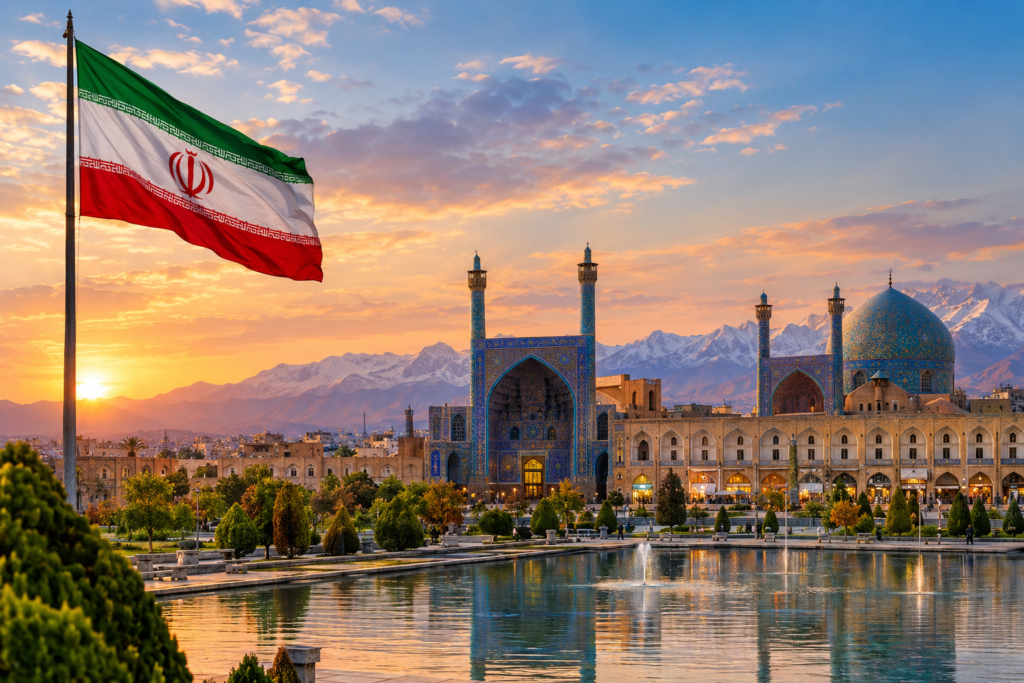
Iran is one of the most influential and historically significant countries in West Asia. Known for centuries as Persia, the country has played a major role in the development of civilization, trade, literature, science, religion, architecture, and international politics. Today, Iran continues to attract worldwide attention because of its strategic location, vast energy resources, ancient cultural heritage, and complicated relationship with major global powers.
The modern country officially known as the Islamic Republic of Iran is far more complex than the headlines often suggest. News coverage frequently focuses on Iran’s nuclear program, regional conflicts, sanctions, or diplomatic tensions. However, Iran is also home to one of the world’s oldest continuous civilizations, a highly educated population, major cities, diverse ethnic communities, and a cultural tradition that has influenced societies across Asia, Europe, and the Middle East.
Understanding Iran requires looking beyond a single issue. Its identity has been shaped by ancient Persian empires, Islamic traditions, invasions, revolutions, wars, economic challenges, and rapid modernization. At the same time, the country’s geographic position has made it strategically important for centuries. Iran connects regions, borders several major countries, and sits close to some of the world’s most important energy routes.
Today, Iran remains a major regional power, but it also faces serious economic and political pressures. International sanctions, regional tensions, conflict, inflation, infrastructure challenges, and domestic political debates continue to shape the country’s future. The following guide explores Iran from multiple angles, including its geography, history, culture, political system, economy, international role, and future prospects.
Iran’s Geographic Location and Strategic Importance
Iran is located in West Asia and occupies a large and strategically important area. It borders several countries, including Iraq, Turkey, Armenia, Azerbaijan, Turkmenistan, Afghanistan, and Pakistan. To the north lies the Caspian Sea, while the Persian Gulf and Gulf of Oman form important parts of its southern coastline.
This geographic position has given Iran enormous strategic importance throughout history. The country sits near the intersection of the Middle East, Central Asia, South Asia, and the Caucasus. Ancient trade routes passed through Iranian territory, connecting civilizations from the Mediterranean region to India and beyond.
Iran’s southern coastline is especially important because of its proximity to the Strait of Hormuz. This narrow waterway has long been one of the world’s most strategically important maritime routes because a significant amount of international energy trade passes through the region. As a result, political or military developments involving Iran can affect international markets and global energy security.
Iran is also geographically diverse. Much of the country consists of mountains and high plateaus, while other regions include deserts, fertile agricultural areas, forests, and coastal zones. The Zagros Mountains and Alborz Mountains are among the country’s most important geographical features.
The diversity of Iran’s geography has influenced where people live and how communities developed. Large cities emerged in major basins and fertile regions, while mountainous areas historically created relatively isolated communities with distinct traditions and languages.
Climate conditions also vary significantly. Some northern regions near the Caspian Sea receive considerable rainfall and support agriculture, while large central and eastern areas are dry or desert-like. Water availability has therefore always been an important factor in Iranian society and remains a major challenge for the country today.
Iran’s geographic location continues to influence its foreign policy, security concerns, trade opportunities, and economic development. It is difficult to understand modern Iran without recognizing that geography has made the country both powerful and vulnerable.
The Ancient History of Iran and the Persian Civilization
Iran is one of the world’s great historical centers of civilization. The region has been home to organized societies and urban settlements for thousands of years. Long before the modern Iranian state existed, ancient peoples developed kingdoms, trade networks, agricultural systems, and cultural traditions across the Iranian plateau.
The most famous chapter of ancient Iranian history is the rise of the Persian Empire. The Achaemenid Empire, established during the sixth century BCE, became one of the largest empires in ancient history. Under rulers such as Cyrus the Great and later Darius I, Persian power expanded across vast territories.
The Persian Empire was remarkable not only because of its military strength but also because of its administrative systems. The empire governed diverse populations across enormous distances. Roads, communication systems, regional administrators, and taxation structures helped maintain control over a territory that included many languages and cultures.
Persian rulers developed systems that influenced later governments and empires. The concept of managing different regions through local administration while maintaining central authority was particularly important. Persian civilization also became known for architecture, art, engineering, and large-scale construction projects.
After the fall of the Achaemenid Empire, Iran remained a major center of political and cultural power. Other important Iranian dynasties emerged, including the Parthians and the Sassanids. These states frequently competed with powerful neighboring civilizations, particularly the Roman and Byzantine empires.
The ancient city of Persepolis remains one of the most famous symbols of Iran’s historical heritage. The ruins demonstrate the architectural sophistication and artistic traditions of the ancient Persian world. They also remind modern visitors that Iran’s historical identity extends far beyond its contemporary political system.
Iranian civilization developed through constant interaction with neighboring societies. Trade, migration, military conflict, and cultural exchange brought Iranian communities into contact with Greeks, Arabs, Turks, Indians, Central Asians, and many others.
This long history remains an important part of modern Iranian identity. References to ancient Persia, historical rulers, Persian literature, and pre-Islamic traditions continue to influence how many Iranians understand their national heritage.
The Arrival of Islam and the Transformation of Iranian Society
A major turning point in Iranian history occurred during the seventh century, when Arab Muslim armies conquered the Sassanid Empire. The political transformation was dramatic, but Iranian civilization did not disappear. Instead, Persian cultural traditions became deeply connected with the expanding Islamic world.
Over time, Islam became the dominant religion, while the Persian language continued to play an important role in literature, administration, and cultural life. This combination of Islamic and Persian traditions became one of the defining characteristics of Iranian civilization.
Persian scholars, scientists, poets, philosophers, and administrators contributed significantly to the intellectual development of the Islamic world. Persian culture spread far beyond the borders of modern Iran, influencing Central Asia, Afghanistan, parts of South Asia, and other regions.
The Persian language became especially important as a literary language. Poetry developed into one of Iran’s greatest cultural traditions, and poets such as Ferdowsi, Rumi, Saadi, and Hafez achieved lasting international recognition.
Iran’s Islamic identity later developed a distinctive political and religious character. During the Safavid period, Twelver Shia Islam became the dominant state religion. This decision had a long-lasting impact on Iran’s identity and differentiated the country from many neighboring states where Sunni Islam became dominant.
The relationship between religion and government became increasingly important throughout Iranian history. Religious scholars gained influence in social and political life, while rulers often sought religious legitimacy.
Iran’s history after the arrival of Islam demonstrates an important pattern: foreign conquest and political change repeatedly transformed the country, but Persian language, culture, and identity remained resilient. Iran absorbed outside influences while continuing to maintain a distinctive civilization.
That ability to combine ancient traditions with new cultural and religious developments remains visible in modern Iranian society.
Iran’s Modern History and the 1979 Islamic Revolution
Iran entered the modern era facing increasing pressure from foreign powers. During the nineteenth and early twentieth centuries, major outside powers competed for influence in the region. Russia and Britain were particularly important players in Iranian affairs.
These foreign pressures contributed to growing debates about national sovereignty, modernization, and political reform. Many Iranians became increasingly concerned about foreign influence over the country’s economy and government.
During the twentieth century, Iran experienced rapid modernization and major political changes. The Pahlavi monarchy sought to modernize the country through industrial development, infrastructure projects, education, and social reforms.
However, modernization also created political tensions. Critics of the monarchy objected to authoritarian government, restrictions on political opposition, economic inequality, and the close relationship between Iran and Western powers.
These tensions eventually contributed to the Iranian Revolution of 1979. The revolution overthrew Shah Mohammad Reza Pahlavi and ended the monarchy. Ayatollah Ruhollah Khomeini became the central figure in the establishment of a new Islamic Republic.
The revolution fundamentally changed Iran’s political direction. The new system combined elected institutions with religious leadership. Iran’s relationship with the United States and several Western governments also changed dramatically.
The Islamic Revolution remains one of the most important events in modern Middle Eastern history. It reshaped Iran’s domestic political system and influenced regional politics for decades.
Understanding contemporary Iran therefore requires recognizing the continuing influence of the 1979 Revolution. Many of the country’s current institutions, foreign-policy positions, and political debates emerged from that historical transformation.
How Iran’s Political System Works
Iran has a political system that combines republican institutions with religious authority. The country has a president, parliament, elections, ministries, courts, and other institutions commonly associated with modern states. However, powerful religious institutions also play a central role.
The office of the Supreme Leader is one of the most important positions in Iran’s political system. The Supreme Leader has significant influence over major areas of national policy, including important security and foreign-policy matters.
Iran also has an elected president who leads the executive branch and oversees many aspects of domestic administration. The president is an important political figure, although the office operates within a broader system that includes powerful institutions outside the presidency.
The Iranian parliament, known as the Majlis, is responsible for legislation. However, laws and political candidates are subject to review within Iran’s constitutional and religious framework.
One particularly important institution is the Guardian Council. It has a role in reviewing legislation and approving candidates for elections. This means that Iran’s electoral system operates differently from many Western democratic systems.
The country’s political environment includes different groups and perspectives. Some politicians favor greater engagement with Western countries and economic reform, while others emphasize resistance to foreign pressure and the preservation of Iran’s revolutionary political principles.
Political debates in Iran are therefore more complex than a simple division between government and opposition. There are disagreements within the political establishment regarding economic policy, diplomacy, social policy, and the country’s relationship with the outside world.
At the same time, Iran’s political system has faced criticism from international governments and human-rights organizations over political freedoms, restrictions on opposition, treatment of protesters, and other issues.
Recent years have also seen economic difficulties and periods of public protest. These developments have increased pressure on Iran’s political leadership and raised important questions about the country’s long-term political direction.
Iran’s Economy and Natural Resources
Iran possesses some of the world’s most important natural resources. The country has major oil and natural-gas reserves, making energy production a central part of its economy and international importance.
Oil has played a major role in Iranian economic development for more than a century. Revenue from petroleum exports has supported government spending, infrastructure, and economic activity. However, dependence on oil has also created challenges.
When energy prices fall or exports are restricted, government revenue can decline sharply. International sanctions have further complicated Iran’s ability to sell oil, attract foreign investment, and access international financial systems.
Iran’s economy is not limited to petroleum. The country also has significant agricultural production, manufacturing, mining, service industries, and a large domestic consumer market.
Iran has a large and well-educated population, creating potential for technological development and entrepreneurship. Iranian professionals have made contributions in engineering, medicine, science, technology, and other fields.
However, the economy faces major structural challenges. Inflation, currency instability, sanctions, limited international investment, water shortages, and energy shortages have all affected economic activity.
The World Bank has described Iran’s economy as relatively diversified compared with some other oil exporters, but still heavily influenced by hydrocarbons and state involvement. Recent conflict, sanctions, trade disruption, and infrastructure pressures have added to economic uncertainty.
The economic situation in 2026 has become particularly difficult. Recent reporting has highlighted pressure on oil exports, foreign trade, currency stability, and consumer prices, demonstrating how geopolitical developments can quickly affect everyday economic life inside Iran.
Despite these difficulties, Iran continues to search for ways to diversify its economy and strengthen trade relationships with regional and international partners. The long-term success of these efforts will depend heavily on domestic reforms and the country’s future relationship with the global economy.
Iranian Culture, Language and Literature
Iranian culture is one of the country’s greatest sources of international influence. Persian civilization has produced remarkable achievements in literature, architecture, music, visual art, philosophy, and science.
Persian, commonly known as Farsi, is the country’s official language and remains one of the world’s major cultural languages. It has a rich literary tradition extending back more than a thousand years.
Poetry holds a particularly important position in Iranian culture. Hafez, Saadi, Ferdowsi, and Rumi remain widely respected, and their works continue to influence readers around the world.
The Shahnameh, written by Ferdowsi, is one of the most important works of Persian literature. It preserves stories of ancient Iranian kings, heroes, and mythology and has played a major role in maintaining awareness of Iran’s pre-Islamic heritage.
Iranian architecture is another major cultural achievement. Historic mosques, gardens, palaces, bridges, and marketplaces demonstrate a combination of artistic beauty and technical sophistication.
Cities such as Isfahan and Shiraz are internationally associated with Persian architecture and culture. Their historic buildings and public spaces reflect centuries of artistic development.
Iran is also ethnically and linguistically diverse. While Persian culture is central to the country’s national identity, communities speak languages including Azeri, Kurdish, Luri, Arabic, Baluchi, Gilaki, Mazandarani, and Turkmen languages.
This diversity contributes to the richness of Iranian society. Local traditions, foods, music, clothing, and dialects vary significantly across different regions.
Iranian culture is therefore not a single uniform tradition. It is a combination of Persian heritage, Islamic traditions, regional identities, and influences accumulated over thousands of years.
Iranian Food and Everyday Traditions
Iranian cuisine is famous for its use of herbs, rice, vegetables, fruits, nuts, and aromatic spices. Food is an important part of family life and hospitality.
Rice dishes occupy a central place in Iranian cooking. Different regions have developed their own recipes and methods of preparing rice, often served with meat, vegetables, herbs, or stews.
Kebabs are also widely associated with Iranian cuisine, although Persian cooking is far more diverse than grilled meat alone. Stews such as ghormeh sabzi and fesenjan demonstrate the complexity of Iranian culinary traditions.
Fresh herbs are commonly used in meals, giving many Iranian dishes distinctive flavors. Pomegranates, saffron, walnuts, dried fruits, and various herbs are important ingredients in traditional recipes.
Tea is also deeply connected to social life. Serving tea is often part of hospitality and everyday conversation.
Family relationships are highly important in Iranian culture. Celebrations, religious events, weddings, and holidays often bring extended families together.
One of the most important celebrations is Nowruz, the Persian New Year. It has ancient roots and is celebrated around the beginning of spring. Nowruz traditions include family gatherings, symbolic decorations, special foods, and visits with relatives and friends.
These traditions demonstrate the continuing influence of Iran’s ancient cultural heritage. Even after centuries of political and religious transformation, many pre-Islamic customs remain important parts of Iranian cultural life.
Iran’s Role in the Middle East
Iran is one of the most important geopolitical powers in the Middle East. Its large population, geographic size, military capabilities, energy resources, and historical influence give it an important role in regional affairs.
Iran’s relationships with neighboring countries are shaped by geography, history, security concerns, trade, and religious differences. The country has relationships and rivalries that have changed significantly over time.
Relations with Iraq are particularly important because the two countries fought a devastating war during the 1980s. Despite that history, Iran has maintained significant political and economic influence in Iraq in more recent decades.
Iran also has important relationships with countries in Central Asia, the Caucasus, South Asia, and the Persian Gulf region. Its position allows it to participate in trade routes connecting multiple regions.
The country’s relationship with the United States has been particularly tense since the 1979 Revolution. Disagreements over Iran’s nuclear program, regional security, sanctions, and military activities have contributed to decades of hostility.
Iran’s relationship with Israel is also a major source of regional tension. These tensions have influenced alliances and security policies throughout the Middle East.
Iran’s role in regional politics cannot be understood only through military competition. Trade, energy, transportation, religious connections, and cultural influence are also important.
Because of Iran’s size and location, major political changes inside the country often have consequences beyond its borders.
Iran, Sanctions and International Relations
International sanctions have been one of the defining factors affecting modern Iran. Sanctions have targeted different parts of the Iranian economy and have limited access to some international financial and commercial systems.
Supporters of sanctions generally argue that economic pressure can influence Iranian government policies. Critics argue that sanctions often place heavy burdens on ordinary citizens and can contribute to inflation, shortages, and economic instability.
Iranian leaders have repeatedly sought to develop strategies for reducing the impact of sanctions. These efforts have included expanding trade relationships with countries willing to continue commercial ties.
China has become particularly important for Iran’s energy trade. According to recent parliamentary research, a substantial share of Iranian petroleum exports has gone to China, highlighting the importance of Asian markets to Iran’s economy.
Sanctions also affect foreign investment. International companies may hesitate to operate in Iran because of legal restrictions and concerns about future political developments.
This situation has made economic planning difficult. Businesses and ordinary citizens can be affected by sudden changes in currency values, import costs, and international trade conditions.
In 2026, economic pressure has become closely connected with wider regional conflict and security tensions. Recent reports describe intensified pressure on Iranian trade and oil exports, illustrating how diplomacy, military developments, and economic policy remain closely connected.
The future of Iran’s international relations will likely depend on whether diplomatic agreements can reduce tensions and create opportunities for greater economic engagement.
Challenges Facing Iran Today
Iran faces several major challenges that will shape its future. Economic pressure is among the most immediate concerns. Inflation and currency instability can reduce purchasing power and increase pressure on households.
Water scarcity is another serious long-term challenge. Large parts of Iran are naturally dry, and climate pressures, population growth, agriculture, and infrastructure problems have increased concerns about water management.
Energy shortages have also affected economic activity. This may seem surprising for a country with enormous oil and natural-gas resources, but energy infrastructure, consumption patterns, investment limitations, and other structural issues can create domestic supply problems.
Iran also faces demographic changes. Like many countries, it must prepare for changing population patterns, employment demands, and the expectations of younger generations.
Political debates and public dissatisfaction are additional challenges. Many Iranians want greater economic opportunities and improved living standards, while the government must manage internal demands alongside external pressure.
International conflict remains another major source of uncertainty. Escalation can disrupt trade, investment, infrastructure, and everyday life.
Recent economic assessments have warned that conflict, sanctions, disruptions to oil exports, and trade problems could place additional pressure on Iran’s economy. The World Bank has emphasized that the outlook depends heavily on the duration and intensity of conflict, infrastructure damage, and disruptions to economic activity.
Iran’s future will therefore depend on how effectively it manages both domestic and international challenges.
The Future of Iran
Predicting Iran’s future is difficult because the country is influenced by many rapidly changing factors. Domestic politics, international diplomacy, economic conditions, regional conflict, and technological development could all significantly affect the country’s direction.
Iran has important strengths. It has a large population, major natural resources, a strong cultural identity, a strategic geographic position, and a long tradition of education and intellectual achievement.
At the same time, the country faces significant obstacles. Sanctions and conflict have limited economic opportunities, while inflation and currency instability create pressure for ordinary citizens.
One possible future involves greater economic engagement with international markets. If diplomatic tensions decrease, Iran could potentially attract investment and benefit more fully from its natural resources and educated workforce.
Another possibility is that prolonged geopolitical competition continues to limit economic integration. In that case, Iran may increasingly depend on regional partnerships and countries willing to trade outside traditional Western economic systems.
Domestic reform will also be important. Economic modernization, infrastructure investment, water management, employment opportunities, and technological development could significantly influence Iran’s long-term stability.
The country’s young and educated population will remain an important factor. Future generations may have different expectations regarding employment, technology, social life, and political participation.
Ultimately, Iran’s future will not be determined by a single event or political decision. Its direction will emerge from the interaction of history, geography, economics, culture, domestic politics, and international relations.
Conclusion
Iran is a country with an extraordinary depth of history and a major role in contemporary global affairs. From the ancient Persian Empire to the modern Islamic Republic, the country has repeatedly experienced dramatic political and social transformations.
Its cultural influence extends far beyond its borders. Persian poetry, architecture, language, art, and traditions continue to attract global admiration and remain central to the identity of millions of people.
At the same time, modern Iran faces serious challenges. Economic pressure, sanctions, regional tensions, water shortages, infrastructure problems, and political debates all create uncertainty about the future.
Yet Iran’s history demonstrates remarkable resilience. The country has experienced invasions, revolutions, wars, political transformations, and economic crises while maintaining a strong cultural identity.
For anyone trying to understand Iran, the most important lesson is that the country cannot be explained through headlines alone. Iran is simultaneously an ancient civilization, a modern nation-state, a regional power, a major energy producer, and a society undergoing constant change.
Its future will continue to matter not only to the Middle East but also to global energy markets, international diplomacy, trade, and security. As events continue to develop, Iran will remain one of the world’s most closely watched and strategically significant countries.
YOU MAY HAVE MISSED