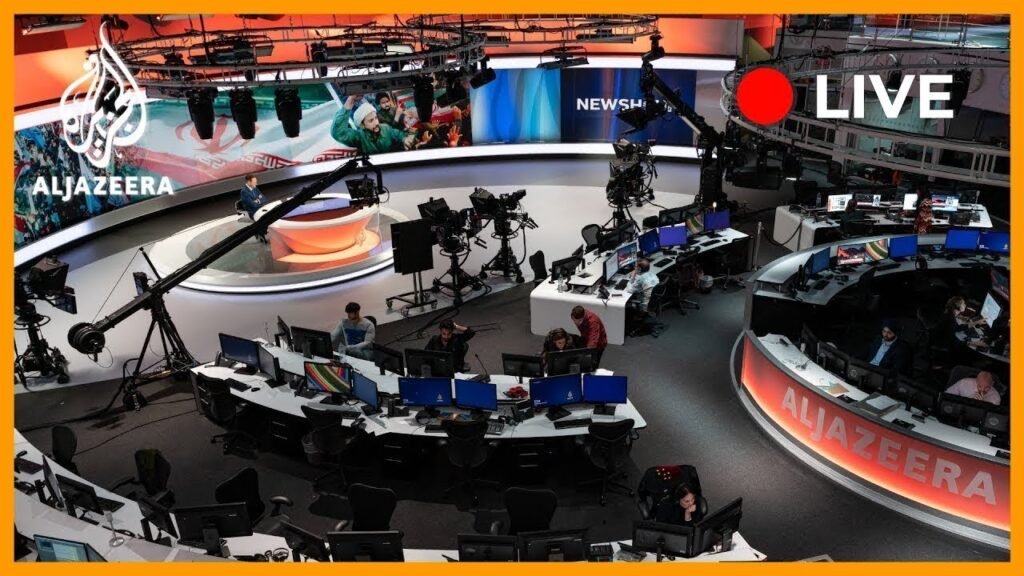
Introduction: Why Al Jazeera Remains One of the World’s Most Influential News Networks
Al Jazeera is one of the most recognizable names in international journalism. Over the years, it has grown from a regional Arabic-language news channel into a global media network with a powerful presence across television, websites, social media, documentaries, live broadcasting, and digital journalism. For millions of viewers, Al Jazeera represents an alternative perspective on international events, particularly stories involving the Middle East, Africa, Asia, and other regions that have historically received limited attention from major Western news organizations.
The network was launched in Doha, Qatar, in 1996 and quickly changed the media environment of the Arab world. At a time when much of the region’s broadcasting landscape was heavily influenced by state-controlled media, Al Jazeera introduced a more confrontational style of debate and news coverage. Its early slogan, often translated as “The Opinion and the Other Opinion,” reflected the network’s goal of presenting competing viewpoints and encouraging public discussion.
Today, Al Jazeera is much more than a television channel. It operates as a large international media network with multiple channels, digital platforms, investigative journalism projects, documentary programming, research institutions, and media training initiatives. Its influence comes not only from its audience size but also from its ability to place stories from different parts of the world at the center of international discussion.
The network has also faced intense criticism, political pressure, controversy, and debate throughout its history. Like many major global news organizations, Al Jazeera is frequently examined for its editorial decisions, funding structure, political environment, and coverage priorities. Understanding Al Jazeera therefore requires looking beyond headlines and considering its history, mission, journalism, challenges, and continuing transformation in the digital age.
The Origins and History of Al Jazeera
Al Jazeera began broadcasting on November 1, 1996, from Doha, the capital of Qatar. The launch represented a significant moment in the development of Arabic-language broadcasting. The network entered a media environment in which many television outlets were closely connected to governments or operated within highly restricted political environments. Al Jazeera positioned itself as a new type of broadcaster capable of hosting debate and covering controversial political issues.
One of the most important reasons for Al Jazeera’s early success was its willingness to air discussions involving opposing political viewpoints. Television debates and interviews could include government representatives, opposition figures, analysts, activists, and international voices. This approach attracted audiences who wanted more than official statements and carefully controlled programming. It also created controversy because open political debate was still unusual in many parts of the region.
The network’s rapid rise eventually became known by academics and media observers as the “Al Jazeera phenomenon.” The term reflected the channel’s growing influence on Arab media, political discussion, and international journalism. Al Jazeera demonstrated that a broadcaster based in the Middle East could reach a large audience while competing with established international news organizations.
During the following years, the network expanded significantly. It developed digital services, additional television channels, documentary programming, live-event coverage, research initiatives, and international bureaus. According to the network’s own history, important stages of expansion included the launch of its Arabic website, the creation of the Al Jazeera Media Institute, the launch of Al Jazeera Mubasher, and the establishment of Al Jazeera English in 2006.
The Meaning Behind the Name Al Jazeera
The name “Al Jazeera” comes from Arabic and means “the island.” The network’s distinctive logo is based on Arabic calligraphy and has become one of the most recognizable symbols in international broadcasting. Over time, the name Al Jazeera has become associated not only with one television channel but with an entire global media organization.
Brand recognition has played an important role in the network’s international expansion. A strong logo, recognizable name, and consistent journalistic identity have helped Al Jazeera establish itself in a crowded global media market. International news organizations must compete not only with television channels but also with social media platforms, independent journalists, podcasts, newsletters, and millions of online content creators.
The Al Jazeera brand is particularly associated with international reporting from regions that may receive less attention from other global networks. This does not mean that Al Jazeera covers only the Middle East. Its reporting includes events from Africa, Europe, Asia, North America, Latin America, and other parts of the world. However, its geographic origins continue to influence the perspective and editorial priorities that make it different from many Western-based international broadcasters.
The meaning behind the name also reflects the network’s identity as an organization that originated in the Arab world but developed global ambitions. Rather than simply copying the model of existing international broadcasters, Al Jazeera built its reputation by emphasizing its own regional roots while expanding its global coverage.
Al Jazeera’s Growth Into a Global Media Network
One of the most important developments in the history of Al Jazeera has been its transformation from a single Arabic-language television channel into a large media network. The organization now includes multiple channels and platforms designed for different audiences. This expansion allowed Al Jazeera to reach viewers in different languages and across different types of media.
Al Jazeera English, launched in 2006, was particularly important for the network’s international growth. The English-language channel allowed the organization to compete more directly in the global news market and reach audiences outside the Arabic-speaking world. The network describes Al Jazeera English as focusing strongly on people and on regions and issues that may be underreported internationally.
The broader network also includes Al Jazeera Arabic, Al Jazeera Mubasher, the Al Jazeera Documentary Channel, AJ+, and other institutions and projects. AJ+, for example, was developed as a digital-first media platform designed for audiences consuming news through social networks and mobile devices. This reflected an important shift in the media industry away from traditional television schedules and toward on-demand and mobile journalism.
According to Al Jazeera’s corporate information, the network operates with bureaus around the world and employs journalists and staff from numerous countries. Its international infrastructure allows the organization to report directly from locations where major events are taking place rather than relying entirely on news agencies or outside broadcasters.
Al Jazeera English and Its International Audience
Al Jazeera English played a major role in turning the Al Jazeera name into a truly global media brand. Before its launch, the network was already well known internationally, particularly because of its coverage of major conflicts and political events. However, an English-language channel created a direct connection with audiences in countries where Arabic was not widely understood.
The channel entered a highly competitive international market dominated by well-established broadcasters. Competing against organizations with decades of international experience required Al Jazeera English to develop a distinctive editorial identity. The channel emphasized in-depth reporting, international perspectives, and stories from communities often overlooked by larger global media outlets.
This approach helped Al Jazeera English develop a reputation for reporting from regions where international coverage can be difficult, expensive, or dangerous. Foreign bureaus are expensive to maintain, and many media companies have reduced their international reporting operations. A network with a strong international bureau system can therefore offer perspectives that are difficult to produce through remote reporting alone.
Al Jazeera English also benefits from being part of a broader multilingual network. News events can be covered by journalists with deep regional knowledge, language skills, and long-term experience in particular locations. This kind of reporting can provide context that is sometimes missing when international stories are covered primarily from distant capitals.
Al Jazeera’s Approach to Journalism
Al Jazeera has consistently presented itself as an organization committed to accurate, in-depth journalism and the inclusion of diverse viewpoints. Its editorial identity places considerable importance on context, human stories, and the consequences of political events for ordinary people. The network’s official mission and ethics materials emphasize truth, accuracy, professional standards, and the presentation of different perspectives.
One important feature of the Al Jazeera approach is the effort to move beyond official political statements. Government announcements are often only one part of a larger story. Al Jazeera’s reporting frequently includes civilians, local experts, witnesses, aid workers, and other individuals directly affected by major events. This human-centered approach can make complicated international stories easier for audiences to understand.
The network also places significant importance on live reporting. During major conflicts, protests, elections, and natural disasters, live coverage can provide audiences with immediate access to developments. However, live journalism also presents serious challenges because information can change quickly and early reports may later require corrections or additional context.
Like every major news organization, Al Jazeera must balance speed with accuracy. Modern audiences often expect immediate updates, but responsible journalism requires verification. The challenge is particularly difficult during wars and emergencies, when rumors, misleading videos, manipulated images, and false social media claims can spread rapidly.
The Role of Al Jazeera in Covering the Middle East
Al Jazeera’s coverage of the Middle East is one of the main reasons the network has become internationally influential. The region has long been central to global politics, energy markets, military conflicts, diplomacy, migration, and international security. Yet perspectives from within the region have not always received equal attention in international media.
Because Al Jazeera originated in the Arab world, it has often approached Middle Eastern stories with a different geographic and cultural perspective. The network can place greater emphasis on local communities and regional consequences rather than viewing events primarily through the foreign policy interests of major Western powers.
This approach has attracted a large audience but has also created controversy. Coverage of sensitive regional conflicts can generate strong reactions from governments, political groups, and audiences. Different people often interpret the same reporting through their own political experiences and beliefs, which means accusations of bias are common throughout international journalism.
The value of having multiple international news organizations is that audiences can compare perspectives. No single news outlet should be the only source of information for complicated international events. Readers and viewers benefit when they examine different reputable sources, identify areas of agreement, and pay attention to evidence and reporting methods.
Al Jazeera and Major Global Events
Throughout its history, Al Jazeera has become closely associated with coverage of major international events. Its journalists have reported on wars, political revolutions, humanitarian crises, elections, protests, and diplomatic conflicts. The network’s coverage has often placed it directly in the middle of important international debates.
The wars in Afghanistan and Iraq were important moments in Al Jazeera’s development. The network’s ability to report from the region brought it international attention and sometimes placed its journalists and facilities under extraordinary pressure. Its official historical timeline records the organization’s extensive coverage of both conflicts during the early years of the twenty-first century.
The Arab Spring was another major period for Al Jazeera. Beginning in 2010 and continuing through subsequent years, protest movements and political upheaval transformed several countries across the Middle East and North Africa. Al Jazeera’s extensive reporting during this period increased its visibility and influence, while also placing the network at the center of debates about media and political change.
More recently, conflicts and humanitarian crises have continued to demonstrate the importance and danger of field journalism. Reporting from active conflict zones can expose journalists to serious risks. Al Jazeera’s recent corporate statements and press releases also illustrate the continuing dangers faced by media workers covering conflict.
Investigative Journalism and Documentary Storytelling
Al Jazeera has expanded beyond daily news broadcasting by investing in long-form investigations and documentary programming. These formats allow journalists to spend more time researching complicated subjects than is possible during a standard television news bulletin.
Investigative journalism can involve reviewing documents, interviewing sources, analyzing financial information, examining video evidence, and conducting long-term reporting. The process is expensive and time-consuming, but it can reveal information that would otherwise remain hidden from the public.
Documentary storytelling offers another advantage: context. Breaking news often focuses on what happened today, while documentaries can explore why something happened, how it developed, and what consequences may follow. This allows viewers to understand the larger historical and social background behind major events.
Al Jazeera’s documentary and investigative work has become an important part of its broader identity. The network’s official history includes the establishment of an Investigative Unit and the development of documentary-focused programming as part of its expansion beyond traditional news broadcasting.
The Digital Transformation of Al Jazeera
The media industry has changed dramatically since Al Jazeera launched in 1996. At that time, television broadcasting was the dominant way many people consumed international news. Today, audiences receive updates through smartphones, websites, social networks, podcasts, streaming platforms, and messaging applications.
Al Jazeera has adapted to these changes by expanding its digital operations. Its websites provide breaking news, analysis, opinion, video, live coverage, and interactive content. Digital platforms also allow stories to reach audiences who may never watch a traditional television broadcast.
AJ+ represented an important part of this digital transformation. Designed primarily for digital audiences, the platform focused on short-form and social-first storytelling. This approach recognized that younger audiences often consume news differently from previous generations.
The challenge for digital journalism is not simply publishing faster. Modern audiences are surrounded by enormous amounts of information. Al Jazeera’s leadership has recently discussed the importance of providing context rather than focusing only on speed, particularly as artificial intelligence and algorithm-driven platforms continue to reshape the media environment. In 2026, the network described a broader initiative aimed at adapting journalism to technological change while maintaining professional and ethical responsibilities.
Al Jazeera, Social Media, and the Changing News Audience
Social media has transformed the relationship between journalists and audiences. In the past, news organizations largely communicated in one direction: journalists produced stories, and audiences watched or read them. Digital platforms have made the relationship far more interactive.
Today, audiences can comment on stories, share information, upload videos, challenge journalists, and communicate directly with news organizations. This creates opportunities for faster reporting and wider engagement, but it also increases the risk of misinformation.
For Al Jazeera, like other global news organizations, social media provides an opportunity to reach audiences who may not actively visit a news website or watch television. A short video or breaking-news update can travel around the world within minutes.
At the same time, social media algorithms often reward emotional, shocking, or highly divisive content. This can create pressure on journalism organizations to compete for attention. Maintaining accuracy and context in an environment dominated by speed is therefore one of the most important challenges facing modern news networks.
Controversies and Criticism Surrounding Al Jazeera
No major international news organization operates without criticism, and Al Jazeera is no exception. The network has faced accusations of bias from governments, political organizations, rival media outlets, and individual commentators. These criticisms often become particularly intense during wars and major political crises.
Questions about funding and Qatar’s relationship with the network have also been part of public discussion for many years. Al Jazeera’s own public materials describe the organization as a private foundation for public benefit under Qatari law, while its public-facing information also acknowledges funding connections involving the Qatari government. The network states that its editorial content is not directed or controlled by the government.
The existence of criticism does not automatically prove that a news organization is inaccurate, just as popularity does not automatically prove that it is correct. Media literacy requires readers to examine reporting carefully, compare multiple credible sources, and distinguish between evidence-based criticism and political attacks.
Al Jazeera’s critics and supporters often view the network very differently. Supporters praise its willingness to cover stories and perspectives that they believe receive insufficient attention elsewhere. Critics argue that the network’s coverage can reflect particular political priorities. These debates demonstrate why audiences should approach all major news organizations with critical thinking rather than unquestioning loyalty.
Challenges Faced by Al Jazeera Journalists
Journalism can be dangerous, especially when reporters work in conflict zones or politically unstable countries. Al Jazeera journalists have operated in some of the world’s most difficult reporting environments, including active war zones and areas experiencing political unrest.
The risks can include physical violence, arrest, intimidation, restrictions on movement, equipment confiscation, and legal pressure. Journalists reporting from conflict zones must also deal with rapidly changing military conditions and the difficulty of verifying information.
Media organizations face a difficult responsibility when assigning reporters to dangerous locations. The public benefits from independent reporting, but no story is worth ignoring the safety of journalists. Networks must therefore invest in security training, emergency procedures, protective equipment, and support systems.
The risks faced by journalists are also a reminder that press freedom is not guaranteed everywhere. Even large international organizations can face restrictions when their reporting conflicts with powerful political interests. Al Jazeera’s history includes numerous examples of disputes and pressure connected to its reporting activities.
Why Al Jazeera Has a Unique Place in Global Media
The global media landscape is dominated by organizations from several major regions, particularly North America and Europe. Al Jazeera’s importance comes partly from the fact that it developed into a global network while remaining headquartered in the Arab world.
Geographic location influences journalism. Journalists decide which stories deserve attention based partly on experience, audience interests, editorial priorities, and access to information. A network based outside the traditional centers of Western media can therefore bring different stories and perspectives into international discussion.
Al Jazeera’s success also demonstrated that global news influence does not have to originate only from London, New York, Washington, or other traditional media centers. Doha became an important location in the international news industry because of the network’s growth.
This shift contributed to a more competitive and diverse global media environment. The presence of additional international broadcasters gives audiences more opportunities to compare reporting and understand how different societies interpret major events.
The Future of Al Jazeera
The future of Al Jazeera will depend heavily on how successfully it adapts to technological and cultural changes. Artificial intelligence, automated content systems, personalized feeds, and changing audience habits are already transforming journalism.
The biggest challenge may be maintaining public trust. Audiences are increasingly skeptical of institutions, while misinformation can spread faster than carefully verified reporting. News organizations must therefore demonstrate why professional journalism remains valuable.
Al Jazeera has indicated that it is focusing on the role of technology while continuing to emphasize context, analysis, and human stories. Its 2026 discussions about adapting journalism for the digital age show that the organization sees technological transformation as one of its major future priorities.
The network’s continued investment in digital platforms, international distribution, investigations, documentaries, and multimedia storytelling suggests that Al Jazeera is preparing for a future in which traditional television is only one part of a much larger information ecosystem.
How Readers Can Use Al Jazeera as a News Source
Al Jazeera can be a useful source of international news, particularly for readers interested in the Middle East, Africa, Asia, international politics, humanitarian issues, and global conflicts. Its extensive reporting network and emphasis on international stories provide perspectives that may differ from those offered by other major broadcasters.
However, the best approach to news consumption is comparison. Readers should avoid depending entirely on one outlet, regardless of whether that outlet is Al Jazeera or any other major media organization. Comparing reputable reporting can reveal important differences in language, emphasis, evidence, and political perspective.
It is also useful to separate news reporting from opinion content. News reports generally focus on verified events and statements, while opinion articles present arguments and interpretations. Both can be valuable, but readers should understand the difference.
Readers can also examine the sources used in a story, check publication dates, and follow updates when a developing situation changes. In the digital age, being well informed requires more than simply reading headlines.
Final Thoughts: The Continuing Importance of Al Jazeera
Al Jazeera has come a long way since its launch in Doha in 1996. What began as a groundbreaking Arabic-language news channel developed into a major international media network with global reach. Its growth changed the Arab broadcasting landscape and demonstrated the international influence that a news organization based outside traditional Western media centers could achieve.
The network’s influence comes from several factors: its international reporting infrastructure, its focus on underreported regions, its investment in live coverage, its documentary and investigative journalism, and its ability to adapt to changing technology. At the same time, its political environment and editorial decisions continue to generate debate and criticism.
That combination of influence and controversy is part of what makes Al Jazeera such an important subject in modern journalism. It is not simply another television channel. It is an organization that has played a significant role in changing how international audiences receive and discuss news from the Middle East and beyond.
As journalism continues to move toward digital platforms and artificial intelligence, the importance of reliable reporting, context, verification, and diverse perspectives will only increase. Al Jazeera’s future will depend on how effectively it balances innovation with the fundamental responsibilities of journalism.
For readers and viewers, the most valuable lesson is to remain curious and critical. Al Jazeera can provide an important perspective on world events, but informed audiences should always compare sources, question assumptions, and seek evidence. In a world overflowing with information, the ability to understand context may be just as important as access to the news itself.
For more information about the network and its current platforms, readers can visit the official Al Jazeera website and the Al Jazeera Media Network website.
YOU MAY HAVE MISSED