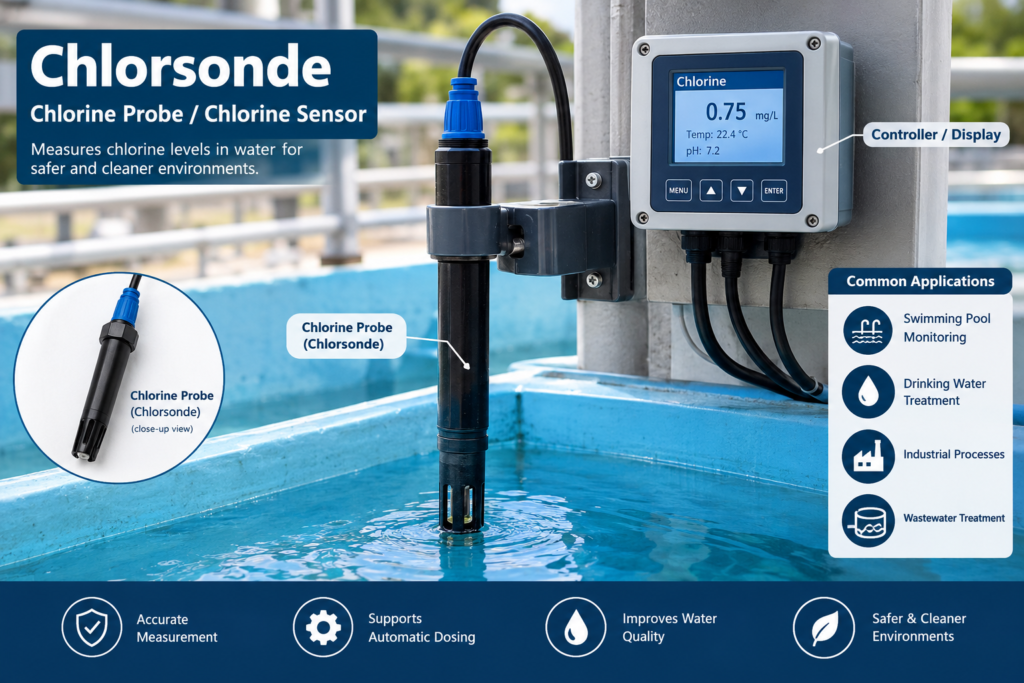
Introduction to Chlorsonde
In today’s world, new terms, technologies, and specialized products appear across different industries, making it important to understand what they mean before relying on them. Chlorsonde is one such keyword that may attract attention from people researching technology, industrial equipment, water quality, environmental monitoring, or specialized instruments. However, its precise meaning is not immediately clear from the term alone, so it is important to approach the topic carefully rather than assume it refers to a particular product or technology.
Understanding an unfamiliar term starts with identifying its context. A name might represent a commercial product, a technical instrument, a software platform, a company, or a specialized concept used within a particular profession. The surrounding information usually helps establish which interpretation is correct. This is especially important when a term resembles the names of scientific devices or industrial technologies.
This guide explores how to research Chlorsonde, what to consider when evaluating a product or service under that name, and how to assess its possible relevance to technical applications. It also explains the importance of accurate terminology, reliable documentation, and informed decision-making. The goal is to provide a practical, easy-to-understand resource without presenting unverified claims as established facts.
Let’s go!
1. What Is Chlorsonde?
The first step in understanding Chlorsonde is to establish exactly what the term represents. The name alone does not provide enough reliable information to confirm a specific manufacturer, product category, technical specification, or intended application. It would therefore be misleading to assign it a definite meaning without supporting documentation.
When researching a specialized term, consider whether it appears on a manufacturer’s website, in a technical manual, on a product label, or in an industry publication. These sources can help distinguish an official product name from a spelling variation, a brand name, or a term that is used informally. Context is often more informative than the name itself.
It is also worth checking alternative spellings. Technical product names can be difficult to remember, particularly when they contain unfamiliar combinations of letters. A small spelling difference can lead to completely different search results, so confirming the original spelling is a useful starting point for any serious investigation.
2. Why Is Chlorsonde Worth Researching?
Researching an unfamiliar keyword can help people discover information that is otherwise difficult to locate. A consumer may encounter the term while comparing products, a technician may see it in documentation, or a business owner may receive a recommendation involving a product with a similar name. In each case, finding the correct information is more useful than relying on assumptions.
A careful search can reveal whether the term is associated with a particular industry, a manufacturer, a technical process, or a specialized service. It can also uncover user manuals, installation instructions, product specifications, and customer support resources. These details help establish whether the information is relevant to the researcher’s actual needs.
Another reason to investigate Chlorsonde is to avoid confusion between similarly named products. In technical fields, two products can have similar names while differing significantly in design, compatibility, operating requirements, and safety considerations. Confirming the exact identity of a product before purchasing or using it can prevent unnecessary costs and misunderstandings.
3. Chlorsonde and Its Connection to Chlorine Sensors
One useful finding from technical research is that the German word Chlorsonde refers to a chlorine probe or chlorine sensor. These instruments are used to measure chlorine in water, especially in swimming pools, water-treatment systems, and certain industrial processes. This interpretation provides a concrete technical meaning for the keyword, although it does not establish that Chlorsonde is a separate brand or a single model.
Waterdos Instruments
+1
A chlorine sensor helps operators understand how much chlorine is present in a water sample. Chlorine is commonly used as a disinfectant because it helps control harmful microorganisms. Measuring its concentration is important because water-treatment systems need an appropriate disinfectant level rather than an uncontrolled amount. The right measurement method depends on the water chemistry, the application, and the instrument being used.
Modern chlorine sensors may be integrated into monitoring equipment that displays readings, sends information to a controller, or supports automated chemical dosing. Some models use electrochemical measurement methods, while other systems rely on different analytical approaches. The sensor must be selected according to the intended application because not every instrument measures the same form of chlorine or operates under the same conditions.
News center
+1
4. How Does a Chlorsonde Work?
The operating principle of a chlorine probe depends on its design. One common option is an amperometric sensor, which measures an electrical current associated with an electrochemical reaction. In suitable designs, that current changes in relation to the concentration of the chlorine being measured. The instrument then converts the signal into a reading that an operator or control system can interpret.
Some amperometric sensors use a membrane that separates the measuring electrodes from the surrounding water while allowing selected substances to reach the sensing area. The reaction at the electrodes produces an electrical signal, which the instrument processes to estimate the chlorine concentration. The CL4.2 sensor, for example, is described by its supplier as a membrane-covered, two-electrode amperometric instrument designed to measure free inorganic chlorine under specified pH conditions.
Waterdos Instruments
+1
The final reading depends on more than the sensor itself. Water pH, temperature, flow, pressure, the presence of interfering substances, and the instrument’s calibration can all affect performance, depending on the model. For that reason, a displayed value should be interpreted according to the manufacturer’s instructions and checked against an appropriate reference measurement when necessary. A sensor should never be assumed to provide accurate readings simply because its display is working.
5. Common Applications of Chlorsonde Technology
12
Swimming Pool Water Monitoring
Swimming pools are one of the most familiar applications for chlorine measurement. Pool operators need to maintain suitable disinfection while avoiding unnecessary chemical use. A chlorine probe connected to an automatic controller can help track changes in the water and support more consistent treatment.
Automated monitoring can be especially useful in busy swimming facilities where the number of swimmers, temperature, sunlight, and other factors may change the chlorine demand. A probe can supply frequent readings to a compatible controller, which may adjust chemical dosing when the system is correctly configured. The installation still requires regular checks because sensor readings can drift or become unreliable.
Pool owners should not treat an electronic reading as a substitute for all other water-quality checks. The correct chlorine range depends on the pool type, applicable guidance, and operating conditions. Following the equipment manual and the relevant public-health recommendations is essential for maintaining safe swimming water.
Drinking Water Treatment
Water utilities use disinfection processes to reduce the risk posed by disease-causing microorganisms. Chlorine monitoring can help operators verify that treatment is functioning as intended and that disinfectant concentrations remain within the required operating limits. Depending on the facility, measurements may be taken at several stages of treatment and distribution.
A chlorine probe can form part of a larger monitoring arrangement that includes pumps, chemical dosing equipment, flow sensors, alarms, and data logging. These components help operators identify changes in process conditions and respond before a minor issue becomes a larger operational problem. The exact arrangement depends on local regulations, the treatment process, and the characteristics of the water supply.
Drinking-water systems require careful instrument selection and verification. A sensor designed for a swimming pool should not automatically be considered suitable for a municipal water facility. Operators need to confirm measurement range, compatibility, certifications where applicable, and the ability to operate reliably under the conditions present at the installation.
Industrial and Wastewater Processes
Industrial facilities may use chlorine-based treatment to manage microorganisms or meet process requirements. In these environments, reliable measurement can help control chemical consumption, monitor treatment performance, and support consistent operation. Depending on the industry, the monitoring equipment may need to tolerate different temperatures, pressures, flow conditions, and water compositions.
Wastewater treatment introduces additional challenges because samples may contain suspended solids, organic matter, and other substances that interfere with certain measurement methods. The sensor must be suitable for the particular process, and operators may need additional filtration or sample-conditioning equipment. A device that performs well in clean pool water may not deliver equally reliable results in wastewater.
In industrial settings, a Chlorsonde-type instrument is best understood as one component of a broader process-control system. It can provide valuable information, but good results depend on appropriate installation, routine maintenance, verified measurements, and a response plan for alarms or unexpected readings.
6. Different Types of Chlorine Probes
Not all chlorine probes use the same measurement technology. Choosing the right type starts with understanding which chlorine measurement is needed, how the water will be sampled, and how the instrument will be used. A sensor that measures free chlorine, for example, may not provide a direct measurement of total chlorine.
Amperometric Chlorine Sensors
Amperometric sensors are widely used for continuous chlorine monitoring. They measure an electrical current produced by an electrochemical reaction, and the current is interpreted according to the instrument’s calibration and operating specifications. Depending on the design, these sensors may be suitable for automatic control systems that need frequent readings.
Some amperometric models include a membrane, while others use different electrode arrangements. Membrane-covered instruments can be sensitive to the conditions at the measuring surface, and their performance depends on correct installation and maintenance. Users should check whether the model requires a particular flow rate, pH range, or temperature range.
These sensors are useful when an application requires ongoing monitoring rather than occasional manual testing. However, the specific instrument must be selected carefully. Measurement range, response time, maintenance requirements, and compatibility with the controller all influence whether a particular model is suitable.
Membrane-Free Chlorine Sensors
Membrane-free sensors use an alternative electrode arrangement that does not rely on the same membrane-covered design. Depending on the model, they may offer advantages in certain operating environments, but their suitability depends on the chemistry of the water and the manufacturer’s specifications.
These instruments still require proper calibration and maintenance. Electrode condition, deposits, changing water chemistry, and unsuitable operating conditions can influence their readings. It is important not to assume that a membrane-free sensor is maintenance-free or universally more accurate than a membrane-covered alternative.
Before purchasing this type of probe, compare its documented operating limits with the conditions at the installation. Ask the supplier whether the sensor is compatible with the intended chlorine source, expected concentration, sample flow, and control equipment.
Digital and Analog Sensors
Some chlorine sensors provide an analog output, such as a current signal that a compatible controller interprets as a measurement. Other models offer digital communications that allow readings and, depending on the system, diagnostic information to be exchanged with monitoring equipment.
Analog systems can be practical for straightforward installations, while digital options may simplify integration into modern control and data-management systems. However, neither output format automatically guarantees greater accuracy. The sensing method, calibration, installation quality, and suitability for the application remain critical.
When choosing between digital and analog equipment, review the controller’s supported inputs, communication protocols, electrical requirements, and alarm capabilities. A sensor with excellent measurement performance may still be unsuitable if it cannot communicate correctly with the existing system.
7. Important Features to Consider Before Buying
Buying a chlorine probe should involve more than comparing prices. The best choice is an instrument that measures the required parameter reliably under the actual conditions of use. Reviewing the manufacturer’s technical documentation before placing an order can help avoid compatibility problems and unnecessary replacement costs.
Several specifications deserve particular attention:
- Measurement range: The sensor must cover the expected chlorine concentration.
- Measurement type: Confirm whether it measures free chlorine, total chlorine, or another specified parameter.
- pH compatibility: Some sensors have strict pH operating limits.
- Temperature range: Check that the instrument can tolerate the water temperature.
- Pressure and flow requirements: Verify that the installation falls within the permitted operating conditions.
- Output compatibility: Make sure the controller accepts the sensor’s signal or communication method.
- Maintenance needs: Review electrode care, cleaning requirements, calibration procedures, and replacement components.
- Manufacturer support: Check the availability of manuals, replacement parts, and technical assistance.
These details are not merely technical extras. They determine whether the sensor can deliver useful readings in everyday operation. For example, a sensor that is accurate under laboratory conditions may not be appropriate for a system with unstable flow or water chemistry outside its specified limits.
It is also worth reviewing the cost of ownership rather than focusing exclusively on the purchase price. Some instruments require regular replacement parts, specialized calibration materials, or professional servicing. A slightly more expensive model may offer better long-term value if it is easier to maintain and integrates smoothly with the existing equipment.
8. Understanding Free Chlorine and Total Chlorine
One of the most important concepts in chlorine monitoring is the difference between free chlorine and total chlorine. These measurements are related, but they are not interchangeable. Understanding the distinction helps users choose an appropriate sensor and interpret its readings correctly.
Free chlorine refers to chlorine available in the water in forms that can contribute to disinfection, including hypochlorous acid and hypochlorite ion. Their relative proportions depend largely on water chemistry, particularly pH. A free-chlorine measurement is commonly used in swimming pool and drinking-water monitoring.
Total chlorine includes free chlorine plus combined chlorine, which forms when chlorine reacts with certain substances in the water. In swimming pools, combined chlorine may include chloramines. The difference between total chlorine and free chlorine can therefore provide useful information about the water’s chemical condition.
A probe intended to measure free chlorine should not be assumed to measure total chlorine accurately. The appropriate method depends on the application and the manufacturer’s specifications. When a measurement is important for safety or regulatory compliance, use an approved reference method and follow the applicable testing procedure.
9. How to Install a Chlorsonde Correctly
Correct installation is essential for reliable readings. Even a high-quality sensor can produce misleading results when installed in an unsuitable location or operated outside its specifications. Before beginning, read the installation manual and identify the required mounting position, water-flow conditions, electrical connections, and safety precautions.
The installation location should provide a representative sample of the water being monitored. Avoid selecting a point where the water chemistry may differ significantly from the rest of the system unless that specific location is required by the process design. The manufacturer may also specify a sample flow rate, orientation, or minimum distance from chemical injection points.
Electrical and plumbing work should be completed by a qualified person when required. Before connecting the sensor, verify that the controller supports its signal type and electrical requirements. After installation, inspect the connections, confirm stable water flow, follow the manufacturer’s startup procedure, and compare the reading with an appropriate reference measurement.
A successful installation is not simply one where the display turns on. The sensor must provide readings that are representative, repeatable, and suitable for the control decisions being made. Recording the initial setup and reference measurements also makes later troubleshooting easier.
10. Calibration: Why It Matters
Calibration establishes the relationship between a sensor’s output and a known or independently measured chlorine concentration. Over time, sensor readings can drift because of electrode changes, deposits, wear, or variations in operating conditions. Calibration helps identify and correct this difference when the manufacturer’s procedure permits adjustment.
The correct method varies by instrument. Some systems require the operator to compare the sensor reading with a reference measurement and adjust the controller accordingly. Other instruments use specific calibration procedures or calibration solutions. For certain chlorine sensors, the reference method may involve a DPD test, which is a chemical method used to determine chlorine concentration.
Waterdos Instruments
+1
Calibration should be performed at the recommended intervals and whenever the manufacturer’s guidance indicates that it is necessary. It may also be appropriate after sensor replacement, significant maintenance, or an unexplained difference between the electronic reading and a reliable reference test. The precise procedure should always come from the model-specific manual.
Do not adjust a sensor simply to make its display match an expected number. First confirm that the reference test is valid, that the water sample is representative, and that the instrument is operating under suitable conditions. An incorrect reference measurement can lead to an inaccurate calibration, creating a problem rather than solving one.
11. Cleaning and Routine Maintenance
Routine maintenance helps keep a chlorine probe operating consistently. Deposits, biological growth, dirt, and changes in the condition of the sensing surface can affect some instruments. A sensor may continue to display a number even when its measurement performance has deteriorated, so maintenance should be based on the manufacturer’s recommendations rather than appearance alone.
The appropriate cleaning method depends on the sensor’s materials and design. Some probes require gentle cleaning of the measuring surface, while others have specific procedures for membranes, electrodes, or internal components. Using an unsuitable brush, solvent, or chemical cleaner can damage the instrument and affect future readings.
Maintenance records are particularly useful in commercial and industrial installations. Recording cleaning dates, calibration results, replacement parts, and observed faults makes it easier to identify recurring problems. It also helps operators distinguish between a sudden failure and gradual performance deterioration.
A sensible maintenance schedule should include visual inspection, checking sample flow, reviewing alarms, verifying readings against a reference method, and replacing components when required. The schedule should be adapted to the operating environment because a sensor in clean pool water may require a different maintenance frequency from one used in a demanding industrial process.
12. Common Chlorsonde Problems and Their Solutions
A chlorine probe may show an unusually low reading, fluctuate unexpectedly, respond slowly, or fail to agree with a manual test. These symptoms do not always indicate that the sensor is broken. They can also result from poor water flow, incorrect calibration, an unsuitable operating range, electrical issues, or changes in water chemistry.
Begin troubleshooting by checking the simple factors. Confirm that the sensor is installed correctly, that the required sample flow is present, and that the controller is configured for the correct sensor type. Review any displayed fault codes and consult the manufacturer’s manual before disassembling the instrument.
If the reading remains inconsistent, compare it with a suitable reference test performed on a representative sample. Check whether the reference method and the sensor measure the same chlorine parameter. For example, comparing a free-chlorine reading with a total-chlorine result can produce an apparent disagreement even when neither measurement is necessarily incorrect.
If the problem persists after basic checks, contact the manufacturer or a qualified technician. Avoid making repeated calibration adjustments without identifying the cause. When the sensor controls automatic chemical dosing, follow the system’s safety procedures and verify water quality independently until reliable operation has been established.
13. Factors That Can Affect Measurement Accuracy
Several conditions can influence how accurately a chlorine probe measures water. One of the most important is pH, because the chemical forms of chlorine change with pH. Certain sensor designs are intended to operate only within a specified pH range, meaning that a measurement may become unreliable if the water falls outside that range.
Temperature and flow are also important. Changes in temperature can affect the sensor’s response and the behavior of chlorine in water, while insufficient or unstable flow can interfere with some measurement designs. Certain instruments include temperature compensation, but this feature does not eliminate every possible source of error.
Other chemicals and substances can interfere with particular sensors. For example, some instruments may respond to chlorine dioxide or ozone in ways that affect the displayed result. The manufacturer of the CL4.2 sensor specifically documents interference considerations for its design, illustrating why technical specifications matter when choosing a monitoring instrument.
Waterdos Instruments
To improve measurement reliability, keep the sensor within its specified operating conditions, maintain the sample system, perform recommended calibration checks, and investigate unusual changes rather than assuming that every displayed value is correct. Where the result affects public health or regulatory compliance, use the prescribed verification procedures.
14. Chlorsonde and Automatic Chlorine Dosing
Automatic chlorine dosing systems use measurements and control logic to manage the addition of disinfectant. In a typical arrangement, a compatible sensor sends readings to a controller, which compares the measured value with a configured target. Depending on the system’s design, the controller can then adjust a dosing pump or activate an alarm.
Automation can reduce the need for constant manual adjustments and help a facility respond to changing conditions. In a swimming pool, for example, chlorine demand may rise when more people use the water. In an industrial installation, changes in water quality or process flow may require a different treatment response.
However, automatic dosing should never be treated as a system that can operate safely without supervision. If a sensor becomes fouled, loses flow, or produces an incorrect reading, the controller may respond inappropriately unless suitable safeguards are in place. Alarm limits, dosing limits, flow interlocks, and regular independent testing can help reduce these risks.
A well-designed installation combines suitable sensors, compatible control equipment, correct chemical handling, and a documented maintenance plan. The objective is not simply to automate chemical addition but to maintain reliable treatment while reducing unnecessary dosing and operational uncertainty.
15. Safety Considerations When Using Chlorine Sensors
A chlorine probe is a measuring instrument, but it is often installed in a system that handles chemicals or pressurized water. Safe operation therefore involves more than protecting the sensor from damage. Anyone installing or servicing the equipment should understand the hazards associated with the surrounding process.
Follow the manufacturer’s instructions before opening a sensor housing, disconnecting electrical equipment, or working on sample lines. If the probe forms part of an automatic dosing system, use the specified shutdown and isolation procedures before performing maintenance. Wear the protective equipment required for the chemicals and conditions involved.
Chemical dosing equipment should be kept within its designed operating limits. Do not bypass alarms, disable protective interlocks, or rely exclusively on an electronic reading when independent testing is required. If the displayed chlorine concentration is unexpectedly high or low, follow the site’s established response procedure instead of making an unverified adjustment.
Safety requirements differ between household pools, public facilities, and industrial treatment plants. Commercial and regulated installations should follow the applicable local rules and operating procedures. Where the system is complex or the cause of a fault is uncertain, a qualified technician is the appropriate person to inspect it.
16. How to Choose the Right Chlorsonde for Your Needs
The selection process should begin with the application. A homeowner monitoring a swimming pool has different requirements from a water utility, laboratory, or industrial facility. Before looking at prices or brands, identify the purpose of the measurement and the conditions under which the sensor will operate.
Next, establish which chlorine parameter must be measured and what concentration range is expected. Confirm the water’s pH and temperature conditions, required sample flow, pressure limitations, and any substances that could interfere with the measurement. These details help narrow the selection to instruments designed for the actual environment.
Finally, evaluate compatibility and long-term support. Confirm that the sensor works with the intended controller, that replacement parts are available, and that the manufacturer provides clear installation and calibration instructions. If the application requires formal certification or compliance with a specific standard, verify the relevant documentation rather than relying on general marketing claims.
A good purchasing decision balances measurement suitability, reliability, maintenance requirements, technical support, and total operating cost. A sensor is only useful when it provides dependable information that the operator can interpret and act on correctly.
17. The Future of Chlorine Monitoring Technology
Water monitoring technology continues to develop as facilities seek more reliable measurements and more efficient treatment processes. Modern analyzers increasingly support digital communication, improved diagnostics, and integration with broader process-control systems. These capabilities can help operators identify changes more quickly and maintain better records of system performance.
Manufacturers are also working on ways to improve sensor stability and reduce maintenance demands. For example, ABB’s ChloroStar analyzer family includes digital sensors and measurement cells designed to address challenges associated with chlorine measurement in demanding environments. Such developments demonstrate the wider direction of the industry, although they do not mean that every chlorine probe has the same features.
News center
Remote monitoring is another useful development. When a compatible system sends readings and alarms to a central interface, operators may be able to review measurements without being physically beside the equipment. Data logging can also help reveal patterns, such as recurring changes in chlorine demand or repeated sensor faults.
Despite these improvements, reliable water monitoring will continue to depend on sound measurement principles. Digital communication cannot compensate for an incorrectly selected sensor, poor installation, or inadequate calibration. The most effective systems combine suitable technology with trained operators, proper maintenance, and appropriate verification procedures.
18. Frequently Asked Questions About Chlorsonde
What does Chlorsonde mean?
Chlorsonde is a German term commonly used for a chlorine probe or chlorine sensor. It generally describes an instrument that measures chlorine in water for monitoring or process-control purposes. The exact specifications depend on the particular model and application.
What is a Chlorsonde used for?
A chlorine probe can be used in swimming pools, drinking-water treatment, and certain industrial water systems. It helps operators monitor chlorine concentrations and assess whether a treatment process is working as intended. Some probes also supply readings to automatic controllers.
Does a Chlorsonde measure free chlorine or total chlorine?
That depends on the instrument. Some sensors are designed to measure free chlorine, while other analytical methods can determine total chlorine. Always check the manufacturer’s documentation to confirm which measurement the particular model provides.
How often should a Chlorsonde be calibrated?
There is no single calibration interval suitable for every chlorine sensor. The appropriate schedule depends on the model, the operating environment, and the manufacturer’s instructions. Calibration or verification may also be needed when readings disagree with a reliable reference test.
Why does a chlorine probe show an incorrect reading?
Possible causes include poor water flow, sensor fouling, calibration drift, unsuitable pH or temperature, electrical problems, or interference from other substances. Comparing the result with an appropriate reference measurement can help identify the issue. Persistent faults should be investigated according to the manufacturer’s troubleshooting instructions.
Can a Chlorsonde control chlorine dosing automatically?
Yes, when the sensor is compatible with an automatic dosing controller. The controller can use the sensor’s readings to adjust chemical addition according to its programmed settings. Suitable alarms, safety limits, maintenance, and independent verification remain important.
Is every chlorine sensor suitable for drinking water?
No. Sensors differ in their measurement ranges, construction, operating conditions, and intended applications. A device should be used for drinking-water monitoring only when its specifications and any applicable approvals meet the requirements of the installation.
What should I check before buying a Chlorsonde?
Check the chlorine parameter being measured, the measurement range, pH and temperature limits, flow requirements, output compatibility, and maintenance needs. Also review the manufacturer’s documentation and technical support options. These checks help ensure that the instrument is appropriate for the intended system.
Conclusion: Understanding Chlorsonde and Its Practical Value
Chlorsonde is a useful keyword to understand when researching chlorine monitoring equipment, particularly because it is commonly associated with chlorine probes used in water treatment and related applications. These instruments help operators measure chlorine concentrations, monitor treatment performance, and, when integrated with compatible control systems, support more consistent chemical dosing.
The most important consideration is selecting the right sensor for the application. Measurement type, water chemistry, operating conditions, calibration, maintenance, and controller compatibility all influence how useful the instrument will be. A sensor should never be selected solely because its name sounds appropriate or its advertised price is attractive.
Ultimately, reliable chlorine monitoring depends on combining suitable equipment with accurate reference testing, proper installation, and regular maintenance. Whether the goal is to manage a swimming pool, support drinking-water treatment, or monitor an industrial process, understanding the instrument’s capabilities and limitations is the key to making informed decisions.
By researching the exact product, checking its technical documentation, and following the manufacturer’s recommendations, users can better understand Chlorsonde technology and determine whether a particular chlorine probe meets their needs.
YOU MAY HAVE MISSED