Introduction to Transmission Repair
Transmission repair is an essential part of vehicle maintenance that helps keep your car running smoothly, efficiently, and safely. The transmission transfers power from the engine to the wheels, allowing your vehicle to accelerate, slow down, and maintain the appropriate speed. Without a properly functioning transmission, even a powerful engine cannot deliver the performance you expect. Whether you drive a traditional automatic, a manual vehicle, or a modern continuously variable transmission (CVT), understanding transmission problems can help you make better decisions about repairs and maintenance.
Many drivers do not think about their transmission until something unusual happens. You might notice delayed shifting, strange noises, fluid leaking beneath the vehicle, or a sudden loss of acceleration. These symptoms can be frustrating, especially when they appear unexpectedly. However, not every transmission problem requires a complete replacement. Some issues can be resolved with a relatively simple repair, while others need professional diagnosis and more extensive work.
The good news is that early detection can often prevent minor transmission problems from becoming expensive mechanical failures. Learning how your transmission works, recognizing common warning signs, and following appropriate maintenance practices can help you protect your vehicle. In this guide, we will explore transmission repair in detail, including common problems, diagnostic methods, repair options, estimated costs, and practical ways to extend the life of your transmission.
What Is Transmission Repair?
Transmission repair refers to the inspection, diagnosis, adjustment, and replacement of components that allow a vehicle’s transmission to operate correctly. Depending on the problem, a technician may repair a leaking seal, replace a faulty sensor, service a valve body, or rebuild damaged internal components. The appropriate solution depends on the type of transmission, the severity of the damage, and the vehicle manufacturer’s specifications.
A transmission contains many moving parts that work together under considerable pressure and heat. In automatic transmissions, components such as clutch packs, planetary gear sets, hydraulic passages, solenoids, and a torque converter help manage power delivery. Manual transmissions use gears, synchronizers, a clutch system, and related mechanical components to achieve similar results. Because these systems differ, the repair procedure must match the transmission design.
Professional transmission repair begins with identifying the actual cause of the problem rather than replacing parts based on assumptions. For example, a vehicle that shifts roughly might have low fluid, a failing sensor, an electrical fault, worn internal components, or an engine performance issue. Correct diagnosis helps prevent unnecessary expenses and increases the likelihood that the repair will solve the problem.
How Does a Vehicle Transmission Work?
The transmission adjusts the relationship between engine speed and wheel speed. Engines operate most efficiently within certain speed ranges, while the wheels need different amounts of torque depending on acceleration, road conditions, and vehicle load. The transmission provides the gear ratios needed to balance these requirements.
In an automatic transmission, the vehicle’s control system determines when to change gears based on factors such as vehicle speed, throttle position, engine load, and operating temperature. Hydraulic pressure and electronically controlled solenoids help engage the appropriate gear. Many modern systems also use adaptive controls that adjust shifting behavior based on driving conditions and other operating information.
A manual transmission works differently because the driver selects gears using a gear lever and operates the clutch to temporarily disconnect engine power from the transmission. A CVT uses a variable ratio mechanism rather than a conventional series of fixed forward gears. Although these systems operate differently, they all depend on proper lubrication, correctly functioning components, and suitable operating temperatures. When one part fails, the entire driving experience can be affected.
Common Signs That Your Car Needs Transmission Repair
Recognizing transmission warning signs early can help you avoid breakdowns and reduce the risk of additional damage. One of the most common symptoms is delayed shifting. You may move the gear selector into Drive or Reverse, but the vehicle takes longer than normal to respond. This can indicate a fluid pressure issue, a control problem, or internal wear that requires further investigation.
Another warning sign is slipping between gears. The engine may rev higher than expected without a corresponding increase in vehicle speed. You might also feel a sudden change in power while accelerating. Transmission slipping can result from worn clutch components, inadequate fluid pressure, internal damage, or other faults. It should not be ignored because continued driving may make the problem worse.
Other symptoms include unusual whining, grinding, clunking, burning smells, fluid leaks, and warning lights on the dashboard. Some vehicles enter a protective operating mode called limp mode when the control system detects a serious fault. If your car loses the ability to move normally, produces severe mechanical noises, or smells strongly of burning fluid, stop driving when it is safe to do so and arrange a professional inspection.
Understanding Automatic Transmission Problems
Automatic transmissions are designed to change gears without requiring the driver to operate a clutch pedal. They provide convenience, but their combination of mechanical, hydraulic, and electronic components can make diagnosis complicated. Problems may begin with subtle symptoms, such as slightly harsh shifts, intermittent hesitation, or an occasional warning light.
Low or degraded transmission fluid is a common concern. Automatic transmission fluid lubricates internal parts, helps transfer hydraulic pressure, and carries heat away from critical components. If the fluid level becomes too low, the transmission may struggle to engage gears correctly. Fluid that has deteriorated from excessive heat or prolonged use may also lose some of its protective properties.
Electronic faults can cause similar symptoms. A malfunctioning speed sensor, pressure-control solenoid, wiring connection, or transmission control module may interfere with normal shifting. These issues sometimes trigger diagnostic trouble codes, but a code does not automatically identify the failed component. A qualified technician should interpret the codes alongside fluid condition, electrical tests, live data, and mechanical symptoms before recommending a repair.
Manual Transmission Repair and Common Issues
Manual transmissions offer direct driver control over gear selection, but they still require regular maintenance and occasional repairs. One of the most noticeable problems is difficulty shifting into a particular gear. This may occur because of worn synchronizers, a damaged shift linkage, clutch problems, or insufficient lubricant. Grinding noises while changing gears can indicate that components are no longer engaging smoothly.
Clutch problems are frequently mistaken for transmission failure. If the clutch slips, the engine may rev without delivering enough power to the wheels. A clutch pedal that feels unusually soft, stiff, or inconsistent may also signal a problem with the clutch mechanism or its hydraulic system. Depending on the vehicle, repairs may involve the clutch disc, pressure plate, release bearing, hydraulic cylinder, or related components.
Manual transmission fluid is another important consideration. The lubricant reduces friction and protects gears and bearings from excessive wear. Using the wrong fluid can affect shifting quality and component protection, even if the fluid level appears correct. Always follow the vehicle manufacturer’s recommendations regarding lubricant type, service intervals, and inspection procedures.
Common Causes of Transmission Failure
Transmission failure rarely has just one universal cause. In many cases, several factors contribute to deterioration over time. Excessive heat is a major concern because high temperatures can accelerate fluid degradation and increase stress on seals, clutch materials, and other internal components. Repeated heavy towing, stop-and-go driving, aggressive acceleration, and inadequate cooling can increase operating temperatures under certain conditions.
Poor maintenance can also shorten transmission life. Ignoring fluid leaks, using an incorrect lubricant, or delaying attention to early warning signs may allow relatively minor faults to develop into serious damage. Some transmissions require specific fluid service procedures, while others have manufacturer-defined inspection or replacement intervals. There is no single maintenance schedule suitable for every vehicle.
Mechanical wear, manufacturing defects, electrical problems, and external damage can also contribute to failure. A damaged transmission mount, for example, may cause excessive movement or noticeable clunking, even when the transmission’s internal gears are functioning correctly. This is why a thorough inspection is important. The technician must determine whether the problem originates inside the transmission or in a related system.
Transmission Fluid: Why It Matters
Transmission fluid plays a critical role in maintaining reliable operation. Depending on the transmission design, it lubricates gears and bearings, supports hydraulic functions, helps engage internal clutches, and carries heat away from working components. When the fluid level or condition is incorrect, the transmission may shift poorly or experience accelerated wear.
Drivers should never assume that all transmission fluids are interchangeable. Different vehicles may require specific automatic transmission fluids, CVT fluids, dual-clutch transmission fluids, or manual transmission lubricants. These products have different friction characteristics and performance requirements. Using an incompatible fluid can cause shifting problems or damage components, so the manufacturer’s specification should always guide fluid selection.
Checking the fluid is not always as simple as pulling a dipstick. Some modern transmissions have no conventional dipstick and require a specific temperature range and service procedure for an accurate level check. If you notice a leak, unusual shifting, or a burning odor, have the system inspected promptly. Fluid color alone is not a definitive diagnostic test, and adding fluid without identifying a leak or confirming the correct specification may not solve the underlying problem.
Transmission Fluid Leak: Causes and Solutions
A transmission fluid leak can develop when a seal deteriorates, a gasket fails, a cooler line becomes damaged, or a housing or pan is affected by impact. Depending on the vehicle and fluid type, leaking fluid may appear reddish, amber, brown, or another shade. However, color can vary with age and formulation, so appearance alone cannot confirm the source.
A leak should be taken seriously because insufficient fluid can interfere with lubrication and hydraulic pressure. A small leak may initially produce only a few drops beneath the vehicle, but the condition can worsen over time. If the transmission begins slipping, shifting erratically, or struggling to engage Drive or Reverse, stop driving when safe and seek professional assistance.
The repair depends on where the leak originates. A technician may replace a gasket, renew a seal, repair a damaged line, or address a cracked component. After the repair, the transmission must be filled with the correct fluid and checked according to the manufacturer’s procedure. Simply topping up the fluid without repairing the leak may provide only temporary relief.
How Mechanics Diagnose Transmission Problems
Accurate diagnosis is the foundation of effective transmission repair. A technician typically begins by discussing the symptoms, including when they occur, how long they have been present, and whether they change with vehicle speed, temperature, or driving conditions. This information can help narrow the possible causes before any parts are removed.
The next step may include a visual inspection, fluid-level check, road test, and electronic scan. Diagnostic tools can retrieve trouble codes from the transmission control system and display live information such as sensor readings, commanded gear, and operating temperature. Depending on the symptoms, the technician may also inspect wiring, connectors, engine performance, mounts, and cooling components.
More complex cases can require pressure testing, electrical measurements, specialized manufacturer diagnostic procedures, or internal inspection. A reliable repair shop should explain its findings and distinguish confirmed faults from possible causes. Before approving expensive work, ask what tests were performed, which components failed, and why the recommended repair is appropriate.
Transmission Repair vs. Transmission Replacement
Transmission repair and transmission replacement are two different approaches to resolving serious problems. Repair generally focuses on correcting specific faults while retaining the existing transmission. This may involve replacing a solenoid, fixing a leak, renewing a seal, repairing wiring, or addressing a damaged internal component. When the damage is limited, targeted repair can be a cost-effective solution.
Replacement involves removing the existing unit and installing another transmission. The replacement may be new, remanufactured, or used, depending on availability, budget, and the vehicle’s requirements. Replacement can be appropriate when the original transmission has widespread internal damage, severe contamination, or multiple worn components that would make rebuilding impractical.
The best choice depends on the vehicle’s age, mileage, overall condition, repair estimate, and expected future use. A newer vehicle with otherwise excellent condition may justify a more comprehensive repair, while an older vehicle with extensive unrelated problems may not. Compare the total installed cost, warranty coverage, parts quality, and expected reliability rather than choosing solely by the initial price.
What Is a Transmission Rebuild?
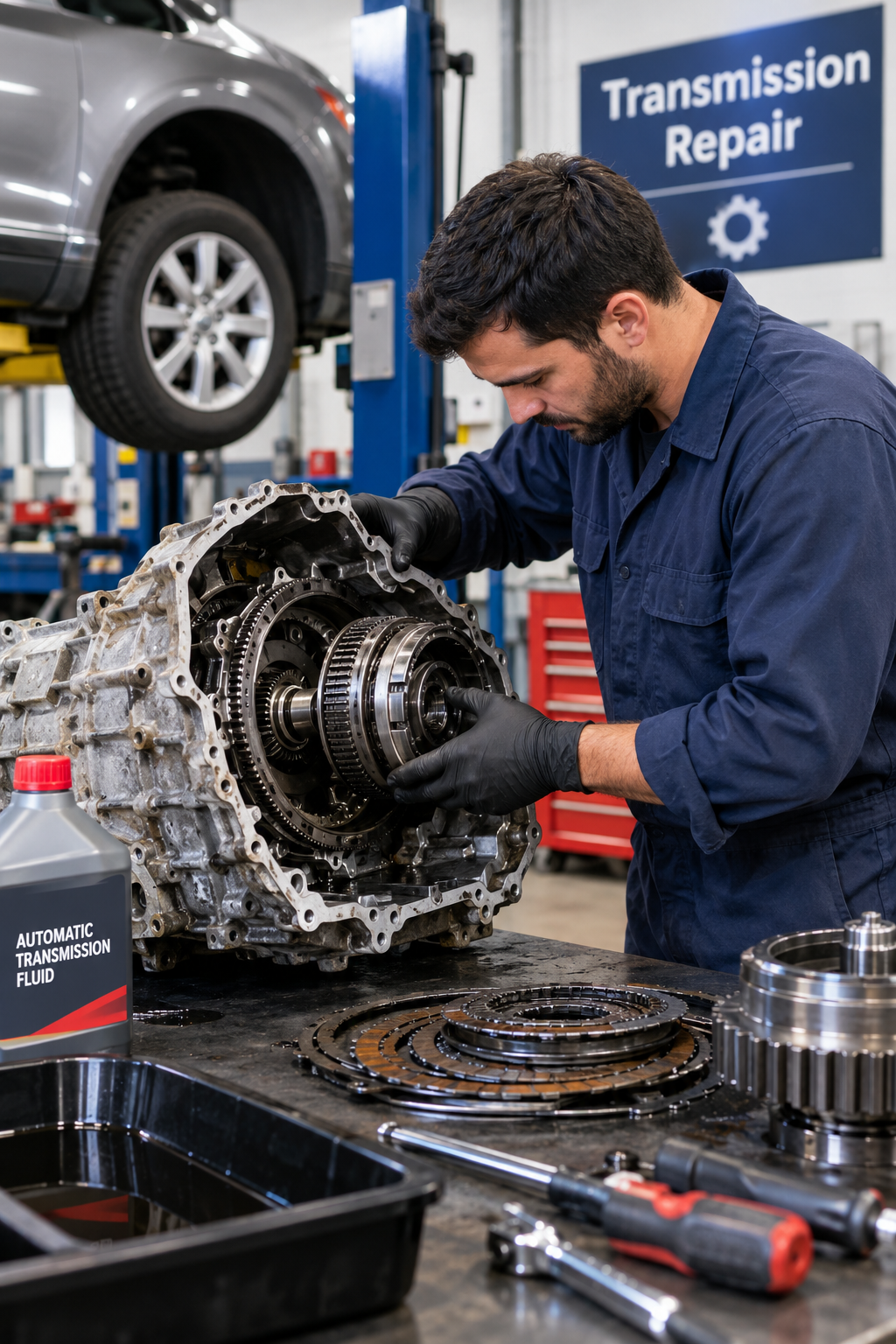
A transmission rebuild involves disassembling the transmission, inspecting its internal components, replacing damaged or worn parts as appropriate, and reassembling the unit according to technical specifications. The process is more extensive than a simple external repair and typically requires specialized tools, technical knowledge, and a clean working environment.
During a rebuild, the technician may inspect clutch packs, bands where applicable, bearings, seals, bushings, planetary gear sets, the valve body, and other components. The exact parts replaced depend on the transmission design and inspection results. Some components may remain serviceable, while others may need replacement because of wear, heat damage, or contamination.
A rebuild can restore reliable operation when performed correctly, but its quality depends on the parts used, the technician’s expertise, and proper testing. Ask whether the estimate includes necessary internal components, updated parts where applicable, fluid, filters, and post-repair testing. You should also clarify the warranty terms and whether the rebuild includes the torque converter or other related components when relevant.
Transmission Repair Costs: What Should You Expect?
Transmission repair costs vary considerably because different problems require different levels of labor and parts. A relatively simple external leak or electrical repair may cost much less than an internal rebuild or complete replacement. Vehicle make, model, transmission design, local labor rates, parts availability, and regional taxes can all affect the final bill.
As broad illustrative estimates in the United States, minor repairs may range from approximately $150 to $600, while some more involved repairs can cost $600 to $2,000 or more. A rebuild may fall around $2,000 to $5,000 or higher, and a full replacement can exceed $3,000 to $8,000 depending on the vehicle and the unit installed. These figures are not quotes, and some modern or luxury vehicles can cost substantially more.
To understand a repair estimate, request an itemized breakdown covering diagnostic fees, labor, parts, fluids, programming, and any additional work. Ask whether the shop will contact you before performing repairs beyond the approved amount. If the proposed work is expensive, a second opinion from a reputable transmission specialist can help you evaluate the diagnosis and compare available options.
Factors That Affect Transmission Repair Prices
The type of transmission is one of the most important cost factors. Conventional automatic transmissions, manual gearboxes, CVTs, and dual-clutch systems use different components and service procedures. Some designs require specialized diagnostic equipment, programming, or highly specific replacement parts, which can increase the total repair cost.
Vehicle age and parts availability also influence pricing. Parts for a common vehicle may be easier to source than components for an older, rare, or luxury model. In addition, labor costs vary between repair shops and regions. A transmission that must be removed from the vehicle for access can require substantially more labor than a sensor or external seal that can be replaced without removing the unit.
The extent of damage matters just as much as the original symptom. A small leak may be inexpensive to repair if it has not caused additional damage. However, if the transmission has been operated with insufficient fluid for an extended period, internal components may have suffered serious wear. Prompt diagnosis can help prevent a manageable repair from becoming a much larger expense.
Can You Drive With a Faulty Transmission?
Whether you can continue driving depends on the symptoms and the underlying fault. A minor issue that does not affect safe operation may allow you to reach a repair facility after receiving professional advice. However, slipping gears, delayed engagement, severe noises, burning smells, fluid loss, or unpredictable acceleration can indicate a serious problem.
Driving with a slipping or overheating transmission can create additional friction, heat, and internal damage. A vehicle that unexpectedly loses drive or fails to respond when accelerating can also become dangerous in traffic. Continuing to drive simply because the car still moves may turn a repairable problem into a complete transmission failure.
If the vehicle cannot engage gears properly, leaks a significant amount of fluid, produces severe grinding sounds, or displays a warning accompanied by major performance changes, stop in a safe location and arrange towing. Follow the vehicle manufacturer’s towing instructions because certain transmission designs can be damaged by improper towing methods. When in doubt, avoid driving until a qualified technician assesses the vehicle.
Transmission Repair for Modern Vehicles
Modern vehicles rely heavily on electronic controls to manage transmission performance. Sensors monitor operating conditions, while control modules process information and command components to deliver suitable gear changes. This technology can improve efficiency and responsiveness, but it also means that a transmission symptom may originate from an electrical or software-related problem rather than a damaged mechanical component.
Advanced driver assistance features, engine management systems, and integrated vehicle networks may also interact with transmission operation. A faulty sensor, low battery voltage, damaged wiring, or communication issue can sometimes trigger warning messages or abnormal shifting. The presence of a warning light does not automatically mean the transmission must be replaced.
Some repairs require manufacturer-specific diagnostic equipment, software updates, control-module programming, or adaptive relearning procedures. These steps must be performed according to the vehicle’s service information. Choosing a shop with experience in the specific make and transmission type can be particularly valuable when the fault involves complex electronics.
CVT Transmission Repair: What Makes It Different?
A continuously variable transmission, commonly called a CVT, changes its gear ratio continuously rather than relying on a conventional sequence of fixed forward gears. Many CVTs use a belt or chain and variable-diameter pulleys, although other designs also exist. This arrangement can provide smooth acceleration and help the engine operate efficiently.
CVT problems may include unusual whining, shuddering, hesitation, overheating, warning lights, or a loss of acceleration. These symptoms can arise from several causes, including fluid problems, sensor faults, control issues, or internal mechanical wear. Because different CVT designs use different operating principles, accurate identification of the transmission is essential before selecting a repair procedure.
CVT fluid is especially important because its friction and lubrication characteristics must match the manufacturer’s requirements. Using conventional automatic transmission fluid when a specific CVT fluid is required can create serious problems. If a CVT develops persistent symptoms, seek a technician experienced with that system rather than relying on assumptions based on traditional automatic transmissions.
How to Choose a Reliable Transmission Repair Shop
Choosing the right repair shop can make a major difference in the quality and cost of the work. Look for a business with experience servicing your vehicle’s make and transmission type. Specialized knowledge is particularly important for modern automatic transmissions, CVTs, dual-clutch systems, and electronically controlled gearboxes.
A reputable shop should explain its diagnostic process, provide a written estimate, and answer questions without pressuring you into immediate approval of expensive work. Ask whether diagnostic charges are separate from repair costs and whether the shop offers a warranty on labor and parts. It is also sensible to review recent customer feedback and check whether complaints are handled professionally.
Before authorizing a rebuild or replacement, ask for the specific failure identified, the available repair options, and the advantages and disadvantages of each. Find out whether the replacement unit is new, remanufactured, or used, and request written warranty details. Clear communication helps you understand what you are paying for and what protection you will receive after the repair.
Preventive Maintenance Tips for a Longer-Lasting Transmission
Preventive maintenance is one of the best ways to reduce the risk of expensive transmission problems. Start by following the maintenance schedule specified for your vehicle. Depending on the design, the manufacturer may recommend fluid inspection, fluid replacement, filter servicing, or other procedures at particular mileage or time intervals. Some transmissions have special requirements that differ from older designs.
Driving habits also influence transmission wear. Avoid unnecessary aggressive acceleration, and allow the vehicle to come to a complete stop before switching between Drive and Reverse. If your vehicle is equipped for towing, follow its towing capacity and operating recommendations. Heavy loads, steep hills, and repeated stop-and-go driving can increase transmission temperatures under demanding conditions.
Pay attention to leaks, shifting changes, warning lights, and unusual noises. Addressing these symptoms promptly is often less expensive than waiting until the vehicle becomes undriveable. You should also use only the specified transmission fluid and avoid unverified additives or treatments that promise to repair serious mechanical damage. Maintenance cannot prevent every failure, but it can reduce avoidable wear and help identify problems early.
Transmission Flush vs. Transmission Fluid Change
A transmission fluid change and a transmission flush are not necessarily the same service. A fluid change generally replaces some or all of the fluid through a procedure specified for the vehicle. Depending on the design, the service may also include replacing a filter, cleaning an accessible pan, and inspecting for debris or leaks.
A flush typically refers to a process intended to exchange a larger proportion of the fluid, although the exact procedure varies by equipment and shop. Some vehicles and transmission conditions may be suitable for a manufacturer-approved fluid exchange, while others require a different service approach. The word “flush” alone does not guarantee that the procedure is appropriate or beneficial.
The right choice depends on the vehicle manufacturer’s guidance, transmission design, service history, and current condition. A transmission that already slips or has severe internal damage will not necessarily be repaired by replacing its fluid. Before approving either service, ask the technician which procedure is recommended for your specific vehicle and why.
Transmission Warning Lights and Diagnostic Trouble Codes
A transmission warning light indicates that the vehicle’s monitoring system has detected a condition requiring attention. Depending on the make and model, the warning may appear as a transmission symbol, a check-engine light, a temperature warning, or a message on the instrument display. Some faults produce a warning immediately, while others may only be recorded in the vehicle’s diagnostic system.
A diagnostic trouble code can help identify the system or operating condition involved, but it is not always a direct instruction to replace a specific part. For example, a sensor-related code might be caused by a failed sensor, damaged wiring, a poor electrical connection, or a separate mechanical issue affecting the reading. Correct diagnosis requires testing the likely causes rather than simply replacing the component named in a code description.
If a warning appears alongside slipping, overheating, severe noise, or loss of drive, stop driving when safe and arrange professional help. If the vehicle appears to operate normally, consult the owner’s manual and have the code checked promptly. Avoid clearing warning codes before diagnosis because doing so may erase useful information about the original fault.
Transmission Repair Mistakes You Should Avoid
One common mistake is ignoring early symptoms because the vehicle still seems drivable. A slight hesitation or occasional harsh shift may appear harmless, but repeated symptoms can indicate a developing problem. Prompt inspection helps determine whether the cause is minor or requires immediate attention.
Another mistake is adding the wrong fluid or using additives without confirming compatibility. Transmission systems depend on specific fluid properties, and an unsuitable product can interfere with operation or damage components. Always verify the manufacturer’s specifications before adding fluid or authorizing a service.
It is also unwise to approve a complete replacement without understanding the diagnosis. Although replacement may be necessary in some cases, similar symptoms can result from external leaks, electrical faults, engine problems, or other components. Request a clear explanation of the test results and consider a second opinion if the proposed work is expensive and the evidence is unclear.
Frequently Asked Questions About Transmission Repair
1. How do I know if my transmission needs repair?
Common warning signs include delayed shifting, slipping gears, unusual noises, fluid leaks, burning odors, and warning lights. Difficulty engaging Drive or Reverse can also indicate a problem. A professional inspection is the best way to determine the cause and identify the appropriate repair.
2. How much does transmission repair usually cost?
The cost depends on the fault, vehicle, transmission type, labor rate, and parts required. Minor repairs may cost a few hundred dollars, while rebuilds and replacements can cost several thousand dollars. Obtain a written estimate based on a proper diagnosis rather than relying on a general price range.
3. Can a transmission be repaired instead of replaced?
Yes. Many transmission problems can be addressed without replacing the entire unit. External leaks, faulty sensors, damaged wiring, and certain internal component failures may be repairable. However, severe internal damage may make rebuilding or replacement the more practical option.
4. How long does transmission repair take?
Simple repairs may be completed within a few hours, depending on parts availability and the shop’s schedule. More complex repairs may take several days, while a rebuild or replacement can take longer if specialized parts or additional testing are required. Ask the repair shop for a realistic timeline.
5. Is it safe to drive with a transmission fluid leak?
A minor leak still requires attention because the fluid level can fall and cause additional damage. A significant leak, slipping gears, or loss of drive makes continued driving unsafe. If fluid is leaking rapidly or the transmission is behaving abnormally, stop in a safe place and arrange towing.
6. Does changing transmission fluid fix slipping?
It depends on the cause. If the problem results from an incorrect fluid level or another service-related issue, correcting it may help. However, slipping caused by worn clutch packs, damaged internal parts, or other mechanical failures will not necessarily improve with a fluid change.
7. How often should transmission fluid be changed?
There is no single interval that applies to every vehicle. Recommendations vary by transmission type, manufacturer, driving conditions, and vehicle use. Check the owner’s manual or manufacturer service information for the correct schedule, including any special requirements for towing or severe operating conditions.
8. Is a transmission rebuild worth the money?
A rebuild may be worthwhile when the vehicle is in good overall condition and the transmission can be restored reliably at a reasonable cost. Compare the rebuild price, warranty, vehicle value, mileage, and expected future maintenance before deciding. A trustworthy technician can explain whether rebuilding or replacement is more suitable.
9. What causes a transmission to overheat?
Excessive load, heavy towing, inadequate cooling, low fluid, internal slipping, and certain mechanical faults can contribute to overheating. Repeated high temperatures can accelerate fluid deterioration and damage internal components. Follow the vehicle’s towing recommendations and investigate temperature warnings promptly.
10. Can regular maintenance prevent transmission failure?
Regular maintenance can reduce avoidable wear and help identify problems before they become severe. Using the correct fluid, following service intervals, checking for leaks, and addressing unusual shifting can all help. However, maintenance cannot eliminate the risk of age-related wear, manufacturing defects, or unexpected component failure.
Conclusion: Keep Your Vehicle Reliable With Timely Transmission Repair
Transmission repair is an important part of keeping your vehicle dependable, comfortable, and safe to operate. Because the transmission contains many interconnected mechanical, hydraulic, and electronic components, even a small fault can affect shifting performance and power delivery. Recognizing warning signs early gives you a better chance of addressing problems before they develop into major mechanical failures.
The most effective approach combines accurate diagnosis, suitable repairs, and preventive maintenance. Pay attention to slipping gears, unusual noises, fluid leaks, delayed engagement, and warning lights. Follow the manufacturer’s recommendations for transmission fluid and servicing, and avoid continuing to drive when serious symptoms suggest that the vehicle may be unsafe.
Finally, choose a qualified repair shop that explains its findings, provides a clear estimate, and stands behind its work. Compare repair, rebuild, and replacement options based on the vehicle’s overall condition and your long-term needs. With informed decisions and proper care, you can reduce unnecessary repair expenses and help your transmission deliver reliable performance for years to come.
YOU MAY HAVE MISSED