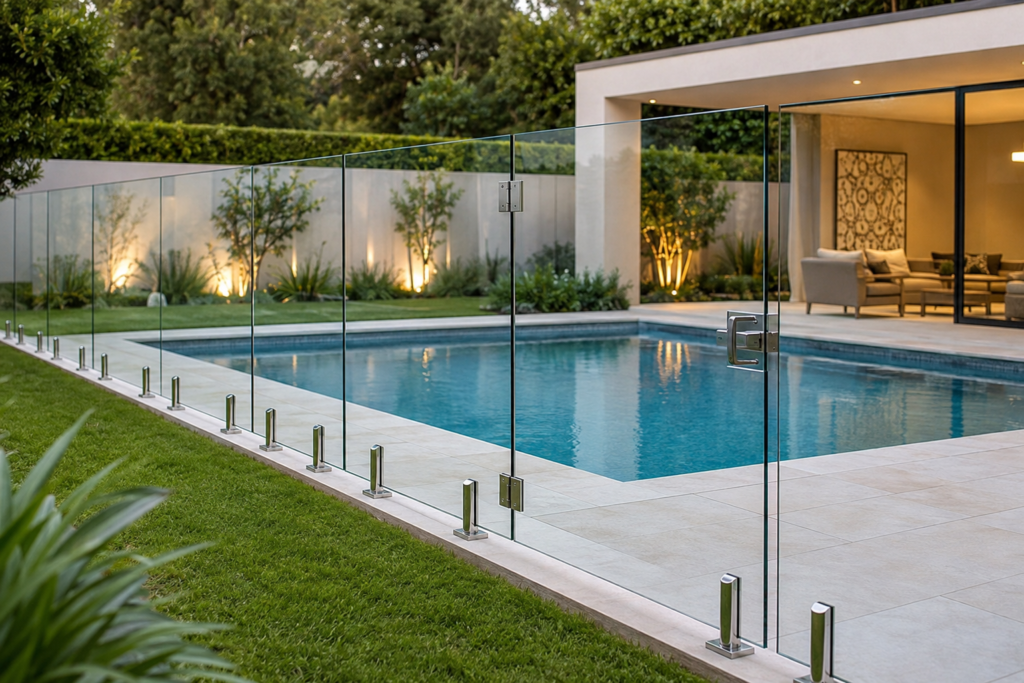
A glass fence is one of those home improvements that can completely change the feel of an outdoor space without making it look overly complicated. Instead of creating a heavy visual barrier, glass fencing gives you a clean, open appearance while still providing a clear boundary around areas such as swimming pools, balconies, patios, gardens, and terraces.
The popularity of glass fencing has grown because modern homeowners increasingly want outdoor spaces that feel connected rather than divided. Traditional materials such as brick, timber, and metal can provide excellent security, but they can also interrupt views and make smaller spaces appear more enclosed. Glass takes a different approach by creating separation without sacrificing visibility.
Of course, choosing a glass fence is not simply about picking the most attractive option. There are important decisions involving glass thickness, hardware, safety standards, privacy, maintenance, installation, and budget. Understanding these factors before making a purchase can help you choose a fence that looks good and performs reliably for years.
What Is a Glass Fence?
A glass fence is a barrier system made primarily from specially manufactured safety glass. Unlike ordinary household glass, fencing glass is designed to withstand impact, outdoor conditions, and everyday use. The panels are normally supported by posts, channels, spigots, or other specialized hardware, depending on the style of installation.
Most modern glass fences use toughened or tempered glass. This type of glass is heat-treated to improve its strength compared with standard glass. If it is severely damaged, it is designed to break into relatively small pieces rather than large, sharp shards. This characteristic makes it particularly useful for applications where safety is important.
Glass fencing can be installed in several different configurations. Some systems use visible metal posts between panels, while frameless systems use small fittings or channels to hold the glass in place. Semi-frameless designs sit somewhere between the two, offering a minimalist appearance while retaining some structural framing.
Why Glass Fencing Has Become So Popular
One of the biggest reasons people choose a glass fence is its appearance. Glass has a naturally modern quality that works well with contemporary architecture, landscaped gardens, outdoor entertaining areas, and swimming pools. Because the panels are transparent, they can blend into their surroundings instead of competing with them.
Another major advantage is the sense of space they create. A solid fence can visually divide a yard into separate sections, while glass maintains a connection between those areas. This can be particularly useful in smaller gardens, where a traditional fence may make the property feel enclosed.
Glass fencing also has a timeless quality. While some fencing styles are strongly associated with particular design trends, clear glass tends to remain visually relevant. When paired with simple hardware and good landscaping, it can continue to look sophisticated even as other elements of the property change.
Glass Fence for Swimming Pools
Pool fencing is one of the most common applications for glass fencing. A swimming pool needs a clearly defined barrier, and glass can provide that separation without blocking the view of the water or surrounding landscape.
Clear visibility is particularly useful around pools. Parents and other adults can more easily see across the pool area when there is no solid material obstructing the view. This does not replace responsible supervision, but it can make the overall pool environment easier to monitor.
Pool fencing also benefits from the clean appearance of glass. Instead of turning the pool into a visually closed-off zone, glass can help integrate it with the rest of the backyard. When the fence is designed correctly, the barrier becomes a subtle part of the landscape rather than the dominant feature.
Frameless Glass Fence
A frameless glass fence is designed to minimize visible structural components. Instead of using large posts between every panel, the glass is generally supported by smaller fittings, spigots, channels, or related hardware.
The main attraction of a frameless system is its minimalist appearance. From a distance, the glass can appear almost invisible, allowing the surrounding architecture and landscaping to remain the focus. This effect is especially attractive around swimming pools and properties with scenic views.
However, frameless does not mean structure-free. The supporting hardware is essential to the stability of the fence, and installation needs to be carried out carefully. The supporting surface must also be suitable for the selected system. A beautiful frameless design will only perform properly when the engineering and installation behind it are equally well considered.
Semi-Frameless Glass Fence
A semi-frameless glass fence uses fewer or smaller posts than a fully framed system while still providing more visible structural support than a frameless design. It offers a useful balance between clean aesthetics and practical construction.
This option can be attractive for homeowners who like the appearance of glass but want a more defined structural framework. Depending on the design, the posts may be positioned at the ends or between selected panels rather than creating a heavy visual grid.
Semi-frameless fencing can also offer flexibility when dealing with unusual outdoor layouts. Changes in levels, corners, pathways, and landscaping features may influence the best fencing configuration. A semi-frameless system can sometimes accommodate these details without losing its modern character.
Framed Glass Fencing
Framed glass fencing typically places the glass inside or alongside a more substantial frame or series of posts. The frame can be made from materials such as aluminum or other suitable metals, depending on the system.
The additional framing can provide a distinctive visual style. Rather than trying to make the fence disappear, framed systems can use the posts and rails as part of the overall design. This may work especially well with homes that already feature strong architectural lines.
Framed fencing can also provide practical advantages depending on the application. The exact construction, hardware, and glass specifications vary between systems, so homeowners should consider the design as a complete package rather than judging the glass alone.
Benefits of Installing a Glass Fence
One of the clearest benefits of a glass fence is visibility. You can establish a physical boundary without losing sight of the garden, pool, patio, or landscape beyond it. This makes glass particularly appealing for properties where the view is an important part of the outdoor experience.
Another benefit is its modern appearance. Glass works naturally with concrete, stone, timber, tile, metal, and greenery. This gives homeowners considerable freedom when combining the fence with existing landscaping and architectural materials.
Glass fencing can also be relatively easy to maintain when the right products and installation methods are used. It does not need to be painted like timber, and there is no conventional rust problem with the glass itself. The main maintenance task is usually keeping the panels clean and checking the supporting hardware periodically.
Does a Glass Fence Provide Privacy?
Clear glass is not generally the first choice for maximum privacy. Its biggest advantage is visibility, so homeowners who want complete visual separation may prefer another fencing material.
However, glass fencing can be customized to provide a greater degree of privacy. Frosted, tinted, textured, or patterned glass can reduce visibility while maintaining the clean aesthetic associated with glass fencing.
Privacy glass can be particularly useful around patios, balconies, and outdoor entertaining areas. It allows light to enter while reducing direct views into the space. The right level of opacity depends on how much privacy you need and how important visibility is to the design.
Is Glass Fencing Safe?
Safety is one of the most important considerations when choosing any glass fence. Properly specified fencing glass is significantly different from ordinary window glass and should be selected according to the requirements of its intended application.
The glass is only one part of the safety equation. Hardware, fixing points, supporting surfaces, panel dimensions, installation quality, and local regulations all matter. A high-quality glass panel cannot compensate for an incorrectly installed support system.
Homeowners should therefore work with an experienced fencing professional who understands the applicable building and safety requirements. Pool fencing in particular can be subject to specific rules concerning height, openings, gates, climbing points, and access. Requirements vary by location, so local regulations should always be checked before installation.
Choosing the Right Glass Thickness
Glass thickness is another factor that deserves careful attention. Different applications may require different specifications based on panel size, support method, location, and applicable safety requirements.
It can be tempting to assume that thicker glass is automatically the best choice. In reality, the correct specification depends on the entire fencing system. Glass thickness, dimensions, edge treatment, hardware, fixing method, and engineering considerations all work together.
Rather than selecting a thickness based solely on price or appearance, ask the installer to explain why a particular specification is appropriate for your project. A professional recommendation should take the actual site conditions into account.
Glass Fence Hardware and Fittings
The hardware used with a glass fence plays a major role in both appearance and performance. Common components include posts, spigots, channels, clamps, hinges, latches, brackets, and other fixing systems.
Stainless steel and appropriately finished aluminum are commonly used because outdoor fencing is exposed to weather, moisture, and temperature changes. The right material depends on the location and the specific fencing system.
Hardware should also complement the overall design. Polished finishes can create a brighter appearance, while brushed or matte finishes may provide a more understated look. Small details matter because minimalist fencing leaves relatively little room for visual distractions.
Glass Fence Gates
A gate is often one of the most important components of a glass fencing system, particularly around pools and restricted areas. A well-designed gate should operate smoothly while meeting the relevant safety requirements.
The hinges and latch need to be selected as part of the complete system rather than treated as an afterthought. The gate should align correctly with adjacent panels and remain reliable after repeated use.
For pool applications, self-closing and self-latching mechanisms may be required depending on local regulations. The exact requirements vary, so it is important to verify the rules that apply to your property before purchasing or installing the gate.
How Much Maintenance Does a Glass Fence Need?
Glass fencing generally requires straightforward maintenance, but it is not completely maintenance-free. Dust, fingerprints, rain marks, salt deposits, and environmental pollution can gradually build up on the panels.
Regular cleaning with an appropriate glass-cleaning solution and a soft cloth or suitable squeegee can keep the panels looking clear. Avoid abrasive materials that could scratch the surface or damage surrounding finishes.
The hardware should also be inspected periodically. Check for loose fittings, unusual movement, corrosion, damaged seals, or other changes in condition. If something appears unstable, it should be addressed promptly rather than ignored.
How to Clean a Glass Fence Properly
Cleaning a glass fence is usually simple when done regularly. Start by removing loose dust and debris so that particles do not get dragged across the surface during washing.
A mild cleaning solution and clean water are normally sufficient for routine cleaning. Work across the panel in manageable sections, then use a squeegee or clean microfiber cloth to reduce water marks.
Properties near the coast may require more frequent cleaning because airborne salt can accumulate on glass and hardware. In these environments, regular rinsing and appropriate maintenance can help preserve the appearance and condition of the fencing system.
Glass Fence Installation Process
Professional installation generally begins with a site assessment. The installer needs to examine the ground, surrounding structures, levels, corners, access points, and intended fence layout.
The next stage involves measuring and planning the panels and hardware. Accurate measurements are extremely important because glass panels are manufactured to specific dimensions. Mistakes at this stage can lead to delays, additional costs, or an installation that does not achieve the intended appearance.
Once the supporting hardware is installed, the glass panels are carefully positioned and secured. The installer then checks alignment, spacing, gates, fittings, and overall stability. A final inspection should confirm that the completed system functions as intended.
Glass Fence Installation Cost
The cost of a glass fence depends on several variables, so there is no single price that applies to every project. Glass type, panel size, fencing style, hardware, site conditions, access, labor, gate requirements, and the total length of the fence can all affect the final cost.
Frameless systems may have a higher upfront cost than some conventional fencing options because they often require specialized glass and precision hardware. Difficult installation conditions can also increase labor costs.
It is usually better to compare complete written quotes rather than comparing a price per panel alone. A quote should make it clear what is included, such as glass, hardware, installation, gates, delivery, site preparation, and any required finishing work.
Glass Fence vs. Traditional Fencing
Traditional fencing materials such as timber, brick, metal, and vinyl each have their own advantages. Glass stands out mainly because it combines physical separation with visual openness.
Timber can provide warmth and privacy, while metal can offer a strong architectural appearance. Solid masonry provides excellent visual separation and can feel substantial. Glass, by comparison, is best suited to homeowners who value visibility, natural light, and a contemporary aesthetic.
The best choice depends on the property rather than on a universal ranking of materials. A glass fence may be ideal around a modern pool but less suitable where complete privacy is the main objective. Thinking about how the space will actually be used is more useful than choosing a material simply because it is fashionable.
Common Mistakes to Avoid
One common mistake is choosing a glass fence based entirely on appearance. A beautiful photograph does not tell you whether the design is suitable for your site, climate, ground conditions, or local safety requirements.
Another mistake is focusing on the glass while ignoring the hardware. The fittings are critical components of the system, and low-quality or inappropriate hardware can undermine an otherwise excellent installation.
Trying to save money through inexperienced installation can also create problems. Glass fencing requires accurate measurements and careful handling. Professional installation may cost more initially, but proper workmanship can reduce the risk of alignment problems, damage, and premature repairs.
How to Choose a Glass Fence Installer
Start by looking for an installer with relevant experience in the type of fencing you want. Installing a simple garden barrier and installing a frameless pool fence are not necessarily the same job.
Ask about previous projects, product specifications, warranties, installation methods, and compliance with local requirements. A reputable installer should be comfortable explaining the system rather than simply giving you a price.
It is also worth asking what happens if a panel is damaged in the future. Understanding replacement procedures and warranty coverage before installation can save you from unpleasant surprises later.
Is a Glass Fence Worth It?
For many homeowners, a glass fence is worth considering because it combines functionality with a polished appearance. Its ability to preserve views while creating a defined boundary is difficult to achieve with many other materials.
The higher initial investment can make sense when the visual design and long-term appearance are important priorities. Glass also works especially well in spaces where natural light and openness are valuable.
That said, glass is not automatically the right choice for every property. If your top priority is maximum privacy, low initial cost, or a more traditional appearance, another fencing material may be more appropriate.
Final Thoughts on Glass Fencing
A glass fence can turn an ordinary outdoor boundary into a clean architectural feature. Whether it surrounds a swimming pool, frames a terrace, protects a balcony, or separates sections of a garden, glass provides a combination of visibility and structure that few materials can match.
The key is to look beyond the appearance of the glass itself. The quality of the glass, supporting hardware, installation, gate system, maintenance plan, and compliance with local requirements all contribute to the final result.
When properly designed and professionally installed, a glass fence can provide years of practical service while keeping an outdoor area bright, open, and visually connected. For homeowners who want a modern fence without making their property feel boxed in, it remains one of the most attractive options available.
YOU MAY HAVE MISSED