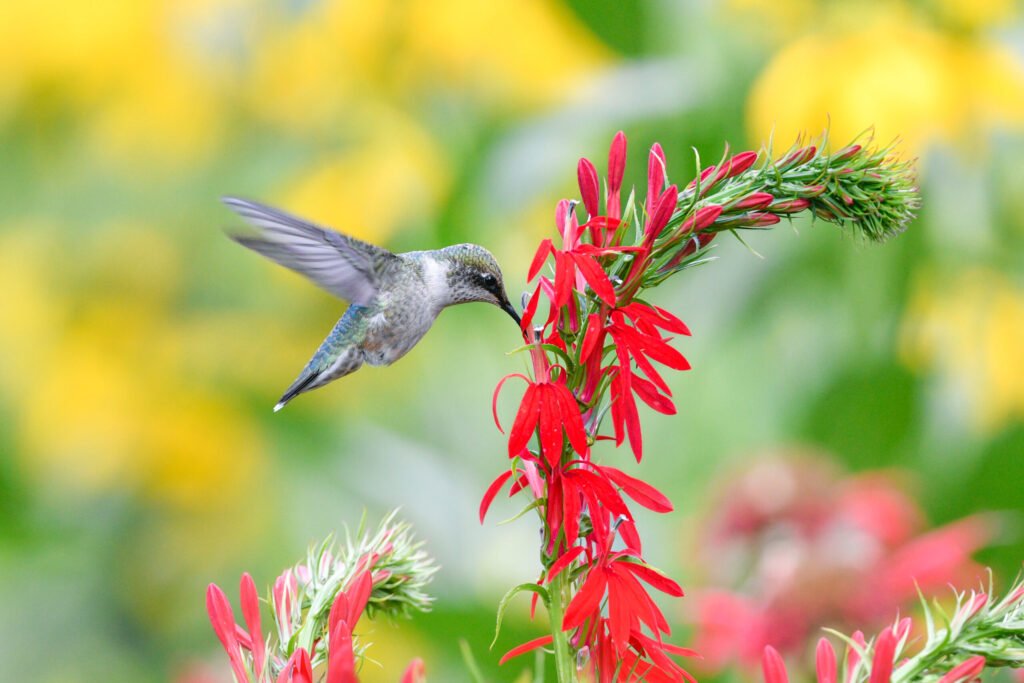
Introduction to the Hummingbird
A hummingbird is one of the most fascinating birds in the natural world. Known for its tiny body, colorful feathers, and incredible flying abilities, this remarkable creature attracts attention wherever it appears. Hummingbirds can hover in the air, fly backward, and move between flowers with impressive speed and precision. Although they are among the smallest birds on Earth, their energy, agility, and unique biological features make them extraordinary examples of nature’s engineering.
Hummingbirds belong to the family Trochilidae, which includes more than 350 recognized species. They are native to the Americas, ranging from Alaska and Canada to Central America, the Caribbean, and the southern regions of South America. Different species have adapted to a wide range of environments, including tropical rainforests, mountain forests, deserts, gardens, and grasslands. Their ability to survive in such varied habitats has helped them become one of the most diverse bird families in the Western Hemisphere.
People often associate hummingbirds with brightly colored flowers and sweet nectar, but their lives involve much more than feeding. They must find enough energy to support their rapid metabolism, avoid predators, defend feeding territories, locate suitable nesting sites, and sometimes migrate thousands of miles. Understanding hummingbirds reveals how a small animal can play an important role in its ecosystem while developing extraordinary survival strategies.
Let’s go! In this comprehensive guide, we will explore hummingbird characteristics, feeding habits, flight mechanics, reproduction, migration, symbolism, conservation, and practical ways to attract these beautiful birds to a garden.
What Is a Hummingbird?
A hummingbird is a small bird belonging to the order Apodiformes, which also includes swifts. Its most recognizable features are its narrow bill, specialized wings, rapid wingbeats, and ability to hover while feeding. Unlike many other birds, hummingbirds can maintain a stable position in the air while reaching into flowers for nectar.
Their bodies are adapted for a highly active lifestyle. Strong flight muscles allow them to accelerate quickly and change direction almost instantly. Their lightweight skeleton and specialized shoulder joints help their wings move in a distinctive figure-eight pattern, generating lift during both the forward and backward portions of each wingbeat.
Hummingbirds are also warm-blooded animals with unusually high energy requirements. They consume food frequently to maintain their activity levels, and many species feed on nectar throughout the day. However, nectar alone does not provide everything they need. Small insects and spiders supply essential protein, fats, and other nutrients that support muscle function, feather development, and reproduction.
Physical Characteristics of Hummingbirds
Size and Weight
Hummingbirds are famous for their small size, although their dimensions vary considerably between species. The bee hummingbird, native to Cuba, is generally recognized as the smallest living bird species. It measures approximately 5–6 centimeters in length and weighs around 2 grams.
At the other end of the size range, the giant hummingbird of western South America can reach roughly 20–23 centimeters in length and weigh around 18–24 grams, depending on the individual. Its larger body allows it to travel between flowers that may be difficult for smaller species to exploit.
Despite these differences, hummingbirds share several physical adaptations. Their compact bodies reduce the weight they must support in flight, while their relatively long wings provide the movement needed for hovering and rapid acceleration. Their small size also makes it possible for many species to reach nectar hidden deep inside narrow flowers.
Colorful Feathers
One of the most striking characteristics of hummingbirds is their brilliant plumage. Many species display shades of emerald green, ruby red, turquoise, violet, copper, or golden brown. These colors are especially noticeable on the throat, head, and upper body.
Some hummingbird feathers contain microscopic structures that interact with light to create iridescent colors. Rather than relying entirely on pigments, these feathers reflect and scatter light in particular ways. As a result, a male hummingbird may appear bright red when viewed from one angle but look dark or almost black when the light changes.
This colorful appearance plays an important role in communication and courtship. Males of many species display their bright feathers to attract females or intimidate rivals. However, not every hummingbird is brightly colored. Females and juveniles often have more subdued plumage, which can help them blend into their surroundings while nesting or resting.
The Hummingbird’s Beak and Tongue
A hummingbird’s bill is typically long and slender, although its shape varies according to the flowers it visits. Some species have straight bills, while others have curved bills that help them reach nectar in specialized flowers.
Inside the bill is a remarkably adapted tongue. When a hummingbird feeds, it extends its tongue into a flower and draws nectar into its mouth through a process involving the tongue’s specialized structure and rapid movements. The tongue is not simply a hollow straw, as is sometimes suggested.
The shape of the bill and tongue often corresponds to the types of flowers a species uses most frequently. This relationship can benefit both the bird and the plant. The bird receives energy-rich nectar, while pollen may attach to its head or bill and be transferred to another flower.
Where Do Hummingbirds Live?
Hummingbirds are native exclusively to the Americas. Their geographic range extends from northern regions of North America to the southern tip of South America, although individual species occupy much smaller territories within this enormous area.
Many species live in tropical and subtropical forests, where flowers are available throughout much of the year. Others inhabit woodland edges, open meadows, scrubland, mountain slopes, and dry environments. Certain hummingbirds can survive at remarkably high elevations, where temperatures are low and oxygen levels are reduced.
Their distribution is closely connected to food availability and suitable nesting locations. Some species depend on particular flowering plants, while others use a wide variety of flowers. This flexibility helps certain hummingbirds adapt to changing seasons and different environments.
Hummingbirds in North America
North America supports several well-known hummingbird species, including the ruby-throated hummingbird, Anna’s hummingbird, rufous hummingbird, and black-chinned hummingbird. Their distributions differ according to climate, vegetation, and seasonal food supplies.
The ruby-throated hummingbird is especially familiar in eastern North America. It breeds across much of the eastern United States and southern Canada before many individuals migrate south for winter. Anna’s hummingbird is common along the Pacific Coast and has expanded into some urban and suburban areas where flowering plants and feeders remain available.
Gardens can provide useful feeding opportunities for these birds, especially when they contain nectar-producing flowers and pesticide-free vegetation. However, planting choices should match the local climate and the needs of the species found in the region.
Hummingbirds in Central and South America
Central and South America contain an especially rich diversity of hummingbird species. Tropical forests, mountain ranges, and varied elevations create many ecological niches where different birds can specialize.
The Andes are particularly important for hummingbird diversity. Some species inhabit humid mountain forests, while others live in high-elevation grasslands and shrublands. Their adaptations may include specialized feathers, different body sizes, and feeding behaviors suited to local conditions.
In tropical regions, hummingbirds often interact with plants that depend heavily on bird pollination. Their feeding activities can help maintain the reproduction of native flowering plants and contribute to the health of the surrounding ecosystem.
What Do Hummingbirds Eat?
Hummingbirds are best known for drinking nectar, a sugary liquid produced by flowers. Nectar provides the carbohydrates needed to fuel their rapid wing movements, frequent flights, and other daily activities. Because they use energy so quickly, many hummingbirds visit numerous flowers throughout the day.
However, nectar is not their only food. Hummingbirds also consume small insects and spiders, including tiny flies, mosquitoes, aphids, and other arthropods. These foods provide protein and essential nutrients that sugary nectar cannot supply in sufficient quantities.
Their diet changes according to the season, local food availability, reproductive needs, and the species involved. During nesting, for example, access to small insects is especially important because growing chicks need protein to develop properly.
Why Nectar Is Important
Nectar is a convenient source of readily available energy. Its sugars help power the intense muscular activity required for hovering and rapid flight. Hummingbirds may feed repeatedly throughout the day because they cannot store enough energy to remain active for long periods without replenishing their supplies.
Different flowers produce different amounts and concentrations of nectar. Hummingbirds often visit flowers that provide a favorable balance between energy gained and effort spent feeding. Their preferences can change as the availability of flowers shifts throughout the day or across the seasons.
Although nectar is essential, a hummingbird cannot remain healthy on sugar water alone. A natural feeding environment should also support insects and spiders, which provide important nutrients. This is one reason native plants and healthy garden ecosystems are more beneficial than feeders by themselves.
How Hummingbirds Catch Insects
Hummingbirds obtain insects in several ways. Some catch tiny flying insects in midair, a behavior sometimes called aerial hawking. Others pick small arthropods from leaves, branches, or spider webs.
They may also inspect flowers and vegetation for hidden prey. Their quick reactions and excellent visual abilities help them detect small moving objects. Even though hummingbirds are tiny, they can be effective hunters of small invertebrates.
Insects are particularly important when adults are raising chicks. Young hummingbirds need nutrients to develop their muscles, bones, feathers, and other tissues. A garden that supports a healthy population of harmless insects can therefore contribute more to hummingbird survival than one that offers only artificial nectar.
How Do Hummingbirds Fly?
The flight of a hummingbird is one of its most impressive biological features. Most birds generate lift primarily during the downstroke of their wings, but hummingbirds can generate substantial lift during both the downstroke and upstroke.
Their wings rotate at the shoulder, allowing them to reverse their movement through a broad range of angles. This creates the distinctive figure-eight wing motion associated with hovering. By adjusting the angle and speed of their wings, hummingbirds can remain nearly stationary while feeding.
They can also accelerate, brake, turn sharply, and fly backward. These abilities are especially useful when feeding from flowers that require a precise approach. Rather than landing on every flower, a hummingbird can hover in front of it, collect nectar, and immediately move to the next feeding location.
How Fast Do Hummingbirds Beat Their Wings?
Wingbeat frequency varies by species, activity, and flight conditions. Many hummingbirds beat their wings dozens of times per second, and some can exceed 70 or even 80 beats per second during certain activities.
The familiar humming or buzzing sound comes partly from the rapid movement of the wings through the air. In some species, the feathers also produce distinctive sounds during courtship displays or rapid dives.
A hummingbird’s wings do not simply flap faster than those of other birds. Their structure, muscular control, and movement patterns are specialized for hovering and maneuverability. These adaptations require considerable energy, which explains why hummingbirds must feed so frequently.
Can Hummingbirds Fly Backward?
Yes. Hummingbirds are among the few birds capable of sustained backward flight. Their wing structure and joint flexibility allow them to reverse the direction of the force generated by their wings.
Backward flight helps them withdraw from flowers without turning around. It can also improve maneuverability when navigating dense vegetation or moving away from an object.
They can hover, move sideways, rise, descend, and change direction quickly. These abilities give them exceptional control in confined spaces, although they still need sufficient energy and suitable environmental conditions to maintain such demanding movements.
The Remarkable Metabolism of a Hummingbird
A hummingbird’s metabolism is among the fastest of any warm-blooded animal relative to its body size. Its heart can beat extremely rapidly during activity, and its respiratory system supports the oxygen demands of intense flight.
This high metabolic rate means hummingbirds must balance energy intake with energy expenditure. They spend much of the day searching for food, feeding, defending territories, and moving between flowers. During periods when nectar is scarce, maintaining this balance becomes particularly challenging.
Their small bodies also lose heat quickly, especially in cold conditions. To survive, hummingbirds have evolved strategies that help conserve energy during the night or when food is limited.
What Is Torpor?
Torpor is a temporary state in which an animal reduces its metabolic rate and body temperature to conserve energy. Many hummingbirds use torpor during cold nights or periods when food availability is low.
During torpor, a hummingbird becomes less responsive and may appear almost motionless. Its heart rate, breathing rate, and energy consumption can fall substantially compared with normal daytime activity.
This behavior is an important survival adaptation, but it should not be confused with ordinary sleep. A bird in torpor is undergoing a deeper physiological reduction in activity. When conditions improve, it gradually returns to its normal active state.
How Hummingbirds Survive Cold Weather
Cold weather presents a challenge because hummingbirds require considerable energy to maintain body temperature and remain active. Some species migrate to warmer regions, while others remain in areas where winter food sources are available.
Species such as Anna’s hummingbird can remain in relatively cool parts of western North America. They may use torpor to conserve energy during cold nights, then resume feeding when temperatures rise.
People who provide winter feeders should keep them clean and prevent nectar from freezing where practical. However, local climate, native food sources, and the needs of individual species all influence whether supplemental feeding is helpful.
Hummingbird Behavior and Daily Activities
Hummingbirds are highly active birds with behaviors shaped by feeding competition, courtship, and survival. They spend much of their daylight hours visiting flowers, catching insects, resting between feeding periods, and monitoring their surroundings.
Many species are territorial around productive feeding areas. A bird may repeatedly chase away other hummingbirds that approach its favorite flowers or feeder. These encounters can look aggressive, but they are usually part of competition over valuable food resources.
Not all hummingbirds behave in the same way. Some defend small territories, while others feed in more flexible patterns or gather at locations where nectar is abundant. Their behavior depends on species, food availability, and the number of competing birds nearby.
Why Hummingbirds Chase Each Other
Hummingbirds have high energy demands, so access to reliable food can be especially valuable. When one bird finds a productive feeding area, it may attempt to defend that location against rivals.
Chasing, rapid dives, and aerial confrontations are common territorial behaviors. A dominant bird may return repeatedly to patrol its feeding area, while other birds try to feed when the territory holder is absent.
Although these interactions can appear intense, they are usually normal behavior. Gardeners who want to support multiple hummingbirds can provide several feeding locations spaced apart, making it harder for one bird to control every available source.
How Hummingbirds Communicate
Hummingbirds communicate through visual displays, body movements, and sounds. Bright throat feathers, tail positions, and aerial movements may be used during courtship or territorial disputes.
Some species produce chirps, squeaks, or other vocalizations. Males may also perform elaborate flight displays to attract females, including rapid ascents followed by steep dives.
Sound and visual signals serve different purposes depending on the situation. A brief call may help communicate nearby danger or identify a bird’s presence, while a dramatic flight display may be part of a mating ritual.
Hummingbird Reproduction and Nesting
Hummingbird reproduction involves courtship displays, nest construction, egg laying, incubation, and parental care. In many species, males and females interact mainly during courtship and mating, while the female handles most or all of the nest building and chick rearing.
The breeding season depends on the species and its geographic location. In temperate regions, it often coincides with periods when flowers and insects are abundant. Tropical species may follow different seasonal patterns depending on rainfall and food availability.
Successful reproduction requires more than a suitable nesting site. The female must have access to sufficient food, safe shelter, and materials for building a nest. The young also need protection from predators, harsh weather, and disturbance.
How Hummingbirds Build Their Nests
Hummingbird nests are usually small, carefully constructed cups placed on branches, shrubs, or other protected structures. The exact design and location depend on the species.
Females often use plant fibers, soft down, moss, and spider silk to create a flexible structure. Spider silk is especially useful because it allows the nest to stretch as the chicks grow. The outer surface may be decorated with lichen or bits of plant material that help the nest blend into its surroundings.
The nest is generally difficult to notice from a distance because its small size and natural colors provide camouflage. A safe nesting site offers some protection from rain, wind, predators, and excessive disturbance.
Hummingbird Eggs and Chicks
Most hummingbirds lay two small white eggs per clutch, although reproductive details vary among species. The eggs are incubated by the female, and the incubation period commonly lasts around two weeks, sometimes longer depending on the species and environmental conditions.
After hatching, the chicks are tiny and dependent on their mother. She feeds them small insects and other food items that provide the nutrients necessary for growth. As the chicks develop, they grow feathers and become increasingly capable of regulating their body temperature.
The young eventually leave the nest, a stage known as fledging. However, fledging does not mean they immediately become completely independent. Young hummingbirds may still require additional feeding or practice before they can forage and fly as effectively as adults.
Hummingbird Migration
Migration allows many hummingbirds to move between breeding grounds and wintering areas as seasons change. These journeys can involve substantial distances for such small birds, demonstrating their remarkable endurance and navigational abilities.
The ruby-throated hummingbird is a well-known example. Many individuals travel from eastern North America to Mexico and Central America for the winter. Some cross the Gulf of Mexico in a nonstop flight that can cover approximately 800 kilometers, depending on the route.
Migration patterns differ widely among species. Some travel long distances, some move shorter distances between elevations, and others remain in the same general region throughout the year. The availability of flowers, insects, temperature, and breeding opportunities all influence these movements.
How Hummingbirds Prepare for Migration
Before migration, hummingbirds may increase their energy reserves by feeding intensively. They store fat that can be used as fuel during long flights or when food is difficult to find.
Their preparation depends on the timing and length of the journey. Birds need suitable feeding opportunities along migration routes, making flowering habitats and healthy ecosystems especially important during these periods.
Migration is not without risk. Storms, habitat loss, collisions with windows, and a lack of food can make travel more difficult. Protecting stopover habitats and providing safe outdoor spaces can help reduce some of these pressures.
Do All Hummingbirds Migrate?
No. Migration varies considerably across the hummingbird family. Some species travel between breeding and wintering grounds, while others remain in one region throughout the year.
Anna’s hummingbird, for example, often remains in parts of western North America year-round, although individuals may move locally in response to changing conditions. Other species follow seasonal movements related to flowering patterns and elevation.
This diversity demonstrates that hummingbirds do not all follow one universal life cycle. Their movements are shaped by local climate, food supplies, reproduction, and evolutionary history.
The Role of Hummingbirds in Pollination
Hummingbirds play an important role in pollination, the process by which pollen is transferred between flowers. When a bird inserts its bill into a flower to collect nectar, pollen may stick to its feathers or bill. The bird can then carry that pollen to another flower of the same species.
This process helps certain plants reproduce. In some ecosystems, hummingbirds are especially important pollinators because their feeding behavior brings them into repeated contact with particular flowering plants.
Flowers adapted to hummingbird pollination often have features that make them attractive and accessible to these birds. They may be tubular, brightly colored, and positioned in ways that allow a hovering bird to feed efficiently. Many produce nectar that rewards repeated visits.
Why Hummingbird-Pollinated Flowers Are Special
Certain flowers have evolved shapes and colors that suit hummingbird feeding. Red and orange flowers are common among plants pollinated by hummingbirds, although the birds visit many other colors as well.
Tubular flowers can allow a hummingbird to reach nectar while positioning its head or bill where pollen is likely to make contact. The plant benefits when the bird subsequently visits another flower and transfers pollen.
This relationship is an example of mutualism, in which two organisms benefit from an interaction. The bird obtains energy, while the plant gains opportunities for successful reproduction.
How Hummingbirds Support Biodiversity
Pollination helps maintain plant populations, which in turn provide food and shelter for many other organisms. By contributing to plant reproduction, hummingbirds can indirectly support insects, other birds, and animals that depend on flowering vegetation.
Their ecological importance varies by location and plant species. In some habitats, other pollinators perform much of the work, while hummingbirds are particularly influential for certain flowers.
Protecting hummingbirds therefore means protecting more than one group of birds. Healthy pollinator habitats support interconnected ecological relationships that contribute to the resilience of natural environments.
How to Attract Hummingbirds to Your Garden
Attracting hummingbirds can be a rewarding way to observe wildlife close to home. The most effective approach is to provide natural food sources, safe shelter, and a garden environment that supports the birds throughout the seasons.
Native flowering plants are an excellent starting point because they are often well adapted to local conditions. Choose plants that bloom at different times so nectar remains available for as much of the year as possible. A varied garden also supports the insects hummingbirds need for a balanced diet.
Avoid relying exclusively on feeders. While feeders can supplement natural nectar sources, a healthy garden offers a broader range of food, nesting opportunities, and protective cover. It is also important to avoid pesticides that can harm the small insects hummingbirds eat.
Choosing the Right Flowers
The best plants depend on your climate and the hummingbird species that visit your area. In North American gardens, suitable options may include native columbines, bee balm, trumpet honeysuckle, cardinal flower, and certain native salvias.
Choose plants that are appropriate for your region rather than selecting species based solely on their appearance. Native plants often provide better ecological value and may require less maintenance once established.
A mixture of shrubs, flowering perennials, and other vegetation creates a more useful habitat than a garden containing only a few ornamental flowers. Providing several flowering areas can also reduce competition between birds.
Using a Hummingbird Feeder
A hummingbird feeder can provide a supplementary source of sugar water, particularly when flowers are scarce. A simple homemade nectar mixture uses four parts water to one part plain white sugar.
For example, mix one cup of white sugar with four cups of water until the sugar dissolves. Boiling is not always necessary when using clean water and equipment, but heating can help dissolve the sugar. Allow the mixture to cool completely before filling the feeder.
Never add honey, artificial sweeteners, food coloring, or flavored syrups. Honey can encourage harmful microbial growth, and artificial sweeteners do not provide the energy hummingbirds need. Red food coloring is unnecessary because a feeder can attract birds through its design and placement.
Keeping Feeders Clean
Feeder hygiene is essential. Sugar water can ferment or develop mold, particularly during hot weather. Contaminated nectar may put visiting birds at risk.
Clean the feeder regularly, following the manufacturer’s instructions and using appropriate cleaning methods. Replace nectar before it becomes cloudy, moldy, or fermented. In hot conditions, it may need replacement every day or two, while cooler weather can allow longer intervals.
Place feeders in a shaded location when possible, since direct sunlight can accelerate spoilage. If birds stop visiting a feeder, inspect it for contamination, leaks, or other problems before assuming that the hummingbirds have disappeared.
Common Hummingbird Predators and Threats
Despite their speed and agility, hummingbirds face several natural predators. Larger birds may catch them in flight, while praying mantises and some spiders can capture hummingbirds in particular circumstances. Cats can also pose a serious threat when birds feed or rest near the ground.
Their small size makes them vulnerable to environmental changes. Extreme weather, drought, habitat destruction, and the loss of flowering plants can reduce access to food and nesting locations.
Human activities create additional risks. Pesticides can reduce insect populations, while collisions with windows may injure or kill birds. Poorly maintained feeders can also become a source of contamination rather than a benefit.
Habitat Loss
Habitat loss is one of the most significant challenges facing many wildlife species, including some hummingbirds. Forest clearing, urban expansion, and the removal of native vegetation can reduce the availability of food and nesting sites.
When flowering plants disappear, hummingbirds may have to travel farther to find enough nectar. This can increase energy expenditure, especially during breeding and migration periods.
Restoring native vegetation and preserving connected habitats can help maintain the resources hummingbirds need. Even small gardens can contribute when they form part of a wider network of flowering spaces.
Climate Change
Climate change can influence the timing of flowering, the distribution of suitable habitats, and the availability of food. If plants bloom earlier or later than usual, hummingbirds may encounter mismatches between their movements and the resources they depend on.
Changes in temperature and precipitation can also affect breeding conditions and migration routes. However, the effects differ among species and regions, so not every hummingbird will respond in the same way.
Monitoring local bird populations and protecting diverse habitats are useful ways to improve resilience. A landscape containing different plant species and varied habitat types may offer more options when environmental conditions change.
Interesting Facts About Hummingbirds
Hummingbirds have several characteristics that make them especially interesting to scientists and bird enthusiasts. Their unusual flight mechanics, high energy demands, and specialized feeding strategies have inspired extensive research into animal physiology and aerodynamics.
Their diversity is equally remarkable. Different species have evolved distinctive bills, feather patterns, courtship displays, and habitat preferences. These differences reflect the many ecological opportunities available throughout the Americas.
Here are some fascinating facts about hummingbirds:
- They can hover in place. Their specialized wings allow them to remain suspended in the air while feeding.
- They can fly backward. This ability helps them withdraw from flowers without turning around.
- They rely on insects as well as nectar. Small arthropods provide essential nutrients that sugar water cannot supply.
- Their feathers can appear to change color. Iridescent structures reflect light differently depending on the viewing angle.
- Some migrate across the Gulf of Mexico. Ruby-throated hummingbirds can make remarkable nonstop flights over open water.
- They use torpor. This temporary reduction in metabolism helps conserve energy during cold nights or food shortages.
- Many species are territorial. Birds may aggressively defend flowers or feeders that provide reliable food.
- They contribute to pollination. Pollen carried between flowers can help plants reproduce.
- Their nests are extremely small. Many resemble tiny cups made from plant fibers, down, and spider silk.
- They occur in diverse environments. Hummingbirds live in tropical forests, dry habitats, mountain regions, and human-modified landscapes.
These facts show why hummingbirds are much more than attractive garden visitors. They are highly specialized animals whose survival depends on a complex combination of physiology, behavior, and environmental resources.
Hummingbird Symbolism and Cultural Meaning
Hummingbirds have inspired stories, artwork, and symbolic interpretations in many cultures. Their rapid movements, bright colors, and ability to hover have made them powerful symbols in literature and popular culture.
People commonly associate hummingbirds with joy, energy, resilience, freedom, and adaptability. Their small size combined with their impressive abilities can serve as a reminder that strength does not always depend on physical size.
Symbolism varies across cultures and individuals, however. There is no single meaning that applies to every tradition. Some interpretations arise from folklore, while others are modern personal associations rather than established historical beliefs.
Hummingbirds in Art and Storytelling
Hummingbirds frequently appear in paintings, jewelry, decorative objects, and garden designs. Their colorful feathers and distinctive flight make them visually appealing subjects for artists.
In storytelling, they may represent movement, perseverance, renewal, or the ability to find opportunities in challenging circumstances. Their relationship with flowers can also symbolize cooperation and the interconnectedness of living things.
These interpretations can add personal meaning to an encounter with a hummingbird, but they are separate from the scientific facts about the bird’s behavior and biology.
Why People Feel Connected to Hummingbirds
Watching a hummingbird can encourage people to pay closer attention to their surroundings. The bird’s rapid movements often require patience to observe, while its repeated visits to flowers can make an ordinary garden feel more alive.
For some people, hummingbirds also evoke memories of particular places, seasons, or loved ones. These associations are personal and meaningful even when they are not based on scientific explanations.
Whether someone appreciates hummingbirds for their beauty, ecological role, or symbolic significance, these birds offer many reasons to value and protect the natural world.
Frequently Asked Questions About Hummingbirds
1. What is a hummingbird?
A hummingbird is a small bird from the family Trochilidae, native to the Americas. It is known for its rapid wingbeats, colorful feathers, long bill, and ability to hover while feeding on nectar.
Hummingbirds also eat insects and spiders to obtain essential nutrients. More than 350 recognized species occupy a wide variety of habitats, from tropical forests to mountain regions.
2. What do hummingbirds eat?
Hummingbirds primarily consume flower nectar for energy. They also eat tiny insects and spiders, which supply protein, fats, and other nutrients needed for healthy growth and reproduction.
A balanced natural habitat offers both flowering plants and small invertebrates. Sugar-water feeders can supplement their food supply but should not replace natural feeding opportunities.
3. How fast can a hummingbird fly?
Flight speed varies according to species and activity. Hummingbirds can accelerate rapidly, maneuver through tight spaces, and perform steep dives during courtship or territorial displays.
Their flight abilities are more remarkable for their precision and versatility than for one universal top-speed figure. Hovering, backward flight, and rapid directional changes are among their best-known adaptations.
4. How long do hummingbirds live?
Lifespan depends on the species and environmental conditions. Many hummingbirds die during their first year, when they face challenges such as predators, weather, and finding sufficient food.
Those that survive their early months may live for several years. Some individuals have been documented living for a decade or longer, demonstrating that these tiny birds can have surprisingly long lives.
5. Do hummingbirds sleep?
Yes. Hummingbirds rest during the night, often perching in sheltered locations. They may enter torpor, a state that reduces their metabolic rate and body temperature to conserve energy.
This adaptation is especially useful because hummingbirds consume so much energy during the day. After returning to normal activity, they need to find food to replenish their energy reserves.
6. Why do hummingbirds fight over feeders?
Hummingbirds often defend feeding locations because reliable nectar sources are valuable. A dominant bird may chase away other visitors to reduce competition.
Adding several feeders in different locations can sometimes help more birds feed successfully. Planting a variety of nectar-producing flowers can also spread feeding opportunities throughout the garden.
7. Are hummingbirds attracted to red flowers?
Many hummingbirds visit red and orange flowers, but they are not limited to those colors. They feed on flowers of many different shades, depending on nectar availability and the plants growing in their habitat.
A garden should therefore contain a range of suitable flowering plants rather than relying exclusively on red blossoms. Nectar production and plant suitability matter more than color alone.
8. Can hummingbirds drink sugar water?
Yes. A feeder containing four parts water to one part plain white sugar provides a commonly recommended supplementary nectar mixture.
Avoid honey, artificial sweeteners, red food coloring, and flavored products. Feeders must also be cleaned regularly to prevent mold and fermentation.
9. Do hummingbirds migrate?
Many hummingbird species migrate seasonally, while others remain in the same general region throughout the year. Migration depends on species, climate, breeding patterns, and food availability.
Some North American hummingbirds travel to Mexico or Central America for winter. Others move shorter distances or remain in areas where food sources are available throughout the year.
10. How can I help protect hummingbirds?
You can help by planting locally appropriate flowering plants, reducing pesticide use, maintaining clean feeders, and making windows more visible to birds. Providing a variety of vegetation can also create shelter and support insect populations.
Protecting natural habitats is equally important. Forests, grasslands, gardens, and other flowering environments provide food and nesting opportunities that hummingbirds need to survive.
Conclusion
Hummingbirds are among the most extraordinary birds in the world. Their tiny bodies, brilliant feathers, specialized wings, and remarkable metabolism allow them to perform feats that few other birds can match. From hovering beside a flower to completing long migrations, they demonstrate how evolution can produce highly specialized adaptations for survival.
Their importance extends beyond their appearance and flight abilities. Hummingbirds contribute to pollination, interact with many other organisms, and depend on healthy ecosystems that provide flowers, insects, shelter, and nesting locations. Protecting these resources benefits hummingbirds and the wider natural world.
You do not need a large property or an elaborate garden to appreciate these birds. A few suitable flowering plants, a clean feeder, and a pesticide-conscious approach can make a difference in the right environment. Observing hummingbirds also offers a wonderful opportunity to learn about wildlife and develop a deeper appreciation for nature.
Ultimately, the hummingbird is a reminder that even the smallest creatures can have remarkable abilities and meaningful ecological roles. By understanding their behavior and protecting their habitats, we can help ensure that future generations continue to enjoy these fascinating birds.
YOU MAY HAVE MISSED