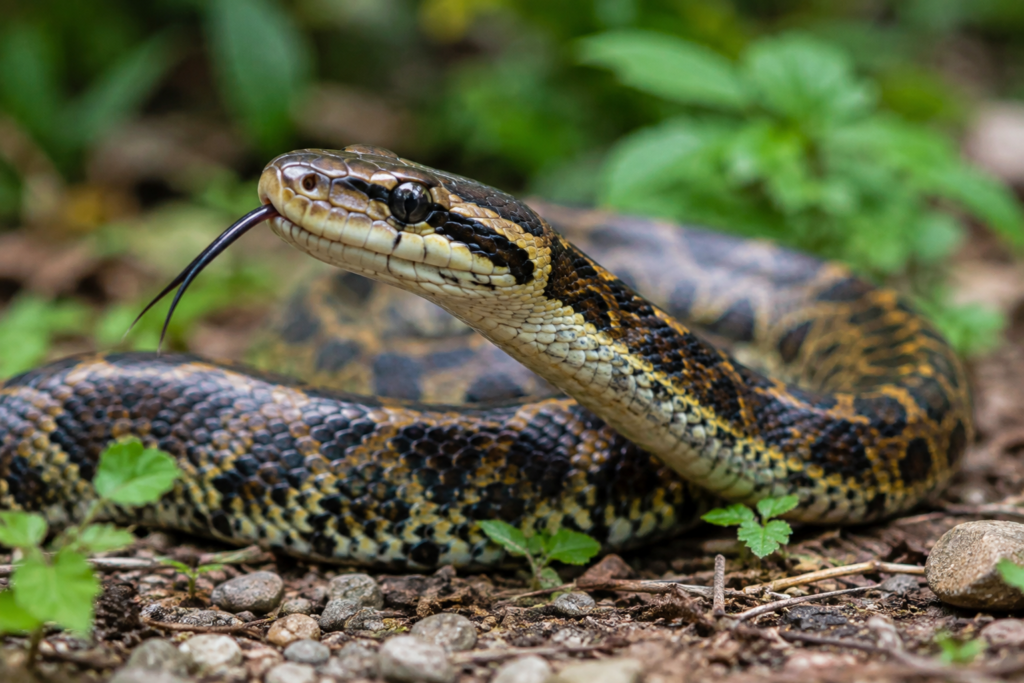
Snakes are among the most fascinating animals on Earth. They can be found in forests, deserts, grasslands, wetlands, mountains, farms, and even areas close to human homes. Their long, flexible bodies and unusual way of moving make them instantly recognizable, but there is much more to snakes than their appearance. They have evolved into highly specialized predators and survivors, with remarkable abilities that help them locate food, avoid danger, and live in environments where many other animals would struggle.
Although some people are naturally afraid of snakes, these reptiles are not simply dangerous creatures waiting to attack humans. In reality, most snakes prefer to avoid people whenever possible. Their behavior is generally influenced by survival rather than aggression. A snake may flee, hide, freeze, or defend itself when it feels threatened. Understanding this behavior can make it easier to appreciate snakes and respond sensibly when one is encountered.
There are thousands of snake species around the world, and they vary enormously in size, appearance, diet, habitat, and behavior. Some are tiny enough to fit comfortably in a person’s hand, while others can grow several meters long. Some species are venomous, while many others are completely harmless to humans. From tiny burrowing snakes to enormous constrictors, the snake family represents one of nature’s most impressive examples of adaptation.
What Is a Snake?
A snake is a legless reptile belonging to the suborder Serpentes. Snakes are vertebrate animals, meaning they have backbones, but their bodies have evolved in a way that allows them to move efficiently without external limbs. Their elongated shape is supported by a large number of vertebrae and ribs, giving them an unusual combination of flexibility and strength. This body design allows snakes to travel through narrow spaces, climb, swim, and navigate complicated terrain.
Snakes are covered in scales, which protect their bodies and help reduce moisture loss. Their scales are made primarily from keratin, the same tough protein found in human hair and fingernails. Rather than growing continuously like mammals, snakes periodically shed their outer layer of skin. This process is called ecdysis. Before shedding, a snake’s eyes may appear cloudy because the old skin temporarily covers the transparent scale over each eye.
One of the most distinctive characteristics of snakes is their jaw structure. Unlike humans, whose jaws are relatively rigidly connected, snakes have highly flexible skulls. Their lower jaw is divided into two sides that can move somewhat independently, allowing many species to swallow prey much larger than their head might suggest. This adaptation is particularly useful because snakes generally swallow their food whole rather than chewing it.
The Evolution of Snakes
The evolutionary history of snakes is complex and still studied by scientists. Modern evidence suggests that snakes evolved from ancient lizard-like ancestors. Over millions of years, their bodies changed as they adapted to different environments and lifestyles. The loss of visible limbs was not a sudden event but part of a long evolutionary process in which body structure gradually became better suited to particular ways of moving and hunting.
Some ancient snake relatives retained small remnants of hind limbs. Certain modern snakes, including boas and pythons, still possess tiny vestigial structures near the rear of their bodies. These structures are not functional legs, but they provide an interesting clue about the evolutionary history of snakes. Fossils and genetic research continue to help scientists understand how early snakes developed their distinctive body plans.
Evolution did not produce just one type of snake. Instead, snakes diversified into numerous lineages that adapted to forests, deserts, rivers, oceans, underground environments, and other habitats. Their success demonstrates how effective the basic snake body plan can be. Once adapted to a particular ecological niche, snakes could develop specialized hunting methods, camouflage, sensory abilities, and feeding strategies.
Where Do Snakes Live?
Snakes live on almost every continent except Antarctica. Their remarkable geographic distribution reflects their ability to adapt to a wide range of environments. Tropical forests support a huge variety of species because they offer abundant food, shelter, and suitable temperatures. Other snakes have adapted to dry deserts where water is scarce and temperatures can change dramatically between day and night.
Grasslands and agricultural regions can also provide excellent snake habitat. Rodents, insects, frogs, and other small animals may be abundant around fields and farms, creating reliable food sources. Snakes often use rocks, fallen logs, vegetation, abandoned burrows, and natural cracks as places to hide. Some species may occasionally enter buildings because human structures can provide shelter or attract prey.
Aquatic environments support another fascinating group of snakes. Some species spend much of their time in rivers, ponds, wetlands, or coastal waters. Sea snakes are particularly well adapted to marine environments, with flattened bodies and tails that assist swimming. Their specialized adaptations demonstrate that snakes are not restricted to crawling across dry land.
How Snakes Move Without Legs
The way a snake moves is one of its most impressive biological features. Instead of using legs, snakes rely on their muscles, ribs, scales, and body shape to generate movement. Different species use different movement patterns depending on their environment. This flexibility allows snakes to travel over sand, soil, rocks, vegetation, and even water.
One common method is lateral undulation, in which the snake creates a series of waves along its body. These waves push against irregularities in the environment and move the snake forward. Other techniques include concertina movement, where the snake gathers and extends sections of its body, and rectilinear movement, which allows some larger snakes to move in relatively straight lines using specialized muscle action and belly scales.
Some snakes are also excellent climbers. They can use branches, rough surfaces, and carefully controlled body movements to climb trees. Certain species can even bridge gaps between surfaces by extending their bodies. Aquatic snakes have their own swimming techniques, using side-to-side movements to propel themselves through water. The variety of snake locomotion is a perfect example of how anatomy and behavior work together.
What Do Snakes Eat?
Most snakes are carnivores, although their diets vary significantly between species. Depending on their size and habitat, snakes may eat insects, worms, fish, frogs, lizards, birds, eggs, rodents, or other reptiles. Larger snakes can consume substantial prey, including animals that appear surprisingly large compared with the snake itself.
Because snakes generally do not chew their food, they have developed specialized feeding mechanisms. After capturing prey, a snake may swallow it whole. Its flexible skull and movable jaw structures allow the mouth to expand around the meal. The body then processes the food through powerful digestive systems capable of breaking down many tissues efficiently.
Some snakes are specialized hunters while others are opportunistic feeders. A species living in a wetland may rely heavily on fish and amphibians, while a desert species might specialize in rodents or small reptiles. Diet is closely connected to habitat, body size, hunting strategy, and available prey. This specialization helps different snake species coexist without always competing for exactly the same food.
How Snakes Hunt
Snakes use several different hunting strategies. Some are active hunters that search for prey, while others prefer to remain hidden and wait for an opportunity. Ambush predators may position themselves in a location where prey regularly passes. Remaining motionless helps them conserve energy while reducing the chance that potential prey will notice them.
Snakes have excellent chemical-sensing abilities. They use their tongues to collect chemical particles from the environment. When the tongue returns to the mouth, these particles are transferred to an organ called the vomeronasal organ, often known as Jacobson’s organ. This system gives snakes valuable information about nearby animals and their surroundings.
Venomous snakes have another specialized hunting advantage. Their venom can help immobilize prey and begin the digestive process. However, venom is not found in every snake, and even among venomous species, its composition and function differ. Constricting snakes use a completely different strategy, wrapping their bodies around prey and applying pressure until the prey can no longer breathe normally.
Venomous and Non-Venomous Snakes
The distinction between venomous and non-venomous snakes is often misunderstood. Venom is a substance delivered into another animal through specialized structures, usually teeth or fangs. Poison, by contrast, generally causes harm when it is eaten, inhaled, or absorbed. Therefore, describing a snake as “poisonous” is often inaccurate when the intended meaning is venomous.
Venomous snakes belong to several different groups and use venom for purposes that primarily relate to feeding and defense. Their venom can affect the nervous system, blood clotting, muscles, or tissues, depending on the species. Not every venomous snake poses the same level of risk to humans, and the danger associated with a bite depends on numerous factors.
Non-venomous snakes can still defend themselves effectively. Some may bite if handled or cornered, while others rely on camouflage, rapid escape, intimidating displays, or unpleasant odors. A harmless snake should never be picked up simply because it appears non-venomous. Correct identification is not always easy, and the safest approach is to observe snakes from a distance.
How Snakes Protect Themselves
Snakes have evolved many defensive behaviors because they are vulnerable to predators despite being effective hunters themselves. Their first choice is often to escape. A snake may quickly disappear into vegetation, cracks, water, or a burrow when it detects danger. Avoiding confrontation is usually safer and requires less energy than fighting.
Camouflage is another important defense. Many snakes have patterns and colors that blend into leaves, soil, rocks, bark, or sand. Some species have developed highly convincing patterns that make them difficult to see even when they are relatively close. This camouflage can protect snakes from predators while simultaneously helping them approach prey.
When escape is impossible, a snake may display defensive behavior. It might flatten its body, hiss, coil, raise its head, strike, or release a strong-smelling substance. These behaviors are usually warnings rather than evidence that the snake is actively seeking a fight. Giving the animal space often allows the situation to end without harm to either the snake or the person nearby.
Snake Senses
Snakes experience the world differently from humans. Their vision varies considerably between species, with some having relatively strong eyesight and others relying more heavily on other senses. Vision can be particularly important for arboreal or daytime hunters, while underground species may depend more heavily on chemical and tactile information.
Their sense of smell is especially important. The forked tongue helps snakes sample chemical information from different directions. By comparing signals collected on the two sides of the tongue, a snake can gain clues about where a scent originated. This ability can help it locate prey, identify other snakes, and navigate its environment.
Some snake species also possess specialized heat-sensing structures. These organs allow them to detect infrared radiation from warm objects. This can be extremely useful for locating warm-blooded prey, particularly in low-light conditions. The combination of vision, chemical sensing, heat detection, and vibration sensitivity makes snakes remarkably capable environmental sensors.
How Snakes Shed Their Skin
Snake skin does not grow in the same way that human skin does. As a snake grows, its existing outer skin eventually becomes too tight. The snake then develops a new layer underneath the old one and prepares to shed the outer covering. This process is known as shedding or ecdysis.
Before shedding, a snake may become less active and its appearance may change. The eyes can become cloudy or bluish because of changes in the transparent covering over them. During this period, snakes may be more defensive because their vision is temporarily reduced. Providing the animal with space is particularly important at this stage.
Eventually, the old skin separates and the snake works its way out of it, often by rubbing against rough surfaces. The discarded skin may be found in one piece, especially when conditions are suitable. Shed skins can provide useful information to researchers because their patterns and scales can sometimes help identify the species that left them behind.
The Role of Snakes in Nature
Snakes play important roles in ecosystems. Many species help control populations of rodents and other small animals. This can have indirect benefits for natural habitats and agricultural areas. By removing prey animals from an ecosystem, snakes participate in the complex network of relationships that keeps populations from becoming completely unbalanced.
Snakes are also prey for other animals. Birds of prey, mammals, larger reptiles, and other snakes may feed on them. This means snakes occupy different positions in food webs depending on their species and life stage. Removing snakes from an ecosystem can therefore affect more than just the snake population itself.
Their ecological importance is sometimes overlooked because people tend to focus on fear or potential danger. A healthy ecosystem contains many different organisms performing different jobs. Snakes are one part of that system. Protecting biodiversity means recognizing the value of predators and prey alike, even when an animal is not considered attractive or friendly.
Snakes and Humans
Humans have lived alongside snakes for thousands of years. Snakes appear in mythology, art, literature, medicine, religion, and popular culture across many civilizations. They have been represented as symbols of wisdom, transformation, danger, healing, fertility, and mystery. These varied interpretations show how strongly snakes have influenced human imagination.
In practical terms, encounters between snakes and humans can happen wherever their habitats overlap. Urban expansion, farming, construction, and changes in land use can bring wildlife into closer contact with residential areas. Snakes may also be attracted to places where prey such as rodents are abundant. Keeping surroundings clean and reducing potential hiding places can sometimes reduce unwanted encounters.
The most sensible response to a snake encounter is usually calm observation from a safe distance. Attempting to catch, kill, or handle an unidentified snake increases the risk of injury. If a snake is inside a building or poses a genuine safety concern, contacting a qualified local wildlife professional is a better option than trying to remove it personally.
Common Myths About Snakes
Snakes are surrounded by myths, and many of these stories are exaggerated. One common misconception is that snakes regularly chase humans. In most situations, snakes are more interested in escaping than pursuing a person. What looks like pursuit may sometimes be an attempt to reach nearby shelter or escape in the same direction as the person.
Another misconception is that every snake is dangerous. There are thousands of snake species, and only a portion are medically significant to humans. Even venomous snakes generally do not spend their lives looking for people to bite. Understanding species diversity is important because treating every snake as equally dangerous can lead to unnecessary fear and harm to harmless wildlife.
There are also myths about snake behavior, intelligence, and physical abilities. Snakes are often portrayed as mysterious animals with almost supernatural powers, but their real abilities are already impressive enough. Their sensory systems, movement, feeding strategies, and adaptations are the result of evolutionary processes rather than magic or mystery.
How to Stay Safe Around Snakes
The simplest safety rule is to give snakes plenty of space. A snake that is left alone will often move away on its own. People should avoid attempting to touch, corner, photograph from very close range, or capture an unfamiliar snake. Children should also be taught that wild animals should be observed rather than handled.
When walking outdoors, paying attention to where you place your hands and feet can reduce accidental encounters. This is particularly useful around rocks, logs, tall vegetation, piles of materials, and other locations where snakes may shelter. Wearing appropriate footwear in areas known to contain venomous species can provide an additional layer of protection.
If someone is bitten by a snake, the situation should be treated seriously, particularly if the species is unknown or venomous species are present in the region. The person should seek urgent professional medical care and avoid relying on traditional methods or improvised treatments. Trying to capture the snake can create another bite risk; if it can be identified safely from a distance, useful details or a photograph may help professionals determine appropriate treatment.
Snakes as Pets
Some snake species are kept as pets because they can be fascinating to observe and, when properly cared for, can adapt well to captive environments. However, keeping a snake is a responsibility rather than a simple novelty. Owners need to understand enclosure requirements, temperature management, humidity, feeding, handling, hygiene, and local regulations.
A suitable enclosure must be secure because snakes are excellent escape artists. The enclosure should provide enough space for the species and include appropriate hiding areas and environmental conditions. Temperature and humidity requirements differ between species, so owners should research the specific animal rather than assuming that every snake needs the same setup.
Responsible ownership also means obtaining animals legally and from reputable sources. Wild-caught animals can face additional stress and may carry parasites or other problems. Prospective owners should consider the snake’s expected adult size and long-term needs before purchasing one. A snake can live for many years, making it a long-term commitment.
Why Snakes Matter for Biodiversity
Biodiversity is not simply a collection of attractive animals. It includes predators, prey, decomposers, plants, fungi, insects, reptiles, mammals, birds, and countless microorganisms. Snakes are an important part of this network. Their disappearance from an ecosystem can change predator-prey relationships and influence the abundance of other animals.
Habitat loss is one of the major challenges facing wildlife around the world. Snakes can be affected when forests are cleared, wetlands are drained, grasslands are converted, or natural landscapes become heavily fragmented. Pollution, road traffic, illegal collection, and persecution can create additional pressures for some species.
Conservation efforts are therefore valuable not only for snakes but for entire ecosystems. Protecting natural habitats, maintaining wildlife corridors, reducing unnecessary killing, and educating communities can help people and wildlife coexist. Better public understanding can be especially powerful because fear often decreases when people learn how animals actually behave.
Interesting Facts About Snakes
Snakes have some remarkable biological features. Some species can survive long periods with limited food, while others have highly specialized diets. Certain snakes spend much of their lives in trees, others underground, and some are adapted to aquatic environments. Their diversity makes it difficult to describe all snakes using a single behavioral pattern.
Some snakes can climb surprisingly well, and others are excellent swimmers. A few species have adaptations that allow them to glide between trees by flattening their bodies and controlling their movement through the air. These abilities may sound extraordinary, but they are examples of specialized adaptations that developed over generations.
Another fascinating fact is that snakes can communicate and interact with their environment in ways that humans may not immediately notice. Chemical signals, body movements, vibrations, and visual displays can all provide information. Although snakes are often considered simple creatures, their behavior is more complex than popular stereotypes suggest.
The Future of Snakes
The future of snakes depends heavily on the future of their habitats. As human populations grow and landscapes change, wildlife increasingly faces pressure from development and environmental disruption. Some adaptable snake species may survive successfully around people, while habitat specialists may face much greater challenges.
Scientific research can help identify which species are declining and why. Researchers can study populations, habitats, reproduction, movement patterns, disease, and threats. This information allows conservation organizations and governments to make better decisions about protected areas and wildlife management.
Public education is equally important. People who understand snakes are more likely to respond responsibly when they encounter them. Replacing myths with accurate information can reduce unnecessary fear and persecution. In the long run, coexistence becomes easier when people recognize that snakes are not simply symbols of danger but important members of the natural world.
Final Thoughts on Snakes
Snakes are extraordinary reptiles that have survived and diversified through millions of years of evolution. Their legless bodies, flexible jaws, specialized senses, camouflage, hunting strategies, and wide range of habitats make them one of the most successful reptile groups on the planet. From tiny species hiding beneath soil to enormous snakes moving through forests and wetlands, their diversity is genuinely impressive.
Fear of snakes is understandable, especially in places where venomous species are present. However, fear does not need to become hatred or panic. Most snakes would rather avoid unnecessary contact with humans, and many species are harmless. Learning to identify general snake behavior and understanding how to respond safely can make encounters much less stressful.
Ultimately, snakes deserve the same basic respect given to other wild animals. They have an important role in food webs, help regulate prey populations, and contribute to healthy ecosystems. The more we learn about them, the easier it becomes to see beyond the stereotypes. Snakes may look unusual, move differently from other animals, and sometimes possess dangerous defenses, but they are also fascinating examples of how life can adapt, survive, and thrive in an astonishing variety of environments.
YOU MAY HAVE MISSED