Introduction to Denticon Login
Denticon login is the gateway many dental professionals and practice teams use to access their digital practice-management environment. Instead of keeping patient schedules, clinical information, billing details, reports, and administrative tasks scattered across different systems, Denticon brings many of these functions together in one platform. For a busy dental office, having a reliable login process can make the beginning of each workday much smoother.
The login itself may look simple, but access to a dental management platform involves more than entering a username and password. Users may need the correct account credentials, an authorized organization, a supported browser, and appropriate permissions. Understanding these basics can help prevent unnecessary delays, particularly when staff members are trying to access the system during a busy appointment schedule.
This guide explains the Denticon login process, common access problems, password-related issues, security considerations, and practical tips for keeping your account accessible. The goal is to provide a straightforward resource for anyone who regularly works with Denticon and wants to understand how the login experience fits into everyday dental practice operations.
What Is Denticon?
Denticon is a cloud-based dental practice management platform designed to help dental organizations manage important operational and administrative activities. Dental practices can use practice-management software to coordinate appointments, patient information, billing, insurance workflows, reporting, and other day-to-day functions.
One of the main advantages of a cloud-based system is accessibility. Rather than relying entirely on information stored on a single office computer, authorized users can generally work through a web-based environment. This can be especially useful for organizations with multiple locations, larger teams, or staff members who need access to information from different workstations.
Denticon is associated with Planet DDS, a company that provides technology solutions for dental practices and dental service organizations. Because the platform can handle sensitive practice information, access is controlled through user authentication and permissions. That makes the login stage an important part of the overall system rather than simply a routine website visit.
Understanding the Denticon Login Page
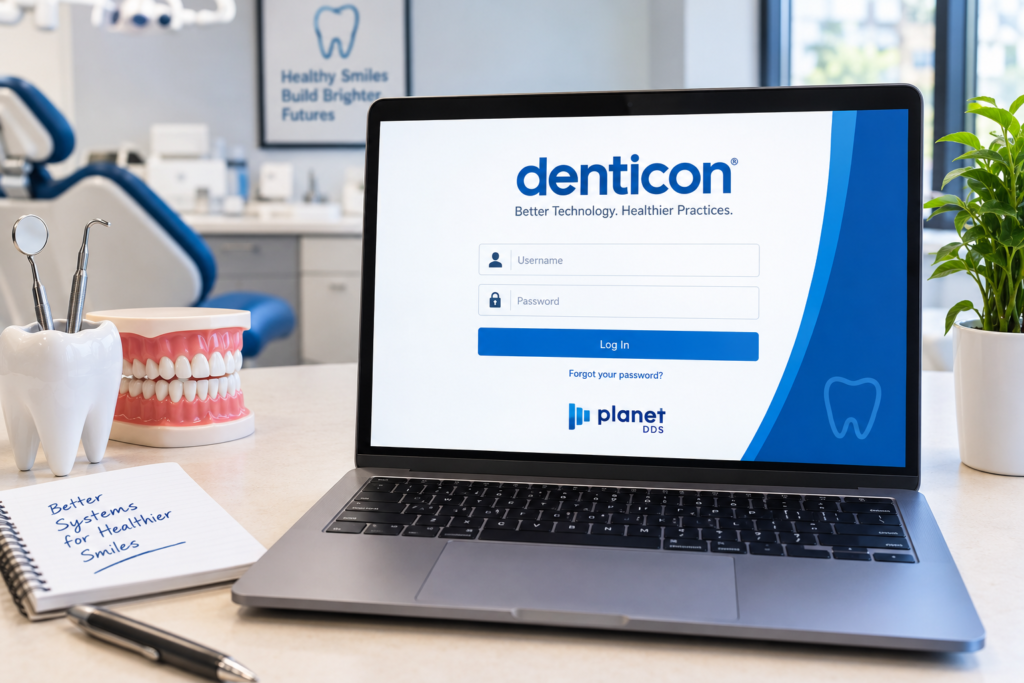
The Denticon login page is where an authorized user begins the process of accessing the platform. The exact appearance and login workflow can change as software providers update their systems, so users should rely on the current login page supplied by their dental organization or the official Denticon environment rather than relying on an unfamiliar third-party website.
Typically, the login process requires credentials associated with an authorized account. Depending on the organization’s configuration, users may encounter additional authentication or security steps. These measures are designed to help ensure that only approved people can access practice information.
It is worth remembering that the login screen is only the first layer of access. Once authentication is completed, the information and features a user can see may depend on their assigned role. A dentist, office manager, receptionist, biller, and administrator may not necessarily have identical permissions.
How to Complete a Denticon Login
Starting with the correct website is the most important part of the login process. If your dental organization has provided a specific Denticon login address, use that address rather than searching randomly for login pages. This reduces the chance of accidentally entering credentials into a fraudulent website.
Once the official login page is open, enter the username or other requested account identifier. Make sure the information is typed exactly as required. If your organization uses a specific naming convention, an incorrectly entered username can prevent access even when the password is correct.
Next, enter your password and submit the login form. If additional verification is required, complete the authentication step according to your organization’s instructions. Avoid repeatedly submitting incorrect credentials because repeated failed attempts can sometimes result in temporary account restrictions.
Why Denticon Login Matters to Dental Practices
A dental practice depends heavily on timely access to information. Staff may need to check an appointment, update patient details, review billing information, confirm insurance-related information, or prepare reports. If employees cannot sign in, even routine activities can become more difficult.
The importance of a reliable login becomes particularly obvious during busy periods. A front-desk employee may need to check several appointments within minutes, while clinical and administrative staff may simultaneously need access to different areas of the platform.
For this reason, practices benefit from establishing clear procedures for account access. Staff should know who handles password problems, who can create or deactivate users, and where to go when a technical problem affects multiple employees.
Common Denticon Login Problems
Login problems can happen for several reasons, and not every failed login means the Denticon platform is unavailable. Sometimes the problem is simply an incorrect password, an outdated browser session, or a temporary connectivity issue.
One of the most common causes is incorrect credentials. Passwords are often case-sensitive, so an accidental capital letter or an extra space can cause authentication to fail. Browser autofill can also create problems if it has stored an old password.
Another possibility is an account-related issue. A user account could have been disabled, a password could have expired, or permissions may have changed. In those situations, repeatedly attempting to log in is unlikely to solve the problem. Contacting the appropriate practice administrator or support resource is usually more effective.
What to Do If You Forget Your Denticon Password
Forgetting a password is a normal occurrence, especially when organizations require employees to use strong and frequently updated credentials. The first step should be to use the official password-recovery option provided on the Denticon login page, if one is available for your account configuration.
Follow the recovery instructions carefully and use the email address or other verification information associated with your account. If your organization manages password resets internally, you may need to contact your office administrator instead.
Avoid using unofficial websites or services that claim they can recover your Denticon password. Legitimate password recovery should never require you to disclose your password to another person. Keeping the recovery process within approved channels helps protect both your account and the practice’s information.
Denticon Login and Username Issues
A forgotten username can be just as frustrating as a forgotten password. In larger dental organizations, usernames may follow specific formats that are not immediately obvious. Employees who recently joined a practice may also be unsure which credentials they should use.
If you do not remember your username, check the onboarding information supplied by your organization. Your office administrator or system administrator may also be able to confirm the correct account identifier.
Do not create a second account simply because you cannot remember the first one unless your administrator specifically instructs you to do so. Duplicate accounts can make user management more complicated and may result in inconsistent permissions or records.
Browser Problems That Can Affect Denticon Login
Because Denticon operates through a web-based environment, the browser you use can affect your experience. An outdated browser, corrupted cookies, blocked scripts, or conflicting extensions can sometimes interfere with login pages.
If the login page behaves strangely, first make sure your browser is updated. You can also try opening the site in a private or incognito window. If the page works there, cached information or browser extensions may be contributing to the issue.
Clearing cookies and cached files can sometimes help, but remember that this may sign you out of other websites. In a professional environment, it is often better to troubleshoot systematically rather than deleting everything immediately.
Internet Connection and Denticon Access
A stable internet connection is essential for cloud-based applications. If your internet connection is slow or frequently disconnecting, Denticon may appear to be malfunctioning even though the platform itself is operating normally.
Before assuming there is a Denticon outage, check whether other websites and cloud applications are working. If several unrelated services are also inaccessible, the problem may be with the practice’s internet connection.
For an office environment, network problems should generally be handled by the person responsible for the practice’s technology infrastructure. If every workstation experiences the same problem at approximately the same time, a network or service issue becomes more likely than an individual password problem.
Denticon Login on Different Devices
One of the advantages of cloud-based practice-management software is that authorized users can work from compatible devices without depending entirely on a single office computer. However, the organization may have policies governing which devices employees are permitted to use.
When signing in from a different workstation, make sure the device is trusted and appropriately secured. Avoid using public computers for accessing sensitive dental information. If you are working from home or another location, use a secure internet connection and follow your organization’s remote-access policies.
It is also important to log out when you finish using a shared workstation. Simply closing a browser tab may not always be the same as signing out of the application.
Mobile and Remote Access Considerations
Modern dental organizations may have employees who need access to practice information outside the traditional front desk. Remote work, administrative responsibilities, and multi-location organizations can make flexible access valuable.
However, convenience should never replace security. If you access Denticon remotely, use only approved devices and follow the security procedures established by your organization. Never save sensitive credentials on a device that other people can freely access.
If your organization provides specific instructions for remote access, those instructions should take priority over generic advice. Different practices can configure user permissions and security requirements differently.
Denticon Login Security
Dental practice-management systems can contain sensitive information, which makes account security extremely important. Users should treat their Denticon credentials as confidential and avoid sharing passwords with coworkers.
Each employee should ideally have an individual account that reflects their responsibilities. Shared credentials make it harder to determine who accessed information and can weaken the organization’s overall security controls.
Strong passwords are another important defense. A good password should be difficult to guess and should not be reused across multiple unrelated services. Password managers can be useful for securely storing complex credentials when their use is permitted by the organization.
Why You Should Never Share Your Denticon Password
Sharing a password may seem harmless when a coworker needs quick access, but it creates unnecessary security and accountability problems. If several people use one account, it becomes difficult to determine which person performed a particular action.
There is also a risk that a shared password could be written down, sent through an insecure messaging service, or reused elsewhere. A compromised credential can potentially create a much larger problem than the original convenience is worth.
If another employee needs access to Denticon, the better approach is to have an authorized administrator create the appropriate account or adjust permissions. Individual accounts provide better accountability and make user management easier.
Multi-Factor Authentication and Account Protection
Organizations increasingly use additional authentication methods to strengthen account security. Multi-factor authentication, when enabled, requires more than just a password to confirm a user’s identity.
An additional verification step can be especially useful if a password is accidentally exposed. Even if someone obtains the password, they may still be unable to complete authentication without the second factor.
If your organization uses multi-factor authentication with Denticon or another connected service, follow the setup instructions carefully. Keep recovery information secure and notify the appropriate administrator if you lose access to your authentication method.
What to Do When Denticon Is Not Loading
A blank page, endless loading screen, or error message does not necessarily mean your account is damaged. Several factors can cause a web application to load incorrectly.
Start by checking your internet connection and refreshing the page. If that does not help, try another supported browser or a private browsing window. You can also restart the browser and try again.
If the problem continues across multiple devices and users, the issue may be broader than your individual account. At that point, checking official service information or contacting the organization’s designated support channel can help determine whether there is a platform-side problem.
Denticon Login Errors
Different login errors can point toward different causes. An incorrect username or password message generally indicates an authentication problem, while a page that fails to load may point toward a browser, network, or service issue.
When reporting a login problem, provide useful details to your administrator or support team. Explain what you were doing, what error appeared, whether other users are affected, and whether you have already tried basic troubleshooting.
Avoid sending your password when reporting an error. Support staff generally do not need to know your password to diagnose an account or technical issue.
When to Contact Your Dental Practice Administrator
Your practice administrator is often the first person to contact when your account has been disabled, your permissions appear incorrect, or you need help with credentials. Administrators may have access to user-management functions that ordinary employees do not.
For example, if you recently changed roles, moved to another location, or returned after an extended absence, your access settings may need to be reviewed. These are account-management issues rather than problems that can necessarily be solved from the login screen.
Having a clear internal contact for Denticon access can save considerable time. Practices should make sure employees know whether their office manager, IT department, system administrator, or another designated person handles login issues.
Denticon Login for Multi-Location Dental Organizations
Large dental groups often have more complicated access structures than single-location practices. Employees may work across multiple offices, and administrators may need to control access according to location and job responsibilities.
This makes accurate account configuration particularly important. A user should have access to the information required for their role without automatically receiving unnecessary permissions.
When employees transfer between locations, administrators should review their access rather than assuming existing permissions are still appropriate. Proper user management helps organizations maintain security while keeping daily workflows efficient.
Best Practices for Denticon Users
Good login habits can prevent many avoidable problems. Start by using the official login route provided by your organization and keeping your credentials private.
Keep your browser and operating system updated. Software updates often include security improvements as well as compatibility fixes. If your practice manages computers centrally, follow its update policies rather than installing unauthorized software.
Finally, log out when you are finished, especially on shared computers. This simple habit reduces the chance that another person will accidentally access an active session.
Protecting Patient Information After Login
Logging into Denticon gives authorized users access to information that should be handled carefully. Once you are inside the system, follow your organization’s privacy and security policies.
Do not leave patient information visible on an unattended screen. Lock your computer when stepping away, even if you expect to return shortly. Avoid photographing or copying sensitive information to personal devices unless your organization explicitly permits it.
Security is not limited to the login screen. Protecting patient information requires good habits throughout the entire session, from the moment you sign in until you properly log out.
How Administrators Can Improve Denticon Access
Administrators can make the login experience easier by establishing clear procedures for new and existing employees. New staff should receive credentials and instructions through a secure onboarding process.
Organizations should also maintain accurate user lists. When an employee leaves the practice, their access should be reviewed and disabled according to organizational policy. Similarly, employees who change positions should have their permissions updated.
Regularly reviewing user accounts can reduce security risks while ensuring that employees have the access they actually need. It also gives administrators an opportunity to identify inactive or unnecessary accounts.
Tips for Faster Everyday Denticon Access
Efficiency matters in a dental office. A few simple habits can make routine login much easier. Keep your credentials stored securely rather than relying on handwritten notes near your workstation.
Use a supported browser and keep it updated. Avoid installing unnecessary extensions on a work computer because some extensions can interfere with websites or create additional security concerns.
If you repeatedly encounter the same login issue, document the exact problem and report it instead of repeatedly trying random solutions. A consistent description of the issue can help an administrator identify the underlying cause more quickly.
What If Denticon Login Works but Certain Features Do Not?
Sometimes users can successfully log in but cannot access a particular screen, report, or function. This does not necessarily mean that Denticon is malfunctioning.
Access inside an application is often controlled by user roles and permissions. For example, an employee may be able to view appointments but not access administrative reporting features.
If a feature that you previously used suddenly disappears, contact your administrator. Your role or permissions may have changed, or the organization may have updated its configuration.
Common Mistakes to Avoid During Denticon Login
One common mistake is repeatedly entering a password that you suspect is incorrect. If you cannot remember your password, use the approved recovery process instead of continuing to guess.
Another mistake is searching for login credentials through unofficial websites. Search engines can display many pages that mention a software product, but not every result should be trusted with your account information.
A third mistake is ignoring browser and network problems. If several users cannot access the system, spending time resetting individual passwords may not solve the actual issue. Troubleshooting should begin by identifying whether the problem is isolated or widespread.
Denticon Login and Employee Onboarding
A smooth onboarding process should include system access from the beginning. New employees need to know how they will receive their credentials, who to contact for help, and what security rules apply to their account.
Training should cover more than simply entering a username and password. Employees should understand why accounts are individual, why passwords must remain private, and how to report suspicious activity.
A short access checklist can make onboarding easier. It can include account activation, password setup, authentication requirements, browser requirements, and the appropriate support contact.
Troubleshooting Checklist for Denticon Login
When Denticon login does not work, use a logical troubleshooting sequence rather than trying random fixes.
First, verify that you are using the correct official login page. Then check your username and password carefully. Make sure Caps Lock is not causing a problem and confirm that the browser has not inserted an outdated saved password.
Next, check your internet connection and try refreshing the page. If necessary, test the site using another supported browser or a private browsing window.
If the problem continues, determine whether other employees are experiencing the same issue. If multiple users are affected, contact the appropriate administrator or support resource and provide details about the error.
Frequently Asked Questions About Denticon Login
What is Denticon login used for?
Denticon login is used by authorized users to access their organization’s Denticon practice-management environment. Depending on their permissions, users may work with appointments, patient information, billing-related tasks, reports, and other practice-management functions.
What should I do if I forget my Denticon password?
Use the official password-recovery process available for your account, if provided. If your organization handles password resets internally, contact your practice administrator or designated support person.
Why is my Denticon login not working?
Possible causes include incorrect credentials, browser problems, internet connectivity issues, account restrictions, or a broader service issue. Start with basic credential and browser checks before escalating the problem.
Can I share my Denticon password with a coworker?
You should not share your password. Individual accounts provide better security and accountability. If another employee needs access, ask an authorized administrator to provide the appropriate account.
Can I use Denticon from another computer?
Access may be possible from another compatible device, but you should follow your organization’s policies regarding approved devices and remote access. Avoid accessing sensitive information from public or unsecured computers.
Why can I log in but not see a particular feature?
Your account may not have permission to use that feature. User access is often determined by role and organizational configuration. Contact your administrator if you believe you need additional permissions.
Should I save my Denticon password in my browser?
Whether browser password saving is permitted depends on your organization’s security policies. If your practice does not allow it, use an approved password-management solution instead.
What should I do if Denticon keeps loading without opening?
Check your internet connection, refresh the page, restart the browser, and try a supported browser or private window. If the problem affects multiple users, report it to your administrator or support team.
How can I make my Denticon account more secure?
Use a strong, unique password, keep your credentials private, use additional authentication when required, lock your workstation when stepping away, and follow your organization’s security policies.
Who should I contact when my Denticon account is locked?
The correct contact depends on your organization. Usually, this is a practice administrator, office manager, IT team, or designated Denticon administrator. Follow your organization’s established support procedure.
Final Thoughts on Denticon Login
Denticon login may seem Monks Fishery like a small part of a dental practice’s daily routine, but reliable access is essential when so many administrative and operational activities depend on digital systems. Knowing how to approach the login process can save time and prevent unnecessary frustration.
The most important habits are straightforward: use the correct login page, protect your credentials, maintain a secure device, keep your browser updated, and follow your organization’s access policies. When something goes wrong, identify whether the problem is related to credentials, the browser, the network, your account permissions, or the service itself.
For dental teams, good login practices are about more than convenience. They also contribute to protecting sensitive information and maintaining accountability. By combining secure credentials with sensible troubleshooting and clear internal procedures, practices can make Denticon access a smoother part of the everyday workflow.
YOU MAY HAVE MISSED