Introduction: Why Growth SEO Has Become So Important
The internet has made it easier than ever for businesses to reach potential customers, but it has also made competition much tougher. Almost every industry has thousands of websites competing for attention, and simply having a website is no longer enough. A business can have an attractive design, excellent products, and a strong team behind it, yet still struggle if potential customers cannot find it online. This is where growth SEO becomes especially valuable.
Growth SEO is more than the traditional idea of trying to rank a webpage for a handful of keywords. It is about using search engine optimization as part of a broader growth strategy. The objective is not simply to bring random visitors to a website. The bigger goal is to attract people who are genuinely interested in what a business offers and then turn that attention into leads, sales, bookings, subscriptions, or other meaningful actions.
GrowthSEO presents itself as a digital marketing agency focused on helping businesses improve online visibility, attract relevant traffic, and generate leads and sales. Its services include SEO, content marketing, digital advertising, PPC advertising, and related optimization work. The company’s own positioning emphasizes revenue and measurable growth rather than rankings alone.
That approach reflects an important change in digital marketing. Ranking number one can be useful, but rankings are only one part of the picture. If a keyword brings visitors who have no interest in purchasing, the ranking may have little commercial value. On the other hand, a page that attracts fewer visitors but consistently generates qualified leads can be extremely valuable.
This guide takes a detailed look at growth SEO, what it means, how it works, the role of technical SEO, content, keyword research, search intent, local SEO, PPC, analytics, AI, link building, conversion optimization, and long-term strategy. It also explores how businesses can evaluate an SEO provider and avoid common mistakes that waste time and money.
What Is Growth SEO?
Growth SEO can be described as a business-focused approach to search engine optimization. Traditional SEO often focuses on rankings, keywords, backlinks, and organic traffic. Those things still matter, but growth SEO goes one step further by asking how search visibility contributes to the actual performance of a business.
The difference is subtle but important. Imagine that a website moves from page three to page one for a keyword. That sounds like a success, and it can be. But what happens next? If visitors leave immediately, never contact the company, and never buy anything, the ranking has limited value. A growth SEO strategy would investigate the entire journey from search query to website visit to conversion.
GrowthSEO’s official website describes its mission around increasing visibility, attracting the right kind of traffic, and turning online interest into tangible business growth. It also says that its focus is not merely on generating more visitors but on bringing people who can become customers.
This makes growth SEO particularly relevant for businesses that want their marketing investment connected to commercial outcomes. Instead of asking only, “How many keywords do we rank for?” a growth-focused marketer asks, “Which search opportunities are bringing qualified prospects, and what can we do to turn those prospects into customers?”
Growth SEO vs. Traditional SEO
Traditional SEO is often associated with a collection of technical and content-related tasks. These may include keyword research, title optimization, link building, website audits, content creation, and technical fixes. All of those activities remain important, but growth SEO puts greater emphasis on the relationship between those activities and business results.
For example, suppose an online store wants to sell more products. A traditional SEO campaign might focus on improving rankings for product-related keywords. A growth SEO campaign would also look at category pages, product descriptions, internal links, site speed, conversion rates, checkout behavior, customer questions, and revenue generated from organic traffic.
The difference is not that one approach uses SEO and the other does not. Both do. The difference is how success is defined.
GrowthSEO’s own description makes this distinction clear by saying its goal is not simply to rank but to drive revenue. That is a useful principle for almost any SEO campaign because rankings should ultimately support a business objective.
Why Organic Search Still Matters
Search engines remain one of the most important ways people discover information, products, services, and businesses. When someone has a problem, they frequently search for an answer before deciding what to do next.
This creates a valuable opportunity for businesses. Instead of interrupting someone with an advertisement, organic search can place a business in front of a person who is already looking for something related to its products or services.
Organic visibility can also become a long-term asset. Paid advertising can produce traffic while a campaign is active, but well-optimized organic pages may continue attracting visitors after publication. That does not mean SEO is free or automatic. Content needs maintenance, technical work requires attention, and competitors continue improving their websites. Still, organic search can create compounding value over time.
GrowthSEO positions SEO as one part of a wider digital marketing system designed to improve traffic, exposure, leads, and sales. This broader view is increasingly useful because customers rarely interact with a brand through one channel alone.
The Core Philosophy of Growth SEO
The core philosophy of growth SEO is simple: optimize for business growth, not vanity metrics. A business does not pay its employees with rankings. It pays them with revenue. Rankings can contribute to revenue, but only when they attract the right audience and lead to meaningful actions.
This philosophy changes how SEO priorities are selected. A marketer might discover hundreds of potential keywords, but not all of them deserve equal attention. Some have enormous search volume but weak commercial relevance. Others have smaller audiences but extremely strong buying intent.
For example, a software company could rank for a broad educational phrase such as “what is project management.” That traffic might be useful for awareness, but a phrase such as “project management software for construction companies” could be much closer to a purchase decision.
Growth SEO tries to understand that difference. It connects search behavior with customer journeys and business objectives.
GrowthSEO describes its approach as data-driven and says it develops plans suited to individual businesses rather than simply pursuing traffic. That business-specific approach is important because there is no universal SEO formula that works equally well for every website.
Understanding Search Intent
Search intent is one of the most important concepts in growth SEO. It refers to what the user actually wants when entering a query into a search engine.
Someone searching “how does SEO work” is probably looking for information. Someone searching “best SEO agency for ecommerce” is researching possible providers. Someone searching “hire SEO consultant” is much closer to taking action.
These searches may contain related words, but their intentions are different. Creating the same type of page for all three would be a mistake.
A growth SEO strategy therefore starts by asking what users expect to see. Informational queries usually need helpful explanations. Commercial searches may need comparisons, reviews, or detailed service pages. Transactional searches require clear paths toward purchasing or contacting the business.
Keyword Research for Growth SEO
Keyword research is the process of identifying the terms and phrases potential customers use when searching online. It remains a fundamental part of SEO, but growth SEO treats keyword research as market research rather than simply a ranking exercise.
Every search query reveals something about a person’s needs. Some queries reveal problems. Others reveal product preferences. Some show that the user is comparing alternatives, while others demonstrate an immediate desire to buy.
A good keyword strategy considers search volume, competition, relevance, intent, business value, and the current strength of the website.
It is also important to think beyond individual keywords. Search engines understand topics and relationships between concepts. A website that thoroughly covers a subject can often create stronger relevance than one that publishes dozens of disconnected pages.
Building Keyword Clusters
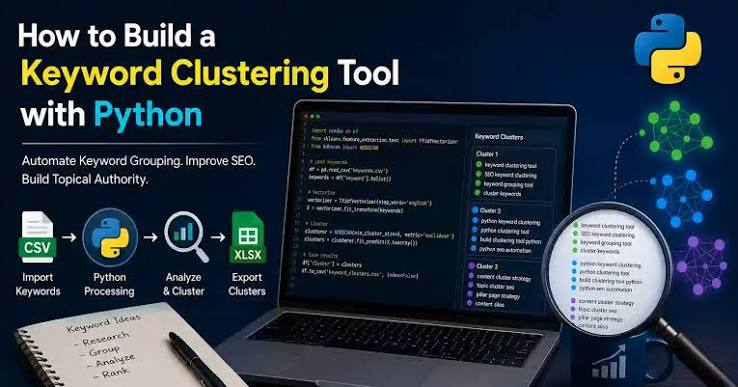
Keyword clustering involves grouping related queries into logical topic areas. Instead of creating a separate article for every slight keyword variation, a website can create comprehensive pages that satisfy multiple closely related searches.
Suppose a company sells accounting software. Instead of producing separate low-value pages for every variation of “accounting software,” it might develop a main guide around accounting software and supporting pages covering invoicing, expense tracking, payroll integration, small-business accounting, and industry-specific needs.
This structure creates topical relationships.
It also makes internal linking easier because related pages can naturally reference one another. Users can move from a broad educational article to a more specific guide and eventually toward a commercial page.
Technical SEO: The Foundation of Growth
Technical SEO is the part of search optimization that focuses on the underlying structure and accessibility of a website. Users may not notice technical SEO directly, but they can certainly notice its consequences.
A website with broken links, slow pages, poor mobile usability, indexing problems, or confusing architecture can create problems for both search engines and visitors.
GrowthSEO specifically lists technical SEO among its services and identifies issues such as website speed, indexing, mobile-friendliness, and crawl errors as areas that can affect rankings.
Technical SEO is therefore not just a developer concern. It is part of the foundation that allows content and marketing campaigns to perform properly.
Website Crawlability and Indexing
Search engines need to discover and process website pages before those pages can become eligible to appear in search results. Crawlability refers to how easily search engine systems can access website content, while indexing refers to storing and processing that content for potential retrieval.
Problems can occur when important pages are blocked, accidentally marked as noindex, buried within poor navigation, or affected by technical errors.
A strong growth SEO campaign should make sure important pages are discoverable and technically accessible.
It is also important to avoid creating unnecessary pages that provide little value. Large websites can sometimes generate thousands of URLs through filters, search functions, parameters, or duplicate content. Without careful management, that can create unnecessary complexity.
Website Speed and Performance
Speed matters because users expect websites to respond quickly. A slow website can create frustration before a visitor even reads the first paragraph.
Performance optimization can involve image compression, efficient code, caching, hosting improvements, script management, and other technical changes.
The exact solution depends on the website, which is why performance should be measured before changes are made. Randomly removing website features is not a strategy.
A growth-focused approach considers both performance and business value. The objective is not to make a website technically perfect at the expense of functionality. It is to create a fast, reliable experience that helps visitors accomplish what they came to do.
Mobile SEO
Mobile search has transformed the way people interact with websites. Many users discover businesses on phones, and they expect pages to work smoothly on smaller screens.
A mobile-friendly site should provide readable text, responsive layouts, accessible menus, usable forms, and buttons that are easy to tap.
Conversion paths deserve special attention. If a visitor wants to call a business, request a quote, or complete a form, the process should not become frustrating on mobile.
Mobile SEO therefore overlaps heavily with user experience. A website that works well for search engines but poorly for real people has a serious strategic problem.
On-Page SEO
On-page SEO focuses on the content and elements found directly on a webpage. This includes titles, headings, content structure, internal links, descriptive text, and other elements that help users and search engines understand the page.
GrowthSEO describes its on-page SEO service as optimizing website content, structure, and keywords to improve search visibility and user experience.
Good on-page SEO should feel natural. The reader should not feel that the page was written for an algorithm.
A well-optimized page has a clear topic, answers relevant questions, uses useful headings, provides context, and guides visitors toward appropriate next steps.
Content Optimization
Content optimization is one of the most practical areas of growth SEO because existing pages often contain untapped potential.
A page might already receive impressions but have a low click-through rate. Another page might rank near the first page but fail to answer important questions. A third page might contain useful information but have weak internal links.
GrowthSEO describes content optimization as improving keyword usage, structure, search intent, readability, titles, descriptions, and internal linking.
The key is to optimize with a purpose. Changing words simply to make a page look different does not necessarily improve performance. Optimization should make the page clearer, more complete, more useful, or better aligned with the searcher’s needs.
Creating High-Quality SEO Content
High-quality SEO content begins with the reader. Before writing, a marketer should understand who the audience is and what problem the content is supposed to solve.
Generic content often fails because it repeats information users can find everywhere else. Strong content adds value through practical examples, original explanations, clear frameworks, expert observations, comparisons, data, or useful tools.
The writing style matters as well. SEO content does not need to sound robotic or overly formal. In fact, conversational writing can make complicated subjects much easier to understand.
The best approach is usually simple: write for humans first, then make the page easy for search engines to understand.
Content Marketing and Growth SEO
Content marketing gives businesses an opportunity to attract people before they are ready to buy.
A potential customer may first search for a problem, then discover educational content, later compare solutions, and eventually visit a product or service page.
A strong content strategy supports those different stages.
GrowthSEO lists content marketing among the main services through which it helps brands grow. That fits naturally with SEO because search behavior creates countless opportunities for educational and commercial content.
The important part is creating content that serves a clear purpose rather than publishing simply to maintain a calendar.
Topic Authority and Content Depth
Topic authority refers broadly to how thoroughly a website covers a subject and how well its pages relate to one another.
A website that publishes one article about a topic may have limited depth. A website that provides a comprehensive guide plus supporting resources can give visitors much more useful information.
For example, an SEO website could have a central guide about technical SEO supported by separate pages about crawling, indexing, redirects, structured data, page speed, mobile usability, and technical audits.
Internal links can connect these pages into a coherent knowledge structure.
This is much stronger than publishing unrelated articles simply because keyword tools show that the phrases have search volume.
Internal Linking
Internal linking is sometimes overlooked because it does not have the same excitement as backlink campaigns. Yet it can be extremely useful.
A relevant internal link helps users discover additional information. It can also help search engines understand how pages relate to each other.
For example, an article about keyword research might naturally link to guides about search intent, content strategy, technical SEO, and conversion optimization.
The links should be useful rather than excessive.
When internal linking is done thoughtfully, it creates a smoother journey through the website and helps distribute attention across important pages.
Local SEO and Growth SEO
Local SEO is essential for businesses that depend on customers in specific geographic areas. A dentist, restaurant, law firm, repair company, consultant, or local retailer may not need global visibility. It needs visibility among the right people in the right locations.
GrowthSEO lists local SEO optimization among its services and says it works on local search, map results, and local keywords.
Local SEO involves more than adding city names to webpages. Businesses need accurate location information, strong service pages, useful local content, and a trustworthy online presence.
The goal is to make it easy for both search engines and potential customers to understand what the business offers and where it operates.
Google Business Profile and Local Visibility
For local businesses, the business profile shown in local search and map environments can be extremely important.
Accurate business information helps customers understand where a company is located, when it operates, and how to contact it.
Reviews can also influence customer decisions. A business may rank well but lose potential customers if its reputation looks poor compared with competitors.
Local SEO should therefore connect search visibility with reputation and conversion.
A good local strategy considers the entire experience from discovery to contact.
Growth SEO for Small Businesses
Small businesses often cannot compete with large companies on every keyword. That does not mean SEO is out of reach.
The smarter approach is usually to identify areas where the business has a realistic opportunity to become highly relevant.
GrowthSEO specifically offers SEO for small businesses and describes its service as focused on affordable strategies designed to improve visibility and sales.
A small company can focus on specific services, local searches, long-tail keywords, specialized customer problems, and high-intent topics.
Being specific can be an advantage. A small company that deeply understands one niche may create much better content for that audience than a large generalist website.
Growth SEO for E-Commerce
E-commerce SEO has unique challenges because online stores can contain hundreds, thousands, or even millions of URLs.
Product pages, category pages, filters, sorting options, tags, and variations can create complex structures.
The first priority is making important products and categories easy to discover.
Category pages should also provide useful information. They should help shoppers understand what is being sold, how products differ, and what makes a particular category relevant.
Product pages should provide enough detail for customers to make informed decisions.
Growth SEO for Service-Based Businesses
Service businesses often rely on a smaller number of important pages. Their main opportunities may include service pages, location pages, educational resources, comparison pages, and frequently asked questions.
A strong service page should explain the problem, describe the service, communicate benefits, answer common concerns, and provide a clear next step.
Supporting content can attract people earlier in the buying journey.
For example, a plumbing company could publish content about common plumbing problems while linking relevant articles to its emergency plumbing service page.
That creates a natural relationship between information and commercial intent.
PPC and Growth SEO
GrowthSEO does not position SEO as the only marketing channel. Its official service information also includes digital advertising and PPC advertising.
PPC can be useful because it provides faster visibility than organic search in many situations. Businesses can target specific keywords and audiences while measuring clicks, conversions, and campaign performance.
The downside is that paid traffic comes with an ongoing cost.
This is where SEO and PPC can complement each other. Paid campaigns can provide immediate demand capture while organic SEO builds long-term visibility.
Combining SEO and PPC
SEO and PPC can provide useful information for each other.
Suppose a paid campaign reveals that a specific keyword generates high-quality leads. That keyword may deserve attention in the organic strategy.
Likewise, organic search can reveal which topics and queries consistently attract relevant visitors.
Using both channels can also provide greater search visibility for important commercial terms.
The ideal mix depends on the business, industry, budget, competition, and customer journey. There is no universal percentage that every company should spend on organic versus paid marketing.
Conversion Optimization
Traffic is valuable only when it contributes to something meaningful.
Conversion optimization focuses on what visitors do after arriving on a website. Depending on the business, a conversion could be a purchase, phone call, form submission, appointment, subscription, download, or demo request.
A page can rank extremely well and still perform poorly if visitors cannot figure out what to do next.
Clear headlines, strong value propositions, useful proof, simple forms, visible contact information, and relevant calls to action can all improve the experience.
Growth SEO therefore needs to look beyond the search result and into the website itself.
Measuring Growth SEO Success
One of the biggest differences between activity-based SEO and growth SEO is measurement.
Publishing ten articles is an activity. Ranking for ten keywords is a measurable SEO outcome. Generating qualified leads from those rankings is a business outcome.
A growth-focused campaign should understand the connection between all three.
Useful metrics can include organic clicks, impressions, rankings, click-through rates, conversions, qualified leads, sales, revenue, and customer acquisition costs.
The most important metrics depend on the business model.
Google Search Console Data
Google Search Console provides useful information about how websites appear in organic search.
It can help identify queries that generate impressions, pages that receive clicks, and opportunities where rankings may be close to stronger positions.
The data becomes valuable when it leads to action.
For example, if a page receives many impressions but few clicks, its title and description might need improvement. If a page ranks near the first page but lacks depth compared with competitors, content optimization may be worth testing.
GrowthSEO’s recent blog content also emphasizes turning Search Console information into actionable insights rather than simply looking at numbers.
SEO Reporting
A useful SEO report should answer four questions: What happened? Why did it happen? What was done? What happens next?
A report that contains dozens of numbers but no interpretation is not particularly helpful for a business owner.
Growth SEO reporting should connect SEO activity to business goals.
Instead of simply saying that organic traffic increased, a useful report might explain which pages grew, which queries contributed, whether leads increased, and which improvements should be prioritized next.
Clear reporting also builds trust between an SEO provider and a client.
Link Building in Growth SEO
Backlinks can contribute to search visibility, but link building should be approached carefully.
A large number of irrelevant or low-quality links is not automatically better than a smaller number of useful references.
Strong link-building strategies often focus on creating assets worth referencing. These might include original research, useful tools, industry studies, expert resources, surveys, data visualizations, or exceptionally helpful guides.
The goal is to build authority naturally rather than chase numbers.
Growth SEO should therefore treat link acquisition as part of a broader authority-building strategy.
Why Content Quality Beats Content Quantity
Publishing hundreds of articles may look impressive, but volume alone does not create value.
If every article repeats information already available elsewhere, the website becomes larger without becoming substantially better.
A smaller library of comprehensive resources can often be more useful.
Before creating a new page, marketers should ask whether the topic deserves its own URL and whether the page will provide something genuinely valuable.
If an existing article already covers the subject, improving that article may be more effective than creating another similar one.
Updating Old Content
SEO is not a “publish once and forget” activity.
Search results change. Competitors improve. Statistics become outdated. Products change. Customer questions evolve.
That means old pages should occasionally be reviewed.
An update might involve replacing outdated information, improving examples, restructuring headings, adding missing sections, strengthening internal links, or improving conversion paths.
The goal is not to update pages simply because they are old. The goal is to keep valuable pages useful.
AI and Growth SEO
Artificial intelligence is changing how SEO professionals research, analyze, write, and optimize content.
GrowthSEO’s blog currently includes material about AI workflow automation for SEO agencies and discusses topics such as keyword research, content briefs, technical audits, reporting, and lead management.
AI can help automate repetitive work, organize information, generate ideas, identify patterns, and speed up certain production processes.
But speed should not be confused with quality.
AI-generated material still needs human review because it can produce inaccurate claims, weak examples, generic explanations, or outdated information.
AI Content and Human Expertise
One of the easiest mistakes in modern SEO is assuming that AI can produce unlimited high-quality content without editorial oversight.
The technology can produce fluent writing, but fluent writing is not automatically authoritative writing.
Human experts are still needed to check facts, add real-world examples, challenge assumptions, improve clarity, and ensure that content actually serves the audience.
GrowthSEO’s blog includes guidance around fact-checking AI-generated content before publication, which highlights the importance of editorial review in AI-assisted workflows.
The strongest workflow is often collaborative: AI handles selected repetitive tasks while people provide expertise, judgment, verification, and final quality control.
Generative Search and the Future of SEO
Search is becoming increasingly conversational. Users are not always typing short keyword phrases and scanning a traditional list of links. They may ask detailed questions through AI-powered search systems and expect synthesized answers.
This creates new opportunities and new challenges.
Businesses still need strong foundational SEO because search systems need accessible, understandable, trustworthy information.
At the same time, content should be structured clearly. Definitions, direct answers, comparisons, original information, supporting evidence, and well-organized sections can make content easier for different discovery systems to interpret.
GrowthSEO’s recent content includes discussion of Generative Engine Optimization, showing that the company is addressing the broader evolution of online discovery.
User Experience and Growth SEO
Search optimization and user experience should work together.
A visitor who clicks a search result expects the page to fulfill the promise made by the result.
If the page is slow, confusing, overloaded with advertisements, difficult to navigate, or unrelated to the query, the visitor may leave.
A good website should therefore be designed around user needs.
Readable typography, clear navigation, useful headings, strong page structure, fast performance, responsive design, and straightforward calls to action can all contribute to a better experience.
Building Trust Through SEO Content
Trust is one of the most valuable assets a website can build.
People are more comfortable buying from businesses that demonstrate expertise, provide clear information, show real contact details, explain their services honestly, and offer evidence that they understand their industry.
Trust can come through case studies, reviews, original research, transparent explanations, author information, business details, and consistent communication.
GrowthSEO’s current blog also includes content about building trust signals on websites, reflecting the importance of credibility as part of digital marketing.
SEO gets people through the door. Trust helps convince them to stay.
SEO Audits
An SEO audit provides a structured assessment of a website’s current search performance and potential problems.
A comprehensive audit can examine technical issues, indexing, site architecture, content quality, keyword targeting, internal links, page performance, mobile usability, and external authority.
The most useful audit is not necessarily the longest one.
A business owner needs to know what should be fixed first. If an important technical issue is preventing pages from being indexed, that problem may deserve attention before smaller on-page adjustments.
Growth SEO uses audits as a way to identify opportunities and establish priorities rather than simply creating a list of technical jargon.
Building an SEO Strategy From Scratch
A strong SEO strategy should begin with business goals.
What does the company actually want? More sales? More qualified leads? More local customers? More subscriptions? Greater brand awareness?
Once the objective is clear, the SEO strategy can work backward.
The next step is understanding the audience and identifying the searches that connect that audience to the business.
Then comes the website assessment: technical condition, existing content, authority, conversion paths, and competitive landscape.
Only after those pieces are understood should the campaign prioritize specific keywords and content projects.
Competitor Research
Competitor analysis can reveal opportunities that keyword research alone cannot.
A competitor may rank for important topics that the business has never covered. Another competitor may have strong content but a weak conversion experience.
The objective is not to copy competitors.
Instead, analyze what they do well, where they are weak, what users expect, and where there may be gaps.
The best opportunities often appear when a business can provide something substantially more useful rather than simply creating another version of the same article.
Search Results as Market Research
Search results themselves contain useful information.
Look at the pages ranking for an important query. Are they guides, product pages, service pages, comparison articles, videos, category pages, or local listings?
The dominant format provides clues about user expectations.
If Google consistently shows detailed guides for a query, publishing a short sales page may be a poor fit.
If product pages dominate, users may have transactional intent.
Growth SEO uses these signals to determine what type of content deserves to be created.
Long-Tail Keywords
Long-tail keywords are more specific search phrases that often contain several words.
They may have lower search volume than broad keywords, but they can reveal stronger intent.
For example, “running shoes” is broad. “best running shoes for flat feet under $100” is much more specific.
The second query gives a marketer more information about what the user wants.
For smaller websites, long-tail opportunities can be especially useful because they may provide a realistic way to attract highly relevant visitors without competing immediately for the broadest terms.
Semantic Relevance
Modern SEO is not limited to exact keyword matching.
Search engines can understand relationships between concepts and terms.
A page about technical SEO might naturally discuss crawling, indexing, redirects, canonical tags, structured data, site speed, JavaScript, mobile usability, and XML sitemaps.
These concepts provide context.
This means writers should focus on covering a subject properly rather than forcing the same keyword into every paragraph.
Natural language usually produces better content anyway.
SEO for Brand Awareness
Organic search can introduce a brand to people who have never heard of it.
Someone might discover a company through a detailed guide, then return later after seeing the brand elsewhere.
This makes SEO useful beyond direct conversions.
A strong organic presence can reinforce brand recognition and help establish a company as a knowledgeable resource.
Over time, people may begin searching directly for the brand, products, or services.
Growth SEO and Email Marketing
SEO and email marketing can also complement each other.
Organic search can bring new visitors into the website. Useful resources can encourage those visitors to subscribe to an email list.
The email relationship then allows the company to communicate without depending entirely on future search visits.
For example, a business might offer a helpful guide in exchange for an email address, then send useful educational content over time.
This creates a more durable customer relationship.
Growth SEO and Digital Advertising
GrowthSEO identifies digital advertising as part of its broader service offering. Its website says its advertising approach is designed to reach relevant people and use data to improve performance rather than waste advertising spend.
This is consistent with a growth marketing mindset.
Paid campaigns can provide immediate data about audiences, offers, keywords, and messaging.
That information can then inform SEO and content decisions.
Likewise, organic data can reveal which topics deserve paid promotion.
Choosing the Right SEO Provider
Businesses considering an SEO agency should evaluate more than promises about rankings.
Ask what will actually be done. How will the website be audited? Who creates content? How are technical issues handled? How are backlinks approached? What metrics are reported? How frequently is progress reviewed?
Transparency matters.
A provider should be able to explain its strategy in understandable language.
Businesses should also be cautious about guaranteed number-one rankings. Search results depend on many variables, including competitors, algorithms, search behavior, content quality, and implementation.
A trustworthy SEO provider should focus on process, measurable outcomes, and realistic expectations.
Why Custom SEO Strategies Matter
Every business has a different market, audience, website, budget, and competitive environment.
A strategy that works for an ecommerce store may not work for a local law firm.
Likewise, a new website needs a different approach from an established domain with thousands of pages.
GrowthSEO says it creates plans suited to individual businesses and emphasizes data-based methods.
Customization does not mean reinventing SEO from scratch every time. It means choosing the right combination of proven principles for the specific situation.
How Long Does Growth SEO Take?
SEO rarely produces meaningful results overnight.
A new website may need time to be discovered, indexed, evaluated, and developed into a credible resource.
An established website with technical problems or underperforming content may sometimes see faster improvements after high-impact issues are corrected.
The timeline depends on competition, website authority, content quality, technical condition, implementation speed, and the type of keywords being targeted.
The healthiest expectation is to treat SEO as a long-term investment rather than a short-term trick.
Common Growth SEO Mistakes
One of the biggest mistakes is focusing entirely on rankings.
Another is choosing keywords based only on search volume.
Businesses also make mistakes by publishing low-quality content, ignoring technical problems, neglecting mobile users, failing to track conversions, and refusing to update old pages.
Some companies also spend heavily on backlinks without improving their actual website.
Growth SEO requires balance. Technical quality, content, authority, user experience, and conversion strategy should support each other.
Keyword Stuffing and Other Outdated Tactics
Keyword stuffing means forcing keywords into content unnaturally.
It often makes writing awkward and can damage user experience.
Modern SEO should prioritize relevance and usefulness.
Other risky tactics include creating large quantities of thin pages, copying competitors, using manipulative link schemes, and producing automatically generated content without quality control.
A sustainable strategy should be built around value rather than loopholes.
Measuring Return on SEO Investment
SEO investment should eventually be connected to financial outcomes.
For ecommerce websites, this might mean measuring organic revenue.
For service companies, it might mean tracking qualified leads and the revenue generated from those leads.
For publishers, it could mean subscriptions, memberships, or advertising revenue.
The exact calculation varies, but the principle is consistent: SEO should be connected to business performance wherever possible.
This is one reason growth SEO differs from purely traffic-focused campaigns.
Creating an SEO Content Calendar
A content calendar helps businesses maintain strategic consistency.
Instead of randomly choosing topics, the team can organize content around customer problems, commercial priorities, seasonal demand, and keyword opportunities.
A strong calendar might include pillar guides, supporting articles, service pages, comparison content, FAQs, case studies, and updates to existing resources.
Publishing frequency should be realistic.
It is better to publish useful content consistently than to create a huge backlog of rushed articles.
Evergreen and Trending Content
Evergreen content remains useful over long periods.
Examples include beginner guides, definitions, tutorials, checklists, and foundational explanations.
Trending content addresses current events, industry developments, product launches, or temporary search interest.
Both can be valuable.
Evergreen content provides a stable foundation, while timely content allows a brand to participate in current conversations.
The right combination depends on the business and its audience.
Growth SEO for New Websites
New websites have an advantage in one important area: they can build their architecture correctly from the beginning.
This includes choosing logical URLs, organizing pages properly, creating useful categories, establishing internal links, and planning content around clear topics.
Technical SEO should be considered during development rather than treated as an emergency repair job afterward.
The website should launch with a clear purpose and a manageable content strategy.
That foundation makes future growth easier.
Growth SEO for Established Websites
Established websites often have a different opportunity.
They may already have pages receiving impressions and traffic, but those pages may be underperforming.
Instead of publishing hundreds of new articles, the business can sometimes generate meaningful gains by improving existing assets.
This might include updating outdated information, strengthening internal links, consolidating overlapping pages, improving titles, fixing technical issues, or improving conversion paths.
An existing website is not automatically an optimized website.
The Importance of Content Pruning
Sometimes a website has too much content.
Several articles may target nearly identical topics. Some pages may receive no meaningful traffic or serve no clear purpose.
Content pruning involves reviewing such pages and deciding whether they should be improved, consolidated, redirected, or removed.
The goal is to make the website more focused and useful.
Pruning should be strategic rather than aggressive. A page with little traffic may still serve an important customer or conversion purpose.
Growth SEO and Website Architecture
Website architecture determines how information is organized.
A logical structure makes navigation easier and creates clear relationships between pages.
For example:
Homepage → Services → SEO Services → Local SEO → City-Specific Service
This type of hierarchy can make sense for a local SEO provider.
The exact architecture depends on the business, but the general principle is universal: important pages should be easy to discover.
Building a Strong SEO Workflow
A repeatable workflow makes SEO easier to manage.
A typical process might begin with research, followed by auditing, prioritization, implementation, measurement, and refinement.
Research identifies opportunities.
Auditing reveals problems.
Prioritization determines what matters most.
Implementation puts the strategy into action.
Measurement shows what changed.
Refinement improves the next cycle.
This creates a continuous improvement process rather than a one-time SEO project.
Data-Driven SEO
GrowthSEO describes its approach as data-driven, which is important because SEO generates enormous amounts of information.
But data alone does not create strategy.
A dashboard can show traffic, impressions, rankings, and conversions, but someone still needs to interpret the numbers.
The real value comes from identifying patterns and deciding what action to take.
Good SEO teams use data as evidence rather than treating every fluctuation as a crisis.
What Makes Growth SEO Sustainable?
Sustainable growth SEO is built on useful content, technical quality, relevant authority, good user experience, and consistent measurement.
It does not depend on a single trick.
Search engines change. Competitors change. Consumer behavior changes.
A flexible strategy can adapt.
A website that genuinely helps people has a much stronger foundation than one built around temporary ranking shortcuts.
The Role of Expertise
Expertise gives content depth.
A knowledgeable writer can explain why something works, when it does not work, what mistakes to avoid, and how to apply the concept in real situations.
This is especially important in competitive search results where many pages already cover the basics.
Expertise does not mean using complicated language.
Often, the clearest explanation is the most valuable one.
Growth SEO and Brand Trust
A brand that consistently appears with useful, accurate information can build familiarity.
Users may begin to associate the company with expertise.
That familiarity can make future conversions easier.
Trust also improves the effectiveness of other channels because customers who recognize a brand may be more receptive to advertising, email, social media, and direct outreach.
SEO can therefore contribute to the larger brand ecosystem.
The Future of Growth SEO
Growth SEO is likely to become increasingly connected with AI search, content quality, structured information, conversion optimization, analytics, and multi-channel marketing.
Search behavior is evolving, but the fundamental principle remains familiar: understand what people need and make it easy for them to find useful answers.
AI may change how people discover information, but businesses will still need credible content, accessible websites, clear positioning, and strong customer experiences.
GrowthSEO’s current blog already covers subjects including AI workflow automation, Search Console analysis, fact-checking AI content, Core Web Vitals, and Generative Engine Optimization, reflecting how the SEO landscape is expanding beyond traditional ranking tactics.
Final Thoughts on Growth SEO
Growth SEO is ultimately about connecting search visibility with business growth.
It begins with understanding the customer. From there, it involves identifying valuable search opportunities, building a technically sound website, creating useful content, matching pages with search intent, earning authority, improving user experience, and measuring meaningful results.
GrowthSEO positions itself around this broader approach, offering SEO alongside content marketing, digital advertising, and PPC services. Its stated objective is to generate not just traffic but the right traffic that can become customers.
That philosophy is useful whether a business works with GrowthSEO, another agency, or an internal SEO team.
The biggest mistake is treating SEO as a collection of isolated tasks.
SEO works best as a connected system.
Technical SEO helps search engines access the website. Content gives them something useful to understand. Keyword research identifies demand. Search intent helps match content to users. Internal links create relationships between pages. Authority supports credibility. Conversion optimization turns visitors into opportunities. Analytics shows what is working.
When these elements work together, SEO becomes much more than a way to gain rankings.
It becomes a long-term growth channel.
Frequently Asked Questions About Growth SEO
What is growth SEO?
Growth SEO is a business-focused approach to search engine optimization that connects organic visibility with measurable outcomes such as qualified traffic, leads, sales, and revenue.
Instead of focusing only on rankings, growth SEO considers the complete customer journey from search query to website visit and eventual conversion.
What is GrowthSEO?
GrowthSEO is a digital marketing agency operating through growthseo.net. Its official website describes services including search engine optimization, content marketing, digital advertising, and PPC advertising.
The company says its focus is on improving online visibility, attracting relevant traffic, and generating leads and sales.
What SEO services does GrowthSEO offer?
GrowthSEO lists SEO for small businesses, local SEO optimization, technical SEO, on-page SEO, and content optimization among its SEO services.
It also offers content marketing, digital advertising, and PPC advertising as broader digital marketing services.
Is growth SEO useful for small businesses?
Yes. Small businesses can benefit from growth SEO when the strategy focuses on realistic search opportunities and commercial intent.
Local SEO, long-tail keywords, service-specific pages, useful educational content, and conversion optimization can all help smaller businesses compete more effectively.
What is technical SEO?
Technical SEO focuses on the infrastructure and accessibility of a website.
It can include crawling, indexing, page speed, mobile usability, site architecture, redirects, and other technical elements.
GrowthSEO specifically lists technical SEO as a service addressing issues such as speed, indexing, mobile-friendliness, and crawl errors.
How important is search intent?
Search intent is extremely important because it explains what users Growth SEO actually want from a search.
A page can contain the correct keyword and still perform poorly if it does not satisfyGrowth SEO the user’s underlying purpose.
Growth SEO therefore considers not only what people search for but why they search for it.
Does content still matter for SEO?
Yes. Useful content remains an important part of organic search visibility.
However, the focus should be on quality, relevance, completeness, and Growth SEO usefulness rather than publishing as many articles as possible.
Can AI replace SEO professionals?
AI can automate parts of SEO, but it does not remove the need for strategy, expertise, fact-checking, editing, and judgment.
GrowthSEO’s recent content discusses AI workflow automation and fact-checking AI-generated content, highlighting the role of human oversight.
Is PPC better than SEO?
PPC and SEO serve different purposes.
PPC can provide faster visibility but requires ongoing advertising spend. SEO Growth SEO can build longer-term organic visibility but generally requires time and consistent investment.
Many businesses can benefit from using both.
How long does growth SEO take?
There is no universal timeline.
Results depend on competition, website authority, technical condition, content quality, implementation speed, and the search terms being targeted.
SEO should generally be treated as a long-term growth investment rather than an instant marketing tactic.
What should businesses measure in SEO?
Businesses can measure organic clicks, impressions, rankings, click-through rates, conversions, qualified leads, sales, and revenue.
The best metrics depend on the business model.
A growth-focused campaign should prioritize metrics that connect SEO activity with actual business performance.
Is local SEO part of growth SEO?
Yes. Local SEO can be an important part of growth SEO for businesses that Growth SEO serve particular geographic markets.
GrowthSEO specifically lists local SEO optimization among its services and describes work around local search, map results, and local keywords.
What is the biggest SEO mistake businesses make?
One of the biggest mistakes is focusing on rankings and traffic without considering business outcomes.
Other common mistakes include poor search-intent matching, thin content, technical problems, weak conversion paths, outdated pages, and low-quality link-building tactics.
Can old content be optimized?
Absolutely.
Existing content can often be improved by updating outdated information, adding missing sections, improving structure, strengthening internal links, and better matching search intent.
Content optimization is often one of the most practical ways to improve an Growth SEO established website.
What makes a good SEO strategy?
A good SEO strategy starts with clear business objectives.
It then combines audience research, keyword research, search-intent analysis, technical SEO, useful content, internal linking, authority building, conversion optimization, and measurement.
The strongest strategies are customized rather than copied from another business.
Conclusion: Making Growth SEO Work for the Long Term
Growth SEO is not a shortcut to instant rankings. It is a structured approach to building Growth SEO online visibility that supports real business objectives.
The strongest strategies understand that search traffic is only one part of the customer journey. People need to discover the business, find useful information, trust the brand, understand the offer, and have an easy way to take action.
That is why technical SEO, content, search intent, local visibility, paid advertising Growth SEO , analytics, conversion optimization, and brand trust all matter.
GrowthSEO’s current positioning reflects this broader philosophy. The company Growth SEO presents SEO as one part of a wider digital marketing strategy that also includes content marketing, digital advertising, and PPC, with an emphasis on relevant traffic, leads, sales, and measurable growth.
For a business owner, the most useful takeaway is simple: do not measure SEO only by how many keywords appear on page one.
Ask better questions.
Are the right people finding the website? Are they staying? Are they engaging Growth SEO with the content? Are they contacting the company? Are they buying? Which pages produce the best results? Which opportunities deserve more investment?
When SEO is connected to those questions, it becomes a genuine growth engine rather than just another marketing task.
That is the real promise of growth SEO: not merely being seen online, but being found by the people who matter, giving them something valuable, and turning that attention into sustainable business growth.
YOU MAY HAVE MISSED