The Honda Civic is one of the most recognizable names in the automotive world. Known for its practical design, comfortable interior, fuel efficiency, and enjoyable driving experience, the Civic has earned a loyal following among first-time car buyers, families, commuters, and car enthusiasts. Over the years, it has evolved from a small, economical vehicle into a sophisticated compact car with modern technology, improved safety features, and a range of performance options.
What makes the Honda Civic particularly interesting is its ability to balance everyday practicality with a little excitement behind the wheel. Some drivers want a dependable vehicle that keeps fuel costs manageable, while others prefer a sporty sedan with responsive handling. The Civic offers options for both, depending on the model year, trim level, and powertrain.
Whether you are considering buying a new Honda Civic, shopping for a used model, or simply learning more about this popular vehicle, understanding its features and ownership costs can help you make a better decision. This guide explores the Honda Civic’s history, design, performance, fuel economy, interior, safety technology, maintenance requirements, and overall value.
What Is the Honda Civic?
The Honda Civic is a compact passenger car produced by Honda. First introduced in 1972, it was developed to provide drivers with affordable transportation, efficient fuel consumption, and dependable everyday performance. Its compact dimensions made it suitable for city driving, while its practical cabin and straightforward controls helped it appeal to a broad audience.
As automotive technology advanced, Honda continued refining the Civic. Later generations introduced more powerful engines, improved ride comfort, updated styling, advanced safety systems, and increasingly sophisticated infotainment features. The vehicle also expanded into different body styles and performance categories, giving buyers more choices than the original economy-focused model offered.
Today, the Honda Civic is available in different configurations depending on the market and model year. These can include conventional gasoline-powered sedans, hatchbacks, hybrid models, and high-performance variants such as the Civic Si and Civic Type R. Not every version is sold in every country, so checking local availability is important before choosing a specific model.
The History and Evolution of the Honda Civic
The first-generation Honda Civic arrived during a period when drivers were becoming increasingly interested in smaller, more economical vehicles. Rising fuel prices and changing transportation needs helped create demand for cars that could deliver practical performance without excessive running costs. The original Civic answered that demand with compact dimensions, efficient engines, and an approachable price.
During the following decades, the Civic gradually developed into a more refined vehicle. Honda introduced improvements in engine technology, body construction, suspension design, and passenger protection. The Civic also gained a reputation for being enjoyable to modify, which helped establish a strong following among automotive enthusiasts interested in tuning, motorsports, and aftermarket customization.
Modern Civic generations combine the original model’s practical character with features that would have been difficult to imagine in the early 1970s. Digital displays, driver-assistance systems, turbocharged engines, hybrid powertrains, and carefully designed interiors have transformed the car. Despite these changes, its central appeal remains familiar: a compact vehicle designed to make everyday driving easier without sacrificing comfort or driving enjoyment.
Exterior Design and Overall Appearance
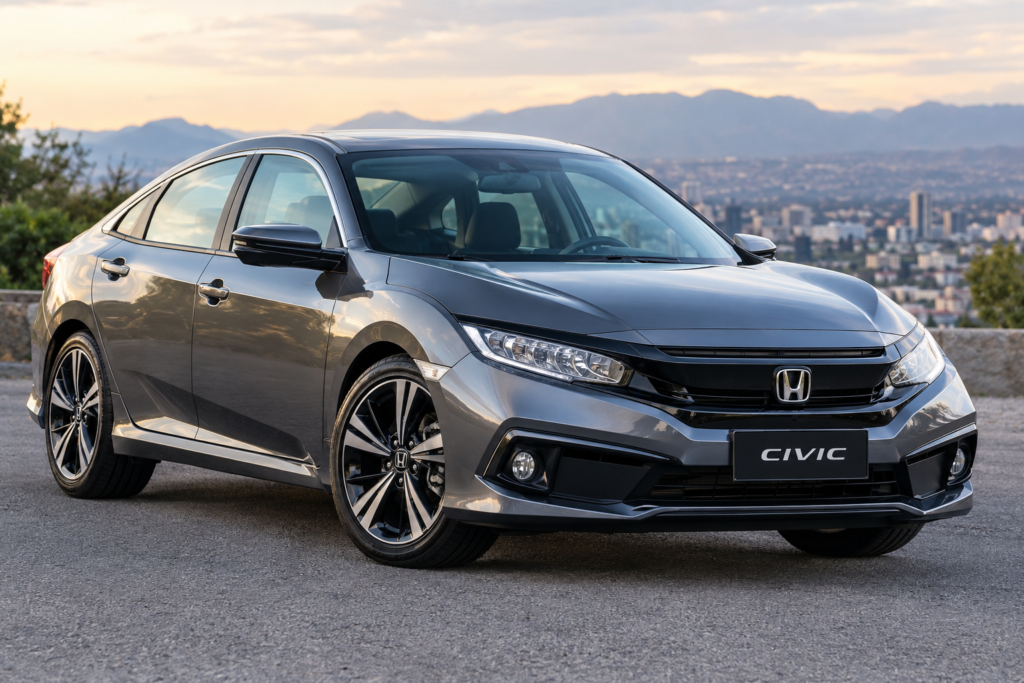
The Honda Civic’s exterior design has changed significantly throughout its history. Older models generally emphasized simplicity and compact proportions, while recent generations use cleaner body lines, wider-looking stances, and more carefully sculpted panels. The result is a vehicle that can look mature and understated without losing its sporty character.
The front end usually plays a major role in the Civic’s visual identity. Depending on the generation and trim, the car may feature narrow headlights, a prominent grille, sculpted bumper details, and aerodynamic contours. These elements create a modern appearance while serving practical purposes such as directing airflow and integrating lighting equipment.
The side profile often combines a sloping roofline with defined character lines and balanced proportions. Sedan models tend to look more traditional, while hatchbacks provide a slightly more versatile appearance. Sport-oriented versions may add distinctive wheels, larger brakes, spoilers, unique bumpers, or other exterior details that communicate their performance-focused nature.
Honda Civic Engine Options and Performance
The Honda Civic is not defined by a single engine or performance level. Its powertrain choices vary according to the generation, market, and trim. Depending on the version, buyers may find naturally aspirated gasoline engines, turbocharged engines, hybrid systems, or more powerful engines developed for performance-oriented models.
For everyday driving, standard Civic engines are generally designed to provide a sensible balance of power and efficiency. They can offer sufficient acceleration for commuting, city traffic, and highway travel without requiring the fuel consumption associated with larger vehicles. Turbocharged versions may provide stronger low-speed torque, making the car feel more responsive when accelerating or joining faster-moving traffic.
Performance models deliver a different experience. The Civic Si is designed to appeal to drivers who want sharper handling and a more engaging powertrain, while the Civic Type R places greater emphasis on track-inspired performance. These variants can include more powerful engines, upgraded suspension systems, stronger braking components, and performance-focused transmission options. Buyers should compare exact specifications rather than assuming that every Civic has the same capabilities.
Fuel Economy and Everyday Efficiency
Fuel efficiency is one of the reasons the Honda Civic has remained popular among commuters and budget-conscious drivers. A compact body, relatively efficient engines, and carefully developed powertrains can help reduce the amount of fuel needed for everyday travel. However, actual consumption depends on the specific engine, transmission, road conditions, and driving habits.
Hybrid Civic models can offer additional efficiency by combining a gasoline engine with electric motor assistance. Depending on the system, the car can recover energy during deceleration and use electric power to support acceleration. This can be particularly beneficial in stop-and-go traffic, where conventional gasoline vehicles often experience less favorable fuel consumption.
Drivers should remember that advertised fuel-economy figures are estimates produced under defined testing conditions. Heavy acceleration, high speeds, frequent short journeys, air-conditioning use, traffic congestion, and incorrect tire pressure can all affect real-world results. When comparing different Civic versions, use figures from the same testing standard and consider the type of driving you normally do.
Interior Comfort and Cabin Quality
Inside the Honda Civic, the design generally focuses on usability, visibility, and a clean arrangement of controls. Modern models often feature a horizontal dashboard layout that makes the cabin feel organized. Depending on the trim, materials may include textured plastics, soft-touch surfaces, leather-trimmed seating, decorative accents, and other details intended to improve the overall impression of quality.
The front seats are designed to support drivers and passengers during daily commutes and longer journeys. Seat adjustment options, steering-wheel positioning, and the placement of major controls can make a noticeable difference to comfort. Buyers should spend time sitting in the vehicle before purchasing it, especially if they are particularly tall, have specific seating preferences, or regularly drive for several hours at a time.
Rear-seat comfort is another important consideration. The Civic generally makes good use of its compact footprint, but available headroom and legroom vary by generation and body style. Families should check whether child seats fit comfortably and whether rear passengers have enough space for their needs. It is also worth testing the door openings and checking how easily passengers can enter and exit the car.
Infotainment, Connectivity, and Technology
Technology has become an important part of the Honda Civic experience. Depending on the model year and trim, the car may feature a central touchscreen, digital instrument display, Bluetooth connectivity, USB ports, smartphone integration, and steering-wheel-mounted controls. These features help drivers access useful information and entertainment without relying entirely on their phones.
Many recent Civic models offer Apple CarPlay and Android Auto, although availability and wireless functionality depend on the particular version. These systems can provide access to compatible navigation applications, music services, calls, and messages through the car’s display. For drivers who regularly travel to unfamiliar places, smartphone navigation can be especially useful.
Higher trim levels may include additional convenience features, such as a premium sound system, wireless charging, enhanced displays, and more advanced climate controls. Nevertheless, more technology does not automatically mean a better ownership experience. Before buying, check how quickly the infotainment system responds, whether the screen is easy to read in sunlight, and whether essential controls remain simple to operate while driving.
Safety Features and Driver Assistance
Safety is a major consideration for anyone choosing a family or commuter car. The Honda Civic’s safety equipment varies by model year, market, and trim, but newer versions may offer automatic emergency braking, adaptive cruise control, lane-keeping assistance, traffic sign recognition, and other driver-support technologies. Some versions also provide a multi-angle rearview camera and additional parking assistance.
These technologies can help drivers recognize hazards and respond more effectively in certain situations. For example, automatic emergency braking may warn the driver about a potential collision and apply braking assistance when conditions require it. Adaptive cruise control can help maintain a selected following distance, while lane-related systems may provide steering assistance or warnings when the vehicle begins drifting from its lane.
It is important to understand that driver-assistance systems are not substitutes for attention and responsible driving. Their performance may be affected by poor weather, road markings, visibility, or sensor obstructions. When evaluating a Civic, review the safety equipment fitted to the exact vehicle and check independent crash-test results for the relevant model year and market rather than relying on the model name alone.
Honda Civic Sedan vs. Hatchback
The Honda Civic sedan is a good choice for drivers who prefer a conventional four-door design. Its separate trunk gives it a familiar appearance, and the body style may suit commuters, small families, and people who primarily carry passengers and everyday shopping. Depending on the generation, the sedan may also provide a quieter or more traditional feel that appeals to buyers who value understated styling.
The Civic hatchback offers a different approach to practicality. Its rear opening typically provides easier access to the cargo area, and the larger opening can make it more convenient to load bulky items. Folding rear seats can increase the available carrying space, although the exact capacity and layout depend on the version. This flexibility is useful for people who frequently transport sports equipment, luggage, or larger shopping purchases.
Choosing between the two comes down to your priorities. A sedan may be preferable if you like a traditional trunk and its styling, while a hatchback can be more convenient for carrying varied loads. Compare cargo measurements, rear-seat access, visibility, and parking dimensions before deciding. It is also worth checking which body styles are officially sold in your country, because availability differs between markets.
Honda Civic Hybrid: What Makes It Different?
The Honda Civic Hybrid combines a gasoline engine with electric motor assistance to improve efficiency while retaining the familiar compact-car format. Depending on the generation, the hybrid system can use electric motors for propulsion, engine power, or a combination of both. The control system manages these components according to driving conditions and available energy.
One advantage of a hybrid Civic is that it can recover some energy during deceleration. Instead of losing all that energy as heat through conventional braking, the system converts some of it into electricity and stores it in a battery. That stored energy can later support acceleration or power certain vehicle functions. This approach can be especially helpful during frequent starts and stops.
A hybrid model may be attractive to drivers who want lower fuel consumption without switching to a fully electric vehicle. It does not usually require the same charging routine as a plug-in vehicle, because its battery is recharged through the hybrid system. However, purchase prices, fuel savings, battery warranties, and servicing requirements should all be considered. The best choice depends on your annual mileage, fuel prices, local service availability, and the price difference between hybrid and conventional versions.
Honda Civic Si and Type R: Sportier Options
The Honda Civic Si is designed for drivers who want more involvement from their daily car. Depending on the generation and market, it can offer a turbocharged engine, a manual transmission, sport-tuned suspension, stronger brakes, and other performance-related changes. Its appeal comes from combining usable everyday dimensions with a more engaging driving experience.
The Civic Type R sits further toward the performance end of the range. It is developed around stronger acceleration, sharper handling, enhanced cooling, and more capable braking and suspension systems. Specific generations have earned attention for their performance on circuits as well as their ability to handle normal road journeys. However, tires, brakes, and other performance-related components can cost more to replace than those on a standard Civic.
These models are not necessarily the best options for every buyer. Firmer suspension, more noticeable road noise, performance tires, and higher running costs may be less appealing to someone who mainly wants economical transportation. If you are considering an Si or Type R, take a proper test drive and check insurance costs, fuel requirements, service records, and the condition of any used performance vehicle before committing.
Driving Experience and Road Handling
One of the Civic’s strengths is its ability to feel composed during everyday driving. Its compact size can make it easier to maneuver through urban streets, while a well-tuned suspension helps manage ordinary road imperfections. Steering response and body control vary between generations, but the Civic has generally aimed to offer a balance between comfort and confident handling.
On highways, the car’s stability and seating position can contribute to a relaxed driving experience. Newer versions may also benefit from improved sound insulation, better seats, and more refined powertrains. However, cabin noise can vary considerably depending on tire selection, road surfaces, speed, and trim level. A test drive on both smooth and rough roads is more informative than judging comfort from a short trip around a dealership.
Drivers who enjoy winding roads may appreciate the Civic’s predictable steering and balanced chassis, particularly in sportier trims. Still, handling performance is influenced by tire condition, suspension maintenance, alignment, and the particular model being driven. A well-maintained standard Civic may feel more secure than a neglected performance version with worn tires or poorly repaired suspension components.
Reliability and Long-Term Ownership
Honda has built a strong reputation for producing practical vehicles, and the Civic is often considered by buyers seeking long-term ownership. Nevertheless, reliability is not guaranteed simply because a car carries a respected badge. The engine, transmission, electronics, maintenance history, driving conditions, and previous repairs all influence how dependable an individual vehicle will be.
Routine maintenance is one of the most important factors in keeping a Civic in good condition. Regular oil changes, timely filter replacement, cooling-system checks, brake inspections, and tire maintenance can help reduce avoidable wear. Owners should follow the maintenance schedule for their exact vehicle rather than relying on a generic timetable that may not match the engine or operating conditions.
Used Civic buyers should pay particular attention to service records and signs of previous damage. Check for warning lights, unusual engine noises, transmission hesitation, uneven tire wear, fluid leaks, and evidence of poor-quality accident repairs. It is also sensible to arrange an independent inspection before purchase. A carefully maintained car with documented history can be a better investment than a newer example that has been neglected.
Common Problems to Watch For
No car model is completely free from problems, and the Honda Civic is no exception. Potential issues vary by generation, engine, transmission, production year, and regional specification. Some vehicles may develop electrical faults, suspension noises, air-conditioning problems, or premature wear of certain components. These are possibilities to investigate, not defects that should be assumed to affect every Civic.
When looking at a used vehicle, pay attention to how it behaves during a cold start and after the engine reaches operating temperature. Watch for warning lights, unstable idling, excessive smoke, strange vibrations, and unexplained fluid loss. During the test drive, listen for suspension knocks, check the steering response, and make sure the transmission shifts smoothly under different driving conditions.
Researching the specific model year is more useful than relying on broad claims about the Civic’s reliability. Check whether the vehicle has outstanding recalls, service campaigns, or known issues associated with its particular powertrain. If you discover a problem, ask for a professional diagnosis and a written repair estimate before negotiating the price. This makes it easier to distinguish a manageable maintenance expense from a potentially expensive mechanical fault.
Honda Civic Maintenance and Servicing Costs
Maintaining a Honda Civic generally involves the same basic tasks required by other modern passenger cars. These include engine oil and filter changes, air-filter inspections, brake servicing, tire rotations where appropriate, and periodic checks of essential fluids. The precise schedule depends on the model year, engine, transmission, and the manufacturer’s maintenance recommendations.
The cost of ownership can vary substantially by country. In some markets, Honda parts and qualified technicians are readily available, while in others, imported components and specialist servicing may be more expensive. Labor charges, fuel prices, taxes, insurance, and road conditions also affect the overall cost of keeping a Civic on the road.
Owners can often avoid unnecessary expenses by following the service schedule and addressing minor problems early. Keeping accurate service records, using the correct oil specification, maintaining suitable tire pressure, and checking for fluid leaks can make a real difference over time. It is also wise to set aside a maintenance budget for wear items such as tires, brake pads, batteries, and suspension components.
Buying a Used Honda Civic
A used Honda Civic can be an appealing option for buyers who want practical transportation without paying the price of a new car. Because the Civic has been produced for decades, the used market includes a wide range of ages, equipment levels, engine choices, and price points. This variety allows buyers to compare affordability with newer technology and lower mileage.
Before purchasing, decide which features matter most. Some buyers prioritize fuel economy, while others want automatic transmission, a spacious cabin, advanced safety equipment, or a particular body style. A newer vehicle may offer better connectivity and driver assistance, but an older model with excellent maintenance records could provide better value than a newer example with a questionable history.
Always inspect the car carefully and verify its ownership documents. Review the maintenance history, check the chassis and body for signs of major repairs, and confirm that the engine and transmission operate properly. In markets where used vehicles are imported, verify the model year, original specification, import documents, and any available auction or inspection records. An independent mechanic can identify problems Honda Civic Price and Value for Money
The price of a Honda Civic depends on the country, model year, trim, engine, mileage, condition, and local demand. New hybrid or performance models may cost considerably more than basic versions, while used vehicles can vary widely in value depending on their maintenance and accident history. For this reason, there is no single price that accurately represents every Honda Civic.
When comparing prices, consider the full ownership cost rather than focusing only on the purchase amount. A cheaper vehicle may need new tires, suspension repairs, overdue servicing, or other immediate work. A more expensive example with complete records and fewer upcoming maintenance needs might prove more economical over several years.
Resale value is another factor worth considering. The Civic’s established reputation can help support demand in some markets, but resale prices are never guaranteed. Local fuel preferences, spare-parts availability, currency fluctuations, import rules, and changing buyer preferences can all influence future value. Comparing several similar vehicles and checking recent local transactions can help you judge whether a particular asking price is reasonable.
Honda Civic in Pakistan
The Honda Civic has a recognizable presence in Pakistan’s automotive market. Many buyers associate it with modern styling, a comfortable cabin, responsive performance, and a more premium feel than some smaller economy-focused cars. Its popularity also means that prospective buyers can often find discussions, ownership experiences, and maintenance advice from other local drivers.
The local buying experience depends heavily on the specific generation and variant. Buyers should compare the official specifications, available safety equipment, engine configuration, and transmission options of the version being considered. A car sold in Pakistan may differ in important ways from a similarly named Civic sold in North America, Europe, or another Asian market.
Running costs deserve particular attention in Pakistan. Fuel prices, traffic congestion, road conditions, parts availability, and the quality of available servicing can all affect long-term ownership. Before buying, obtain current local quotations for insurance, routine maintenance, tires, and commonly replaced parts. For a used vehicle, a detailed inspection is especially valuable because repair quality and maintenance history can have a major impact on future expenses.
19. Honda Civic vs. Toyota Corolla
The Honda Civic and Toyota Corolla are frequently compared because both serve drivers looking for practical, everyday transportation. Each model has a long history, a wide international presence, and versions designed around efficiency, comfort, and usability. However, the best choice depends on the specific generation and trim being compared.
The Civic may appeal more to drivers who prioritize steering response, contemporary styling, and an engaging driving experience. Depending on the version, it may also offer distinctive interior design and a range of sporty or hybrid options. The Corolla, meanwhile, has its own strengths in practicality, efficiency, and broad availability, with specifications and ownership costs that vary by market.
Rather than deciding based on brand reputation alone, compare the actual cars. Evaluate purchase price, fuel economy, rear-seat space, cargo capacity, safety features, service history, warranty coverage, and the cost of replacement parts. In Pakistan, local resale demand and the availability of reliable mechanics can be particularly important. A test drive in both vehicles can reveal differences in comfort and visibility that specifications alone do not capture.
20. Honda Civic vs. Other Compact Cars
The Civic competes with a broad selection of compact vehicles, including models designed around affordability, comfort, efficiency, and performance. Depending on the country, alternatives may include the Mazda3, Hyundai Elantra, Kia K4, Toyota Corolla, and Volkswagen Golf. Their availability, pricing, and specifications vary by market and model year.
Some alternatives may provide a more comfortable ride, a different infotainment experience, or a lower purchase price. Others may offer a hatchback layout, an efficient hybrid system, or distinctive styling. The Civic’s strengths should therefore be assessed against what competing vehicles actually deliver, rather than assuming it is automatically superior because of its popularity.
A useful comparison starts with your daily routine. If you spend hours in traffic, fuel economy, seat comfort, and visibility may matter most. If you regularly travel with family, rear-seat room and child-seat compatibility deserve priority. If driving enjoyment is important, compare steering feel, acceleration, transmission behavior, and suspension comfort. This practical approach makes it easier to identify the vehicle that suits your needs and budget.
21. Customization and Aftermarket Upgrades
The Honda Civic has a large enthusiast following, and customization is one reason many owners enjoy the model. Depending on the generation, the aftermarket offers wheels, suspension components, body kits, lighting accessories, interior upgrades, and performance parts. Some owners prefer subtle cosmetic improvements, while others focus on creating a more track-oriented driving experience.
Cosmetic modifications can change the vehicle’s appearance without substantially altering its mechanical behavior. Examples include different wheel designs, carefully selected exterior accessories, upgraded floor mats, and improved interior trim. However, buyers should consider fitment, quality, road legality, and the possibility that modifications may affect insurance coverage or resale value.
Performance upgrades require greater care. Changes to engine tuning, exhaust systems, suspension geometry, or braking components can affect reliability, emissions compliance, and road safety. Poorly installed parts may create problems rather than improve performance. If you intend to modify your Civic, choose reputable components, use a qualified installer, and understand the relevant local regulations before making changes.
22. Is the Honda Civic a Good Family Car?
The Honda Civic can be a practical option for small families who need a vehicle for commuting, shopping, school runs, and occasional longer journeys. Its cabin layout, passenger seating, and available convenience features make it suitable for many everyday situations. However, the amount of usable space depends on the generation and body style, so families should evaluate the exact version rather than relying on the model’s reputation.
Safety equipment is particularly important when choosing a family vehicle. Check which airbags, stability-control systems, driver-assistance features, and child-seat mounting points are fitted. Features that are standard in one country or trim may be optional or unavailable in another. Parents should physically test child seats and check that the required restraints can be installed securely.
Cargo capacity also matters. A sedan may be adequate for school bags, groceries, and normal luggage, while a hatchback can provide a more flexible loading area. Families with several children, frequent travel requirements, or bulky equipment may prefer a larger vehicle. The Civic is worth considering, but a realistic assessment of passenger space and everyday storage needs should guide the final decision.
23. Honda Civic for First-Time Car Buyers
For first-time buyers, the Honda Civic can offer an appealing combination of manageable dimensions, useful features, and a familiar driving experience. Its compact size makes it easier to navigate many urban environments than a larger sedan or SUV. Depending on the model year, it may also include helpful features such as a reversing camera, smartphone connectivity, and modern braking assistance.
However, a first-time buyer should not choose a car based solely on appearance or popularity. Insurance, registration, fuel, routine servicing, parking, and unexpected repairs all contribute to the total cost. A performance-oriented Civic may also have higher tire, brake, and insurance expenses than a standard version, making the latter a more sensible choice for some budgets.
A used Civic can be a good starting point if it has been maintained properly and passes an independent inspection. Before purchasing, arrange a test drive, verify the documents, and compare several examples with similar specifications. It is usually better to buy a well-maintained vehicle that fits your budget than to stretch your finances for a higher trim level that leaves little room for maintenance.
24. Environmental Impact and Hybrid Technology
Fuel consumption influences the environmental impact of a car because burning gasoline produces carbon dioxide. Vehicles also have environmental costs associated with manufacturing, transporting materials, maintaining components, and eventually recycling or disposing of them. The Civic’s relatively compact format and available efficient powertrains can help buyers manage some aspects of their transportation footprint.
Hybrid versions can reduce fuel consumption compared with certain conventional gasoline models, particularly in suitable driving conditions. Regenerative braking helps recover some energy, while electric motor assistance can reduce the amount of work required from the gasoline engine. The actual benefit depends on the vehicle, route, temperature, traffic, and driving style.
Choosing an efficient vehicle is only one part of responsible ownership. Maintaining correct tire pressure, avoiding unnecessary idling, accelerating smoothly, and keeping the engine properly serviced can help improve efficiency. Drivers who want to compare environmental performance should look at official fuel-consumption figures and emissions data for the specific versions they are considering.
25. Tips for Getting the Best Honda Civic Ownership Experience
Getting the most from a Honda Civic starts with choosing the right version. Think about how often you drive, whether you primarily use city streets or highways, how many passengers you carry, and whether you prefer an automatic or manual transmission. These details will help narrow the options and prevent you from paying extra for features you rarely use.
Once you own the vehicle, follow the manufacturer’s maintenance recommendations and pay attention to unusual changes in its behavior. New vibrations, warning lights, strange noises, or sudden changes in fuel consumption may indicate that something needs attention. Addressing problems early can sometimes prevent a minor fault from becoming a more expensive repair.
It is also worth keeping a record of servicing, repairs, tire changes, and replacement parts. Good documentation makes it easier to track maintenance and can help demonstrate responsible ownership when you eventually sell the car. Keep the exterior and interior clean, protect the paint from environmental damage where practical, and avoid modifications that compromise safety or reliability.
26. What to Check Before Buying a Honda Civic
Before purchasing a Honda Civic, prepare a checklist that covers the vehicle’s mechanical condition, documents, features, and total cost. A systematic inspection reduces the chance of overlooking important details, especially when buying a used car privately. If possible, arrange to see the vehicle during daylight and allow enough time for a proper test drive.
Use the following checklist as a starting point:
- Engine: Check for abnormal noises, warning lights, fluid leaks, and irregular idling.
- Transmission: Confirm that gear changes are smooth and consistent with the vehicle’s design.
- Brakes and tires: Look for uneven tire wear, vibration during braking, and signs of neglected maintenance.
- Suspension: Listen for knocking noises and pay attention to how the car handles bumps.
- Interior and electronics: Test the air conditioning, windows, infotainment system, lights, and other equipment.
- Bodywork: Look for mismatched paint, uneven panel gaps, corrosion, or evidence of poor accident repairs.
- Documents: Verify ownership, registration, identification numbers, and any required inspection or import records.
- Maintenance history: Review service invoices and check whether scheduled work has been completed.
- Safety recalls: Confirm whether any applicable recalls or service campaigns remain outstanding.
- Total cost: Include insurance, taxes, servicing, fuel, and any immediate repairs in your budget.
A checklist cannot replace a professional inspection, but it can help you organize the buying process. If the seller refuses reasonable checks or cannot explain important inconsistencies in the vehicle’s history, consider looking at another example.
27. The Future of the Honda Civic
The automotive industry is changing as manufacturers develop more efficient engines, hybrid powertrains, advanced driver-assistance systems, and increasingly connected interiors. The Honda Civic is part of this transition, with newer versions incorporating technologies intended to improve fuel efficiency, comfort, and safety while maintaining the familiar compact-car format.
Hybrid technology is likely to remain important in markets where customers want lower fuel consumption without relying on external charging. At the same time, demand for conventional gasoline vehicles will depend on local regulations, fuel prices, infrastructure, and consumer preferences. Different countries may therefore receive different combinations of Civic powertrains and equipment.
Future developments will also need to balance technology with affordability and ease of use. Buyers still value comfortable seating, dependable transportation, manageable running costs, and straightforward servicing. The Civic’s continued appeal will depend on how effectively future generations meet those everyday needs while adapting to changing expectations.
28. Frequently Asked Questions About the Honda Civic
Is the Honda Civic a reliable car?
The Honda Civic has a strong reputation for practical ownership, but reliability varies by model year, engine, transmission, maintenance history, and previous use. Regular servicing and a careful inspection are important when purchasing any used example.
Is the Honda Civic fuel-efficient?
Many Civic models are designed to deliver good fuel economy for a compact car. Actual consumption depends on the powertrain, traffic conditions, driving style, and maintenance. Hybrid versions may provide additional savings in suitable driving conditions.
Is the Honda Civic suitable for daily driving?
Yes, many Civic versions are well suited to daily commuting. Their compact dimensions, comfortable cabins, and practical controls make them useful for city travel and longer highway journeys. The best choice depends on your comfort preferences and local driving conditions.
Which is better: the Honda Civic sedan or hatchback?
Neither body style is automatically better. The sedan offers a conventional trunk, while the hatchback typically provides a wider rear opening and more flexible cargo access. Your passenger and storage requirements should guide the decision.
Is a used Honda Civic worth buying?
A used Civic can offer good value if its price, condition, and maintenance history are reasonable. Before buying, verify the documents, inspect the vehicle, check for outstanding recalls, and arrange an independent mechanical assessment.
Is the Honda Civic expensive to maintain?
Maintenance costs depend on the country, model year, parts availability, labor rates, and the vehicle’s condition. Routine servicing may be manageable, but neglected maintenance or major repairs can become expensive. Obtain local service estimates before purchasing.
What is the difference between the Honda Civic Si and Type R?
The Civic Si is generally positioned as a sporty road car, while the Civic Type R is a more performance-focused model with additional engineering for demanding driving. Exact specifications vary by generation and market, and both can cost more to maintain than standard versions.
Is the Honda Civic a good car for families?
It can be a suitable choice for small families because it offers passenger seating, useful storage, and available safety technology. Families should check child-seat compatibility, rear-seat comfort, and luggage capacity before buying.
Does the Honda Civic have a hybrid version?
Yes, Honda has offered hybrid Civic models in selected generations and markets. Availability, specifications, and fuel-economy figures vary, so check the local model lineup and official information for the specific year you are considering.
How long can a Honda Civic last?
There is no guaranteed lifespan for any individual vehicle. A Civic that receives appropriate maintenance, is driven responsibly, and is repaired when necessary may remain useful for many years. Its condition and service history matter more than mileage alone.
Conclusion
The Honda Civic has maintained its popularity by combining practical transportation with an engaging driving experience. Across its many generations, it has evolved to offer improved comfort, modern connectivity, advanced safety technology, efficient powertrains, and performance-oriented options for enthusiasts.
For everyday commuters, the Civic can provide a useful balance of efficiency and comfort. Families may appreciate its passenger space and available safety features, while drivers who enjoy spirited motoring can explore the Si and Type R versions where available. Hybrid models add another option for buyers who want to reduce fuel consumption without adopting a fully electric vehicle.
Still, choosing the right Honda Civic requires more than recognizing its name. Buyers should compare model years, check local specifications, calculate ownership costs, and evaluate the condition of the exact vehicle they intend to purchase. A careful decision based on real needs and a thorough inspection can make the Civic a rewarding long-term choice. Whether you choose a new model or a well-maintained used example, the key is to find the version that best fits your budget, driving habits, and everyday requirements.
YOU MAY HAVE MISSED