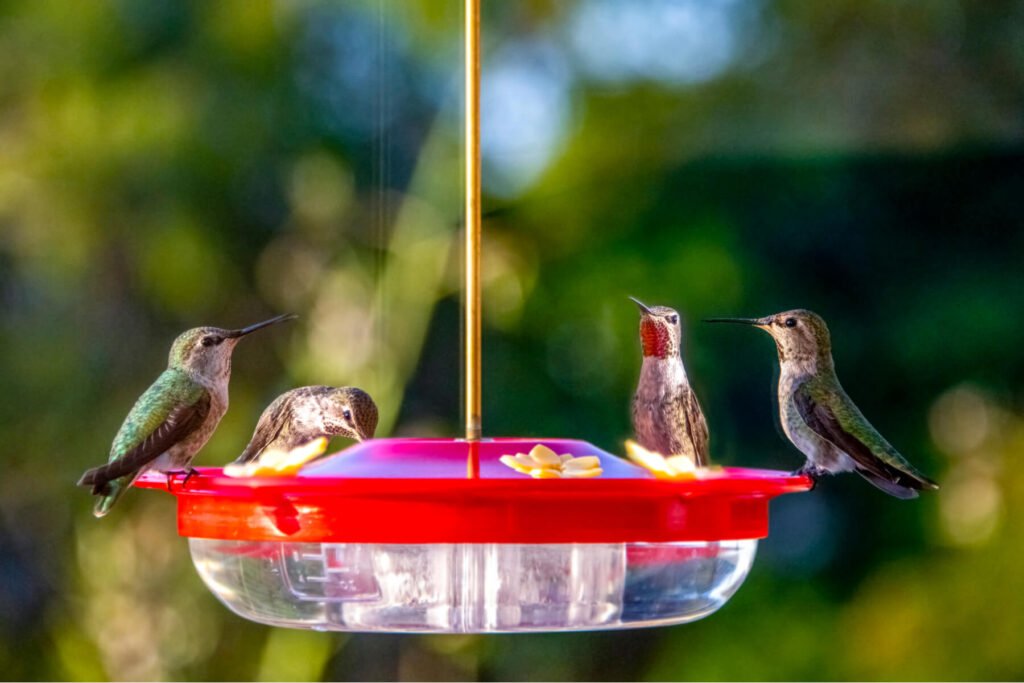
Introduction to Hummingbird Food
Hummingbirds are among the most fascinating birds in the natural world. Their tiny bodies, brilliant feathers, rapid wingbeats, and ability to hover in midair make them a favorite among birdwatchers and backyard gardeners. Although these birds naturally visit flowers to collect nectar, you can also attract them to your yard by providing properly prepared hummingbird food in a clean feeder.
Hummingbird food is a simple mixture of white granulated sugar and water that provides quick energy for these active birds. Unlike many commercial bird foods, homemade hummingbird nectar requires only two ingredients and can be prepared in a few minutes. When made correctly, it closely resembles the sugar concentration found in many natural flower nectars.
However, feeding hummingbirds involves more than filling a feeder and hanging it outside. The ingredients, sugar-to-water ratio, cleaning routine, feeder placement, and surrounding environment all influence whether your feeding station remains safe and attractive. Incorrect ingredients or spoiled nectar can create unnecessary risks for these delicate birds.
This comprehensive guide explains everything you need to know about hummingbird food, including the correct recipe, preparation methods, feeding tips, seasonal considerations, common mistakes, and natural ways to support hummingbirds. Whether you are setting up your first feeder or improving an established feeding station, you will learn how to provide a reliable source of energy while helping hummingbirds thrive.
What Is Hummingbird Food?
Hummingbird food usually refers to homemade nectar prepared by dissolving ordinary white granulated sugar in water. The mixture supplies carbohydrates that hummingbirds use to power their constant movement, hovering, flying, and other daily activities.
In nature, hummingbirds obtain nectar from flowers such as trumpet vines, salvias, bee balms, and many other nectar-producing plants. Natural nectar contains water and varying amounts of sugars, depending on the plant species. A homemade sugar-water solution provides a convenient supplemental food source when suitable flowers are limited or when birds need additional feeding opportunities.
A properly maintained feeder can attract hummingbirds to gardens, patios, balconies, and other outdoor spaces. Once birds discover a dependable source of nectar, they may return regularly, particularly during migration or periods of high activity.
It is important to understand that hummingbird food is not a complete diet. Hummingbirds also consume tiny insects and spiders, which provide protein, fats, vitamins, and minerals that sugar water cannot supply. Therefore, the best hummingbird-friendly yard combines clean nectar feeders with flowering plants and a healthy habitat that supports small insects.
The Best Homemade Hummingbird Food Recipe
The simplest and most widely recommended homemade hummingbird food recipe uses four parts water to one part white granulated sugar. This ratio produces a solution with approximately the same sugar concentration as many natural nectars and is suitable for routine feeding.
You do not need special equipment or expensive ingredients. A clean measuring cup, a container, ordinary white sugar, and safe drinking water are enough to prepare a batch of nectar.
Ingredients You Need
For a standard batch of hummingbird nectar, gather the following ingredients:
- 4 cups of clean water
- 1 cup of plain white granulated sugar
You can reduce the quantities while keeping the same ratio. For example, use 1 cup of water with 1/4 cup of sugar to prepare a smaller amount. This is especially useful when you have only one feeder or when hot weather makes nectar spoil quickly.
Always measure the ingredients accurately. Adding excessive sugar does not make the nectar healthier, and using too little sugar can produce a solution that differs from the usual recommended concentration.
Step-by-Step Preparation
Step 1: Measure the water. Pour four cups of clean water into a clean container or saucepan. Tap water is generally suitable when it is safe to drink, although filtered water is another option if your local water supply has an unusual taste or mineral content.
Step 2: Add the sugar. Measure one cup of plain white granulated sugar and add it to the water. Stir until the crystals dissolve completely. If the water is warm, the sugar will dissolve more quickly.
Step 3: Heat only if necessary. Heating the water can help dissolve the sugar, but boiling is not required when using clean water and preparing fresh nectar. If you bring the water to a boil, allow it to cool completely before filling the feeder.
Step 4: Cool the mixture. Never pour hot nectar into a hummingbird feeder. Hot liquid may damage some feeder materials and can be dangerous if birds attempt to feed before it cools.
Step 5: Fill the clean feeder. Pour the cooled solution into a thoroughly cleaned feeder. Avoid touching the nectar with dirty hands or using a container that has held other substances.
Step 6: Store any extra nectar safely. Place leftover nectar in a clean, covered container in the refrigerator. Prepare only as much as you can use within a reasonable period, and discard stored nectar if it becomes cloudy, develops an unusual smell, or shows any signs of contamination.
This straightforward process produces a practical homemade nectar without artificial coloring, preservatives, or unnecessary additives.
Why the Four-to-One Sugar Ratio Matters
The four-to-one ratio is popular because it provides a moderate sugar concentration appropriate for regular hummingbird feeding. It supplies energy without making the mixture unnecessarily concentrated.
Hummingbirds have extremely high energy demands. Their wings can beat dozens of times per second during ordinary flight, and hovering requires substantial energy. Nectar helps meet those needs by providing readily available sugars that the birds can metabolize quickly.
Nevertheless, a stronger mixture is not automatically better. Concentrated sugar water may differ substantially from the nectar hummingbirds typically obtain from flowers. Using the recommended ratio helps keep homemade food consistent and avoids the temptation to assume that extra sugar provides extra benefits.
The ratio is especially useful because it is easy to remember and scale. You can prepare a small quantity for a single feeder or a larger batch for several feeders without changing the proportions. The most important point is consistency: four parts water to one part white sugar by volume.
Which Sugar Is Safe for Hummingbirds?
Plain white granulated sugar is the preferred choice for homemade hummingbird nectar. It consists primarily of sucrose, a sugar naturally present in many flowering plants. When dissolved in water at the recommended ratio, it provides a straightforward energy source.
Other sweeteners are not equivalent substitutes. Brown sugar contains molasses and additional substances that can alter the mixture. Honey can ferment and encourage microbial growth, while artificial sweeteners do not provide the same energy that hummingbirds obtain from natural sugars.
Raw sugar, turbinado sugar, and products marketed as natural or minimally processed may contain molasses or other components that make them unsuitable for routine feeder nectar. Corn syrup and similar sweeteners also offer no advantage over plain white sugar.
Avoid powdered sugar unless its ingredients have been verified, because some products contain added starch or other ingredients. The safest approach is to choose a simple package labeled 100% white granulated sugar with no additional ingredients.
Although brown sugar and honey may seem more natural, naturalness alone does not determine safety. For hummingbird feeders, a clean solution made with ordinary white sugar is the more reliable choice.
Can You Use Tap Water for Hummingbird Food?
In most locations, clean tap water is appropriate for preparing hummingbird nectar. If your household water is safe to drink, it will generally be suitable for this purpose. You do not need to purchase bottled water specifically for your feeder.
If your tap water has a strong odor, unusual discoloration, or a known contamination problem, use a safe alternative water source. Filtered water may improve taste or remove certain impurities, depending on the filtration system, but not every filter removes every contaminant.
Boiling water can help dissolve sugar and kill many microorganisms present before preparation, but it does not make contaminated equipment clean. Nectar can become contaminated again through the feeder, storage container, hands, insects, or outdoor exposure.
Distilled water is also an option, although it is not normally necessary for ordinary feeder preparation. The key considerations are safe water, clean equipment, correct measurements, and frequent replacement of nectar.
Once prepared, hummingbird food should be handled like a perishable food product rather than a permanently stable mixture. Even a recipe made with clean water can support microbial growth when left in a warm outdoor environment.
Should You Boil Hummingbird Food?
Boiling water is not essential for making a basic hummingbird nectar solution. Sugar dissolves in cool or warm water when stirred sufficiently, and many bird-feeding guides accept preparation with clean water without boiling.
Some people prefer to heat the water because it makes dissolving sugar easier. Others boil the water briefly as an additional preparation step. Either method can work, provided the mixture is prepared hygienically and cooled completely before use.
However, boiling does not eliminate the need to clean feeders regularly. Once nectar is poured into an outdoor feeder, it can be exposed to airborne particles, insects, and microorganisms. Warm weather can accelerate spoilage regardless of whether the original water was boiled.
If you choose to boil water, avoid prolonged boiling that unnecessarily reduces the amount of water through evaporation. Excessive evaporation can change the sugar concentration if you measure the water before heating and then boil it for too long.
For everyday feeding, use the correct proportions, dissolve the sugar thoroughly, cool the solution, and keep the feeder clean. These practices matter more than whether the water was boiled.
What You Should Never Add to Hummingbird Food
One of the most important rules of hummingbird feeding is keeping the recipe simple. Hummingbirds do not need artificial flavors, food coloring, vitamins, or commercial sweeteners in their nectar. Adding extra ingredients can introduce unnecessary risks without providing meaningful benefits.
Red food coloring is particularly unnecessary. Although red feeders are common, the nectar inside them does not need to be red. Many feeders already include red components that help make them visible to hummingbirds. If you want to attract more birds, choose a feeder with red accents and plant colorful, nectar-producing flowers rather than coloring the liquid.
Honey should also be avoided. It can ferment, and its breakdown can encourage microbial growth that may harm birds. Artificial sweeteners are unsuitable because they do not provide the same energy as sugar. Brown sugar, molasses, and unrefined sweeteners can introduce additional substances that are not appropriate for routine nectar preparation.
Commercial nectar products should be evaluated carefully as well. Some are convenient, but convenience does not automatically make them better than homemade nectar. A simple mixture of white sugar and water is usually inexpensive, easy to prepare, and sufficient for a supplemental feeder.
How Often Should You Change Hummingbird Food?
Freshness is one of the most important factors in safe hummingbird feeding. Sugar water can spoil outdoors, particularly when temperatures are high. Warm conditions encourage fermentation and microbial growth, making nectar less suitable for birds.
In hot weather, inspect the feeder daily and replace the nectar frequently. A practical general guideline is to change the food every day or two during very warm conditions, and sooner if it becomes cloudy, smells unusual, or shows signs of contamination. In cooler weather, nectar may remain usable longer, but regular inspection is still essential.
Do not assume that a feeder is safe simply because the nectar looks clear. Microorganisms can develop before obvious changes appear. Establishing a regular cleaning and replacement routine is more reliable than waiting for visible spoilage.
The amount of nectar you prepare also makes a difference. If hummingbirds visit only occasionally, fill the feeder with a smaller quantity. This reduces waste and helps ensure that the birds receive fresher food. A small feeder that is maintained properly can be more useful than a large feeder filled with nectar that sits outside for too long.
How to Clean a Hummingbird Feeder Properly
Cleaning is just as important as preparing the nectar correctly. Sugar residue can accumulate inside the feeder, especially around feeding ports, seams, and narrow openings. These damp areas can support mold and bacterial growth if they are not cleaned regularly.
Start by emptying the feeder completely. Disassemble the removable parts according to the manufacturer’s instructions, then wash them with hot water and a suitable feeder-cleaning brush. Pay particular attention to small feeding ports and corners where residue may collect.
Rinse every part thoroughly so that no soap or cleaning solution remains. If the manufacturer recommends a particular cleaning method, follow those instructions. Some feeders can tolerate more intensive cleaning than others, so avoid harsh treatments that could damage plastic, seals, or decorative components.
Allow the feeder to drain and dry as appropriate before refilling it. During hot weather or heavy use, clean it whenever you replace the nectar. If you notice black spots, persistent slime, a sour smell, or stubborn residue, give the feeder a more thorough cleaning before using it again.
Never top off old nectar with a fresh batch. Empty the feeder, clean it, and then add fresh food. This simple habit helps prevent contamination from carrying over into the new mixture.
Where Should You Place a Hummingbird Feeder?
Feeder placement can influence how frequently hummingbirds visit your yard. A suitable location should make the feeder easy for birds to find while allowing you to inspect, clean, and refill it conveniently.
A spot with some shade is often useful because direct sunlight can warm the nectar and accelerate spoilage. Partial shade also helps protect the feeder from excessive heat. If shade is unavailable, use a smaller feeder and inspect the nectar more frequently during hot weather.
Place the feeder where you can observe it without disturbing feeding birds. A location near a window, patio, or garden seating area may provide excellent viewing opportunities. However, take precautions to reduce window collisions, especially if the feeder is near glass. Window markers or other bird-safe measures can help make transparent or reflective surfaces more visible.
Avoid placing feeders where cats can easily reach visiting birds. Keep the area free from unnecessary hazards and consider whether ants, wasps, or other insects are likely to become a problem. An appropriate location combines accessibility, safety, cleanliness, and protection from excessive heat.
How to Attract More Hummingbirds Naturally
Providing fresh nectar is only one part of creating a hummingbird-friendly environment. These birds benefit from a yard that offers flowering plants, insect prey, safe perching spots, and suitable shelter.
Plant a variety of nectar-producing flowers that bloom at different times of the year. Depending on your climate, suitable choices may include salvias, bee balm, trumpet honeysuckle, cardinal flower, and other locally appropriate species. Native plants are often especially useful because they can support local wildlife and may be well adapted to your growing conditions.
Hummingbirds also eat tiny insects and spiders. Avoid routine pesticide use around feeding areas because chemicals can reduce the availability of insect prey and may expose wildlife to harmful substances. A garden with diverse plants can support more insects naturally, helping hummingbirds obtain nutrients that nectar alone cannot provide.
Water and shelter are also valuable. Hummingbirds may use gentle misters or moving water to bathe, and they need places to rest between feeding trips. Shrubs and small trees can offer perching opportunities and shelter from weather. By combining feeders with a healthy habitat, you can support hummingbirds beyond their visits to sugar water.
Hummingbird Food in Summer
Summer can be one of the busiest periods at a hummingbird feeder. Depending on the species and region, adult birds may be feeding frequently, while some areas may also support nesting birds and growing juveniles.
High temperatures create a particular challenge because sugar water can deteriorate quickly in warm conditions. Inspect feeders daily, choose a shaded location when possible, and replace nectar whenever its condition is questionable. Smaller batches can help you maintain freshness without wasting large amounts of sugar.
Ants and wasps may also become more noticeable during warm weather. A feeder with a properly designed ant moat can help prevent ants from reaching the nectar, while suitable feeder designs can make it harder for insects to access feeding ports. Keep the area clean and wipe up spills promptly.
Do not use insecticides around the feeder to control visiting insects. Instead, select appropriate feeder equipment, remove sugary residue, and adjust the location if necessary. These simple measures can make summer feeding more manageable while keeping the environment safer for birds.
Hummingbird Food During Migration
Migration is an important period for many hummingbird species. Some birds travel considerable distances between breeding and wintering areas, requiring reliable access to food along the way.
A clean nectar feeder can provide supplemental energy during migration, particularly when flowering plants are scarce or weather conditions disrupt normal feeding opportunities. However, hummingbirds do not depend exclusively on backyard feeders. Natural flowers and small insects remain important components of their diet.
If migrating hummingbirds visit your yard, continue providing fresh nectar and maintain the feeder carefully. Avoid making abrupt assumptions about when the birds will leave, because migration timing varies with species, location, weather, and individual circumstances.
In regions where hummingbirds are seasonal visitors, local birdwatching groups can provide useful information about typical arrival and departure periods. Their guidance may help you decide when to set out a feeder and when seasonal activity is likely to change.
Common Hummingbird Food Mistakes to Avoid
Even a simple recipe can be mishandled. One common mistake is adding too much sugar because people assume a stronger solution provides more energy. The recommended four-to-one water-to-sugar ratio is a reliable starting point for routine feeding, and there is no need to make the mixture extra sweet.
Another mistake is leaving nectar in the feeder for too long. Sugar water does not remain fresh indefinitely, and warm outdoor conditions can speed up spoilage. Replacing the nectar regularly and cleaning the feeder prevents old residue from contaminating fresh food.
Using red dye is also unnecessary. Hummingbirds can find suitable feeders without colored nectar, and additives offer no established advantage over a plain sugar-water solution. Similarly, honey and alternative sweeteners should not be substituted for white granulated sugar.
Finally, avoid neglecting the natural environment around the feeder. A feeder cannot replace the insects, flowers, shelter, and other resources hummingbirds need. Treat it as one helpful feature of a wildlife-friendly garden rather than the sole source of food.
Conclusion
Hummingbird food is one of the easiest homemade bird-feeding mixtures to prepare, but getting the details right makes a meaningful difference. A simple combination of four parts water and one part plain white granulated sugar provides a practical supplemental nectar for visiting hummingbirds.
The recipe is only the beginning. Clean feeders, fresh nectar, sensible placement, and regular inspections help make feeding safer and more rewarding. Avoid honey, brown sugar, artificial sweeteners, red dye, and other unnecessary additions, and never allow old nectar or residue to accumulate inside the feeder.
Most importantly, remember that hummingbirds need more than sugar water. Flowering plants, tiny insects, suitable shelter, and a safe outdoor environment all contribute to their well-being. By combining a properly maintained feeder with a wildlife-friendly garden, you can enjoy watching these remarkable birds while helping provide the resources they need throughout the seasons.
YOU MAY HAVE MIISED