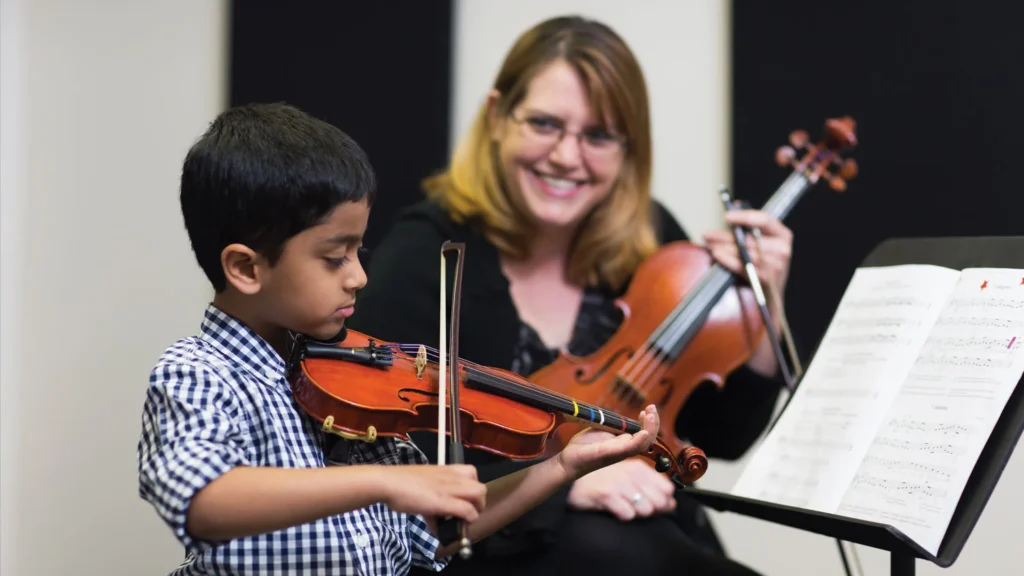
Introduction to Violin Lessons
Violin lessons are an excellent way to explore music, develop a new skill, and experience the satisfaction of creating beautiful melodies. Whether you are a child learning your first instrument, a teenager interested in joining an orchestra, or an adult fulfilling a lifelong dream, learning the violin can be a rewarding experience. Although the instrument may seem challenging at first, the right guidance, regular practice, and a little patience can help you make steady progress.
The violin is one of the most expressive instruments in the world. Its sound can be gentle and emotional, energetic and exciting, or rich and powerful. It plays an important role in classical music, folk traditions, film soundtracks, jazz, and many modern musical arrangements. Violin lessons help students understand how to produce these different sounds while developing the technical skills needed to play confidently.
One of the best things about learning the violin is that there is no single age or starting point that determines success. Some students begin taking lessons at a young age, while others discover their interest in music much later. A qualified teacher can adapt lessons to a student’s experience, learning style, musical preferences, and personal goals.
This guide explores everything you need to know about violin lessons, including how to choose a teacher, what beginners learn, how much practice is helpful, what equipment you need, and how to overcome common challenges. By understanding the learning process, you can begin your musical journey with realistic expectations and a clear plan.
What Are Violin Lessons?
Violin lessons are structured learning sessions designed to teach students how to play the violin correctly and express themselves through music. Lessons usually cover several essential areas, including instrument handling, posture, bow technique, finger placement, rhythm, music reading, and listening skills. As students improve, they gradually learn more complex techniques and musical pieces.
A typical lesson includes a combination of demonstrations, exercises, feedback, and practice assignments. The teacher may show the student how to hold the bow, explain a musical concept, and demonstrate a short passage before asking the student to try it independently. This process helps learners understand not only what to do but also why a particular technique matters.
Violin lessons can be offered privately, in small groups, at music schools, or through online platforms. Private lessons provide individual attention, while group lessons allow students to learn alongside others and develop ensemble skills. Online lessons can be convenient for people who have limited access to local instructors, provided they have a suitable setup and a reliable internet connection.
The best format depends on the student’s needs, budget, schedule, and personality. Some beginners benefit from weekly private instruction, while others enjoy a combination of lessons, group activities, and guided home practice. The most important factor is choosing an approach that encourages consistent learning.
Benefits of Taking Violin Lessons
Developing Musical Skills
One of the most obvious benefits of violin lessons is learning to understand and perform music. Students develop pitch awareness, rhythm, timing, phrasing, and coordination. These abilities gradually improve as learners practice scales, simple melodies, and increasingly challenging compositions.
Unlike instruments that produce a relatively consistent note with a single action, the violin requires players to control several elements simultaneously. The left hand determines pitch, the right hand controls the bow, and the ears help evaluate whether the sound is accurate. This combination encourages careful listening and precise movement.
Students also learn how musicians interpret written music. Reading notes, recognizing rhythms, understanding musical symbols, and following tempo markings become increasingly familiar with practice. Over time, these skills allow learners to approach unfamiliar pieces with greater confidence.
Improving Concentration and Discipline
Learning the violin requires attention to detail. Students must notice the position of their fingers, the movement of the bow, the quality of the sound, and the rhythm of the music. Developing these habits can encourage patience and focused effort.
Regular practice also teaches the value of consistency. A difficult passage may not improve immediately, but repeating it slowly and correcting mistakes can produce meaningful progress. Students begin to understand that improvement often comes from small, repeated actions rather than occasional bursts of effort.
These lessons in concentration and discipline can be useful beyond music. However, the benefits are not automatic or identical for everyone. They depend on the student’s experience, practice habits, teaching environment, and enjoyment of the learning process.
Supporting Creativity and Emotional Expression
The violin offers many opportunities for personal expression. Even when two musicians play the same composition, their performances may differ in tone, dynamics, phrasing, and emotional character. Lessons help students understand these possibilities and make thoughtful musical choices.
As learners gain confidence, they can experiment with different styles and discover the sounds they enjoy most. Some may prefer the elegance of classical compositions, while others may be drawn to folk melodies, contemporary music, or soundtrack arrangements.
Music can also provide a satisfying creative outlet. Playing a familiar melody after a demanding day may feel relaxing, while performing a challenging piece can create a strong sense of accomplishment. For many students, this emotional connection is one of the most enjoyable parts of learning an instrument.
Who Can Benefit From Violin Lessons?
Children and Young Beginners
Children can benefit from violin lessons because they have the opportunity to develop musical skills gradually as they grow. Early lessons usually focus on basic listening, rhythm, posture, bow control, and simple melodies. Teachers often use games, demonstrations, and short activities to keep younger students interested.
The violin must fit the child’s body, so choosing an appropriate instrument size is especially important. A violin that is too large can make it difficult to hold the instrument comfortably and move the fingers accurately. A teacher or experienced violin specialist can help parents select a suitable size.
Parental encouragement can also make a significant difference. Young students often need reminders to practice, help organizing their materials, and reassurance when something feels difficult. Keeping practice sessions short, positive, and manageable can help children build a healthy relationship with music.
Teenagers Learning the Violin
Teenagers can make excellent progress through structured violin lessons, particularly when they have clear goals. They may want to play in a school orchestra, prepare for music examinations, learn favorite songs, or develop skills for future musical study.
At this age, students can often understand technical explanations in greater detail. They may begin exploring scales, shifting, vibrato, bowing patterns, and more advanced repertoire as their fundamentals become reliable. Progress depends on individual readiness rather than age alone.
Teenagers also benefit from choosing music that genuinely interests them. Classical training provides an important foundation, but learning arrangements from films, games, or popular music can make practice more enjoyable. A balanced lesson plan combines technical development with pieces that keep the student motivated.
Adults and Complete Beginners
Adults can absolutely learn the violin, even if they have never studied music before. Although adults may have work, family responsibilities, or other commitments, they can still develop strong playing skills through regular, focused practice.
Adult beginners often appreciate understanding the reasoning behind each exercise. A good teacher can explain how posture affects sound, why slow practice improves accuracy, and how different bow movements create different musical effects. This approach can make the learning process feel more organized and purposeful.
The most important consideration is setting realistic expectations. Adults do not need to become professional musicians to benefit from lessons. Learning favorite melodies, playing with friends, joining a community ensemble, or simply enjoying personal progress can all be worthwhile goals.
What Beginners Learn in Their First Violin Lessons
Understanding the Instrument
The first violin lessons usually introduce the instrument and its main parts. Students learn to recognize the strings, fingerboard, bridge, tuning pegs, chin rest, tailpiece, and bow. Understanding these components makes it easier to follow instructions and care for the violin correctly.
The four violin strings are traditionally tuned to G, D, A, and E, from lowest to highest. Students gradually learn how each string sounds and how its pitch relates to the others. This basic knowledge becomes important when tuning the instrument and practicing scales.
Beginners also learn how to handle the violin safely. They may practice taking the instrument out of its case, supporting it carefully, and putting it away after playing. Developing these habits early helps prevent avoidable damage.
Learning Proper Posture
Good posture is a fundamental part of violin playing. Students learn to stand or sit comfortably, position the instrument on the shoulder, support it with the chin and shoulder area, and keep their arms relaxed. The goal is to create a stable playing position without unnecessary tension.
Poor posture can make playing uncomfortable and interfere with bow control. For example, lifting the shoulder excessively may create tension, while gripping the neck of the violin too tightly can restrict finger movement. A teacher can identify these habits and suggest small adjustments before they become established.
Comfort should remain a priority throughout the learning process. Every student has a slightly different body shape, so the most suitable setup may require adjustments to the shoulder rest, chin rest, or instrument position. Students should speak up if they experience persistent pain or numbness rather than trying to push through it.
Practicing Basic Bow Technique
The bow is essential to producing sound on the violin. Beginners learn how to hold it with a relaxed hand and move it across the strings in a controlled manner. These movements may feel unfamiliar at first because good bow technique requires coordination between the fingers, wrist, elbow, and shoulder.
Early exercises often involve playing open strings without using the left hand. This allows students to concentrate on producing a steady tone, maintaining a suitable bow angle, and controlling the speed and pressure of the bow. Simple exercises can reveal how small movements affect sound quality.
Students gradually learn to draw the bow in a straight path between the bridge and fingerboard. If the bow moves at an inconsistent angle, the sound may become scratchy or uneven. With patient practice and helpful feedback, beginners can develop a more stable and pleasant tone.
Learning Finger Placement
After becoming familiar with basic bowing, students begin using the left hand to produce different notes. They learn where to place their fingers on the fingerboard and how to keep the hand relaxed. Unlike a piano, the violin does not have fixed keys that automatically identify the correct pitch, so accurate placement requires listening and physical awareness.
Teachers often begin with simple finger patterns and familiar melodies. Students may use fingerboard markers temporarily as visual guides, although these do not replace careful listening. As their pitch recognition improves, they become more comfortable locating notes without relying on markers.
Intonation, or the accuracy of pitch, remains an ongoing part of violin study. Even experienced players continually adjust their fingers to produce well-tuned notes. Beginners should therefore view imperfect pitches as a normal part of learning rather than a reason to feel discouraged.
How to Choose the Right Violin Teacher
Choosing the right teacher can make a major difference in a student’s experience. A good instructor explains concepts clearly, identifies technical problems, gives useful feedback, and adapts lessons to the learner’s ability. Just as importantly, the teacher creates an environment where asking questions and making mistakes feels safe.
Experience is valuable, but the most advanced performer is not automatically the best teacher for every student. A beginner may benefit more from someone who understands foundational technique and can explain it patiently than from an instructor who focuses primarily on advanced performance.
It is also important to consider communication and teaching style. Some students prefer a structured approach with specific assignments, while others respond well to flexible lessons that include improvisation and favorite songs. A trial lesson can help determine whether the teacher’s approach feels comfortable and effective.
Before committing to regular sessions, ask about lesson length, fees, cancellation policies, practice expectations, and performance opportunities. If the student has a particular goal, such as preparing for an audition or learning traditional folk music, confirm that the teacher can support it. Clear expectations help both student and instructor work toward the same outcome.
Private Violin Lessons vs. Group Lessons
Private violin lessons provide individualized attention. The teacher can focus on a student’s specific challenges, adjust the pace, and offer immediate corrections. This format is especially useful for beginners who need guidance with posture, bow technique, and intonation.
Another advantage of private instruction is flexibility. The teacher can select repertoire based on the student’s interests and change the lesson plan when progress is faster or slower than expected. Students preparing for examinations, auditions, or solo performances may particularly appreciate this personalized support.
Group lessons offer a different set of benefits. Students can observe one another, participate in shared activities, and learn how to follow a leader or play alongside other musicians. Group learning may also cost less per session and provide a sense of community.
Neither format is automatically superior in every situation. Some students thrive in private lessons, while others enjoy the social energy of group classes. A combination of individual instruction and ensemble playing can provide a useful balance between technical feedback and collaborative music-making.
Online Violin Lessons: Are They Worth It?
Online violin lessons have become a practical option for students who cannot easily attend a local music school. They allow learners to connect with instructors in different locations and may offer greater flexibility around work, school, and family schedules.
A good online lesson requires more than a working camera. The student needs a stable internet connection, adequate lighting, and a camera angle that allows the teacher to see the bow arm, left hand, and overall posture. A microphone that captures the violin clearly can also help the instructor evaluate tone and technique.
There are limitations to consider. Internet delays can make playing together difficult, and a teacher may find it harder to notice subtle physical tension or demonstrate certain adjustments. Students may need to record short practice videos so the instructor can review their technique between lessons.
For beginners, online lessons can work well when the instructor has experience teaching remotely and provides clear visual demonstrations. Some learners may still prefer occasional in-person sessions, especially when they are establishing basic posture and bow control. The best choice depends on access, budget, teaching quality, and individual learning preferences.
How Much Should You Practice the Violin?
Consistent practice is one of the most important factors in violin development. Beginners generally benefit from short, focused sessions rather than attempting to practice for long periods without a clear plan. For many new learners, 10 to 20 minutes a day can be a manageable starting point, with duration increasing as comfort and stamina improve.
The quality of practice matters more than simply counting minutes. Repeating a passage incorrectly without noticing the problem may reinforce unwanted habits. Slowing down, listening carefully, and correcting one issue at a time usually leads to more productive results.
A practical beginner session might include a few minutes of posture and bowing exercises, some open-string work, a simple scale, and a short section of a current piece. Students should also spend a little time reviewing their teacher’s feedback so that each session has a clear purpose.
As technique improves, students may gradually extend their practice time. Intermediate learners might work for 30 to 45 minutes or longer, depending on their goals and schedule. These figures are guidelines rather than strict rules; age, physical comfort, experience, and lesson demands should all influence the routine.
Essential Equipment for Violin Lessons
Choosing the Right Violin
A suitable violin makes learning more comfortable and helps students produce a more consistent sound. Beginners can start with a student instrument rather than purchasing an expensive professional model. The instrument should be properly set up, hold its tuning reasonably well, and have strings and a bridge that allow comfortable playing.
Violins are available in several sizes, including fractional sizes for children and full-size instruments for many adults. The correct size depends on the player’s arm length and overall physical fit, not simply age. A teacher or knowledgeable violin shop can help determine which instrument is appropriate.
Renting can be a sensible option for children who may outgrow their instruments. It also allows families to explore lessons before making a larger purchase. When buying, it is worth considering the quality of the setup and the availability of repairs, rather than focusing only on appearance or price.
The Bow, Rosin, and Shoulder Rest
The bow is usually included with a violin outfit, but its quality and condition matter. A straight, well-maintained bow makes it easier to control movement across the strings. Students should learn how to tighten the bow hair appropriately before playing and loosen it after each session.
Rosin helps the bow hair grip the strings and produce sound. Without enough rosin, the bow may slide across the strings with limited response. Excessive rosin, however, can create a dusty residue and affect the instrument’s appearance, so it should be applied according to the teacher’s guidance.
A shoulder rest or suitable alternative can improve comfort and stability. The ideal setup varies from player to player, and students should not force themselves into a position that causes pain. A tuner, music stand, cleaning cloth, and protective case are also useful items for regular practice.
Understanding the Cost of Violin Lessons
The cost of violin lessons varies considerably depending on location, teacher experience, lesson length, and format. Private lessons typically cost more per session than group classes, while online instruction may reduce travel expenses. Students should compare the overall value of a lesson rather than choosing solely on price.
It is helpful to ask whether the quoted fee includes learning materials, recital participation, or examination preparation. Some teachers charge separately for books, workshops, or additional coaching. Understanding these expenses in advance makes it easier to plan a realistic music budget.
Instrument costs should also be considered. Beginners may need to pay for rental or purchase, strings, rosin, maintenance, and occasional repairs. Renting can spread the cost over time, while purchasing may make sense once the student is confident about continuing.
A manageable budget encourages long-term consistency. It is often better to choose reliable instruction and an appropriately set-up instrument than to spend heavily on equipment before developing the skills needed to appreciate it. Students can upgrade their instruments gradually as their needs change.
Common Challenges Beginners Face
Producing a Clear Sound
Many beginners are surprised by how difficult it can be to produce a smooth violin tone. Early sounds may seem scratchy, weak, or uneven because the bow angle, speed, contact point, and pressure are still developing. This is normal and does not mean that the student lacks musical ability.
The solution is to practice one element at a time. Playing open strings slowly helps students focus on bow movement without the additional challenge of changing notes. Listening for a consistent tone and following the teacher’s corrections can gradually improve control.
It is also important to avoid using excessive force. Pressing the bow too hard may create a harsh sound rather than a richer one. A relaxed hand, steady movement, and suitable contact with the strings are generally more helpful than trying to force the instrument to sound louder.
Keeping the Correct Rhythm
Rhythm can be challenging when students are simultaneously learning notes and coordinating their hands. Beginners may speed up difficult sections, pause unexpectedly, or struggle to maintain a steady beat. These problems are common, particularly when reading music for the first time.
A metronome can help students develop a reliable sense of timing. Starting at a slow tempo allows them to coordinate movements accurately before increasing the speed. Clapping rhythms or speaking note names before playing can also make complex passages easier to understand.
Students should remember that accuracy comes before speed. Playing a short section correctly at a slow tempo is usually more productive than rushing through the entire piece. As the movements become familiar, the tempo can be increased gradually.
Staying Motivated During Slow Progress
Learning the violin involves periods when progress feels slower than expected. A student may spend several days working on the same passage or find that a technique that seemed easy in one lesson feels difficult the next. Such experiences are a normal part of developing a complex physical skill.
Setting small, achievable goals can make improvement easier to recognize. A goal might involve playing a scale with steadier bow movement, improving the rhythm of four measures, or learning a short melody without stopping. These milestones create a sense of direction.
It also helps to keep enjoyable music in the practice routine. Technical exercises are important, but students are more likely to remain engaged when they can see how those exercises connect to pieces they want to play. Celebrating progress, even when it seems modest, can sustain motivation over time.
How to Read Music for the Violin
Reading music is an important skill for many violin students, particularly those interested in classical repertoire, orchestras, and formal music examinations. Violin music is generally written in the treble clef, which identifies the pitch positions on the musical staff. Students gradually learn to recognize notes and connect them with finger placements on the instrument.
Beginners usually start with a small group of notes and simple rhythms. The teacher may introduce each new note through a demonstration, a short exercise, and a familiar melody. This gradual approach makes music reading less overwhelming than trying to memorize every symbol at once.
Rhythm is just as important as pitch. Students learn the meaning of note values, rests, time signatures, and bar lines. Counting aloud or tapping the beat can help them understand how notes fit together before adding the physical demands of violin playing.
Sight-reading develops with practice. Rather than stopping at every unfamiliar note, students gradually learn to recognize patterns, intervals, and rhythmic shapes. These skills become increasingly useful when preparing new pieces or playing with other musicians.
Different Musical Styles You Can Explore
Classical Violin Music
Classical music is a common foundation for violin lessons because it offers a structured path for developing technique. Students may begin with simple educational pieces before progressing to works by composers such as Johann Sebastian Bach, Wolfgang Amadeus Mozart, and Antonio Vivaldi.
Classical training often emphasizes accurate intonation, controlled bowing, rhythmic precision, and attention to musical phrasing. Students also learn to interpret dynamics and articulation markings, which influence how a composition should sound.
The difficulty of classical repertoire varies widely. A beginner does not need to start with a famous concerto; accessible arrangements and teaching pieces can provide the same opportunity to develop essential skills. The teacher should choose music that challenges the student without making the learning process unnecessarily frustrating.
Folk and Traditional Music
Folk music is another enjoyable direction for violin students. Traditional melodies often feature memorable rhythms, repeated patterns, and distinctive ornamentation. Depending on the tradition, students may explore Irish fiddle tunes, bluegrass, Scottish music, South Asian melodies, or other regional styles.
This music can be especially appealing to students who enjoy learning by ear. While reading notation remains useful, listening carefully to recordings can help learners understand phrasing, rhythmic feel, and stylistic details.
Folk music also offers opportunities to play with others. Students may join informal sessions, community groups, or small ensembles as their skills develop. Playing alongside other musicians encourages listening, timing, and flexibility.
Contemporary Music and Film Soundtracks
Contemporary music can make violin lessons feel relevant to a student’s everyday interests. Popular songs, television themes, and film soundtracks often contain memorable melodies that can be adapted for different ability levels.
Teachers may simplify arrangements so beginners can play a recognizable section without needing advanced techniques. More experienced students can explore richer harmonies, expressive bowing, and complex arrangements.
Learning music that students already enjoy can strengthen their motivation. It also demonstrates that violin skills are transferable across musical styles. With suitable guidance, classical fundamentals can support a wide range of creative interests.
Violin Lessons for Orchestra and Ensemble Playing
Playing in an orchestra or ensemble introduces skills that are different from solo practice. Students must listen to other musicians, maintain a shared tempo, follow a conductor when present, and adjust their volume to fit the group. These abilities help transform individual technique into collaborative music-making.
Violin students often begin with small ensembles or school groups before progressing to larger orchestras. Playing with others can make rehearsals exciting because students experience how separate musical parts combine into a complete arrangement.
Ensemble playing also teaches responsibility. Each musician needs to learn their own part, arrive prepared, and remain attentive during rehearsals. Mistakes can affect the whole group, so listening and recovering smoothly are important skills.
Students who are interested in orchestral playing should discuss this goal with their teacher. The instructor can recommend suitable repertoire, explain audition requirements where relevant, and help develop sight-reading and ensemble technique. Even informal group playing can provide valuable experience.
How to Prepare for Your First Violin Lesson
Preparing for a first lesson does not require extensive musical knowledge. Students should bring their violin, bow, rosin, and any materials requested by the teacher. If they have not yet purchased or rented an instrument, they can ask whether the instructor provides one for the initial session.
It is useful to arrive with a few questions. Students might want to know how often to practice, which beginner book to use, how to care for the instrument, or what kind of progress to expect during the first few months. Sharing musical interests also helps the teacher understand what motivates the learner.
Beginners should not worry about being unable to read music or produce a beautiful sound immediately. The first lesson is an introduction to the instrument and the learning process, not a performance test. The teacher will normally focus on a few manageable tasks rather than expecting the student to master everything at once.
After the lesson, students should review the instructions while they are still fresh. Writing down practice assignments, recording approved demonstrations, or keeping a simple progress journal can help reinforce what was learned. A clear routine makes the next lesson more productive.
How Long Does It Take to Learn the Violin?
The time required to learn the violin depends on the student’s goals, practice habits, instruction, and previous musical experience. There is no universal timeline that guarantees a particular level of ability. Some beginners learn simple melodies within their first few weeks, while others need more time to become comfortable with bow control and pitch.
After several months of consistent practice, many students can begin playing simple pieces with improved coordination and a better understanding of rhythm. However, technical challenges such as intonation, shifting, and smooth string crossings may continue to require attention. Progress is rarely perfectly linear.
Intermediate skills often develop over a period of years rather than weeks. Students gradually build a larger repertoire, refine tone quality, and learn more advanced musical techniques. The pace depends on how regularly they practice and how demanding their chosen repertoire is.
It is more useful to measure progress against personal goals than against another student’s achievements. One learner may prioritize casual enjoyment, while another may prepare for auditions or examinations. Both can make meaningful progress, even if their practice schedules and long-term ambitions differ.
Tips for Getting the Most From Violin Lessons
Students can improve their learning experience by arriving prepared and paying close attention to feedback. During lessons, it helps to ask questions whenever an instruction is unclear. Understanding the reason behind a correction makes it easier to apply the same principle during home practice.
Practicing slowly is one of the most useful habits a violinist can develop. Difficult passages should be broken into smaller sections, with attention focused on one challenge at a time. Once the movements become accurate and comfortable, the student can gradually increase the tempo.
Recording a short practice session can also be helpful. Listening afterward may reveal inconsistent rhythm, uneven tone, or pauses that were difficult to notice while playing. Recordings should be used as learning tools rather than as a reason to criticize every imperfection.
Finally, students should communicate with their teacher about their interests and difficulties. If a piece feels too difficult or a practice routine is unrealistic, the teacher can adjust the plan. A successful learning relationship depends on honest communication, reasonable expectations, and a shared commitment to improvement.
Frequently Asked Questions About Violin Lessons
Are violin lessons difficult for beginners?
Violin lessons can feel challenging at first because students must coordinate both hands while listening carefully to pitch and tone. However, lessons are designed to introduce these skills gradually. With a suitable instrument, clear instruction, and regular practice, beginners can build confidence over time.
Can I learn the violin without knowing how to read music?
Yes, you can begin learning the violin without prior music-reading experience. Teachers can introduce notes and rhythms as part of the lessons, and some styles also use learning by ear. Reading music becomes particularly helpful for classical repertoire, orchestras, and many formal study programs.
How many violin lessons should I take each week?
Many beginners start with one lesson per week, supported by short practice sessions at home. This gives students time to review their assignments and identify questions between sessions. Some learners benefit from more frequent instruction, depending on their goals, schedule, and budget.
Is it better to rent or buy a violin?
Renting can be a practical choice for beginners, especially children who may need a different instrument size as they grow. Buying may be suitable for students who are confident they want to continue learning. In either case, correct sizing and a reliable setup are more important than appearance alone.
Can adults learn the violin from scratch?
Absolutely. Adults can learn the violin without previous musical experience, although the time needed to develop particular skills varies. A patient teacher, realistic goals, and consistent practice can help adult learners make meaningful progress.
Are online violin lessons effective?
Online lessons can be effective when the teacher provides clear demonstrations and can see the student’s posture, hands, and bow movements. A reliable internet connection and suitable camera placement are important. Some students prefer occasional in-person lessons for additional feedback.
How long should beginners practice each day?
Many beginners can start with around 10 to 20 minutes of focused practice per day. The routine can be extended gradually as the student becomes more comfortable. Practicing with attention to technique is generally more useful than spending a long time repeating mistakes.
Do I need an expensive violin to learn properly?
No. A well-adjusted student violin is usually sufficient for beginning lessons. The instrument should be comfortable to play, maintain its tuning reasonably well, and allow the student to produce a clear sound. More expensive equipment can be considered later as skills and needs develop.
What age is best to start violin lessons?
There is no single best age for everyone. Children can begin when they are physically ready to handle an appropriately sized instrument and participate in lessons, while teenagers and adults can start at any point. Interest, suitable instruction, and consistent practice matter more than a specific age.
Can violin lessons help me play my favorite songs?
Yes. Many teachers include popular songs, film themes, folk tunes, and other student-selected pieces in their lessons. Arrangements can be adapted to match the learner’s current ability, allowing students to enjoy familiar music while developing technique.
Conclusion
Violin lessons offer a practical and enjoyable way to develop musical ability, improve coordination, and discover new forms of creative expression. Although the instrument requires patience and attention to detail, beginners do not need special musical talent or previous experience to get started. A suitable instrument, a supportive teacher, and a consistent practice routine provide a strong foundation.
The learning process includes much more than memorizing notes. Students develop bow control, accurate pitch, rhythm, listening skills, music reading, and the ability to communicate emotion through sound. As these abilities improve, they can explore classical compositions, traditional folk tunes, contemporary songs, and ensemble performances.
Choosing the right learning format is an important first step. Private lessons, group classes, and online instruction each offer different advantages, so students should select the option that fits their circumstances and goals. They should also remember that progress takes time and that every musician develops at an individual pace.
Ultimately, the best violin lessons are those that combine effective instruction with a genuine enjoyment of music. Start with manageable goals, practice thoughtfully, ask questions, and celebrate small improvements. With patience and commitment, learning the violin can become a rewarding part of everyday life for years to come.
YOU MAY HAVE MIISED