Introduction to John F. Kennedy
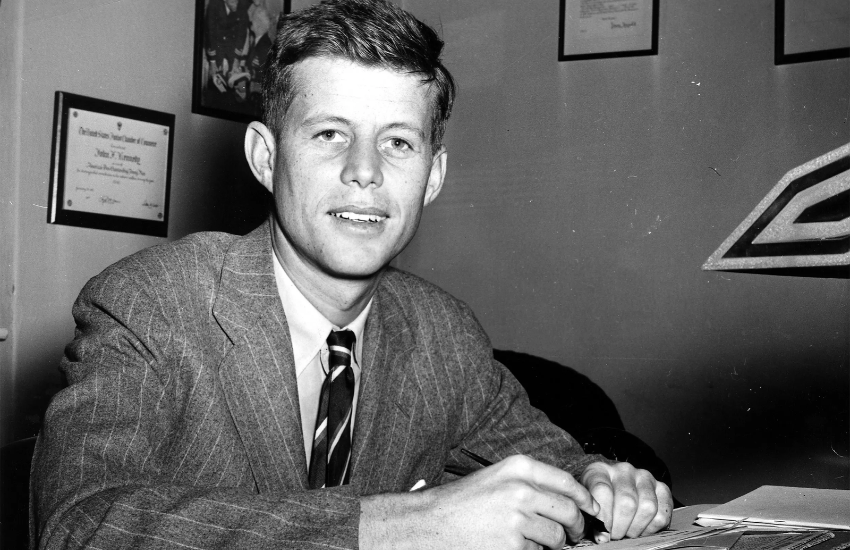
John F. Kennedy, widely known as JFK, was one of the most recognizable and influential presidents in American history. His leadership, personality, political vision, and tragic assassination made him a lasting figure in the story of the United States. Serving as the 35th president from January 1961 until November 1963, Kennedy became a symbol of youthful leadership, political ambition, and national optimism during one of the most challenging periods of the twentieth century.
Born into a wealthy and politically influential family, Kennedy developed an interest in public service at an early age. His journey to the White House was shaped by education, military service, family expectations, and years of political experience. Although his presidency lasted less than three years, he faced major international crises, domestic challenges, and important decisions that influenced American politics for generations.
What made John F. Kennedy particularly interesting was his ability to connect with the public. He was an effective speaker who understood the importance of television, public communication, and inspiring messages. His speeches encouraged Americans to participate in public service and think about their responsibilities to society. Even decades after his death, people continue to study his presidency, leadership style, political decisions, and historical influence.
Let’s go deeper into the life of John F. Kennedy, exploring his childhood, education, military career, political achievements, family, presidency, assassination, and the legacy he left behind.
Who Was John F. Kennedy?
John Fitzgerald Kennedy was born on May 29, 1917, in Brookline, Massachusetts, United States. He belonged to the Kennedy family, a prominent American family known for its political involvement, business interests, and public influence. His father, Joseph P. Kennedy Sr., was a successful businessman and diplomat, while his mother, Rose Fitzgerald Kennedy, came from another politically active family.
Kennedy grew up in an environment where education, competition, ambition, and public service were strongly emphasized. He was one of nine children, and his family encouraged the siblings to develop their abilities and pursue successful careers. His upbringing exposed him to political discussions and influential personalities, helping shape his understanding of American society.
Although Kennedy eventually became president, his life was not always easy. He experienced recurring health problems and faced personal challenges throughout his childhood and adulthood. His journey demonstrated determination and ambition, although his success also depended on family resources, political connections, and extensive support from those around him.
His presidency became especially important because it occurred during the Cold War, when tensions between the United States and the Soviet Union threatened international stability. Kennedy had to make decisions involving military security, diplomacy, civil rights, economic development, and America’s position in the world.
Early Life and Family Background
JFK at 100: Remembering John F. Kennedy
John F. Kennedy was born into a family that played an important role in American political and social life. His father, Joseph P. Kennedy Sr., built considerable wealth through business activities and later served as the United States ambassador to the United Kingdom. His mother, Rose Kennedy, emphasized discipline, education, religious values, and family responsibility.
Growing up with eight siblings created a competitive environment. The Kennedy children were encouraged to achieve academically, participate in sports, and develop leadership skills. Their parents expected them to work hard and maintain high standards. These expectations helped create a family culture in which achievement and public recognition were highly valued.
Kennedy’s childhood also involved frequent movement between family residences and exposure to different social environments. His family had the financial resources to provide excellent educational opportunities and international experiences. These advantages gave him access to influential networks that later became valuable during his political career.
Despite these privileges, Kennedy experienced significant personal difficulties. He suffered from several illnesses and spent considerable time dealing with health problems. His medical challenges continued into adulthood and were often hidden from the general public during his political career. Understanding his early experiences provides important context for examining the person behind the presidential image.
Education and Academic Journey
John F. Kennedy attended several schools during his childhood because his family moved between different locations. He eventually attended Choate School, a respected preparatory institution in Connecticut. At Choate, he developed friendships, participated in school activities, and showed an interest in writing and public affairs.
After graduating from Choate in 1935, Kennedy enrolled at Princeton University. However, illness interrupted his studies, and he eventually left the institution. He later transferred to Harvard University, where he became more academically engaged and developed a stronger interest in international relations and political affairs.
At Harvard, Kennedy studied government and became particularly interested in Britain’s foreign policy before World War II. His senior thesis examined Britain’s failure to prepare adequately for the growing threat posed by Nazi Germany. The work eventually became the basis for his book, Why England Slept, published in 1940.
His educational experience helped develop his understanding of international politics, military strategy, and government institutions. Harvard also provided opportunities to build relationships with influential individuals and improve his public speaking skills. These experiences became valuable foundations for his later work in Congress and the White House.
John F. Kennedy’s Military Service During World War II
Before entering politics, John F. Kennedy served in the United States Navy during World War II. His military career became one of the defining experiences of his life and helped establish his reputation as a courageous young American. After the United States entered the war following the attack on Pearl Harbor in December 1941, Kennedy joined the Navy and eventually received command of a patrol torpedo boat.
In August 1943, Kennedy was commanding PT-109 in the Pacific when a Japanese destroyer struck the boat during a nighttime operation. The collision destroyed the vessel and left Kennedy and his crew members struggling to survive in the ocean. Despite his physical difficulties, Kennedy helped rescue injured sailors and assisted surviving crew members in reaching safety.
Kennedy’s actions during the incident attracted public attention and became an important part of his political identity. His willingness to take responsibility for his crew helped strengthen his reputation as a determined leader. He later received the Navy and Marine Corps Medal for his actions, along with other military decorations. His wartime experiences also influenced his understanding of leadership, responsibility, and the human consequences of military conflict.
John F. Kennedy’s Entry Into Politics
After completing his military service, Kennedy considered different career opportunities. He briefly worked as a journalist before deciding to enter politics. His family’s political background, combined with his education and growing public profile, helped him establish a path toward elected office.
In 1946, Kennedy successfully ran for a seat in the United States House of Representatives from Massachusetts. He took office in January 1947 and represented his district for three terms. During this period, he developed experience in legislative politics and became increasingly interested in national economic and foreign policy issues.
Kennedy’s early political career was supported by his ability to communicate with voters and understand local concerns. He presented himself as a younger generation of political leadership, offering fresh energy and a modern perspective. Although he benefited from his family’s wealth and political connections, he also developed a recognizable individual political identity.
His years in Congress helped prepare him for more demanding political responsibilities. He learned how legislation moved through government, how political coalitions were created, and how national issues affected ordinary Americans. These experiences became especially useful when he decided to compete for a Senate seat.
John F. Kennedy’s Career in the United States Senate
In 1952, Kennedy ran for the United States Senate against Republican incumbent Henry Cabot Lodge Jr. The campaign was competitive, but Kennedy defeated Lodge and became a senator representing Massachusetts. His victory established him as an important figure in the Democratic Party.
During his Senate career, Kennedy worked on issues involving labor, foreign affairs, immigration, and national security. He developed relationships with fellow lawmakers and gained experience dealing with complicated political negotiations. His speeches and public appearances also helped increase his recognition beyond Massachusetts.
One of the most important achievements associated with Kennedy’s Senate years was his book Profiles in Courage. Published in 1956, the book discussed American politicians who had demonstrated political bravery by taking unpopular positions. It received the Pulitzer Prize for Biography in 1957, although questions about the extent of Kennedy’s personal contribution to its writing have been discussed by historians.
His Senate career also strengthened his ambition to become president. Kennedy understood that winning the presidency would require national support, strong political organization, and the ability to appeal to voters from different backgrounds. By the end of the 1950s, he had become one of the Democratic Party’s leading presidential possibilities.
Marriage to Jacqueline Kennedy and Family Life
John F. Kennedy married Jacqueline Bouvier on September 12, 1953, in Newport, Rhode Island. Jacqueline, commonly known as Jackie Kennedy, became one of the most recognizable first ladies in American history. Their marriage attracted considerable public attention because both were young, socially prominent, and connected to influential American families.
The couple had four children, although two died in infancy. Their surviving children were Caroline Kennedy and John F. Kennedy Jr. Their family life was frequently covered by newspapers and magazines, making the Kennedy household a subject of national interest.
As first lady, Jacqueline Kennedy became known for her interest in history, architecture, fashion, and cultural preservation. She led efforts to restore and improve the White House, helping transform it into a place that celebrated American history and artistic achievement. Her televised tour of the restored White House introduced viewers to the historical importance of the presidential residence.
The Kennedy family became closely associated with an image of youth, culture, ambition, and public service. The media often referred to their White House years as Camelot, a comparison that suggested an idealized era of energy and optimism. However, their private lives also included personal difficulties and intense public pressure.
The 1960 Presidential Election
The 1960 presidential election was a major turning point in American political history. John F. Kennedy won the Democratic Party’s presidential nomination and faced Republican candidate Richard Nixon, who was serving as vice president under Dwight D. Eisenhower.
Kennedy’s candidacy was historically significant because he was relatively young and became the first Roman Catholic nominated by a major American political party for president. Some voters questioned whether his religious beliefs might influence his political decisions. Kennedy addressed these concerns directly and emphasized that his responsibility would be to the Constitution and the American people.
Television played an especially important role in the campaign. The presidential debates between Kennedy and Nixon attracted enormous attention. Kennedy appeared confident and comfortable in front of television cameras, while Nixon’s appearance and presentation were often considered less effective by television viewers. The debates demonstrated how television could influence modern political campaigns.
On November 8, 1960, Kennedy defeated Nixon in a very close election. He received approximately 49.7 percent of the popular vote, compared with Nixon’s 49.6 percent. At 43 years old, Kennedy became the youngest person elected president of the United States and the first Catholic president. His victory represented a significant change in American political leadership. National Archives+1
John F. Kennedy’s Inauguration and Presidential Vision
John F. Kennedy was inaugurated as the 35th president of the United States on January 20, 1961. His inauguration became famous for its memorable speech, which encouraged Americans to participate actively in public service and contribute to the nation’s future.
One of the most widely remembered lines from his inaugural address was, “Ask not what your country can do for you—ask what you can do for your country.” This statement reflected his belief that citizenship involved responsibility, cooperation, and participation. Rather than presenting government as something that simply provided services, Kennedy encouraged people to become involved in solving national and international problems.
His administration introduced the concept of the New Frontier, a political vision focused on economic opportunity, scientific progress, education, national security, and social improvement. Kennedy wanted the United States to become more innovative and competitive while maintaining its democratic values.
However, his presidency began during a difficult international period. The Cold War created serious tensions between the United States and the Soviet Union. Nuclear weapons, communist expansion, and political instability in different regions made foreign policy a major responsibility for the new president.
The New Frontier and Domestic Policies
The New Frontier was Kennedy’s broader domestic policy program. It aimed to modernize the country and address challenges involving employment, education, economic development, housing, and social equality. Kennedy believed the federal government could play an important role in improving opportunities for American citizens.
His administration proposed measures intended to strengthen economic growth and reduce unemployment. It also supported improvements in housing programs, minimum wages, and federal assistance for disadvantaged communities. Some of these proposals faced opposition in Congress, where disagreements between political parties and regional interests made legislation difficult.
Kennedy also recognized the importance of science and technology. He believed investment in research, education, and advanced industries could help the United States maintain its international position. His administration supported scientific development and encouraged Americans to think about the future of technology.
Although the New Frontier did not achieve every objective Kennedy proposed, it helped establish a broader political discussion about the responsibilities of the federal government. Several of his policy ideas influenced later administrations, especially the government programs introduced under President Lyndon B. Johnson.
The Creation and Importance of the Peace Corps
One of John F. Kennedy’s notable initiatives was the establishment of the Peace Corps in 1961. The organization was designed to send American volunteers to developing countries to support education, agriculture, healthcare, community development, and other local projects.
Kennedy believed that international cooperation should involve more than military strength and diplomatic negotiations. He wanted American citizens to build relationships with people in other countries by sharing skills, knowledge, and practical assistance.
The Peace Corps became an important part of his foreign policy vision. Volunteers worked in communities where local organizations needed educational and technical support. Their activities helped create cultural exchanges and encouraged cooperation between the United States and participating countries.
The organization continues to operate today, although its programs and priorities have changed over time. Its creation demonstrated Kennedy’s belief that ordinary citizens could contribute to international development and improve America’s relationships with other nations. National Archives+1
John F. Kennedy and the Cold War
The Cold War was one of the most important challenges of Kennedy’s presidency. It was a prolonged political, military, and ideological rivalry between the United States and the Soviet Union. Both countries competed for international influence, technological leadership, and military strength.
Kennedy entered office during a period when concerns about nuclear weapons and communist expansion were especially serious. The Soviet Union had developed powerful military capabilities, while communist governments and movements were gaining influence in several parts of the world.
Kennedy adopted a defense strategy known as flexible response. This approach aimed to give the United States several possible ways to respond to international threats rather than depending entirely on massive nuclear retaliation. The strategy included conventional military forces, special operations, diplomatic measures, and nuclear deterrence.
His administration also worked to strengthen American alliances and improve relations with countries that were concerned about communist influence. Nevertheless, Kennedy’s Cold War policies were not always successful. Some decisions increased international tensions and created difficult situations for American foreign policy.
The Bay of Pigs Invasion
One of the most serious early setbacks of Kennedy’s presidency was the Bay of Pigs invasion in April 1961. The operation involved Cuban exiles who were trained and supported by the United States in an attempt to overthrow the government of Fidel Castro.
The invasion had been planned during the previous presidential administration, but Kennedy approved its implementation after taking office. The plan depended on the expectation that the invasion would encourage a wider uprising against Castro’s government.
However, the operation quickly failed. Cuban forces defeated the invading group, and many participants were killed or captured. The expected public uprising did not happen, leaving the Kennedy administration facing an embarrassing international and political setback.
Kennedy accepted public responsibility for the failure, although the operation involved intelligence assessments and planning decisions made by several government agencies. The incident damaged American credibility and strengthened Castro’s relationship with the Soviet Union. It also influenced Kennedy’s later approach to military advice and foreign policy decisions. Office of the Historian+1
The Cuban Missile Crisis of 1962
The Cuban Missile Crisis was arguably the most dangerous international confrontation of Kennedy’s presidency. In October 1962, American intelligence discovered that the Soviet Union was installing nuclear missile facilities in Cuba, located close to the southern coast of the United States.
Kennedy faced an extremely difficult decision. A direct military attack could destroy the missile installations but might also lead to a wider war with the Soviet Union. On the other hand, allowing the missiles to remain in Cuba could significantly change the strategic balance between the two superpowers.
On October 22, 1962, Kennedy addressed the American public and announced a naval quarantine of Cuba. American military forces were placed on heightened alert while diplomatic negotiations continued between Washington and Moscow.
For thirteen days, the world watched as the crisis developed. The possibility of nuclear war became a serious concern, and both governments had to consider the consequences of their decisions. Kennedy and Soviet leader Nikita Khrushchev eventually reached an agreement. The Soviet Union agreed to remove its missiles from Cuba, while the United States publicly promised not to invade Cuba and secretly agreed to remove American Jupiter missiles from Turkey.
The resolution of the crisis was a major diplomatic achievement, although it did not end Cold War tensions. The experience encouraged both countries to improve communication and reduce the danger of accidental nuclear conflict. National Archives+1
John F. Kennedy and the Berlin Wall
Another major international challenge during Kennedy’s presidency involved Berlin, Germany. After World War II, Germany was divided into separate occupation zones, eventually becoming two countries: West Germany and East Germany. Berlin was also divided, even though it was located deep inside East German territory.
Many people living in East Germany wanted to move to the West because of differences in political freedom, economic opportunities, and living conditions. The movement of people created serious concerns for the East German government and its Soviet supporters.
In August 1961, East Germany began constructing the Berlin Wall to prevent residents from escaping to West Berlin. The wall became one of the most recognizable symbols of the Cold War and represented the political division between communist and democratic Europe.
Kennedy responded by supporting West Berlin and strengthening America’s commitment to its security. In June 1963, he visited West Berlin and delivered his famous speech expressing solidarity with the city’s residents. His statement, “Ich bin ein Berliner,” became an important symbol of American support for freedom and democratic values.
John F. Kennedy and the Space Race
The Space Race was another major feature of Kennedy’s presidency. The United States and the Soviet Union competed to achieve important scientific and technological milestones in space exploration. The Soviet Union had gained an early advantage by launching Sputnik in 1957 and sending Yuri Gagarin into space in April 1961.
Kennedy understood that space exploration was not simply a scientific competition. It was also connected to national prestige, technological development, military capabilities, and international influence. He wanted the United States to demonstrate that it could compete successfully with the Soviet Union.
On May 25, 1961, Kennedy addressed Congress and announced an ambitious national objective: sending an American astronaut to the Moon and returning him safely to Earth before the end of the decade. This announcement helped establish the Apollo program as a major national priority.
The goal required significant investment, scientific research, engineering innovation, and cooperation between government agencies and private contractors. Kennedy did not live to see the achievement, but the United States successfully landed astronauts on the Moon on July 20, 1969, during the Apollo 11 mission. His vision helped shape one of the most remarkable technological achievements of the twentieth century. National Archives+1
John F. Kennedy’s Role in the American Civil Rights Movement
Civil rights became one of the most important domestic issues during Kennedy’s presidency. African Americans continued to experience racial discrimination, segregation, unequal educational opportunities, and restrictions on voting rights. Although constitutional protections existed, many communities still faced serious barriers to equality.
At the beginning of his administration, Kennedy approached civil rights cautiously. He understood that supporting major reforms could create political opposition, particularly among Southern Democrats. Nevertheless, his administration took several steps to increase opportunities for African Americans in federal employment and government appointments.
The growing civil rights movement placed increasing pressure on the federal government. Activists organized marches, demonstrations, Freedom Rides, and other peaceful protests to challenge racial segregation. Events in Birmingham, Alabama, during 1963 brought national and international attention to the violence and discrimination experienced by African Americans.
On June 11, 1963, Kennedy delivered a major televised address in which he described civil rights as a moral issue. He announced that his administration would seek comprehensive legislation to address racial discrimination. The proposed legislation eventually became the foundation for the Civil Rights Act of 1964, signed by President Lyndon B. Johnson after Kennedy’s assassination.
Kennedy’s contribution was important, but his administration did not eliminate racial inequality. Civil rights activists, community organizations, religious leaders, and political supporters played essential roles in pushing the movement forward. His decision to support stronger federal legislation represented an important change in the national government’s response to racial discrimination. Exhibitions – Library of Congress+1
John F. Kennedy and the Limited Nuclear Test Ban Treaty
Nuclear weapons were a constant concern during the Cold War. Both the United States and the Soviet Union conducted nuclear tests to develop and improve their military capabilities. These activities raised international concerns about radioactive fallout and the possibility of a nuclear conflict.
Kennedy recognized that reducing nuclear tensions would require diplomatic communication and practical agreements. The Cuban Missile Crisis demonstrated how quickly disagreements between the superpowers could develop into an international emergency.
In August 1963, the United States, the Soviet Union, and the United Kingdom signed the Limited Nuclear Test Ban Treaty. The agreement prohibited nuclear weapons testing in the atmosphere, outer space, and underwater, although underground testing remained permitted.
The treaty represented an important step toward arms control and improved communication between the rival superpowers. It did not eliminate nuclear weapons or end the Cold War, but it demonstrated that diplomatic negotiations could produce meaningful agreements even during periods of international competition.
Kennedy’s support for the treaty reflected his growing interest in reducing the risks associated with nuclear confrontation. It also helped establish a foundation for later discussions about international arms control.
John F. Kennedy’s Relationship With the Media
John F. Kennedy understood that communication played a major role in modern presidential leadership. Unlike earlier presidents, he operated in an era when television was becoming an increasingly important source of news and political information.
Kennedy’s appearance, speaking style, and confidence helped him connect with television audiences. His press conferences attracted considerable attention because he often answered difficult questions with humor, composure, and a clear understanding of current events.
His administration also recognized the importance of carefully communicating government policies. Television broadcasts allowed Kennedy to speak directly to millions of Americans during major national and international developments. His address during the Cuban Missile Crisis is an important example of how presidential communication could influence public understanding during an emergency.
However, Kennedy’s relationship with the media was not entirely simple. Journalists sometimes focused heavily on his personal life, health, family, and public image. His administration also faced questions about how much information should be shared with the public.
Nevertheless, Kennedy helped establish a more modern relationship between the presidency and television. His communication style influenced future political campaigns and changed public expectations about how presidents should address the nation.
John F. Kennedy’s Leadership Style
Kennedy’s leadership style combined confidence, intellectual curiosity, political calculation, and a strong interest in public communication. He surrounded himself with advisers who had expertise in foreign policy, economics, national security, and government administration.
He often encouraged discussions among advisers before making important decisions. This approach became particularly visible during the Cuban Missile Crisis, when he considered several possible responses rather than immediately accepting military recommendations.
Kennedy also understood the importance of symbolism. His speeches frequently connected national challenges with larger ideas about freedom, responsibility, scientific progress, and democratic participation. He believed that inspiring people could help create public support for difficult national objectives.
However, his leadership was not without weaknesses. The Bay of Pigs invasion demonstrated the dangers of relying on flawed intelligence and poorly coordinated plans. His administration also made controversial decisions involving Vietnam and other international conflicts.
A balanced understanding of Kennedy requires examining both his achievements and his mistakes. He was an influential president, but he was also a political leader operating under intense pressure in an uncertain international environment.
John F. Kennedy’s Health and Personal Challenges
Although Kennedy appeared energetic in public, he experienced serious health problems throughout much of his life. During childhood and adulthood, he suffered from various illnesses that required medical attention and affected his daily activities.
One of the most significant health conditions associated with Kennedy was Addison’s disease, an endocrine disorder affecting the body’s production of certain hormones. He also experienced chronic back problems and underwent several medical procedures during his lifetime.
His health challenges were largely concealed from the American public during his political career. At the time, presidential candidates and sitting presidents were not subject to the same level of routine medical transparency expected today.
Kennedy’s physical difficulties sometimes affected his ability to work comfortably, but he continued to maintain a demanding political schedule. His public image emphasized youth and energy, creating a contrast with the serious medical challenges he privately managed.
Understanding these difficulties provides a more complete picture of Kennedy’s life. His presidency was shaped not only by political events but also by personal circumstances that influenced his experiences and daily responsibilities.
John F. Kennedy’s Assassination in Dallas, Texas
Que révéleront les derniers documents secrets sur JFK rendus publics cette semaine?
One of the most tragic events in American history occurred on November 22, 1963, when John F. Kennedy was assassinated in Dallas, Texas. The president was visiting the city as part of a political trip through Texas, accompanied by First Lady Jacqueline Kennedy and other members of his presidential party.
Kennedy’s motorcade traveled through downtown Dallas while crowds gathered along the route to see the president. As the vehicle passed through Dealey Plaza, shots were fired, and Kennedy was seriously wounded. Texas Governor John Connally was also injured during the shooting.
Kennedy was rushed to Parkland Memorial Hospital, where doctors attempted to save his life. However, he was pronounced dead at approximately 1 p.m. Central Standard Time. His death shocked the United States and attracted international attention.
Vice President Lyndon B. Johnson was sworn in as the 36th president aboard Air Force One later that afternoon. Jacqueline Kennedy, still wearing her bloodstained pink suit, stood beside him during the ceremony. The images and reports from that day became some of the most unforgettable moments in American history.
The assassination ended Kennedy’s presidency after less than three years in office. It also created a period of national mourning and uncertainty as Americans struggled to understand the loss of their president.
Who Assassinated John F. Kennedy?
Following the assassination, law enforcement authorities began investigating the shooting. Lee Harvey Oswald, a former U.S. Marine, was arrested and accused of killing Kennedy. Investigators identified him as the primary suspect in the assassination.
Before Oswald could stand trial, he was shot and killed by nightclub owner Jack Ruby on November 24, 1963, while being transferred through the Dallas police headquarters. The killing prevented Oswald from facing a criminal trial and answering questions publicly.
In 1964, the Warren Commission concluded that Oswald had acted alone in assassinating Kennedy and that Ruby had also acted independently. Its findings became the official conclusion of the federal investigation.
However, the assassination continued to generate public debate. Questions about the available evidence, intelligence agencies, security arrangements, and the circumstances surrounding the shooting led to numerous alternative theories.
In 1979, the House Select Committee on Assassinations concluded that Kennedy was probably assassinated as a result of a conspiracy, although it did not establish the identity of any additional gunman or determine who might have been involved. Its findings and acoustic evidence have also been debated by researchers.
The assassination remains a subject of historical investigation, documentary filmmaking, and public discussion. It is important to distinguish established historical findings from unproven theories when examining this complicated event.
The Funeral and Burial of John F. Kennedy
John F. Kennedy’s funeral took place on November 25, 1963, following several days of national mourning. His body was placed in the White House and later transferred to the United States Capitol, where thousands of people gathered to pay their respects.
The funeral attracted international leaders, government representatives, military officials, and members of the public. Millions of people watched the ceremonies on television, making the event one of the most widely viewed broadcasts of its time.
Kennedy was buried at Arlington National Cemetery in Virginia. His gravesite became an important national memorial, featuring the Eternal Flame, which was lit by Jacqueline Kennedy during the burial ceremony.
The funeral symbolized the end of an era for many Americans. It also demonstrated the international respect and attention associated with the American presidency. Kennedy’s death became a defining historical moment for a generation that had followed his political career.
The Legacy of John F. Kennedy
John F. Kennedy left behind a complicated but influential legacy. His presidency was relatively short, yet it included several important events that shaped American domestic and international policy.
His handling of the Cuban Missile Crisis is frequently discussed as an example of crisis management and diplomatic negotiation. The decision to avoid direct military conflict with the Soviet Union helped prevent a potentially catastrophic nuclear confrontation.
Kennedy’s support for civil rights legislation also became an important part of his historical reputation. Although he initially moved cautiously, his administration eventually took a stronger position on racial equality and helped advance legislation that was completed under Lyndon B. Johnson.
His commitment to space exploration had an equally lasting influence. The Apollo program eventually achieved the Moon landing goal he had announced, demonstrating the power of long-term scientific investment and national cooperation.
At the same time, his administration’s decisions concerning Cuba, Vietnam, and other international matters remain subjects of historical criticism. A complete assessment of his legacy must recognize these controversies rather than presenting his presidency as entirely successful.
John F. Kennedy’s Influence on Future American Presidents
Kennedy’s presidency influenced how later American presidents approached leadership, communication, and international relations. His emphasis on public service encouraged future political leaders to connect national policies with broader ideals of citizenship and responsibility.
His management of the Cuban Missile Crisis became an important case study for presidential decision-making. Later administrations examined the importance of gathering accurate intelligence, considering diplomatic alternatives, and understanding the consequences of military action.
Kennedy also helped establish expectations for presidential communication. His televised speeches and press conferences demonstrated how presidents could use modern media to explain policies and build public support. Later political campaigns increasingly emphasized television appearances, public presentation, and direct communication with voters.
His influence extended beyond American politics. International leaders continued to study his approach to diplomacy, nuclear security, and political relationships during periods of tension. Although his administration had limitations, Kennedy’s presidency remains an important subject for understanding modern political leadership.
Interesting Facts About John F. Kennedy
John F. Kennedy’s life included several fascinating details that help explain why he remains such a popular historical figure. Beyond his political achievements, his personal experiences, military service, family background, and interests attracted considerable public attention.
Here are some interesting facts about his life:
- Youngest elected president: Kennedy was 43 when he won the 1960 presidential election.
- First Catholic president: He was the first Roman Catholic to become president of the United States.
- Navy war hero: He received military decorations for his actions following the destruction of PT-109.
- Pulitzer Prize winner: His book Profiles in Courage received the Pulitzer Prize for Biography in 1957.
- Peace Corps founder: He established the Peace Corps in 1961.
- Space exploration supporter: He challenged America to land an astronaut on the Moon before the end of the 1960s.
- Historic speech: His inaugural address included one of the most recognizable calls for public service in American political history.
- Short presidency: He served as president from January 20, 1961, until November 22, 1963.
- Historic family: His wife, Jacqueline Kennedy, became an influential first lady known for cultural preservation and White House restoration.
- Arlington burial: He was buried at Arlington National Cemetery, where his memorial remains an important historical destination.
These facts demonstrate that Kennedy’s influence came from several aspects of his life, not simply his position as president.
Why Is John F. Kennedy Still Remembered Today?
John F. Kennedy remains an important historical figure because his presidency represented a period of significant political, scientific, and social change. His leadership coincided with major international tensions, the development of modern space exploration, and growing demands for civil rights.
His speeches continue to attract attention because they communicated ideas about national responsibility, democratic participation, and public service. Many people still study his inaugural address to understand how political language can inspire citizens and establish a president’s vision.
Another reason for his continued popularity is the dramatic nature of his assassination. His death created a lasting historical memory and transformed the way Americans viewed presidential security, political violence, and national leadership.
Kennedy’s legacy is also preserved through museums, historical archives, documentaries, books, and educational institutions. The John F. Kennedy Presidential Library and Museum in Boston provides access to historical materials related to his life and administration.
Ultimately, Kennedy remains memorable because his presidency combined remarkable achievements, serious controversies, ambitious goals, and an unexpected ending. His story continues to encourage discussions about leadership, democracy, history, and America’s role in the world.
Conclusion
John F. Kennedy was one of the most influential American presidents of the twentieth century. From his childhood in Massachusetts and military service during World War II to his political career and historic presidency, his life reflected ambition, determination, and a commitment to public leadership.
His administration faced extraordinary challenges, including the Bay of Pigs invasion, the Cuban Missile Crisis, the Berlin Wall, Cold War tensions, and the growing American civil rights movement. He also supported scientific innovation, created the Peace Corps, and established an ambitious goal for American space exploration.
Although his presidency ended tragically in Dallas on November 22, 1963, his influence continued through the policies, institutions, and national ambitions associated with his administration. His achievements and mistakes both provide valuable lessons about political leadership.
Understanding John F. Kennedy requires looking beyond the famous speeches and memorable photographs. His life was complex, his presidency was challenging, and his historical legacy remains open to thoughtful discussion. More than six decades after his assassination, JFK continues to hold an important place in American history and international political memory.
YOU MAY HAVE MISSED