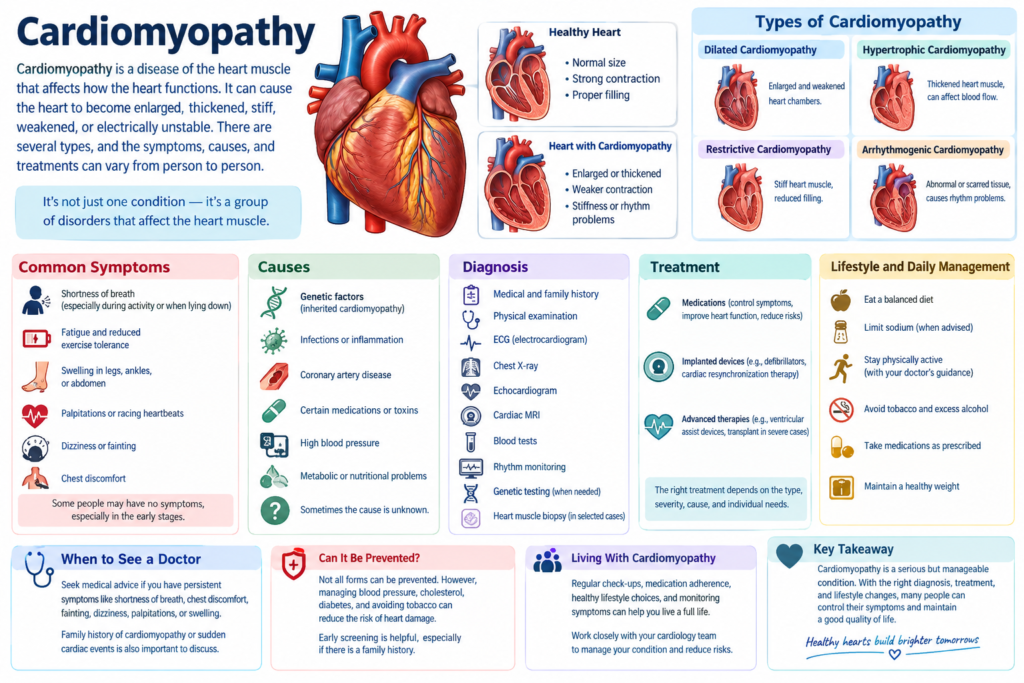
Cardiomyopathy is a term used to describe diseases that affect the heart muscle. It is not one single condition. Instead, it is a broad group of disorders that can change the size, shape, strength, flexibility, or electrical function of the heart. When the heart muscle becomes abnormal, it may have difficulty pumping enough blood throughout the body or maintaining a normal rhythm.
The word can sound intimidating, especially when someone first hears it from a healthcare professional. However, cardiomyopathy can behave very differently from one person to another. Some people have few or no noticeable symptoms for years, while others develop significant shortness of breath, fatigue, swelling, chest discomfort, or abnormal heart rhythms. The outlook also depends heavily on the particular type, its cause, and how early it is recognized.
Understanding cardiomyopathy is useful because early evaluation can make a meaningful difference. Some forms are inherited, some develop because of another health problem or exposure, and others have no obvious cause. Modern cardiology offers several approaches to managing the condition, including medications, lifestyle changes, procedures, implanted devices, and, in severe cases, advanced therapies such as heart transplantation.
What Is Cardiomyopathy?
Cardiomyopathy is a disease of the heart muscle that makes it harder for the heart to perform its normal job. The heart is essentially a muscular pump. With every heartbeat, it receives blood, fills its chambers, and then contracts to send blood to the lungs and the rest of the body. Cardiomyopathy can interfere with one or more parts of this process.
Depending on the type, the heart muscle may become enlarged and weak, unusually thick, stiff, scarred, or otherwise structurally abnormal. Some forms primarily affect the heart’s ability to pump, while others create a greater concern about abnormal electrical rhythms. In some people, more than one feature can occur at the same time.
The important point is that cardiomyopathy is different from ordinary tiredness or occasional palpitations. It represents an actual problem involving the heart muscle. Some people remain stable with monitoring, while others require ongoing treatment. Because the disease has so many forms, determining the exact type is an important part of medical care.
How Does the Heart Work Normally?
To understand cardiomyopathy, it helps to know what a healthy heart is supposed to do. The heart has four chambers: two upper chambers called atria and two lower chambers called ventricles. The right side sends blood toward the lungs, where it receives oxygen. The left side then pumps oxygen-rich blood throughout the body.
The heart muscle must contract strongly enough to move blood forward, but it also needs to relax properly so that the chambers can fill between beats. A healthy heart therefore depends on both effective contraction and effective relaxation. Problems with either function can eventually affect circulation.
The heart also has an electrical system that controls the timing of each beat. If cardiomyopathy damages or alters that system, abnormal rhythms can develop. This is one reason cardiomyopathy is associated not only with heart failure symptoms but also with arrhythmias and, in certain forms, an increased risk of serious cardiac events.
What Are the Main Types of Cardiomyopathy?
There are several recognized forms of cardiomyopathy, and each affects the heart differently. The major categories include dilated, hypertrophic, restrictive, and arrhythmogenic cardiomyopathies. There are also less common forms and conditions that fit into specialized or unclassified categories.
Knowing the type matters because treatment is not interchangeable. A medication or procedure that makes sense for one form may not be appropriate for another. Doctors therefore look at the heart’s structure, pumping ability, rhythm, symptoms, family history, and possible underlying causes before creating a treatment plan.
Some cardiomyopathies are inherited and can affect several members of the same family. Others are acquired and may develop because of another medical condition, pregnancy, inflammation, certain toxins or medications, nutritional problems, or other factors. In many cases, however, the precise cause remains unknown.
Dilated Cardiomyopathy
Dilated cardiomyopathy occurs when one or more heart chambers, particularly the ventricles, become enlarged and weakened. The enlarged chamber may not contract effectively, which can reduce the amount of blood pumped with each heartbeat. Over time, this can contribute to symptoms associated with heart failure.
There are many possible contributors to dilated cardiomyopathy. Coronary artery disease and previous heart damage can play a role, while genetic changes can also be involved. In some people, doctors may identify an underlying cause; in others, the reason for the condition remains uncertain.
Symptoms can include breathlessness, reduced exercise tolerance, fatigue, swelling, and a sensation of an irregular or rapid heartbeat. Treatment is generally directed toward improving heart function, controlling symptoms, treating the underlying cause when possible, and reducing the risk of complications.
Hypertrophic Cardiomyopathy
Hypertrophic cardiomyopathy, often shortened to HCM, occurs when the heart muscle becomes abnormally thickened. The thickening commonly affects the left ventricle and can interfere with the heart’s ability to relax and fill normally. In some people, the thickened muscle can also obstruct blood leaving the heart.
HCM is frequently associated with inherited genetic changes. That means a diagnosis can have implications for close relatives as well. A person may have the condition without realizing it, particularly when the structural changes are present but symptoms are mild or absent. This is why family history can be an important part of evaluating unexplained heart symptoms.
People with HCM may experience shortness of breath, chest discomfort, dizziness, fainting, palpitations, or reduced ability to exercise. The condition varies considerably between individuals, so management should be personalized by a cardiologist familiar with hypertrophic cardiomyopathy.
Restrictive Cardiomyopathy
Restrictive cardiomyopathy is less common than some other forms. In this condition, the heart muscle becomes stiff and loses some of its ability to relax. The ventricles may therefore have difficulty filling with enough blood between heartbeats.
The walls of the heart do not necessarily become thick in the same way seen with hypertrophic cardiomyopathy. Instead, the key problem is reduced flexibility. Because filling is impaired, pressure can build up behind the affected chambers and contribute to congestion or other symptoms.
Restrictive cardiomyopathy can occur for different reasons. Some cases are associated with diseases that cause abnormal substances to accumulate in heart tissue. Amyloidosis is one example. Because the underlying cause can significantly influence treatment, doctors usually investigate the broader health picture rather than treating the heart problem in isolation.
Arrhythmogenic Cardiomyopathy
Arrhythmogenic cardiomyopathy is a less common form in which abnormal or scarred tissue can replace normal heart muscle. It is particularly associated with disturbances in the heart’s electrical rhythm. The right ventricle may be predominantly affected in some people, while other forms involve the left ventricle or both ventricles.
This condition is important because rhythm problems can sometimes appear before major pumping problems become obvious. Symptoms may include palpitations, dizziness, fainting, or episodes of rapid heartbeat. In certain individuals, the condition can increase the risk of serious arrhythmias.
Because arrhythmogenic cardiomyopathy can have a genetic component, family evaluation may be considered when someone receives a diagnosis. Exercise recommendations can also be individualized, particularly when vigorous activity could increase risk. A specialist should provide guidance based on the person’s specific diagnosis and risk profile.
Other Forms of Cardiomyopathy
Not every case fits neatly into the most familiar categories. Medical organizations recognize several additional forms, including left ventricular noncompaction, stress-induced cardiomyopathy, peripartum cardiomyopathy, and cardiomyopathy associated with systemic diseases.
Takotsubo cardiomyopathy, commonly called stress-induced or broken-heart syndrome, can occur after intense emotional or physical stress. Although it can resemble a heart attack and may temporarily impair heart function, it has a different underlying mechanism. Many people recover heart function over time with appropriate medical care.
Peripartum cardiomyopathy is associated with pregnancy and the period around childbirth. It requires medical attention because symptoms such as breathlessness and swelling can sometimes be mistaken for ordinary effects of pregnancy or the postpartum period. Anyone who develops concerning symptoms during or after pregnancy should speak with a healthcare professional promptly.
What Causes Cardiomyopathy?
There is no single cause of cardiomyopathy. Inherited genetic changes are important for some forms, particularly certain cases of hypertrophic and arrhythmogenic cardiomyopathy. A person may inherit a gene change that affects how heart muscle cells develop or function.
Acquired cardiomyopathy can have many possible contributors. These may include coronary artery disease, previous heart injury, high blood pressure, infections or inflammation, metabolic disorders, certain medications or toxins, nutritional deficiencies, and other systemic diseases. In some cases, the heart muscle is affected as part of a broader condition elsewhere in the body.
Sometimes extensive testing still fails to identify one clear cause. This can be frustrating, but it does not mean the condition is imaginary or unimportant. Cardiologists can still focus on controlling symptoms, monitoring heart function, identifying risk factors, and preventing complications even when the original trigger remains unknown.
Is Cardiomyopathy Genetic?
Some types of cardiomyopathy can run in families. A genetic form does not necessarily mean that every relative will develop the condition, but it can mean that close family members may benefit from appropriate evaluation.
Family history is particularly important when relatives have had unexplained fainting, cardiomyopathy, heart failure at a young age, sudden cardiac arrest, or unexplained sudden death. These details can help doctors decide whether additional screening or genetic counseling may be appropriate.
Genetic testing is not automatically necessary for everyone with cardiomyopathy. It is usually considered in the context of the person’s clinical findings and family history. When testing is appropriate, the results may help clarify the diagnosis and provide useful information for relatives.
Common Symptoms of Cardiomyopathy
Symptoms can vary dramatically. Some people have no symptoms at all, especially in the early stages. Others gradually notice that ordinary activities such as climbing stairs, walking quickly, or exercising leave them unusually tired or short of breath.
Common symptoms may include shortness of breath, fatigue, swelling in the legs or ankles, dizziness, fainting, chest discomfort, and sensations of pounding, fluttering, or racing heartbeats. Fluid accumulation can also cause abdominal swelling or breathing difficulties when lying down.
Symptoms should not automatically be attributed to cardiomyopathy because many other conditions can cause similar problems. At the same time, persistent or unexplained symptoms deserve proper evaluation. A clinician can determine whether the heart, lungs, blood, thyroid, medications, fitness level, or another factor may be responsible.
When Should You See a Doctor?
A medical evaluation is appropriate if you repeatedly experience unexplained shortness of breath, chest discomfort, fainting, significant dizziness, persistent palpitations, unusual fatigue, or swelling. These symptoms do not prove that cardiomyopathy is present, but they should not be ignored.
Family history is another reason to discuss cardiovascular screening with a healthcare professional. If a close relative has been diagnosed with cardiomyopathy or has experienced an unexplained sudden cardiac event, your doctor may recommend additional assessment.
Emergency symptoms require immediate attention. Severe or persistent chest pain, significant difficulty breathing, or fainting can represent a medical emergency. Emergency services should be contacted rather than waiting for a routine appointment, particularly when symptoms are sudden or severe.
How Is Cardiomyopathy Diagnosed?
Diagnosis usually begins with a detailed medical and family history. A doctor will ask about symptoms, their timing, exercise tolerance, previous medical problems, medications, and family history. A physical examination may provide additional clues, including abnormal heart sounds or signs of fluid retention.
Testing is often needed because symptoms alone cannot identify the specific type of cardiomyopathy. An electrocardiogram, commonly called an ECG or EKG, records the heart’s electrical activity and can reveal abnormal rhythms or other changes. A chest X-ray may provide information about heart size and fluid in the lungs.
An echocardiogram is particularly useful because it creates moving images of the heart. It can help doctors evaluate chamber size, wall thickness, valve function, and pumping performance. Depending on the situation, additional tests may include cardiac MRI, stress testing, blood tests, ambulatory rhythm monitoring, cardiac catheterization, genetic testing, or, in selected cases, a heart muscle biopsy.
Why Family History Matters
Family history can provide clues that are not obvious from symptoms. A person may feel perfectly healthy while carrying a genetic predisposition to a cardiomyopathy. Inherited heart conditions can sometimes remain unnoticed until they are discovered during an examination, imaging study, or evaluation of a relative.
Doctors may ask whether parents, siblings, children, or other close relatives have been diagnosed with cardiomyopathy, heart failure, unexplained fainting, or sudden cardiac arrest. The age at which these events occurred can also be relevant.
When an inherited cardiomyopathy is suspected, screening relatives can sometimes identify the condition earlier. Early identification gives healthcare professionals an opportunity to monitor the heart and discuss appropriate treatment or lifestyle recommendations before serious complications develop.
Treatment for Cardiomyopathy
Treatment depends on the specific type of cardiomyopathy, the severity of the disease, symptoms, complications, and underlying cause. There is no universal treatment plan that works for every patient. The goal is usually to control symptoms, protect heart function, reduce complications, and address any treatable cause.
Medications are commonly used. Depending on the condition, doctors may prescribe medicines that reduce blood pressure, slow the heart rate, improve circulation, reduce excess fluid, manage heart failure, or lower the risk of blood clots. The exact combination should be determined by a healthcare professional.
Some patients need procedures or implanted devices. An implantable cardioverter-defibrillator, for example, can monitor heart rhythm and deliver an electrical shock when a dangerous rhythm is detected. Cardiac resynchronization therapy may help coordinate ventricular contractions in selected patients. More advanced cases may require ventricular assist devices or transplantation.
Lifestyle and Daily Management
Lifestyle choices can complement medical treatment, although they do not replace professional care. Eating a balanced diet, limiting excessive sodium when advised, maintaining a healthy weight, avoiding tobacco, and following prescribed medications can support overall cardiovascular health.
Physical activity is more complicated than simply saying that everyone with cardiomyopathy should exercise. Some people can safely participate in regular moderate activity, while others may need restrictions because certain forms of cardiomyopathy or rhythm problems can increase the risk associated with strenuous exercise.
The safest approach is to ask the treating cardiologist what level and type of activity is appropriate. Recommendations can change depending on the cardiomyopathy type, heart function, symptoms, medications, and risk of arrhythmia.
Can Cardiomyopathy Be Prevented?
Not every form of cardiomyopathy can be prevented. Genetic conditions cannot simply be eliminated through diet or exercise. Some cases also develop without a clearly identifiable cause.
However, reducing cardiovascular risk can still be valuable. Managing blood pressure, cholesterol, diabetes, and coronary artery disease can protect the heart. Avoiding tobacco and following medical advice for existing conditions can also reduce the likelihood of additional heart damage.
Prevention also means paying attention to symptoms and family history. Early medical assessment may help identify a heart condition before it causes significant complications. For people with known inherited cardiomyopathy, appropriate family screening can be an important part of long-term care.
Cardiomyopathy and Heart Failure
Cardiomyopathy and heart failure are related but are not identical terms. Cardiomyopathy describes a disease of the heart muscle. Heart failure describes a situation in which the heart cannot pump or fill effectively enough to meet the body’s needs.
Certain forms of cardiomyopathy can eventually lead to heart failure. When the heart becomes weak or stiff, blood flow may decrease and pressure can build up in the lungs or other parts of the body. This can contribute to breathlessness, fatigue, swelling, and reduced exercise capacity.
The good news is that cardiomyopathy does not automatically mean that heart failure is inevitable. Some people remain stable for many years, and some forms can improve significantly with treatment. The prognosis depends on the individual diagnosis and response to therapy.
Cardiomyopathy and Abnormal Heart Rhythms
The heart’s electrical system is closely connected to its muscle structure. When cardiomyopathy changes the heart muscle, it can sometimes interfere with normal electrical signaling.
Arrhythmias may feel like fluttering, racing, skipped beats, or pounding in the chest. Some rhythm abnormalities are relatively harmless, while others can interfere with blood flow or become dangerous.
This is one reason doctors may recommend ECG testing or longer-term rhythm monitoring. In selected high-risk patients, an ICD may be considered to help protect against life-threatening ventricular rhythms. Such decisions require individualized assessment because an implanted device is not necessary for every person with cardiomyopathy.
Living With Cardiomyopathy
Living with cardiomyopathy often involves learning how to balance normal daily life with ongoing heart care. Regular appointments can help doctors monitor symptoms, heart function, blood pressure, rhythm, and response to treatment.
Medication adherence is especially important. Some people feel better after starting treatment and may be tempted to stop taking their medication. That can be risky because symptom improvement does not necessarily mean the underlying heart condition has disappeared.
It can also help to keep a record of symptoms. Changes in breathing, swelling, exercise tolerance, dizziness, fainting, or heart rhythm sensations may provide useful information for the healthcare team. Knowing when symptoms occur can make medical appointments more productive.
Cardiomyopathy in Children and Young Adults
Cardiomyopathy can affect children and young adults as well as older adults. In younger people, inherited forms may be particularly important. Some children have few symptoms, while others develop signs of heart dysfunction or abnormal rhythm.
Because symptoms in young people can sometimes be mistaken for poor fitness, anxiety, normal growth, or other conditions, persistent unexplained symptoms deserve evaluation. Fainting during exercise, unexplained chest discomfort, unusual breathlessness, or a strong family history of sudden cardiac events should be discussed with a healthcare professional.
Children and teenagers with a confirmed diagnosis may need specialized care. Exercise and sports recommendations should be individualized rather than based on general assumptions. A pediatric cardiologist or cardiologist with expertise in inherited heart disease can help families understand the safest approach.
Cardiomyopathy During Pregnancy
Pregnancy places additional demands on the cardiovascular system. For people with existing cardiomyopathy, pregnancy planning may therefore require careful medical evaluation.
Medication choices can also change during pregnancy and breastfeeding because not every heart medication is appropriate in these situations. Anyone with cardiomyopathy who is planning pregnancy, already pregnant, or breastfeeding should discuss treatment with the relevant healthcare professionals rather than changing medication independently.
Peripartum cardiomyopathy is another specific condition associated with pregnancy and the period following childbirth. Symptoms such as unexplained breathlessness, swelling, unusual fatigue, or difficulty lying flat should not automatically be dismissed as normal postpartum changes.
What Is the Outlook for People With Cardiomyopathy?
The prognosis varies widely. Some people have mild disease and require monitoring without intensive treatment. Others may have progressive heart dysfunction or significant rhythm problems that require multiple therapies.
Several factors influence the outlook, including the type of cardiomyopathy, the underlying cause, heart function, symptoms, rhythm abnormalities, response to treatment, and whether complications such as heart failure develop.
It is important not to assume that a diagnosis automatically predicts a poor future. Treatments have advanced considerably, and many people with cardiomyopathy are able to manage their condition over the long term. The most useful question is not simply whether cardiomyopathy is “curable,” but what type is present, what risks it creates, and how it can best be managed.
Frequently Asked Questions About Cardiomyopathy
Is cardiomyopathy the same as heart disease?
No. Cardiomyopathy specifically refers to disease involving the heart muscle. Heart disease is a much broader term that includes problems involving the heart’s blood vessels, valves, rhythm, muscle, and other structures.
Can cardiomyopathy go away?
Some forms can improve or even resolve, particularly certain temporary forms. For example, some cases of stress-induced cardiomyopathy can recover with appropriate care. Other forms are chronic and require long-term monitoring and treatment.
Can a person have cardiomyopathy without symptoms?
Yes. Some people have no noticeable symptoms, especially during earlier stages. This is one reason family history and appropriate screening can be important.
Is cardiomyopathy always inherited?
No. Some forms have genetic causes, but cardiomyopathy can also develop because of other diseases, conditions, exposures, or unknown causes.
What is the most common symptom?
Shortness of breath is a common symptom, particularly during physical activity. Fatigue, swelling, dizziness, chest discomfort, and abnormal heartbeats can also occur.
Can cardiomyopathy cause sudden cardiac arrest?
Certain forms and circumstances can increase the risk of dangerous heart rhythms and cardiac arrest. However, risk differs considerably from one person to another. Doctors use clinical history, imaging, rhythm testing, family history, and other factors to estimate individual risk.
Can exercise help with cardiomyopathy?
Physical activity may be beneficial for some people, but the appropriate intensity and type depend on the specific cardiomyopathy and individual risk. People with cardiomyopathy should obtain personalized exercise guidance from their healthcare team.
Does cardiomyopathy always require medication?
No. Treatment depends on the type and severity of the condition. Some people without symptoms may only require monitoring, while others need medication or additional therapies.
Should family members be tested?
If a cardiomyopathy has a suspected or confirmed genetic component, doctors may recommend screening for close relatives. The appropriate approach depends on the specific diagnosis and family history.
When is a heart transplant considered?
Heart transplantation may be considered for selected people with severe, end-stage heart failure when other treatments are no longer effective. It is generally reserved for advanced disease rather than being an initial treatment.
Final Thoughts on Cardiomyopathy
Cardiomyopathy is a broad group of heart muscle diseases rather than a single diagnosis. It can cause the heart to become weak, enlarged, thickened, stiff, or electrically unstable. Because the different forms behave differently, identifying the exact type is one of the most important steps in managing the condition.
Symptoms such as unexplained breathlessness, chest discomfort, fainting, persistent fatigue, swelling, or unusual heartbeats should be evaluated, particularly when they are persistent or occur alongside a concerning family history. Modern diagnostic tools such as echocardiography, ECGs, cardiac imaging, rhythm monitoring, and genetic testing can help doctors understand what is happening inside the heart.
Treatment has many forms, ranging from monitoring and lifestyle adjustments to medications, procedures, implanted devices, and advanced heart therapies. The right plan depends on the individual rather than the word “cardiomyopathy” alone. For anyone who has received this diagnosis, regular communication with a qualified cardiology team is one of the most practical steps toward protecting heart function, controlling symptoms, and maintaining quality of life.
Medical note: This article is for general educational purposes and does not replace evaluation or treatment from a qualified healthcare professional. If you have severe chest pain, serious breathing difficulty, fainting, or other potentially life-threatening symptoms, seek emergency medical care immediately.
YOU MAY HAVE MISSED