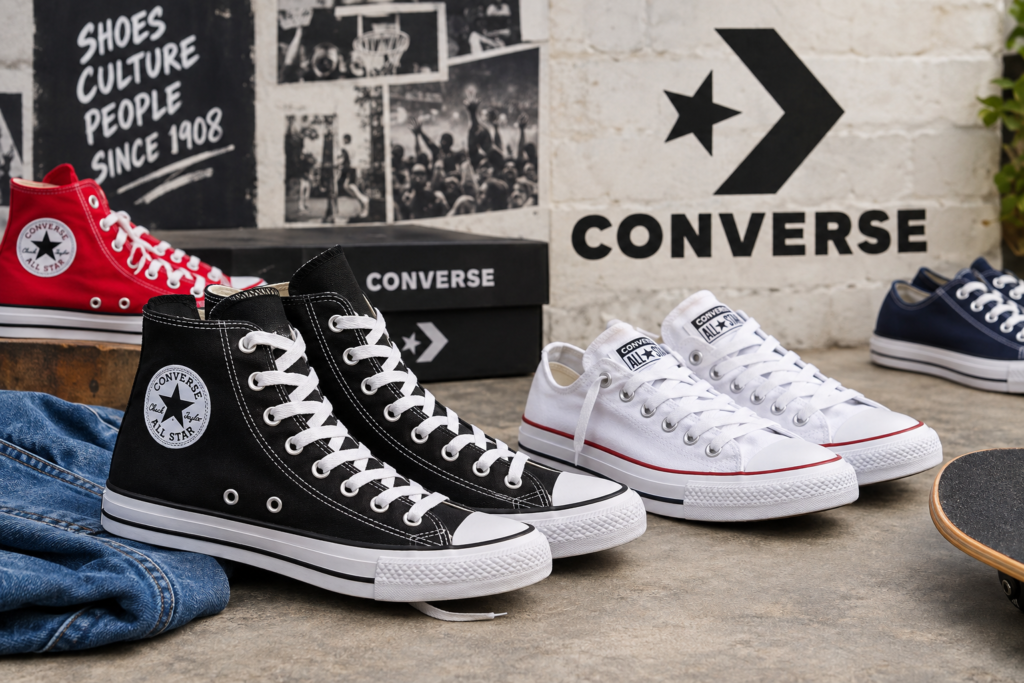
When people hear the word Converse, they often picture a simple pair of canvas sneakers with a rubber toe cap and a recognizable star logo. That image is understandable, but Converse is much more than a shoe. Over the years, the brand has become part of fashion, music, sports, youth culture, and everyday streetwear. Its ability to stay relevant while maintaining a recognizable identity is one of the most interesting things about its story.
Unlike many footwear brands that constantly reinvent their products, Converse has built much of its reputation around timeless designs. A pair of classic sneakers can look just as natural with jeans and a T-shirt as they can with a more carefully planned streetwear outfit. That versatility has helped the brand remain popular across different generations.
The story of Converse is also a story about change. What began with a strong connection to athletic footwear eventually developed into a global lifestyle brand. Today, Converse sneakers appear everywhere from classrooms and concert venues to city streets and fashion collections. The brand’s success shows that a product does not always need to be complicated to become iconic.
The History of Converse
Converse has a long history that stretches back to the early twentieth century. The company was established in the United States in 1908 by Marquis Mills Converse. In its early years, the business focused on producing footwear designed for practical use, eventually moving toward shoes connected with athletics.
Basketball became especially important to the company’s development. As the sport grew in popularity, footwear designed specifically for basketball became increasingly valuable. Converse recognized this opportunity and developed shoes that would become strongly associated with the game.
The company’s basketball connection helped establish Converse as more than an ordinary footwear manufacturer. Its shoes became recognizable on courts, and athletes helped introduce them to wider audiences. This relationship between sport and popular culture would eventually become one of the foundations of the brand’s identity.
The Rise of the Chuck Taylor All Star
One of the most important chapters in Converse history involves the Chuck Taylor All Star. The shoe became closely associated with basketball player and salesman Chuck Taylor, whose involvement helped promote the design and improve its appeal among athletes.
The Chuck Taylor All Star eventually became one of the most recognizable sneaker designs in the world. Its canvas upper, rubber sole, circular ankle patch, and distinctive silhouette created a visual identity that was easy to recognize.
What makes the shoe particularly interesting is that its popularity eventually moved far beyond basketball. People began wearing it for everyday life, and the sneaker gradually developed a cultural identity independent of its original sporting purpose.
Why Converse Became So Iconic
There are several reasons Converse became such a lasting name in footwear. One of the biggest is simplicity. The basic design does not rely on excessive decoration or complicated technology. Instead, it uses a recognizable shape that has remained familiar for generations.
That simplicity makes Converse easy to style. A person can wear classic sneakers with denim, shorts, trousers, skirts, dresses, or casual workwear. Because the shoe does not demand a particular fashion style, it can adapt to different wardrobes.
Another reason is cultural history. Converse has appeared alongside musicians, artists, athletes, skaters, and other creative communities. Over time, this association gave the shoes a personality that went beyond their physical construction.
Converse and Basketball
Basketball played a major role in establishing Converse as a serious athletic footwear brand. During an important period in the development of basketball, Converse shoes became common on courts across the United States.
The Chuck Taylor All Star was particularly influential. Its high-top design provided a distinctive appearance, while its canvas construction and rubber outsole suited the standards of its era.
Although modern basketball shoes are dramatically different in terms of cushioning, stability, materials, and performance technology, the historical importance of Converse in basketball remains significant.
From Athletic Shoe to Lifestyle Sneaker
The transformation from basketball shoe to lifestyle sneaker did not happen overnight. As sports footwear evolved, athletes increasingly demanded advanced performance features. New generations of basketball shoes introduced specialized cushioning, support systems, and lightweight materials.
Converse’s classic designs, however, remained attractive for casual wear. Instead of disappearing as performance footwear changed, the shoes developed a different role.
This is one of the smartest aspects of the brand’s history. Converse did not need its classic sneakers to compete directly with every modern performance shoe. The company could instead benefit from the cultural value that its traditional designs had accumulated.
The Design Language of Converse
Converse has a very recognizable design language. The rubber toe cap, vulcanized-style sole, canvas construction, and star branding are immediately associated with the company.
The design is visually simple, but that simplicity is part of its strength. There is enough structure to make the shoe recognizable without making it difficult to combine with other clothing.
The brand has also produced many variations over the years. High-top and low-top versions give consumers different styling options, while changes in colors, prints, materials, and collaborations allow the basic concept to feel fresh.
High Tops vs. Low Tops
High-top Converse sneakers extend above the ankle and have traditionally been one of the brand’s most recognizable silhouettes. They create a stronger visual presence and often work particularly well with relaxed streetwear outfits.
Low-top versions have a shorter profile and can feel slightly lighter and more understated. They are popular with people who want the general Converse aesthetic without the additional height around the ankle.
Neither style is universally better. The right choice depends on personal preference, clothing, and the look someone wants to create.
Popular Converse Styles
Over the years, Converse has developed a broad range of footwear. Some designs remain closely connected to the classic Chuck Taylor identity, while others offer modern interpretations.
The Chuck Taylor All Star remains perhaps the most recognizable. It is available in different heights, colors, materials, and seasonal editions.
The Chuck 70 is another important variation. It draws inspiration from earlier Converse designs while incorporating updates intended to provide a more refined feel. Details such as construction, materials, and finishing can distinguish it from the standard version.
Converse Run Star Designs
Converse has also experimented with more contemporary silhouettes. Run Star designs, for example, introduce exaggerated soles and a more fashion-forward appearance.
These shoes demonstrate how Converse can maintain recognizable brand elements while responding to modern sneaker trends. The result is something that feels connected to the traditional brand but does not look exactly like an old-school basketball sneaker.
This balance between heritage and experimentation has helped Converse attract consumers who appreciate both vintage-inspired fashion and modern streetwear.
Converse in Streetwear
Streetwear has played an enormous role in keeping Converse relevant. Streetwear often values authenticity, comfort, recognizable silhouettes, and cultural history, all of which fit naturally with Converse.
Classic sneakers can be combined with oversized shirts, hoodies, denim, cargo pants, relaxed trousers, and jackets. Their relatively simple appearance allows other parts of an outfit to stand out.
This flexibility is especially useful in modern fashion, where there are fewer strict rules about matching. Consumers can mix vintage, casual, athletic, and contemporary pieces without needing everything to come from the same style category.
Converse and Music Culture
Music has also contributed heavily to Converse’s cultural reputation. Over the decades, the shoes have appeared among musicians and fans associated with different genres.
Rock, punk, alternative, indie, and other music communities have often embraced simple canvas sneakers. Their understated appearance can communicate a relaxed attitude without looking overly polished.
Converse benefited from this connection because music culture is closely tied to personal identity. When a particular shoe becomes associated with creative communities, consumers may buy it not simply because of its construction but because of what it represents.
The Punk and Alternative Connection
Converse sneakers have a particularly strong relationship with punk and alternative fashion. Their straightforward design works naturally with band T-shirts, denim, leather jackets, and other pieces associated with these subcultures.
The shoes can look worn-in rather than overly pristine, which is another reason they fit naturally into alternative fashion. Scuffs and signs of use can become part of the character of the shoe.
This is quite different from sneaker cultures that place enormous importance on keeping footwear completely untouched. Converse often feels more personal when it develops a history through everyday wear.
How to Style Converse Sneakers
One of the biggest advantages of Converse is styling flexibility. A classic black or white pair can work with a huge number of outfits.
For a simple everyday look, try Converse with straight-leg jeans and a basic T-shirt. Add a casual jacket when the weather requires another layer. The result is uncomplicated but still stylish.
For a more streetwear-inspired outfit, pair high-top Converse with relaxed trousers, an oversized sweatshirt, and a structured jacket. The contrast between the simple shoe and larger clothing can create a balanced silhouette.
Converse With Jeans
Jeans and Converse are one of the easiest combinations in casual fashion. Slim, straight, relaxed, and wide-leg denim can all work depending on the silhouette of the shoe.
High-top sneakers can add visual interest when worn with cropped or cuffed jeans. Low tops can create a cleaner appearance with longer denim.
The key is not to overthink the combination. Converse already has a strong identity, so the rest of the outfit can remain relatively simple.
Converse With Dresses and Skirts
Converse sneakers can also be worn with dresses and skirts. This combination creates a casual contrast that can make an outfit feel more relaxed.
A simple dress with low-top sneakers can be suitable for everyday activities, while high-tops can add a more youthful streetwear influence.
The combination works because it mixes traditionally different style categories. Instead of treating sneakers as something reserved for trousers, modern fashion allows them to become part of almost any casual wardrobe.
Are Converse Comfortable?
Comfort is subjective, and different Converse models can feel noticeably different. Traditional canvas sneakers are relatively simple compared with modern running or athletic shoes, so people should not automatically expect the same level of cushioning.
However, many consumers appreciate Converse because of their straightforward construction and familiar feel. For casual activities and everyday walking, they can be comfortable for many people.
For long-distance walking, intense workouts, or activities requiring specialized support, it makes sense to choose footwear designed specifically for those purposes. Fashion sneakers and performance shoes do not always serve the same function.
Choosing the Right Converse Size
Getting the right size is important because fit can vary between different Converse models and individual preferences.
Some people prefer a close, secure fit, while others like additional room. High-top styles can also feel different from low-top versions because of their structure around the ankle.
When buying online, checking the specific model’s sizing information is a smart step. If possible, trying on the shoe can provide the most reliable indication of fit.
Understanding Width and Foot Shape
Foot shape also matters. Someone with a wider foot may experience a different fit from someone with a narrow foot, even when both purchase the same numerical size.
The way a person wears the shoe can also influence comfort. Thick socks, thin socks, loose lacing, and tight lacing all change the experience.
Rather than focusing only on the number printed inside the shoe, pay attention to how your heel, toes, and sides of the foot feel while walking.
Converse for Everyday Wear
Converse works particularly well as an everyday sneaker because it does not require a complicated outfit. It can become the kind of shoe you reach for when you want something reliable and casual.
A neutral pair is especially versatile. Black, white, cream, or other understated colors can work with a large portion of a typical wardrobe.
Colored Converse can be useful when someone wants footwear to become the focal point of an outfit. A bright sneaker can add personality without requiring a complete wardrobe change.
Converse and Personal Expression
One reason the brand has remained relevant is that its sneakers can feel personal. People often customize their Converse through laces, patches, drawings, pins, paint, or simply the natural marks created through wear.
This makes the sneaker different from highly polished fashion products that are expected to remain perfect.
For many people, a pair of Converse becomes a record of experiences. Concerts, school days, travel, work, weekends, and ordinary walks can all leave small marks on the shoes.
That sense of personal history is difficult for a brand to manufacture. It develops naturally through repeated use.
Converse Collaborations
Collaborations have become an important part of modern sneaker culture, and Converse has participated in many creative partnerships.
Collaborations allow the basic Converse identity to be interpreted through another designer, artist, fashion label, or cultural influence. This can produce limited designs that appeal to collectors as well as everyday consumers.
The appeal of collaborations often comes from scarcity and storytelling. People may want a particular pair because of the partnership behind it rather than simply because of the shoe’s basic design.
Caring for Converse Sneakers
Proper care can extend the life of Converse sneakers. Since many classic models use canvas, keeping them clean requires a little attention.
Regularly removing loose dirt can prevent buildup. A soft brush can be useful for surface cleaning, while a mild cleaning approach is generally safer than using harsh chemicals.
It is also important to follow the care guidance associated with the specific shoe. Different materials can require different cleaning methods.
Dealing With Scuffs and Dirt
Rubber sections of the shoe can accumulate visible marks, especially around the toe cap and sidewall. Gentle cleaning can help restore a cleaner appearance.
Canvas should be treated carefully. Excessive moisture or aggressive scrubbing can potentially affect the material.
At the same time, not every mark needs to be removed. Many Converse fans enjoy the worn-in appearance that develops naturally over time.
Converse in Modern Fashion
Fashion constantly changes, but Converse has shown an unusual ability to survive trends. One reason is that its classic designs do not depend entirely on a specific seasonal aesthetic.
A shoe that works with today’s casual clothing can often work with tomorrow’s trends as well. This gives Converse an advantage in a fashion environment where consumer preferences can change quickly.
The brand can participate in current trends through new silhouettes, collaborations, colors, and materials while keeping its classic designs available.
Why People Keep Buying Converse
People buy Converse for many different reasons. Some appreciate the history, while others simply like the appearance. Some consumers want a versatile everyday sneaker, while others connect with the brand through music or street culture.
There is also a psychological advantage to familiar products. When people know what a silhouette looks like and understand how it fits into their wardrobe, buying another pair becomes an easy decision.
That familiarity can create long-term loyalty without requiring the brand to constantly convince consumers that its identity has changed.
Converse for Different Generations
One of the most impressive aspects of Converse is its cross-generational appeal. Parents may remember wearing classic sneakers when they were younger, while younger consumers may discover the same silhouettes through current fashion.
The meaning can change from generation to generation. One person might see Converse as a nostalgic basketball shoe, another as a punk-inspired sneaker, and someone else as a basic everyday fashion choice.
That flexibility gives the brand a broad cultural lifespan.
Sustainability and Conscious Consumption
Modern consumers are increasingly interested in how products are made, how long they last, and what happens when they are no longer wanted.
For sneaker buyers, durability and responsible purchasing can be important considerations. Buying footwear that fits your actual lifestyle and maintaining it properly can help reduce unnecessary replacement.
Consumers who are concerned about sustainability should also look at the materials, manufacturing information, care instructions, and current environmental initiatives associated with the specific product they are considering.
Is Converse Still Relevant?
Absolutely. Converse remains relevant because it has managed to preserve its recognizable heritage while allowing its products to evolve.
The brand does not need to chase every trend. Its classic silhouettes already have strong cultural recognition, and newer designs can attract people looking for something different.
That combination of history and flexibility is difficult to achieve. Many products become outdated when trends change, but Converse has repeatedly found ways to make familiar designs feel appropriate in new cultural environments.
The Future of Converse
The future of Converse will likely continue to involve a balance between heritage and experimentation. Classic silhouettes are unlikely to disappear because they represent such an important part of the brand’s identity.
At the same time, consumers continue to expect new ideas. Modern materials, updated construction, new shapes, collaborations, and changing fashion preferences will influence future releases.
The strongest path for the brand is probably not abandoning its history but using that history as a foundation for innovation.
Final Thoughts on Converse
Converse is much more than a sneaker company with a famous canvas shoe. Its history connects sports, music, fashion, youth culture, streetwear, and personal expression.
The brand’s most recognizable designs have survived because they are simple, adaptable, and culturally meaningful. A pair of Converse can look classic without feeling outdated, casual without looking careless, and familiar without being boring.
That is ultimately what makes Converse special. The shoes give people a foundation for their own style rather than forcing them into one particular identity. Whether someone wears them with jeans, dresses, shorts, workwear, or relaxed streetwear, the sneaker can become part of the person’s individual story.
In a fashion industry filled with constant change, Converse demonstrates the value of having a strong identity. Trends may come and go, but a well-designed classic can continue finding new audiences. That ability to evolve without losing recognition is the real reason Converse remains one of the most recognizable names in footwear.
YOU MAY HAVE MISSED