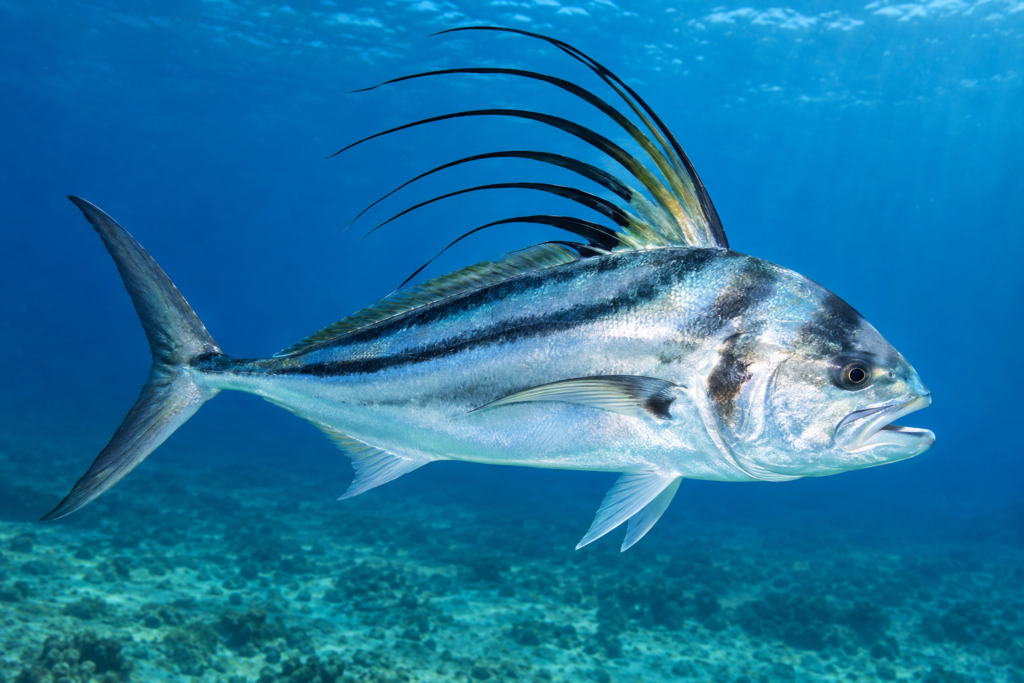
Introduction to Rooster Fish
The rooster fish is one of the most recognizable and exciting fish found in the tropical waters of the eastern Pacific Ocean. Known for its unusual dorsal fin, powerful swimming ability, and aggressive hunting behavior, this remarkable species has become a favorite among sport anglers and marine life enthusiasts. Its distinctive appearance makes it easy to recognize, even among the many other predatory fish that inhabit warm coastal waters.
Scientifically known as Nematistius pectoralis, the rooster fish belongs to the family Nematistiidae. It gets its common name from the long, separated dorsal fin rays that rise above its back and resemble the comb of a rooster. These rays create a striking silhouette when the fish swims near the surface, making it one of the most visually distinctive coastal game fish in the world.
Rooster fish are especially popular in countries such as Mexico, Costa Rica, Panama, and other parts of Central America. Anglers travel to these destinations to experience the challenge of catching one, while researchers and underwater photographers appreciate the species for its behavior and appearance. Whether you are interested in fishing, marine biology, ocean conservation, or simply learning about unusual sea creatures, the rooster fish offers plenty to explore.
Let’s go through its appearance, habitat, diet, behavior, fishing techniques, and ecological importance to understand what makes this fish so special.
What Is a Rooster Fish?
A rooster fish is a large marine predatory fish that inhabits tropical and subtropical coastal waters of the eastern Pacific Ocean. It is best known for its distinctive dorsal fin, which features several long, separated rays that extend above the body like a comb. This unusual feature separates it from many other popular saltwater game fish.
Rooster fish have streamlined bodies that allow them to move quickly through the water while chasing prey. Their powerful tails provide the acceleration needed to pursue smaller fish along beaches, rocky shorelines, and underwater structures. Although they can be found in different coastal environments, they are particularly associated with relatively shallow water near land.
The species is also well known among recreational anglers because it can put up a strong fight when hooked. Rather than being valued primarily as a food fish, the rooster fish is often sought after for sport fishing and catch-and-release experiences. Its distinctive appearance and challenging behavior have helped establish it as an iconic species in many Pacific fishing destinations.
Scientific Classification of Rooster Fish
Understanding the scientific classification of rooster fish helps explain where the species fits within the wider animal kingdom. Its scientific name, Nematistius pectoralis, is used by researchers, marine biologists, and fisheries professionals to identify the species accurately.
The rooster fish belongs to the class Actinopterygii, which includes ray-finned fishes. These fish have fins supported by bony rays rather than the fleshy fin structures found in certain other fish groups. Within this broad class, the rooster fish is placed in the order Carangiformes under widely used modern classifications.
Its family, Nematistiidae, is unusual because it contains only the rooster fish as its living representative. This makes the species particularly interesting from a taxonomic perspective. Although its body shape may remind people of jacks and other fast-swimming coastal predators, its distinctive characteristics make it readily identifiable as a separate species.
Scientific names are especially useful because common names can vary between countries and fishing communities. By using Nematistius pectoralis, scientists can discuss the same species without confusion, regardless of the local language or regional nickname.
Physical Appearance of Rooster Fish
The physical appearance of rooster fish is the main reason they attract so much attention. Their bodies are elongated and muscular, with a silvery base color and darker vertical markings along their sides. Depending on lighting, water conditions, and the fish’s condition, these markings may appear more or less prominent.
One of the most striking characteristics is the tall dorsal fin. Several long rays rise from the back and form a comb-like structure, giving the fish its memorable name. These rays may become more noticeable when the fish is excited or displaying its fins, creating a dramatic appearance that is particularly impressive underwater.
Rooster fish also have strong jaws, a relatively large mouth, and a powerful tail. Their body shape is well suited to chasing prey in open water and along coastal edges. Although the fish looks streamlined, its muscular construction provides the strength required for sudden bursts of speed and forceful changes in direction.
Their coloration helps them blend into the marine environment to some extent. The silvery sides reflect surrounding light, while darker markings break up the outline of the body. This combination may make it more difficult for prey to recognize the approaching predator against changing backgrounds.
How Big Can a Rooster Fish Grow?
Rooster fish can grow to impressive sizes, which contributes to their reputation as powerful saltwater game fish. Many individuals encountered by recreational anglers are smaller than the largest recorded specimens, but even moderately sized rooster fish can be surprisingly strong.
Adult rooster fish commonly reach several feet in length, and large individuals can weigh dozens of pounds. Exceptional specimens have been reported at weights exceeding 100 pounds, although such fish are uncommon. Size depends on factors such as age, food availability, habitat quality, and local environmental conditions.
Their size makes them capable predators of a variety of coastal fish species. A larger rooster fish can pursue substantial prey and cover considerable distances while hunting. Its powerful body and tail also help it resist the pressure applied by an angler during a fight.
It is important to remember that an impressive fish is not necessarily an old fish, and length alone cannot establish its exact age. Scientists generally need more specialized biological information to determine age and growth patterns reliably. For anglers, using appropriate tackle and handling methods helps protect larger fish when they are released.
Where Do Rooster Fish Live?
Rooster fish are native to the eastern Pacific Ocean, where they inhabit warm coastal waters. Their range extends from the southern parts of Baja California and the Gulf of California through Mexico and Central America and into parts of South America, including waters near Ecuador and Peru.
They are frequently associated with beaches, sandy shorelines, rocky points, reefs, and other coastal structures. These areas often support large populations of smaller fish, providing the rooster fish with opportunities to hunt. The combination of suitable water temperatures, prey availability, and coastal habitat makes these locations attractive to the species.
Rooster fish may also be encountered near river mouths and areas where freshwater enters the sea. Such locations can attract baitfish and create productive feeding grounds. However, the presence of rooster fish in a particular area can change according to season, ocean conditions, and the movement of prey.
Although the species is most closely associated with coastal habitats, it should not be assumed that every rooster fish remains in the same small area throughout its life. Individual movement patterns can vary, and further research is useful for understanding how different populations use coastal environments.
Rooster Fish in Mexico
Mexico is one of the most famous destinations for rooster fish fishing. The Pacific coastline offers numerous environments where these predators can hunt, including sandy beaches, rocky headlands, reefs, and productive nearshore waters. The Baja California peninsula and areas along Mexico’s mainland Pacific coast are particularly well known among anglers.
The East Cape region of Baja California Sur has earned a strong reputation for rooster fish encounters. Anglers often look for feeding activity near beaches, where schools of baitfish may attract predators into shallow water. The sight of a large rooster fish chasing prey close to shore is one of the experiences that makes the region popular with sport fishermen.
Other coastal destinations in Mexico can also provide opportunities, depending on local conditions and seasonal patterns. Fishing success varies from day to day, so the presence of a famous fishing location does not guarantee a catch. Water temperature, baitfish movements, wind, and tides can all influence the experience.
Travelers planning a rooster fish trip should choose responsible fishing operators who understand local regulations and prioritize fish welfare. Asking about catch-and-release practices, permitted fishing methods, and seasonal restrictions can help ensure that the experience supports long-term fishing opportunities.
Rooster Fish in Costa Rica
Costa Rica is another well-known destination for rooster fish enthusiasts. Its Pacific coastline contains a variety of coastal habitats, including beaches, rocky points, islands, and productive nearshore waters. These environments support diverse marine life and provide opportunities for anglers seeking challenging sport fish.
Areas along the Nicoya Peninsula and the southern Pacific coast are frequently discussed among rooster fish anglers. Depending on conditions, fish may be found around rocky structures, sandy beaches, and locations where baitfish gather. Local guides often use their knowledge of tides, weather, and seasonal feeding patterns to select productive areas.
Rooster fish fishing can be an exciting part of a broader Costa Rican fishing trip. Visitors may encounter other coastal species during the same outing, depending on location and technique. Nevertheless, the rooster fish remains a special target because of its appearance, strength, and association with shallow-water fishing.
Responsible tourism is important in these areas. Choosing operators who handle fish carefully, follow local rules, and avoid unnecessary harm to marine habitats helps protect the natural attractions that bring visitors to Costa Rica in the first place.
What Do Rooster Fish Eat?
Rooster fish are carnivorous predators that primarily feed on smaller fish. Their diet can include sardines, anchovies, mullet, and other baitfish that occur in their coastal habitats. The precise composition of their diet depends on what prey is available in a particular location.
Their hunting behavior is closely connected to the movement of baitfish schools. When small fish gather near beaches, reefs, or rocky structures, rooster fish may move into the area to feed. They use their speed, strength, and ability to change direction quickly to pursue individual prey or attack groups of smaller fish.
Like many marine predators, rooster fish are opportunistic feeders. They do not necessarily rely on one specific prey species throughout the year. Instead, their feeding activity may change as different fish become more abundant or move through the local environment.
Their position in the coastal food web makes them ecologically important. By consuming smaller fish, they participate in the transfer of energy through the marine ecosystem. Changes in prey abundance may influence their feeding patterns, growth, and distribution.
How Do Rooster Fish Hunt?
Rooster fish use a combination of speed, vision, and muscular power to capture prey. Their streamlined bodies allow them to accelerate quickly, while their strong tails help them pursue baitfish through changing currents and around coastal structures.
When baitfish gather in shallow water, rooster fish may approach from below, behind, or alongside the school. They can make sudden movements to separate an individual fish from the group. These bursts of speed can make an attack difficult for prey to avoid, especially when escape routes are limited by the shoreline or underwater structure.
The environment plays an important role in their hunting strategy. Beaches and rocky points can concentrate prey into relatively small areas, making them attractive feeding locations. Tides and currents may also move baitfish along the coast, creating temporary opportunities for predators to feed.
Although rooster fish are powerful hunters, their success depends on the availability of prey and favorable conditions. They cannot capture every fish they pursue, and prey species have their own defenses, including schooling behavior and rapid escape movements.
The Unique Dorsal Fin of Rooster Fish
The tall dorsal fin is the rooster fish’s defining physical feature. Its long rays rise above the back and create a shape that resembles the comb of a rooster. This unusual structure makes the species easy to recognize in photographs, fishing reports, and underwater observations.
The dorsal fin is part of the fish’s overall fin system, which helps it maintain stability and control while swimming. Fins contribute to steering, balancing, and maneuvering, although the specific functional significance of the rooster fish’s elongated rays requires careful scientific interpretation.
The long rays are particularly noticeable when the fish is viewed from the side or when it raises the fin. In clear water, the silhouette can appear almost like a row of spikes above the body. This feature is one reason rooster fish are so popular with underwater photographers and anglers who appreciate unusual marine animals.
The dorsal fin also gives the species a recognizable identity among coastal predators. Many fish have streamlined bodies and forked tails, but relatively few possess such a distinctive combination of long dorsal rays and vertical body markings.
Rooster Fish Behavior and Temperament
Rooster fish are active predators that spend much of their time searching for food in coastal environments. Their movements are often linked to the distribution of baitfish, local currents, and the structure of the shoreline. They may appear near the surface while feeding or move through deeper water when conditions change.
Their reputation as aggressive fish largely comes from their predatory behavior and the powerful fights they deliver when hooked. However, it is useful to distinguish hunting behavior from unnecessary aggression. Rooster fish pursue prey to obtain food, and their response to a fishing lure is part of a complex interaction involving movement, visual cues, and feeding motivation.
Rooster fish may be encountered individually or in small groups, depending on their size, age, and local conditions. The presence of multiple fish near a baitfish school can create an especially exciting sight for observers. Their behavior is not identical in every location, and marine researchers continue to study the movement and ecology of many coastal predators.
Like other wild animals, rooster fish should be observed respectfully. Divers and snorkelers should avoid chasing or cornering them, while anglers should minimize handling time and return released fish to the water promptly.
Is Rooster Fish Good for Fishing?
Rooster fish are highly regarded as sport fish because they combine impressive strength, speed, and a distinctive appearance. Catching one can be a memorable experience, particularly when the fish is encountered in shallow water where its movements are easy to see.
Many anglers consider rooster fish a challenging target because they can make powerful runs and change direction suddenly. Their strength requires suitable tackle, reliable knots, and an appropriate drag setting. A poorly prepared setup may increase the risk of losing the fish or causing unnecessary injury.
The species is particularly appealing to anglers who enjoy sight fishing. This approach involves spotting fish or feeding activity before presenting a bait or lure. When conditions are clear and the fish are actively chasing prey, the experience can be visually exciting as well as technically demanding.
Rooster fish fishing also encourages anglers to learn about tides, baitfish movements, and coastal habitat. These skills are useful for many types of saltwater fishing. A successful trip depends not only on equipment but also on patience, observation, and an understanding of the local marine environment.
Best Fishing Techniques for Rooster Fish
Several fishing methods can be effective for rooster fish, depending on the location, water conditions, and behavior of the target fish. Common approaches include live-bait fishing, casting artificial lures, and trolling near suitable coastal structures. Each method has advantages, and experienced anglers often adjust their approach throughout the day.
Live-bait fishing is popular because it presents prey that resembles the fish’s natural food. Anglers may use locally appropriate baitfish where regulations permit. The bait should be presented in a way that allows natural movement, and equipment should be matched to the expected size of the fish.
Artificial lures can also be effective. Surface plugs, swimming lures, and other baitfish imitations may attract rooster fish when they are actively feeding. The best choice depends on water clarity, depth, current, and the size of the prey fish in the area.
Trolling can help anglers cover a larger area while searching for active predators. However, it may be less suitable in very shallow or crowded locations, where casting or live-bait presentations provide better control. Regardless of the technique, anglers should follow local regulations and use tackle that allows them to land and release fish efficiently.
Choosing the Right Fishing Gear
Selecting appropriate fishing gear is essential when targeting rooster fish. Because the species can grow large and fight hard, anglers should choose a rod, reel, line, and leader that can handle the likely conditions. Equipment that is too light may prolong the fight and increase the risk of exhaustion or injury to the fish.
A strong saltwater spinning setup is a common choice for casting lures and fishing with bait. The rod should have enough strength to control the fish without becoming difficult to use for extended periods. A reliable reel with a smooth drag system helps manage sudden runs while reducing the risk of line failure.
Line selection depends on the fishing method, the size of the fish, and the presence of rocks or other abrasive structures. Braided line offers high strength for its diameter, while a suitable leader provides additional protection against abrasion. Knots should be tied carefully and checked before every trip.
Saltwater equipment also requires regular maintenance. Rinsing rods and reels with fresh water after use helps remove salt deposits, while periodic inspections can identify corrosion, damaged guides, or worn line before they cause problems.
What Is the Best Time to Catch Rooster Fish?
The best time to catch rooster fish varies by destination and local environmental conditions. Warm coastal waters and active baitfish populations often create favorable opportunities, but no single month guarantees success throughout the species’ range.
Tides can be especially important when fishing near beaches, rocky points, and shallow structures. Moving water may help concentrate prey or move baitfish along the shoreline. Some anglers prefer fishing during periods when the tide is actively changing, but the most productive stage can differ between locations.
Time of day may also affect feeding activity. Early morning and late afternoon can offer favorable conditions in certain areas, particularly when baitfish are active near the surface. Nevertheless, rooster fish can feed at other times, and weather, water clarity, and prey availability may be more important than a fixed schedule.
Before planning a trip, anglers should consult experienced local guides and recent fishing reports. These sources can help identify seasonal patterns, current restrictions, and suitable fishing areas. Checking the forecast and preparing for changing conditions also improves safety and enjoyment.
Rooster Fish Compared With Other Game Fish
Rooster fish are sometimes compared with other popular saltwater game fish, including jack crevalle, giant trevally, and various members of the jack family. These fish share certain characteristics, such as muscular bodies, powerful tails, and predatory feeding habits, but they differ in appearance, distribution, and behavior.
The rooster fish stands out because of its long dorsal rays and vertical markings. Jack crevalle, by comparison, have a more conventional dorsal-fin profile and a different body pattern. Giant trevally are famous for their size and strength in Indo-Pacific waters, whereas rooster fish are associated primarily with the eastern Pacific.
Their preferred fishing environments may overlap in some broad ways, but their geographical ranges differ substantially. An angler traveling to Mexico or Costa Rica for rooster fish is exploring a different marine region from someone targeting giant trevally around tropical islands in the Indo-Pacific.
Comparisons are useful for understanding the unique features of each species, but they should not be used to assume that every fish behaves identically. Successful fishing requires knowledge of the target species, its habitat, and the local conditions rather than relying entirely on similarities between predators.
Can You Eat Rooster Fish?
Rooster fish can be eaten, but they are not generally as celebrated for their table quality as some other popular food fish. Their appeal is primarily associated with sport fishing, and many anglers choose to release their catches rather than keep them for consumption.
The texture and flavor of any fish depend on factors such as size, freshness, handling, and preparation. If a rooster fish is legally retained, it should be handled hygienically and kept properly chilled. Prompt care after capture helps maintain quality and reduces food-safety risks.
Before keeping one, anglers should check the applicable local rules. Regulations may address size limits, catch limits, permitted fishing methods, or protected areas. Rules can vary by jurisdiction and may change over time, so current official guidance is more reliable than outdated advice from fishing forums.
For anglers who prioritize the sporting experience, catch-and-release fishing provides a way to enjoy rooster fish without retaining the animal. When practiced carefully, this approach can help reduce harvest pressure, although survival after release still depends on factors such as hook placement, fight duration, and handling conditions.
Catch-and-Release Practices for Rooster Fish
Catch-and-release fishing is popular among rooster fish anglers because the species is highly valued as a game fish. Releasing a fish allows it to return to its habitat, where it may continue feeding, growing, and contributing to the local ecosystem. However, successful release requires more than simply putting the fish back in the water.
Using suitable tackle is an important first step. Landing a fish efficiently can reduce the duration of the fight and help limit exhaustion. Anglers should avoid unnecessarily light equipment when large fish are expected, particularly in warm water where prolonged exertion can be stressful.
Handling should be kept to a minimum. Wet hands, a suitable landing method, and support for the fish’s body can help reduce damage to its protective mucus layer and other tissues. If a photograph is desired, it is best to prepare the camera before lifting the fish and keep the fish out of the water for as little time as possible.
Hook removal also matters. Barbless hooks or appropriately designed circle hooks may simplify release in some fishing situations, depending on the method being used. If a hook is deeply embedded and removing it would cause significant injury, cutting the line close to the hook may sometimes be the less harmful option. Local guidance and the particular situation should determine the safest approach.
Threats Facing Rooster Fish Populations
Like other coastal predators, rooster fish depend on healthy marine ecosystems and sufficient prey. Changes in habitat quality, fishing pressure, pollution, and coastal development can influence the conditions in which they live. The effects may differ between regions, making local monitoring important.
Overfishing can be a concern when fish are harvested faster than populations can replace them. Large predatory fish may be especially vulnerable to repeated capture because they take time to grow and reproduce. Even when a fishery focuses on sport fishing, excessive pressure and poor handling practices can affect individual survival and local populations.
Coastal habitat changes may also influence rooster fish indirectly. Damage to reefs, deterioration of water quality, and changes in the abundance of smaller fish can affect feeding opportunities. Because marine food webs are interconnected, impacts on one part of the ecosystem may eventually affect predators higher up the food chain.
It is important not to assume that every rooster fish population faces the same level of risk. Assessing conservation status requires reliable scientific evidence, including information about population trends, reproduction, catch levels, and distribution. Responsible fishing practices and continued research can help improve understanding of the species.
Conservation and Sustainable Fishing
Sustainable fishing aims to maintain healthy fish populations while allowing people to enjoy marine resources responsibly. For rooster fish, this means following applicable regulations, avoiding unnecessary harvest, and supporting practices that reduce harm to individual fish and their habitat.
Anglers can contribute by learning the rules that apply to their destination before fishing. These may include restrictions on particular areas, gear requirements, catch limits, or seasonal closures. A reputable local guide can explain relevant regulations and help visitors avoid practices that may damage sensitive habitats.
Catch-and-release fishing can be part of a conservation-minded approach, but it is not automatically harmless. Fish may suffer stress or injury during capture, especially when fights are prolonged or handling is careless. Using appropriate gear, minimizing air exposure, and releasing fish promptly can improve their chances of survival.
Protecting the habitats that support baitfish and other marine organisms is equally important. Responsible coastal tourism, reduced pollution, and protection of sensitive marine environments can help preserve the ecological conditions on which rooster fish and many other species depend.
Interesting Facts About Rooster Fish
Rooster fish have several characteristics that make them stand out among coastal predators. Their distinctive dorsal fin is the most obvious feature, but their geographic distribution and reputation among anglers are also important parts of their identity.
First, rooster fish are native to the eastern Pacific rather than being naturally widespread throughout all tropical oceans. This makes destinations such as Mexico and Costa Rica particularly well known among anglers who want to encounter the species in its natural habitat.
Second, the species is prized for sport rather than being one of the most commercially important food fish. Many fishing trips are organized specifically around the opportunity to catch and release a rooster fish, especially a large specimen displaying its characteristic dorsal fin.
Third, rooster fish are adapted to life as active predators. Their streamlined bodies and strong tails support rapid movement, while their diet of smaller fish connects them to the wider coastal food web. Their feeding behavior reflects the availability of prey and the conditions of the environment.
Finally, their striking appearance makes them valuable to underwater photographers and marine enthusiasts. A rooster fish swimming near a sandy beach or rocky point can be an unforgettable sight, even for someone who has no interest in fishing.
Tips for Planning a Rooster Fish Fishing Trip
Planning a rooster fish fishing trip starts with choosing a destination that offers suitable habitat and experienced local operators. Mexico and Costa Rica are among the best-known options, but the ideal location depends on your budget, travel preferences, and the time of year you intend to visit.
Research the seasonal patterns before booking. Rooster fish availability can change with water temperature, baitfish movements, and other environmental conditions. Local fishing reports can provide useful guidance, but they should be treated as indicators rather than guarantees.
Next, select a guide or charter service that understands rooster fish behavior and practices responsible fishing. Ask about the type of boat used, the fishing methods offered, the equipment supplied, and the operator’s approach to catch-and-release handling. Clear answers can help you choose a service that matches your experience level.
Finally, prepare for the conditions. Sun protection, drinking water, suitable clothing, and motion-sickness precautions may be important depending on the trip. Bring or confirm access to appropriate fishing gear, and review local regulations before departure. A well-planned trip is more enjoyable when safety and conservation are considered alongside the excitement of catching a large fish.
Frequently Asked Questions About Rooster Fish
1. What is a rooster fish?
A rooster fish is a predatory saltwater species scientifically known as Nematistius pectoralis. It lives in the eastern Pacific Ocean and is famous for its tall, comb-like dorsal fin, silvery body, and dark vertical markings. It is particularly popular among sport anglers.
2. Why is it called a rooster fish?
The fish receives its common name from the long dorsal-fin rays that extend above its back. These rays resemble the comb of a rooster, creating a distinctive silhouette that is easy to recognize.
3. Where can you catch rooster fish?
Rooster fish are found along the eastern Pacific coast, including areas near Mexico, Costa Rica, Panama, and parts of South America. The Baja California peninsula and several Costa Rican coastal destinations are well known for rooster fish fishing.
4. How large can a rooster fish get?
Rooster fish can reach several feet in length and weigh dozens of pounds. Exceptional individuals have been reported at weights exceeding 100 pounds, although such specimens are rare.
5. What do rooster fish eat?
Their diet consists mainly of smaller fish, including various baitfish. Depending on local conditions, they may pursue sardines, anchovies, mullet, and other available prey.
6. Are rooster fish difficult to catch?
They can be challenging because of their strength, speed, and sudden runs. Anglers benefit from suitable tackle, reliable knots, knowledge of local conditions, and patience.
7. Can you eat rooster fish?
Rooster fish can be consumed, but they are more widely valued as sport fish than as premium table fish. Anyone considering keeping one should check local fishing regulations and handle the catch safely.
8. Is catch-and-release fishing recommended for rooster fish?
Many anglers favor catch-and-release because of the species’ sporting value. To improve survival, use suitable tackle, minimize handling and air exposure, and return the fish to the water promptly.
9. What is the best bait for rooster fish?
Live baitfish can be effective when permitted and locally available. Artificial lures that imitate small fish can also work, particularly when rooster fish are actively feeding near the surface or along coastal structures.
10. Are rooster fish dangerous to humans?
Rooster fish are wild predators, but they are not generally considered a major threat to people. As with any large fish, anglers should handle them carefully to avoid injury from sudden movement, hooks, or sharp equipment.
Conclusion
The rooster fish is one of the most distinctive predators found in the eastern Pacific Ocean. Its unusual dorsal fin, powerful swimming ability, and impressive fighting strength have made it a favorite among sport anglers and marine life enthusiasts. From the coastal waters of Mexico to the beaches of Costa Rica, it continues to attract people who want to experience the excitement of encountering a remarkable wild fish.
Beyond its reputation as a game fish, the rooster fish plays a role in the coastal marine food web by feeding on smaller fish. Its health and distribution are connected to the condition of the habitats in which it lives, the availability of prey, and the pressures created by human activities.
For anglers, learning about rooster fish involves more than choosing the right rod or finding a productive fishing location. Understanding its behavior, respecting local regulations, and practicing responsible catch-and-release techniques can make fishing more rewarding while reducing unnecessary harm.
Whether you are researching marine wildlife, planning a saltwater fishing adventure, or simply curious about this unusual species, the rooster fish is an excellent example of the diversity and power of ocean life. Respecting its habitat and supporting sustainable fishing practices can help preserve opportunities to observe and appreciate this remarkable predator for years to come.
YOU MAY HAVE MISSED