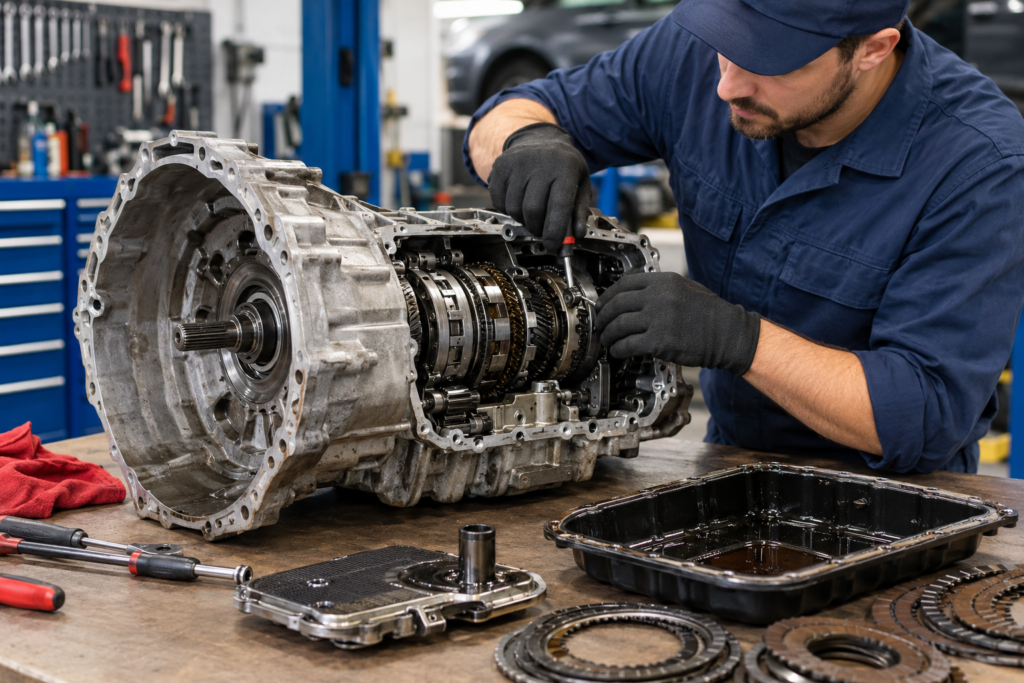
Introduction to Transmission Repair
Transmission repair is an essential part of vehicle maintenance because the transmission helps transfer engine power to the wheels. Whether you drive a car with an automatic, manual, or continuously variable transmission (CVT), this system plays a major role in your vehicle’s performance, fuel efficiency, and overall driving experience. When the transmission starts developing problems, you may notice unusual noises, delayed gear changes, slipping gears, or difficulty accelerating.
Many drivers ignore early transmission warning signs because their vehicles may continue running despite having an underlying problem. Unfortunately, delaying repairs can turn a relatively minor issue into an expensive mechanical failure. Understanding how the transmission works and recognizing symptoms early can help you protect your vehicle and avoid unnecessary expenses.
The good news is that not every transmission problem requires a complete replacement. Sometimes, a fluid service, electrical repair, sensor replacement, or adjustment can resolve the issue. The right solution depends on the vehicle’s design, its maintenance history, the symptoms you experience, and the results of a professional diagnostic inspection.
In this guide, we will explore everything you need to know about transmission repair, including common warning signs, repair options, estimated costs, maintenance practices, and advice for choosing a reliable repair shop. Let’s go!
What Is a Transmission and How Does It Work?
A transmission is a mechanical system that controls how engine power reaches the vehicle’s wheels. Engines operate most efficiently within particular speed ranges, so the transmission changes gear ratios to help the vehicle accelerate, climb hills, maintain cruising speed, and operate under different driving conditions.
In an automatic transmission, the system changes gears without requiring the driver to operate a clutch pedal or manually select every gear. Depending on the design, it may use planetary gearsets, clutches, hydraulic pressure, electronic controls, and a torque converter. Modern automatic transmissions also rely on sensors and computer modules to determine when gear changes should occur.
A manual transmission works differently because the driver selects gears using a gear lever and operates a clutch pedal to temporarily disconnect engine power during shifting. A CVT uses a variable ratio rather than a fixed set of conventional gears, allowing the engine and wheels to operate at different speed relationships. Although these systems have different designs, all require proper lubrication, accurate control, and regular maintenance.
Common Signs That Your Vehicle Needs Transmission Repair
1. Delayed Gear Engagement
One common warning sign is a delay between selecting a gear and feeling the transmission engage. For example, you might shift from Park to Drive and wait several seconds before the vehicle begins moving. A similar delay may occur when selecting Reverse.
Delayed engagement can result from low transmission fluid, internal pressure problems, worn components, or a malfunctioning control system. In some vehicles, software issues or failing electronic components can also affect gear engagement.
If this happens repeatedly, arrange a diagnostic inspection rather than repeatedly shifting between gears to force engagement. Continuing to drive with a serious engagement problem may increase internal wear and worsen the damage.
2. Slipping Gears
Transmission slipping occurs when the selected gear does not remain engaged as expected. You may notice the engine speed increasing without a corresponding increase in vehicle speed. The vehicle might also struggle to maintain speed or unexpectedly change gears while driving.
Possible causes include worn clutch components, insufficient hydraulic pressure, contaminated fluid, damaged internal parts, or electronic control faults. In manual vehicles, a slipping clutch can produce similar symptoms even when the transmission itself is not the primary problem.
Slipping should never be ignored, particularly when it occurs during acceleration or merging into traffic. A vehicle that cannot deliver power consistently may become difficult to control in demanding driving situations.
3. Unusual Noises
A healthy transmission generally operates without loud grinding, whining, clunking, or persistent rattling. New noises may indicate a lubrication problem, worn bearings, damaged gears, failing internal components, or issues with related drivetrain parts.
Grinding during gear changes in a manual vehicle may point to clutch or synchronizer problems. Whining in an automatic transmission can have several causes, including fluid pressure problems or worn components. However, differential, wheel-bearing, and engine noises can sometimes sound similar.
Pay attention to when the noise occurs. Whether it appears during acceleration, braking, gear selection, or steady cruising can help a technician narrow down the cause. Avoid assuming that every unusual noise means the transmission needs replacement.
4. Fluid Leaks
Transmission fluid helps lubricate components, carry heat away, and maintain hydraulic pressure in many transmission designs. A leak can reduce fluid levels and prevent the system from operating correctly.
Depending on the fluid type and vehicle, a leak may leave red, pink, amber, brown, or another colored mark beneath the vehicle. Color alone cannot confirm that the liquid is transmission fluid because engine oil, coolant, and other automotive fluids may have similar appearances.
If you notice a leak, have its source identified promptly. Common leak points include seals, gaskets, fluid lines, and transmission pans. Do not crawl beneath a vehicle supported only by a jack, and do not continue driving if the transmission is losing substantial fluid or behaving abnormally.
5. Warning Lights on the Dashboard
Modern vehicles use electronic control modules to monitor transmission operation. When the system detects a problem, it may illuminate the check engine light, a transmission warning light, or another relevant indicator.
The warning may be associated with a faulty sensor, wiring problem, solenoid issue, overheating, incorrect gear ratios, or a mechanical fault. Some vehicles also enter a reduced-power or limited-gear mode to protect the transmission.
A diagnostic scan can retrieve stored trouble codes and help identify where further testing is needed. However, a trouble code does not automatically identify the failed part. A qualified technician should verify the cause before recommending a repair.
Common Causes of Transmission Problems
Low or Contaminated Transmission Fluid
Transmission fluid is essential for lubrication, cooling, and hydraulic operation in many conventional automatic transmissions. When the level falls below the recommended range, internal pressure may become inconsistent, and certain components may not operate correctly.
Fluid can become contaminated or lose its intended properties over time because of heat, wear particles, and oxidation. Darkened fluid or a burnt odor may indicate overheating or deterioration, although appearance alone cannot establish the full condition of the transmission.
The correct fluid specification and checking procedure depend on the vehicle. Some transmissions use a dipstick, while others require a specific temperature and service procedure to check the level. Always follow the manufacturer’s recommendations rather than adding an arbitrary fluid.
Worn Internal Components
Over time, friction materials, bearings, gears, seals, and other transmission components can wear. Heavy loads, aggressive driving, overheating, insufficient lubrication, and neglected maintenance may accelerate this process.
In automatic transmissions, worn clutch packs or other internal components can cause slipping and poor gear engagement. Manual transmissions may develop worn synchronizers, bearings, or gears that make shifting difficult or noisy.
Internal wear sometimes requires partial disassembly or a complete transmission rebuild. The appropriate option depends on the severity of the damage, parts availability, labor requirements, and the overall condition of the vehicle.
Electrical and Sensor Failures
Modern transmissions depend on electronic systems to control shift timing, hydraulic pressure, and gear selection. Sensors monitor factors such as vehicle speed, engine speed, temperature, and throttle position.
A damaged wire, corroded connector, faulty speed sensor, or failing solenoid can create symptoms that resemble mechanical transmission failure. In certain cases, replacing the correct electrical component resolves the issue without major internal repairs.
Accurate diagnosis is especially important with electronically controlled transmissions. Replacing parts based on guesswork can waste money and leave the original problem unresolved.
Overheating
Excessive heat is one of the major threats to transmission reliability. Heavy towing, repeated stop-and-go driving, excessive loads, low fluid levels, cooling-system problems, and certain mechanical faults can contribute to high transmission temperatures.
Overheating may accelerate fluid degradation and damage seals and friction materials. If the vehicle repeatedly overheats its transmission, simply replacing the fluid without correcting the underlying cause may not prevent the problem from returning.
A technician may inspect cooling lines, heat exchangers, fluid condition, operating temperatures, and related systems to determine why the transmission is becoming too hot.
Different Types of Transmission Repair Services
Transmission Fluid Service
A transmission fluid service involves inspecting the fluid and replacing it according to the vehicle manufacturer’s requirements. Depending on the transmission and service procedure, the work may include replacing a filter, cleaning a pan, inspecting a magnet, and installing a new gasket.
Fluid service can help maintain proper lubrication and remove some accumulated contaminants. However, it cannot restore worn gears, damaged clutch packs, or other severely deteriorated mechanical components.
It is also important to distinguish a routine fluid service from a power flush. Different vehicles have different requirements, and an aggressive or inappropriate procedure may be unsuitable for a particular transmission. Ask the repair shop which method it recommends and why.
Solenoid and Sensor Replacement
Solenoids regulate fluid flow or pressure in many automatic transmissions. If a solenoid fails, the vehicle may shift harshly, hesitate, remain in a limited gear, or store a diagnostic trouble code.
Sensors provide information that helps the transmission control module make shifting decisions. If a sensor supplies incorrect information, the system may behave unpredictably even when major internal components remain serviceable.
Before replacing a solenoid or sensor, a technician should inspect the relevant wiring, connectors, power supply, and control signals. This approach helps prevent unnecessary parts replacement and improves the likelihood of a lasting repair.
Seal and Gasket Replacement
Seals and gaskets prevent transmission fluid from escaping through joints and moving components. Over time, heat, age, pressure, and wear may cause these parts to deteriorate.
Common leak locations include the transmission pan, output shaft seal, axle seals, cooler connections, and other joints. The repair may involve replacing a gasket, installing a new seal, or correcting damage to a mating surface.
Addressing leaks early can prevent fluid loss from becoming a larger mechanical problem. After the repair, the shop should verify the fluid level and check for leaks under appropriate operating conditions.
Clutch Repair for Manual Transmissions
A manual transmission uses a clutch to connect and disconnect the engine from the transmission. The clutch includes friction components and other parts that can wear through normal use.
Common symptoms of clutch trouble include slipping under acceleration, a high engagement point, difficulty selecting gears, unusual noises when operating the pedal, and a burning smell. Some of these symptoms can also arise from hydraulic clutch problems or other drivetrain faults.
Depending on the diagnosis, the repair may involve replacing the clutch disc, pressure plate, release bearing, hydraulic components, or a combination of parts. A technician should also inspect related components to avoid repeating the labor because an overlooked part fails shortly afterward.
Transmission Rebuild
A transmission rebuild involves disassembling the transmission, inspecting internal parts, and replacing components that are worn, damaged, or outside acceptable specifications. The process may include new friction materials, seals, gaskets, bearings, and other necessary parts.
A rebuild can be a practical alternative when the transmission housing and major components remain suitable for reuse. It also gives the repair shop an opportunity to identify multiple internal problems rather than addressing only one visible symptom.
The quality of a rebuild depends on the technician’s experience, the parts used, the accuracy of assembly, and the testing process. Before approving the work, ask for a written explanation of the rebuild scope, warranty terms, and any components that will not be replaced.
Transmission Replacement
Transmission replacement involves removing the existing unit and installing another transmission. Depending on the circumstances, the replacement may be new, remanufactured, rebuilt, or used.
Replacement may be appropriate when the original transmission has extensive damage, when rebuilding is uneconomical, or when a suitable replacement provides better value. The total cost depends on the transmission type, labor, parts availability, and any required programming or adaptation.
A replacement should include checks for the underlying cause of the original failure. If overheating, contaminated fluid, damaged cooling lines, or another related problem is not corrected, the replacement unit could experience similar difficulties.
How Much Does Transmission Repair Cost?
Transmission repair costs vary considerably according to the vehicle, the transmission design, the extent of the damage, and local labor rates. A relatively simple leak repair may cost far less than a complete rebuild or replacement.
The following figures are broad illustrative estimates in US dollars, not current quotes or guaranteed prices. Actual prices can be substantially different depending on the make, model, region, and repair shop.
| Type of service | Illustrative cost range |
|---|---|
| Diagnostic inspection | $75–$200 |
| Basic fluid service | $100–$350 |
| Minor leak repair | $150–$600 |
| Sensor or solenoid repair | $150–$800 |
| Manual clutch replacement | $700–$2,000 |
| Transmission rebuild | $1,500–$4,000+ |
| Transmission replacement | $2,000–$6,000+ |
These ranges are intended to help explain the relative cost of different services. Some luxury, performance, hybrid, and specialized vehicles can cost significantly more to repair. Even similar vehicles may have different transmission designs and parts requirements.
When comparing estimates, look beyond the headline price. Ask whether the quote includes diagnostic work, labor, replacement parts, fluids, seals, programming, taxes, and warranty coverage. A low initial estimate may not represent the final amount if additional damage is discovered during disassembly.
Factors That Affect Transmission Repair Costs
Vehicle Make and Model
The vehicle’s make and model have a major influence on repair costs. Common vehicles may have widely available replacement parts, while specialized models may require expensive components or more complex procedures.
Some transmissions are easier to remove and service than others. In certain vehicles, accessing the transmission requires substantial disassembly, which increases labor time even when the actual repair is relatively straightforward.
Before approving a major repair, obtain a quote specific to your vehicle identification number or exact vehicle configuration. This helps ensure that the estimate accounts for the correct transmission and required parts.
Severity of the Damage
A minor electrical problem may require only a relatively inexpensive component, while severe internal damage can involve extensive labor and many replacement parts. The longer a serious transmission problem continues, the greater the chance that additional components may be affected.
For example, driving with inadequate fluid can contribute to overheating and internal wear. A problem that initially appears to involve a leak may become much more expensive if the vehicle continues operating with insufficient lubrication.
Early diagnosis is often the most effective way to control repair costs. When symptoms appear, have the vehicle inspected before assuming the worst or continuing to drive in the hope that the issue will disappear.
Parts and Labor Availability
Repair costs depend partly on the availability of replacement parts and the expertise required to install them. Some components can be sourced quickly, while others may need to be ordered from a specialist supplier.
Labor rates also vary between independent workshops, dealerships, and transmission specialists. A shop with advanced diagnostic equipment and experienced technicians may charge more per hour but could identify the problem more efficiently.
A fair comparison should consider the repair scope, technician experience, parts quality, turnaround time, and warranty rather than price alone.
Transmission Repair vs. Transmission Replacement
Deciding between repairing and replacing a transmission requires an assessment of the vehicle’s condition and the likely cost of each option. A targeted repair is often attractive when the problem is isolated and the rest of the transmission remains in good condition.
A rebuild may make sense when multiple internal components have worn but the transmission can be restored reliably. Replacement may be more practical when the damage is extensive, rebuilding costs are unusually high, or a suitable replacement unit is available at a competitive price.
The vehicle’s age and market value also matter. Spending a large amount on a transmission may not be economical if the vehicle has several other expensive problems. On the other hand, a well-maintained vehicle with a healthy engine and body may justify a substantial transmission repair.
Ask the shop to provide the expected total cost, warranty, and likely remaining service life for each realistic option. No repair method can guarantee that an older vehicle will never develop another problem, so the decision should consider both immediate expense and long-term value.
How to Choose a Reliable Transmission Repair Shop
Finding a qualified transmission repair shop is important because transmission problems can be difficult to diagnose correctly. Look for technicians who have experience with your specific transmission type and can explain the findings in clear, understandable language.
Check customer reviews, ask about relevant training, and find out whether the shop regularly services your vehicle’s make and model. A reputable business should be willing to explain its diagnostic process rather than immediately recommending a complete replacement without supporting evidence.
It is also sensible to request a written estimate before authorizing significant work. The estimate should identify the proposed repair, expected labor, parts, additional charges, and warranty coverage. Ask how the shop handles unexpected problems discovered after disassembly.
Finally, discuss the testing process. After a transmission repair, the shop should verify fluid levels where applicable, check for leaks, evaluate shifting behavior, and confirm that relevant warning lights or fault codes have been addressed. A proper final inspection helps establish whether the repair has resolved the original concern.
What to Expect During a Transmission Diagnostic Inspection
A professional transmission diagnosis generally begins with a discussion of the symptoms. The technician may ask when the problem started, whether it occurs when the vehicle is cold or warm, and whether it appears during acceleration, braking, reversing, or gear changes.
Next, the technician may inspect the fluid condition, check for leaks, examine wiring and connectors, and scan the vehicle’s electronic systems for diagnostic trouble codes. Depending on the symptoms, additional tests may include checking operating temperatures, measuring hydraulic pressure, or conducting a road test under controlled conditions.
If initial testing indicates internal damage, further inspection may be necessary. In some cases, the transmission must be removed and disassembled before the full extent of the damage becomes clear.
A useful diagnostic report should explain what was found, which tests support the conclusion, and what repairs are recommended. If the evidence does not clearly support an expensive replacement, consider obtaining a second opinion from a qualified transmission specialist.
Can You Drive With a Transmission Problem?
Whether a vehicle can be driven safely with a transmission problem depends on the symptoms and their severity. A minor issue may allow the vehicle to reach a repair facility, but serious symptoms can make continued driving unsafe and cause additional damage.
Stop driving as soon as it is safe if the vehicle loses drive, repeatedly slips out of gear, develops severe grinding or banging noises, leaks substantial fluid, or displays a serious overheating warning. Burning smells combined with abnormal shifting also warrant prompt attention.
Continuing to drive with low fluid or severe slipping can increase friction and heat inside the transmission. What might have been a limited repair could become a major rebuild or replacement.
If the vehicle cannot engage gears reliably, moves unpredictably, or shows signs of serious mechanical failure, arrange professional roadside assistance or towing. Follow the manufacturer’s towing instructions because some automatic and all-wheel-drive vehicles can be damaged by improper towing methods.
Essential Transmission Maintenance Tips
Follow the Manufacturer’s Service Schedule
Every transmission has specific maintenance requirements. Some require periodic fluid replacement, while others have service intervals determined by driving conditions, transmission design, and manufacturer guidance.
Consult the owner’s manual or an authorized service source to identify the correct interval and fluid specification. Do not assume that every transmission marketed as having lifetime fluid never needs inspection or maintenance under any circumstances.
Keep records of fluid services and transmission repairs. A clear maintenance history can help technicians diagnose future problems and may be useful when selling the vehicle.
Use the Correct Transmission Fluid
Transmission fluids are not interchangeable in every application. Different systems may require specific friction characteristics, viscosity, additives, and performance standards.
Using an unsuitable fluid can contribute to poor shifting, excessive wear, or other operational problems. Even fluids that appear similar may not meet the requirements of a particular transmission.
Always verify the exact specification before adding or replacing fluid. If the wrong fluid has been installed, consult a qualified technician about the appropriate corrective procedure.
Avoid Excessive Heat and Overloading
Frequent heavy towing, carrying loads beyond the vehicle’s rated capacity, and prolonged operation under demanding conditions can increase transmission heat. Driving aggressively before the vehicle has warmed up can also place unnecessary stress on its systems.
When towing, follow the manufacturer’s load limits and use the recommended towing mode or equipment if the vehicle is equipped for it. Make sure the transmission’s cooling system is operating correctly, especially if the vehicle regularly works under heavy loads.
If a temperature warning appears, follow the owner’s manual instructions and stop in a safe location when necessary. Do not ignore repeated overheating because it can shorten transmission life considerably.
Respond to Warning Signs Early
Small changes in shifting behavior can provide useful clues about developing problems. Pay attention to delayed engagement, unusual vibration, fluid spots, new noises, and warning lights.
Keep track of when the symptoms occur. For instance, a problem that appears only after the vehicle becomes hot may require a different diagnostic approach from one that occurs only during cold starts.
Early professional inspection can help distinguish normal operating characteristics from genuine faults. It also reduces the temptation to replace parts without understanding the cause.
Transmission Repair for Automatic Vehicles
Automatic transmission repair often involves a combination of mechanical, hydraulic, and electronic diagnosis. Because the system controls gear changes automatically, a fault in one component may affect the behavior of several other parts.
Common complaints include harsh shifting, delayed engagement, slipping, unexpected downshifting, and failure to select certain gears. Potential causes range from fluid problems and solenoid faults to worn clutch packs and damaged internal components.
A specialist may use diagnostic codes, live sensor data, fluid checks, and road testing to determine whether the problem is electrical, hydraulic, or mechanical. More invasive testing may be needed if these checks suggest internal damage.
The best repair approach depends on the evidence rather than the symptom alone. A harsh shift does not automatically mean the transmission needs rebuilding, just as a warning light does not prove that a sensor has failed.
Transmission Repair for Manual Vehicles
Manual transmission repair involves components that work together when the driver operates the clutch and selects gears. Problems may develop in the clutch assembly, synchronizers, shift linkage, bearings, gears, or related hydraulic systems.
Drivers may notice grinding when changing gears, difficulty selecting first or reverse, clutch slipping, or unusual noises when pressing the clutch pedal. These symptoms can originate from different parts, so a careful inspection is needed to determine the actual cause.
Sometimes the problem lies in the clutch hydraulic system or shift linkage rather than the transmission itself. Other cases require internal repairs or replacement of worn gears and synchronizers.
Good driving habits can help reduce unnecessary wear. Avoid resting your foot on the clutch pedal, holding the vehicle on a hill using clutch slip, or forcing the gear lever into position when resistance is present.
Understanding CVT Transmission Repair
A continuously variable transmission, commonly known as a CVT, changes its operating ratio continuously instead of using conventional fixed gear steps. Many designs use pulleys and a belt or chain, while other systems use different mechanical arrangements.
Some CVTs produce engine-speed behavior that feels different from a conventional automatic transmission. A steady rise in engine speed during acceleration may be normal for the design, but severe shuddering, unusual whining, slipping, or warning lights should be investigated.
CVT repair may involve fluid service, electronic diagnosis, valve-body work, sensor replacement, or internal component repair. The appropriate procedure depends on the specific transmission and the nature of the fault.
CVTs often require specialized fluid and service procedures. Because different designs have different requirements, technicians should use the manufacturer’s specifications rather than applying general automatic-transmission advice to every CVT.
Common Transmission Repair Mistakes to Avoid
One frequent mistake is ignoring symptoms until the vehicle can no longer move. Drivers sometimes hope that slipping, delayed shifting, or unusual noises will resolve on their own, but these problems can indicate damage that becomes more expensive over time.
Another mistake is adding the wrong fluid or using a universal product without confirming compatibility. Transmission specifications vary, and an incorrect fluid may create additional problems instead of resolving the original issue.
Replacing components based only on a diagnostic trouble code is also risky. Codes provide useful information, but the underlying cause may involve wiring, connectors, hydraulic pressure, or mechanical wear rather than the component named in a code description.
Finally, choosing a repair shop solely because it offers the lowest quote can lead to disappointing results. Compare written estimates, warranty terms, technician experience, and the evidence supporting the recommended repair. A transparent diagnosis is more valuable than an inexpensive guess.
How Long Does Transmission Repair Take?
The time required for transmission repair depends on the type of problem, parts availability, workshop workload, and whether the transmission needs to be removed. A straightforward fluid service or accessible external repair may be completed within a few hours.
Electrical diagnosis, leak repairs, and component replacement may require longer if testing is complicated or replacement parts are not immediately available. Repairs involving removal and disassembly generally take longer because the technician must inspect, repair, reassemble, and test the unit.
A rebuild or complete replacement can take several days or longer, particularly when specialized parts must be ordered. Unexpected damage discovered during disassembly may also change the original schedule.
Ask the repair shop for an estimated completion time and whether that estimate depends on additional testing or parts availability. A realistic schedule is better than a rushed promise that leaves insufficient time for proper inspection and final testing.
Is Transmission Repair Covered by a Warranty?
Transmission repair may be covered by a manufacturer’s warranty, an extended vehicle service contract, a parts warranty, or a separate repair-shop warranty. Coverage varies depending on the agreement, the vehicle’s age and mileage, the cause of the failure, and whether maintenance requirements were followed.
Before authorizing repairs, review the relevant warranty documents and contact the provider if necessary. Some agreements require approval before work begins or require repairs to be completed by an approved facility.
Ask the repair shop to explain the warranty in writing. Important details include the length of coverage, mileage limits, covered parts and labor, exclusions, and what happens if the same problem returns.
Keep copies of diagnostic reports, invoices, maintenance records, and warranty paperwork. These documents can help resolve disputes and demonstrate that the vehicle received the required maintenance.
Frequently Asked Questions About Transmission Repair
1. What Are the First Signs of Transmission Problems?
Early signs include delayed gear engagement, slipping, harsh shifting, unusual noises, fluid leaks, and warning lights. Some vehicles may also hesitate when accelerating or struggle to select Reverse.
These symptoms can have different causes, so they should not be treated as a definitive diagnosis. A professional inspection can help determine whether the issue involves fluid, electronics, the clutch, or internal transmission components.
2. Is It Worth Repairing a Transmission?
Transmission repair can be worthwhile when the vehicle is otherwise reliable and the repair cost is reasonable compared with its value. A smaller repair may restore normal operation without requiring a complete rebuild or replacement.
For severe damage, compare the repair estimate with the vehicle’s overall condition, market value, and expected future maintenance needs. The cheapest option today is not always the most economical long-term choice.
3. How Much Does Transmission Repair Usually Cost?
Costs vary widely. Minor repairs may cost a few hundred dollars, while a rebuild or replacement can cost several thousand dollars. Vehicle type, local labor rates, parts availability, and damage severity all influence the final price.
Request a written estimate that explains the parts, labor, diagnostic charges, and warranty. Compare equivalent repair options rather than relying on a single headline price.
4. Can Low Transmission Fluid Cause Gear Slipping?
Yes. In many automatic transmissions, insufficient fluid can interfere with hydraulic pressure and lubrication, causing slipping, delayed engagement, or overheating.
However, slipping may also indicate worn internal components or other faults. If you suspect low fluid, follow the manufacturer’s checking procedure and address any leak rather than simply adding fluid and continuing to drive.
5. Can a Transmission Be Repaired Without Replacing It?
Yes. Depending on the fault, a transmission may be repaired through fluid service, seal replacement, electrical repairs, solenoid replacement, clutch work, or an internal rebuild.
The correct solution depends on the diagnosis and the condition of the unit. A qualified technician should explain why the recommended repair is appropriate.
6. How Often Should Transmission Fluid Be Changed?
There is no single interval that applies to every vehicle. The correct schedule depends on the transmission design, manufacturer recommendations, fluid specification, and driving conditions.
Consult the owner’s manual or an authorized service source. Vehicles used for heavy towing, frequent stop-and-go driving, or other demanding conditions may have different service requirements.
7. What Happens If I Ignore Transmission Problems?
Ignoring a transmission problem can lead to worsening drivability, increased internal wear, overheating, and potentially complete failure. It may also create a safety concern if the vehicle unexpectedly loses drive or cannot respond normally.
Early diagnosis is usually the better approach because it allows the problem to be assessed before additional damage occurs.
8. Is a Transmission Rebuild Better Than Replacement?
Neither option is automatically better. A rebuild can be cost-effective when the transmission’s major components remain suitable for reuse and the shop can restore it reliably.
Replacement may be preferable when the damage is extensive or a suitable replacement offers better overall value. Compare the total price, repair scope, parts quality, warranty, and expected reliability before deciding.
9. Can I Repair a Transmission Myself?
Some basic maintenance tasks may be manageable for experienced vehicle owners, but transmission diagnosis and internal repair often require specialized equipment, technical knowledge, and model-specific procedures.
Incorrect fluid selection, improper fluid-level adjustment, or mistakes during disassembly can cause additional damage. If the problem involves slipping, internal noises, severe leaks, or electronic faults, professional diagnosis is generally the safer option.
10. How Can I Make My Transmission Last Longer?
Follow the manufacturer’s maintenance schedule, use the correct fluid, respond to warning signs promptly, and avoid exceeding vehicle load limits. Good driving habits and proper cooling-system maintenance can also reduce unnecessary stress.
Regular inspections and accurate repairs are more effective than relying on unverified additives or delaying service until symptoms become severe.
Conclusion
Transmission repair is an important part of maintaining a dependable vehicle. Whether you drive an automatic, manual, or CVT-equipped car, understanding common warning signs can help you recognize problems before they develop into major failures.
Issues such as slipping gears, delayed engagement, unusual noises, fluid leaks, and warning lights deserve attention. Although some faults require extensive internal work, others can be resolved through targeted repairs, electrical diagnosis, seal replacement, or appropriate fluid service.
Choosing a qualified repair shop, requesting a clear written estimate, and following the correct maintenance schedule can help you make informed decisions and manage costs. It is equally important to compare repair and replacement options based on your vehicle’s overall condition rather than price alone.
Ultimately, the best approach to transmission repair is to act early, insist on an accurate diagnosis, and use parts and procedures that meet the manufacturer’s requirements. With sensible maintenance and timely professional attention, you can help protect your transmission, improve driving reliability, and get more useful years from your vehicle.
YOU MAY HAVE MISSED