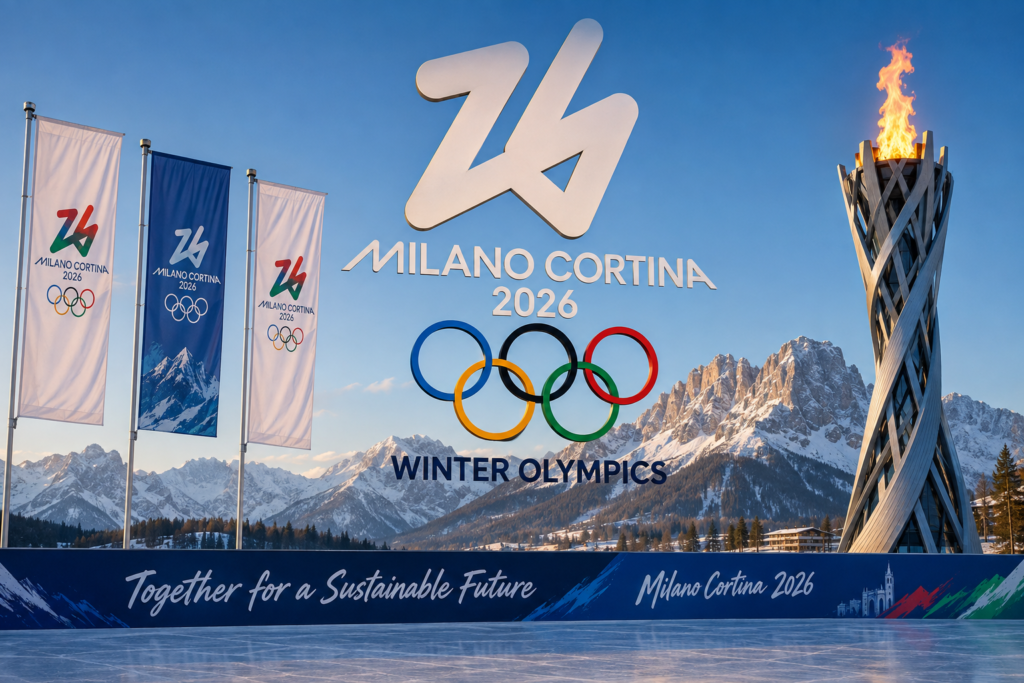
The 2026 Winter Olympics, officially known as the Milano Cortina 2026 Olympic Winter Games, brought the world together in Italy for one of the biggest celebrations of winter sports. The Games took place from February 6 to February 22, 2026, with competitions spread across Milan, Cortina d’Ampezzo, and several other locations in northern Italy.
What made this edition especially interesting was the combination of Italy’s modern cities, famous mountain resorts, and a long sporting tradition. Instead of placing every event in one compact area, Milano Cortina 2026 connected different parts of northern Italy. That gave the Olympics a distinctive character, mixing urban energy with dramatic alpine scenery.
For sports fans, the event offered everything from high-speed alpine skiing and snowboarding to figure skating, ice hockey, curling, speed skating, and biathlon. It also introduced ski mountaineering, or skimo, as a new Olympic sport.
What Were the 2026 Winter Olympics?
The 2026 Winter Olympics were the Olympic Games dedicated to sports performed on snow and ice. They represented the latest chapter in a tradition that has brought together elite winter athletes from around the world for generations.
Milano Cortina 2026 was particularly notable because the Games were hosted by two major Italian names: Milano (Milan) and Cortina d’Ampezzo. Milan offered the metropolitan side of the Olympics, while Cortina provided the classic alpine setting associated with winter competition.
The event was more than a collection of sporting competitions. It was also an international showcase for Italian culture, hospitality, design, food, transportation, and mountain tourism. The organizers had to connect venues that were separated by considerable distances while creating a unified Olympic experience.
The official Olympic record now includes results, athletes, medalists, videos, galleries, and competition information from Milano Cortina 2026.
When Did the 2026 Winter Olympics Take Place?
The Olympic Winter Games Milano Cortina 2026 officially ran from February 6 through February 22, 2026. The Winter Paralympics followed later, from March 6 through March 15.
The timing was important because February provides the traditional winter atmosphere expected for many snow and ice competitions. Athletes entered the Games after months and, in many cases, years of preparation.
For fans, the Olympic schedule created nearly three weeks of constant competition. Some events were completed quickly, while others unfolded through preliminary rounds, heats, qualifying sessions, semifinals, and finals.
That variety is one of the reasons the Winter Olympics remain so engaging. A viewer can move from a technical figure-skating performance to an explosive snowboard final, then watch an endurance-based cross-country skiing race later in the day.
Where Were the 2026 Winter Olympics Held?
Milano Cortina 2026 used a broad collection of venues across northern Italy rather than relying on one single Olympic site. Milan served as the major urban component, while Cortina d’Ampezzo represented the mountain side of the Games.
Cortina is already famous among winter sports enthusiasts. Its alpine environment has hosted major competitions before, making it a natural location for Olympic events. The combination of steep mountains, established winter infrastructure, and international tourism gave the Games a strong visual identity.
Milan, meanwhile, brought something completely different. It is one of Italy’s major economic and cultural centers, known for fashion, architecture, business, art, and food. Having an Olympic presence in such a city helped connect traditional winter sports with a modern metropolitan audience.
This geographical approach also gave viewers a broader picture of northern Italy. The Games were not simply about a stadium or a ski slope; they became a journey through several landscapes and communities.
Why Milano Cortina Was a Special Olympic Host
One of the most appealing aspects of Milano Cortina 2026 was the contrast between city and mountain. Many Winter Olympics are strongly associated with a single mountain destination, but this edition had a wider personality.
Milan contributed a sophisticated urban atmosphere, while Cortina brought the snow-covered peaks and traditional alpine feel that people naturally associate with the Winter Olympics. That contrast created a memorable backdrop for the competitions.
Italy also has a deep relationship with winter sports. Alpine skiing, figure skating, speed skating, snowboarding, and other disciplines have established fan bases throughout the country. Hosting the Olympics gave Italian athletes the opportunity to compete in front of a home crowd.
There was also a strong tourism component. Visitors could experience Olympic competition while exploring Italian cities, mountain communities, restaurants, cultural attractions, and historic sites.
Sports at the 2026 Winter Olympics
The Winter Olympics featured a broad collection of sports, covering both snow and ice disciplines. Traditional events such as alpine skiing, cross-country skiing, ski jumping, biathlon, figure skating, and ice hockey remained central to the program.
Snowboarding and freestyle skiing continued to appeal strongly to younger audiences because of their speed, creativity, and dramatic tricks. Events such as slopestyle, halfpipe, moguls, and aerials require athletes to combine technical precision with physical control.
On the ice, figure skating provided a completely different kind of spectacle. Athletes needed balance, flexibility, musical interpretation, jumps, spins, and exceptional consistency. Speed skating, short-track speed skating, curling, and ice hockey added their own unique styles.
The combination is what makes the Winter Olympics so diverse. There is no single definition of an Olympic winter athlete. Some competitors depend on endurance, others on strength, reaction time, balance, precision, or artistic expression.
Ski Mountaineering Makes Its Olympic Debut
One of the biggest changes at Milano Cortina 2026 was the Olympic debut of ski mountaineering. The sport, often called skimo, combines uphill movement with skiing and requires athletes to manage both climbing and descending sections of a course.
Ski mountaineering is different from traditional alpine skiing because athletes are not simply racing downhill. They must move efficiently uphill before transitioning to downhill skiing. That makes physical endurance and technical ability equally important.
At Milano Cortina 2026, medals were awarded in men’s and women’s sprint events as well as a mixed-gender relay. The addition gave the Winter Olympics another discipline that emphasizes endurance, strategy, transitions, and mountain skills.
The debut also reflected the changing nature of winter sports. Olympic programs evolve over time, and new disciplines can attract audiences that may not traditionally follow established events.
New Events Added to the Program
The 2026 Games were not only about introducing ski mountaineering. Several existing sports also received new events.
Among the additions were women’s doubles in luge, women’s large hill in ski jumping, a mixed team event in skeleton, men’s and women’s dual moguls in freestyle skiing, and team combined in alpine skiing.
These additions helped create more opportunities for athletes and expanded the competitive variety of the Games. They also reflected the Olympic movement’s continuing effort to develop events that balance tradition with modern sporting interests.
Women’s doubles luge, for example, added a new opportunity for female athletes in a discipline that has historically featured different competitive structures. Similarly, the expansion of freestyle and mixed events added more variety for spectators.
For casual fans, new events can also be a great entry point. You do not need to understand every Olympic discipline to enjoy the excitement of a fast, closely contested event.
Alpine Skiing and the Need for Precision
Alpine skiing is one of the most recognizable Winter Olympic sports. It combines speed, balance, technical skill, and an athlete’s ability to read the course while traveling at remarkable speeds.
The difference between winning and losing can be incredibly small. Skiers must find the right line, maintain control through turns, manage changing snow conditions, and stay aggressive without making a mistake.
Events such as downhill and super-G emphasize speed, while slalom and giant slalom demand more technical precision. The athletes may compete on the same mountain, but each discipline requires a different approach.
This makes alpine skiing fascinating to watch. A course that looks straightforward to a spectator can be extremely demanding when an athlete is moving through it at competition speed.
Figure Skating Remains a Major Olympic Attraction
Figure skating has always had a special place in the Winter Olympics because it combines athletic ability with performance. Skaters need to execute difficult jumps and spins while maintaining control, timing, posture, and presentation.
The sport also creates some of the most memorable Olympic moments because performances are often judged not only by technical difficulty but also by execution and artistic qualities.
Behind every short program or free skate is an enormous amount of preparation. Athletes spend years practicing individual elements repeatedly so that difficult movements become reliable under pressure.
At an Olympic Games, however, preparation is only part of the equation. Skaters must also manage nerves, expectations, travel, unfamiliar surroundings, and the pressure of performing in front of a worldwide audience.
Ice Hockey and the Global Appeal of the Games
Ice hockey is another major attraction of the Winter Olympics. For countries where hockey is deeply embedded in sporting culture, Olympic competition can carry enormous national importance.
The speed of the game makes it particularly exciting. Players must make decisions almost instantly while skating at high speed, handling the puck, defending, passing, and shooting.
International hockey also provides an opportunity to compare different playing styles. Teams arrive with different traditions, coaching systems, and tactical approaches, which can make Olympic matchups especially interesting.
For fans, the Olympic tournament is about more than individual players. National identity becomes part of the story, and every goal can dramatically change the mood inside an arena.
Snowboarding and Freestyle Skiing Bring Energy
Snowboarding and freestyle skiing have helped change the image of winter sports. Instead of focusing only on traditional racing, these disciplines emphasize tricks, creativity, aerial control, and individual style.
Halfpipe, slopestyle, aerials, moguls, and other freestyle events require athletes to perform highly technical movements while managing speed and balance.
What makes these events especially appealing to casual viewers is that the action is easy to understand visually. A successful trick looks impressive even if someone watching has never studied the scoring system.
The athletes themselves also represent the changing culture of winter sports. Many have strong personalities and distinctive styles, helping them connect with audiences well beyond traditional Olympic fans.
Cross-Country Skiing Tests Endurance
Cross-country skiing is one of the most physically demanding sports in the Winter Olympics. Unlike downhill events, where the focus can be on explosive speed and technical turns, cross-country skiing often requires athletes to sustain tremendous effort over longer distances.
Competitors must manage their energy carefully. Starting too aggressively can cause problems later, while being too conservative can leave an athlete with too much ground to make up.
Technique also matters enormously. Athletes must use their skis and poles efficiently while adapting to the course and snow conditions.
For spectators, the strategy becomes increasingly interesting as races progress. An athlete who looks comfortable early may be saving energy for the final stages, while another may attempt to create an early gap.
Biathlon Combines Skiing and Shooting
Biathlon is one of the most unusual Olympic sports because it combines cross-country skiing with precision rifle shooting.
The challenge is not simply skiing quickly. Athletes must control their breathing and heart rate before attempting to hit targets. A competitor can have excellent skiing speed but lose valuable time through missed shots and penalties.
This creates an interesting psychological battle. Athletes have to switch from intense physical exertion to calm, controlled shooting within a short period.
The sport rewards versatility. The best competitors need endurance, speed, concentration, technical skiing ability, and the mental discipline to remain composed under pressure.
Curling Is a Game of Strategy
Curling may look slower than many Winter Olympic sports, but it is one of the most strategic. Teams slide stones toward a target while teammates use brushes to influence the stone’s movement and distance.
The objective is not simply to throw a stone accurately. Players need to think several moves ahead and anticipate how the position of one stone will affect the rest of the end.
This strategic element makes curling accessible to viewers who enjoy games involving planning and decision-making.
It also highlights an important point about the Winter Olympics: athletic excellence does not always mean moving at the fastest possible speed. Sometimes it means making the right decision at exactly the right moment.
The Importance of Olympic Athletes
Behind every Olympic event are athletes who have invested years of their lives into reaching this level.
For many competitors, the journey begins during childhood. They train before school, after school, on weekends, and throughout holidays. Over time, ordinary practice becomes elite preparation.
The Olympic Games represent the opportunity to turn all that work into one defining performance. Some athletes arrive as favorites, while others are relatively unknown outside their home countries.
That uncertainty is part of what makes the Olympics special. A competition can change quickly, and a new name can become one of the biggest stories of the Games.
Records, Results, and Olympic Memories
Every Winter Olympics creates a collection of performances that remain part of sporting history. Some are remembered because of records, others because of dramatic victories, unexpected defeats, comebacks, or emotional celebrations.
The official Olympic platform provides results, medal information, athlete details, videos, and highlights from Milano Cortina 2026.
For sports historians, official results are important because Olympic performances become part of an athlete’s permanent competitive record.
For casual fans, however, the numbers are only one part of the story. What people remember years later is often the emotion surrounding a moment: an athlete celebrating with teammates, a family reacting in the stands, or a competitor completing a difficult routine after years of preparation.
Technology at the 2026 Winter Olympics
Modern Olympic competition depends heavily on technology. Timing systems, scoring equipment, video review, athlete tracking, broadcasting technology, and digital platforms all contribute to the experience.
In sports where races can be decided by fractions of a second, accurate timing is essential. Even a tiny difference can determine who receives a medal.
Broadcast technology also allows fans around the world to experience competitions from multiple perspectives. Slow-motion replays can reveal technical details that would be impossible to see in real time.
Technology therefore plays two roles: it helps officials determine results accurately, and it helps spectators understand what they are watching.
Sustainability and the Future of Winter Sports
Sustainability has become an increasingly important issue for Winter Olympic organizers. Hosting a large sporting event requires transportation, energy, construction, accommodation, and extensive logistics.
At the same time, winter sports depend on reliable snow and cold-weather conditions. That makes environmental discussions particularly relevant to the long-term future of skiing and other snow-based competitions.
Milano Cortina 2026 therefore became part of a larger conversation about how major sporting events can use existing infrastructure, manage resources responsibly, and reduce unnecessary construction.
The question is bigger than one Olympic Games. The future of winter sports depends on how athletes, organizers, resorts, governments, and communities respond to changing environmental conditions.
Why the 2026 Winter Olympics Matter
The Olympics matter because they create a rare international sporting environment where athletes compete under national flags while sharing the same global stage.
For competitors, winning a medal can become the defining achievement of a career. For countries, Olympic performances can become a source of enormous pride.
But the Games also provide something less measurable: shared experiences. People who may disagree about almost everything else can watch the same race, celebrate the same dramatic finish, or admire the same extraordinary performance.
That ability to bring people together is one of the most enduring ideas behind the Olympic movement.
The Cultural Side of Milano Cortina 2026
Hosting the Winter Olympics allowed Italy to showcase far more than sport. Visitors encountered Italian food, architecture, fashion, art, history, and hospitality alongside the competitions.
Milan in particular offered a very different experience from the mountain venues. Its urban identity made it an interesting Olympic host because visitors could combine sporting events with museums, shopping districts, historic landmarks, and restaurants.
Cortina, on the other hand, offered the traditional mountain experience. Its alpine landscape provided the kind of dramatic scenery that naturally complements winter competition.
Together, the locations gave Milano Cortina 2026 a distinctive cultural identity that separated it from many previous Winter Olympics.
What Fans Can Learn From the 2026 Winter Olympics
The 2026 Winter Olympics were a reminder that elite sport is rarely about talent alone. The athletes competing at this level have developed discipline, patience, resilience, and the ability to perform under enormous pressure.
There is also something useful for ordinary sports fans. Watching an Olympic athlete make a difficult skill look effortless can hide the years of repetition behind that moment.
The Games also demonstrate the value of adaptation. Athletes constantly adjust to opponents, weather, equipment, courses, and unexpected situations.
Perhaps most importantly, the Olympics show that success does not always mean winning gold. For some competitors, simply reaching the Olympic stage represents the completion of a lifelong dream.
The Legacy of Milano Cortina 2026
The legacy of the 2026 Winter Olympics will not be measured only by medal totals. It will also be reflected in the venues, infrastructure, tourism, athlete development, and memories created during the event.
Young athletes who watched the Games may decide to take up skiing, skating, snowboarding, curling, or another winter discipline.
The introduction of ski mountaineering also gives the Olympic program a new direction. Its inclusion demonstrates that the Winter Olympics can continue evolving while maintaining their traditional sports.
In the long term, the most valuable legacy may simply be inspiration. Every Olympic Games introduces millions of viewers to athletes whose dedication can encourage people to pursue their own goals, whether in sports or elsewhere.
Final Thoughts on the 2026 Winter Olympics
The 2026 Winter Olympics in Milano Cortina represented a fascinating combination of elite competition, Italian culture, mountain scenery, modern technology, and Olympic tradition. Held from February 6 to February 22, the Games brought winter sports to audiences around the world.
From alpine skiing and figure skating to ice hockey, snowboarding, biathlon, curling, and the debut of ski mountaineering, the program offered something for almost every kind of sports fan.
What makes an Olympic Games memorable is not simply the final medal table. It is the collection of stories created along the way: athletes overcoming setbacks, unexpected performances, national teams celebrating together, and competitors pushing themselves to limits most people can hardly imagine.
Milano Cortina 2026 now stands as another chapter in that continuing Olympic story. Its mixture of city and mountain, established events and new disciplines, tradition and modernity gave the Games a personality of their own. For fans, athletes, and future generations of winter sports competitors, those moments will continue to be part of the broader history of the Olympic movement.
YOU MAY HAVE MISSED